Loading Admission Guardian content
Loading Admission Guardian content

Find a program, read its fee details and explore the admission requirements.
Summary of the programs shown below. Fee periods can differ by program. Check the note beside each amount before comparing costs.
| Course | Stream | Fees |
|---|---|---|
| General Nursing and Midwifery [GNM] | Paramedical | 45700 |
Eligibility: 10 + 2
If you're looking for a no-frills, clinically-focused nursing diploma in Himachal Pradesh, Bhojia Institute of Nursing is a name that comes up. Established in 2011 and part of the older Bhojia Dental College campus, it’s built a reputation for getting its GNM students into major hospital wards early and often. The trade-off is clear: you won't find a vibrant campus social scene here. What you will find, according to student reviews, is a disciplined environment with strong hospital affiliations and a total cost that undercuts many private competitors in North India. It’s a practical choice for female students who want to get their qualification and start working without a mountain of debt.
Let's be clear: the core offering here is the General Nursing and Midwifery (GNM) diploma. It's a three-year, full-time program with an annual intake of 40 female students. While some education portals might list B.Sc. Nursing, the institute's own disclosures and current INC approvals center squarely on the GNM course. That's the program they're set up to run.
The academic calendar follows the affiliating university, AMRU, and typically kicks off in late summer. Faculty are qualified with M.Sc. and B.Sc. Nursing degrees, and the leadership pushes a "Students First Policy." But in practice, students say that translates to a heavy emphasis on clinical rigor and attendance, not coddling.
Where Bhojia arguably delivers its main academic value is through its Memorandums of Understanding (MoUs) for clinical training. These aren't minor local clinics. The list includes major government and institutional hospitals: Indira Gandhi Medical College (IGMC) in Shimla, the Regional Hospital in Solan, ESIC hospitals in Parwanoo and Baddi, and even the Institute of Mental Health Hospital in Amritsar for psychiatric nursing rotations. That's a decent spread of exposure for a diploma student.
Nursing placements don't work like engineering ones. There's no "average package" in the corporate sense. Graduates typically join hospitals as staff nurses, and salaries are set by hospital pay scales, not campus bidding wars.
The institute's Corporate Resource Center claims an 85% to 90% placement rate. They bring recruiters from major private hospital chains in the Delhi-NCR region for campus interviews. Top names that show up include Medanta - The Medicity, Max Super Speciality Hospital, Asian Hospital, and Mayom Hospital. Students also get exposure to Fortis Healthcare during their clinical postings.
Now, the reality check. The estimated starting salary for a fresh GNM graduate from here in a private hospital is pegged between ₹2.4 to ₹3.6 LPA. That's a realistic, if modest, range for the region and qualification. The high placement claim seems plausible largely because of the institute's location in the Baddi industrial belt—there are countless small to mid-sized hospitals and clinics nearby always needing staff. The clinical tie-ups at IGMC Shimla and ESIC also give students a foot in the door for potential government sector opportunities, though those require separate competitive exams.
The fee structure is the clearest example of the two-tier system in Indian private education. Your cost depends entirely on which quota you secure admission under.
For the State Quota (filled through AMRU counseling based on 10+2 merit), the total annual fee is approximately ₹37,700. This includes tuition, hospital attachment, and transportation. The Management Quota (direct admission) costs nearly double, at about ₹66,750 per year.
On top of that, hostel lodging costs ₹12,000 to ₹15,000 annually. Mess charges are extra and run about ₹2,500 to ₹3,500 per month for food.
Do the math for the full three-year course:
That's where the "affordability" argument from student reviews holds water. Compared to many purely private nursing colleges in neighboring states, this is a lower-cost pathway. The institute does not advertise major scholarship programs, so financial aid is likely limited to any state-government schemes for which students might independently qualify.
Admission to the GNM program is primarily merit-based on your 10+2 marks. There's no separate, difficult entrance exam run by the college itself.
Eligibility is straightforward:
The critical step is the counseling process. For the coveted (and cheaper) State Quota seats, you must register and participate in the centralized counseling conducted by Atal Medical and Research University (AMRU). The application window usually opens around June-August. Selection is based on the merit list generated from your 12th-grade scores, followed by a counseling round where you lock in your seat.
Management Quota admissions are more direct—you apply to the institute, and selection is based on merit and availability, but at the higher fee rate. The cutoff for State Quota isn't officially published as a single number, but given the competition for the lower-priced seats, you'll need marks comfortably above the 40% minimum to have a real shot.
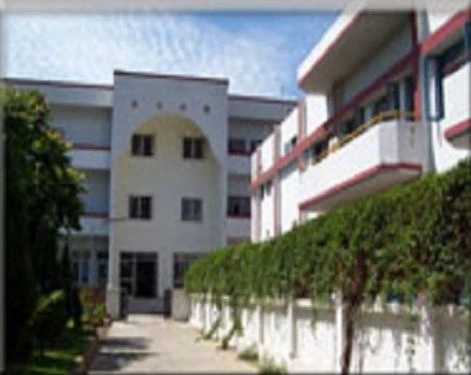
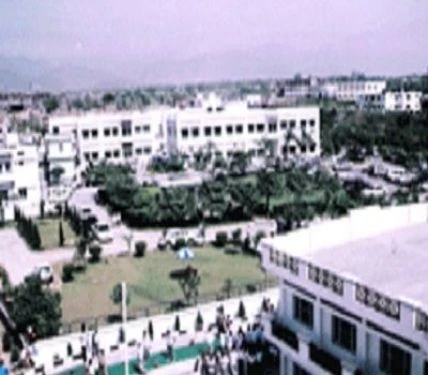
Manage your expectations. The Bhojia Institute of Nursing is a wing within the larger Bhojia Educational Campus, which is dominated by the dental college. It's not a sprawling, independent university setup.
The hostel is for female nursing students only. Reviews rate it around a 3.5/5: the rooms are described as basic but safe, with 24/7 security and warden supervision. The common complaints are the classic hostel grievances—strict timings and repetitive mess food. The "strictness" students mention is a defining feature, not a bug. High attendance is mandatory, and hostel rules are enforced.
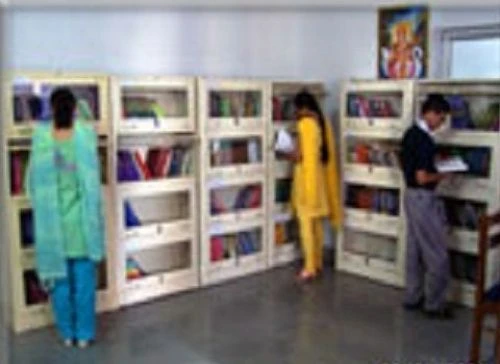
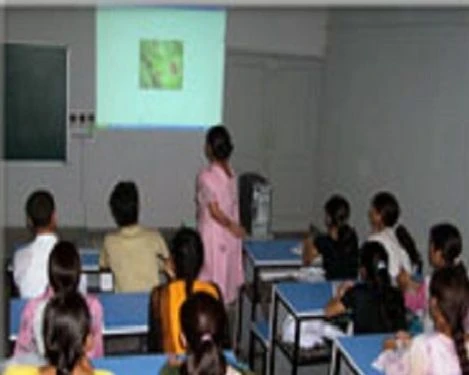
Infrastructure for academics is adequate. There are dedicated labs for nursing foundations, nutrition, anatomy, and community health. The library is stocked with relevant journals and offers Wi-Fi. A significant practical perk is the dedicated student transport bus service that runs from Pinjore, Panchkula, Mohali, and Chandigarh. For day scholars from the Tricity area, that's a major convenience.
Social life is quiet. The location in an industrial belt near Baddi means you're not in a college town. Life revolves around classes, hospital duties, and the hostel. If you're looking for a vibrant campus fest scene, you'll be disappointed.
Scouring platforms like CollegeDunia and Shiksha reveals a consistent pattern. This isn't a college students gush about, but many respect it for what it is.
The positives are practical. Clinical exposure is the number one praise. Getting to train at big-name hospitals like IGMC Shimla is seen as invaluable real-world experience that boosts confidence and employability. The location in the Baddi-Solan industrial corridor is also a plus, with plenty of healthcare facilities nearby for potential jobs or extra observation. And repeatedly, students note the lower fees as a key reason for choosing Bhojia over other options.
The negatives are about lifestyle and control. Strict attendance policies and hostel curfews are frequently cited as downsides. The campus is shared and small, so there's little sense of a dedicated nursing college atmosphere. Mess food quality and variety get the usual complaints you'll find at almost any Indian hostel.
One paraphrased sentiment sums it up: "The teachers are helpful, but they are very strict about internal marks and attendance. Don't expect a big college life; it's mostly about hospital duties and classes." That's the trade-off, laid bare.
Bhojia Institute of Nursing is a specific solution for a specific type of student. It's worth serious consideration if you are a female student from the region (Himachal, Punjab, Chandigarh) seeking a low-cost, clinically-strong GNM diploma. The hospital tie-ups are legitimately good, and the total cost of education is a major advantage. You'll graduate with solid hands-on experience and without crippling debt, ready to start a nursing career.
You should probably look elsewhere if you prioritize a vibrant campus life, want a co-educational environment, or are aiming for a B.Sc. Nursing degree (confirm if they even offer it). The strict, disciplined atmosphere isn't for everyone. Think of it less as a "college experience" and more as a vocational training institute with hostel facilities. For the right student—one who is focused, budget-conscious, and clear about wanting to work in nursing—Bhojia delivers on its core promise. Just go in with your eyes open.

In this preview: 5 photos · 0 videos
No, the General Nursing and Midwifery (GNM) program at Bhojia Institute of Nursing is for female candidates only.
Yes, the institute is approved by the Indian Nursing Council (INC) and Himachal Pradesh Nursing Registration Council (HPNRC). This makes graduates eligible to appear for state and central government nursing recruitment exams, such as NORCET.
Yes, the college provides dedicated bus transport for day scholars from Chandigarh, as well as from Mohali and Panchkula.
The State Quota fee is significantly lower, with tuition approximately ₹12,000 compared to around ₹36,000 for the Management Quota. Admission under the State Quota, however, requires a higher merit score in the 10+2 examination.
Admission to the GNM program is usually based on merit. However, candidates must register through the official AMRU HP (Atal Medical & Research University, Himachal Pradesh) counseling portal for the selection process.
Share what future students should know about BHOJIA.
Student voices are not rewritten by colleges. We remove spam and abuse.
Wider admission question? Community PulseWhat should future students know?
Tell us which course you're considering. We'll help you work out the next step.
Get instant Partner access after mobile verification. Your public edits are reviewed before they go live.
Claim this college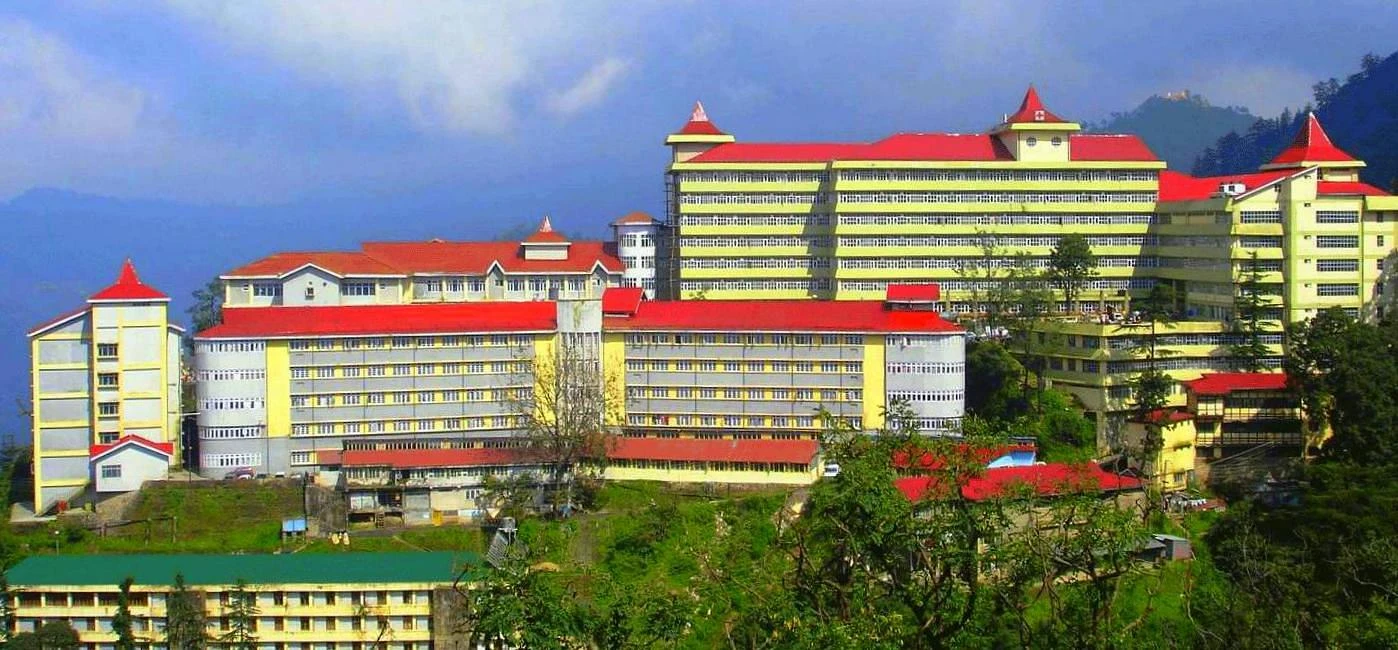

 Cafeteria
 Medical
 Science Labs
 Sports Complex
 Study Library