Loading Admission Guardian content
Loading Admission Guardian content

Provisional score based on available data. It may change as more information is verified.
Selected ranking categories, with the recorded year beside each result. Open all records for the complete history.
3 published records · Lower numeric ranks are stronger
Find a program, read its fee details and explore the admission requirements.
Summary of the programs shown below. First-year fee. Check the note beside each amount for inclusions and exclusions.
| Course | Stream | Fees |
|---|---|---|
| Master of Business Administration [MBA] | Management | 60100 |
| Bachelor of Technology [B.Tech] | Engineering | 78000 |
| Bachelor of Technology [B.Tech] {Lateral} | Engineering | 78000 |
| Master of Technology [M.Tech] | Engineering | 110100 |
Specializations
All accepted exams
Eligibility: Graduation with 50% marks
Specializations
All accepted exams
Eligibility: 10+2 with 45%
Specializations
All accepted exams
Eligibility: Diploma with 50%
Specializations
All accepted exams
Eligibility: Pass in Graduation + 50% marks
2 exams with cutoff data available
 Aptech
 Arf Design
 Bhilwara Infotechnologies
 Bureau Veritas
 C-Core India Technosolution
 CMS Info Systems
 Era Group
 eRevMax
 ICICI Bank
 Intelenet Global Services
 ITC Logistics
 JK Technosoft
 KEC International Limited
 Lafarge (India)
 Mahindra & Mahindra
 Napino Auto & Electronics Limited
 Orient Crafts Ltd
 Pradan
 Progressive Infotech
 Reliance Retail
 Shriram Transport Finance Company Ltd.
 Sparrow Softtech
 Tech Live Connect
 Vivo
Vivo Vodafone
Cambridge Institute of Technology in Ranchi is, for many students, the definition of a pragmatic choice. It's not the flashiest name on the list, but with an NAAC 'A' grade and annual B.Tech fees hovering around ₹80,000, it presents a compelling value proposition for middle-class families in Eastern India. The sprawling 25-acre campus in Tatisilwai offers a quiet, green environment for study, though its location—16 km from the city center—is a double-edged sword. The academic focus is straightforward, anchored by its affiliation with Jharkhand University of Technology (JUT), and the placement story is one of managed expectations: a few headline-grabbing packages but a median reality around 3 LPA. For the right student, it's a solid launchpad.
CIT Ranchi keeps its academic portfolio focused. At the undergraduate level, the B.Tech program is the main draw, with an annual intake of roughly 420-474 students spread across five branches: Computer Science & Engineering (CSE), Civil Engineering (CE), Mechanical Engineering (ME), Electrical & Electronics Engineering (EEE), and Electronics & Communication Engineering (ECE). Each branch takes in about 84 students. There's also a lateral entry path for diploma holders. For postgraduates, the institute offers M.Tech in Structural Engineering and CAD/CAM, and an MBA with specializations in Marketing, Finance, HR, and IT.
The academic rhythm follows the JUT calendar, complete with two mid-semester exams. Faculty strength sits around 55-60 core members, with about a third to 40% of senior staff holding PhDs. Students often highlight department heads like Dr. Prabhu Nath Singh (Civil) and Mr. Arshad Usmani (CSE) as being particularly supportive and knowledgeable. But the feedback isn't uniformly glowing. There's a consistent note in student reviews that while senior faculty are respected, newer appointments can lack practical teaching experience. Attendance is strictly enforced at 75%, a policy the administration doesn't take lightly. On paper, an international MoU with Lincoln University of Malaysia exists for research exchange, though its direct impact on the average undergraduate's daily life seems limited.
This is where you need to separate the brochure from the bench reality. The official placement cell will tout a highest package of 15.5 LPA (achieved in 2024 with Carrier Midea) and an average of 3.8 LPA. The NIRF 2024 report provides a more standardized, sobering data point: a median package of 3.0 LPA for UG students, with 74.8% of eligible candidates (240 out of 321) placed. That's a decent outcome for a state-level private college.
But talk to students, and the picture gets more nuanced. The consensus on forums like CollegeDunia and Shiksha is that the working average package for most is between 2.5 to 3.5 LPA. Placement percentage also varies wildly by branch. While CSE and ECE might see 60-70% of students getting on-campus offers, core branches like Civil and Mechanical can struggle, with placement rates dipping toward 40-50%. The recruiter list is dominated by IT mass recruiters: TCS, Wipro, Cognizant, Accenture, and Infosys are regulars. For core roles, L&T Construction and Carrier Midea show up, but students frequently wish for more dedicated core engineering companies. The gap between the official 85% claim and the student-reported experience is notable, and it underscores a key point: at CIT, your branch choice heavily dictates your placement odds.
The affordability argument is CIT's strongest card. For the 2024-25 academic year, B.Tech tuition fees are estimated between ₹78,000 to ₹90,000 annually. That puts the total four-year cost in the range of ₹3.12 to ₹3.5 lakhs, excluding hostel charges. It's a fraction of the cost of a metro-based private college. The MBA program is even more affordable, with total two-year fees around ₹1.13 to ₹1.58 lakhs.
Hostel and mess add to the cost. Hostel rent is about ₹17,400 per semester, which includes transport and basic medical facilities. Mess charges run ₹2,100 to ₹2,500 per month. Financial aid primarily flows through government schemes. The most significant is the E-Kalyan scholarship for SC/ST/OBC students who are residents of Jharkhand with a family income below ₹2.5 lakhs; it can cover a major portion or even all of the tuition. AICTE's Pragati and Saksham schemes for girls and differently-abled students are also applicable.
Admission to the B.Tech program is primarily through state-level engineering entrance exams. The main gateway is the JCECEB (Jharkhand Combined Entrance Competitive Examination Board) counseling. JEE Main scores are also accepted and used in the merit ranking. For 2024, the JCECEB cutoff for the popular CSE branch ranged between a Home State rank of 2,618 to 5,619 for the general category. For Civil Engineering, ranks went up to around 7,500. The process is straightforward: qualify for counseling, lock in your choice, and secure your seat.
If seats remain vacant after counseling rounds, or through the management quota, direct admission is possible. The application fee is ₹1,050. It's a no-frills process typical of state-affiliated private colleges.
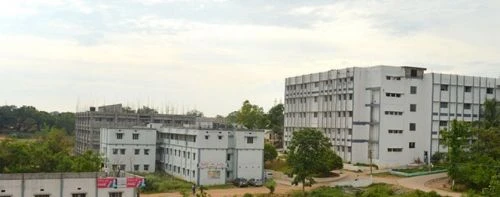
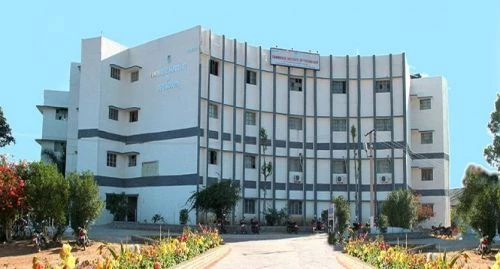
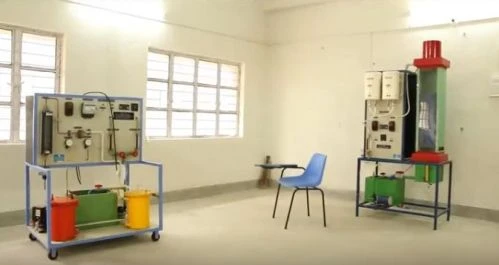
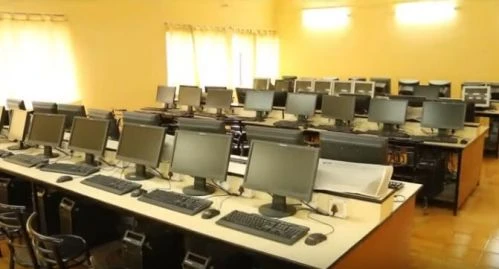
The 25-acre campus is frequently described as peaceful and green. It's a self-contained world, which is good because you're quite far from Ranchi's city life. Infrastructure is a mix of good and functional. The CSE labs are air-conditioned and well-equipped, a clear priority. Labs for Civil and Mechanical, however, receive feedback that some equipment is functional but dated. The library has a digital system and a collection of over 25,000 books. Campus-wide Wi-Fi is available, though students say speeds are average at best.
There are separate hostels for boys and girls. The quality gets a middling 3.5/5 in reviews. The main complaints circle back to the mess food—it's described as acceptable but repetitive, with occasional concerns about hygiene. Sports facilities include a large playground for cricket and football, plus indoor spaces for table tennis and badminton. There's an on-campus dispensary for basic medical needs. The social life is what you make of it; the isolation fosters a close-knit campus community but can feel limiting if you crave city amenities.
Synthesizing the chatter from CollegeDunia, Shiksha, Reddit, and Quora reveals a clear, pragmatic consensus. The most repeated positive is the "Paisa Vasool" factor—great value for the low investment. The green campus and supportive senior faculty (especially HODs in CSE and EEE) also get consistent praise.
But the negatives are just as consistent. The remote location is a major pain point, making students reliant on college buses. The "fine culture" for attendance or late fees is frequently criticized as overbearing. And the placement reality, as discussed, is viewed with some cynicism—especially by core branch students who feel the cell focuses too much on IT and sales roles. Hostel food quality is a perennial gripe.
CIT Ranchi is a college of clear trade-offs. It's best suited for a specific student: one from the region or with a budget constraint, seeking an affordable, accredited B.Tech degree with reasonable campus infrastructure. If you're in CSE or ECE, you'll likely find decent academic support and a fair shot at a 3-4 LPA IT job. For that profile, it's a sensible, low-risk choice.
But you should probably look elsewhere if you're aiming for top-tier packages, crave a vibrant urban campus life, or are dedicated to a core engineering branch like Mechanical or Civil. The opportunities there are thinner. Ultimately, CIT doesn't pretend to be a national powerhouse. It's a workmanlike institution that delivers a baseline engineering education at a price many can stomach. For thousands of families in Jharkhand and neighboring states, that's exactly what they need.
In this preview: 5 photos · 0 videos
Yes, CSE is the most popular branch at CIT Ranchi and has the best placement record, with approximately 60-70% of students securing placements. The department also features air-conditioned laboratories.
CIT Ranchi and CIT Bangalore are entirely different institutions. CIT Bangalore is more prominent within the national technology industry, while CIT Ranchi is a regional leader in the state of Jharkhand.
Yes, direct admission is possible at CIT Ranchi through the Management Quota or if seats remain vacant after the standard JCECEB (Jharkhand Combined Entrance Competitive Examination Board) or JEE (Main) counseling process.
No, staying in the hostel is not mandatory for students at CIT Ranchi. However, it is often recommended because the main campus is located approximately 16 kilometers away from the city center.
Yes, CIT Ranchi provides scholarships. The primary offering is the E-Kalyan scholarship for residents of Jharkhand, which can cover a significant portion of the tuition fees.
Share what future students should know about CIT Ranchi.
Student voices are not rewritten by colleges. We remove spam and abuse.
Wider admission question? Community PulseWhat should future students know?
Tell us which course you're considering. We'll help you work out the next step.
Get instant Partner access after mobile verification. Your public edits are reviewed before they go live.
Claim this college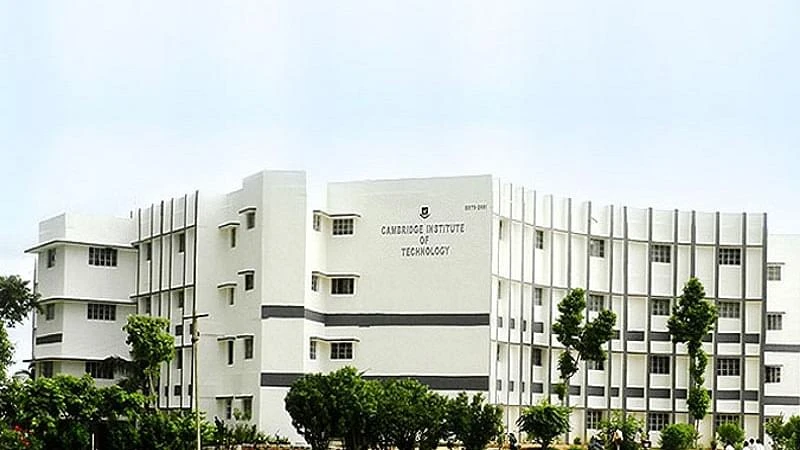
 Auditorium
 Cafeteria
 Computer Labs
 Gym
Gym Hostel
 Medical
 Science Labs
 Sports Complex
 Study Library