Loading Admission Guardian content
Loading Admission Guardian content

Provisional score based on available data. It may change as more information is verified.
Find a program, read its fee details and explore the admission requirements.
Summary of the programs shown below. Total course fee. Check the note beside each amount for inclusions and exclusions.
| Course | Stream | Fees |
|---|---|---|
| Master of Business Administration [MBA] | Management | 104000 |
| Master of Technology [M.Tech] | Engineering | 132000 |
| Bachelor of Technology [B.Tech] | Engineering | 226000 |
| Bachelor of Business Administration [BBA] | Management |
Specializations
All accepted exams
Eligibility: Graduation with 50% + MAT
Specializations
All accepted exams
Eligibility: Pass in Graduation + GATE
Specializations
All accepted exams
Eligibility: 10+2 with 75% + JEE Main
Specializations
Eligibility: 10+2
 UAE Exchange
Ganpati Institute of Technology and Management (GITM) sits on a sprawling 42-acre campus in the Shivalik foothills of Yamuna Nagar, Haryana. Founded in 2006 and affiliated with Kurukshetra University, it's a private institution that has carved out a niche for itself in the region, offering B.Tech, M.Tech, BBA, and MBA programs. But the story here isn't about national rankings or elite placements—it's about a college with decent infrastructure and a significant, recurring student concern: the gap between campus life and career outcomes. The consensus from those who've been there is clear: it's an average college where you get what you pay for, and sometimes a bit less when it comes to job support.
GITM keeps its academic portfolio focused. The undergraduate side is built around the Bachelor of Technology (B.Tech) and Bachelor of Business Administration (BBA). For postgraduates, there's Master of Technology (M.Tech) and Master of Business Administration (MBA/PGDM). The engineering specializations are standard fare for a regional technical institute: Civil, Computer Science, Electrical, Electronics & Communication, and Mechanical Engineering.
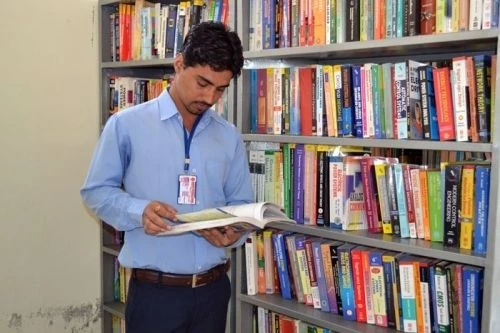
With a total intake of 588 students, the batches are manageable, which can be a plus for accessibility. Faculty details are sparse beyond a few named assistant professors across departments like Chemistry, Mechanical, ECE, and Computer Science. The official line touts "highly experienced & qualified faculty from Topnotch Institutions," but a student review offers a more grounded perspective, noting that "staff kept changing time to time." That kind of turnover isn't unusual in newer private colleges, but it can impact continuity. The library sounds like a solid resource, with over 40,000 books and journals in a fully automated setup.
This is the section that demands the most honesty. The college's official placement statistics—highest package, average package, placement percentage—are not publicly available in the brief. The real picture has to be pieced together from student testimonials, and it's a sobering one.
Reviews from alumni, referencing batches from 2018 to 2024, paint a consistent story of low placement rates. The numbers cited range from a stark 4% to a slightly better, but still low, 20% of students securing on-campus offers. Packages follow suit. While one 2024 review mentions a highest package of 5 LPA, the average figures students talk about cluster between ₹1.5 LPA and ₹3.6 LPA. An official figure of an ₹80,000 average package is also noted, which, if accurate, is exceptionally low for a technical degree.
The recruiter list is a mix of local manufacturing and some IT services names. You'll see Swaraj (Mahindra & Mahindra), Tata Motors, Bajaj Motors, and Escorts alongside Tech Mahindra, Concentrix, and Daffodil. Many of these are likely visiting for bulk, lower-skill roles in software testing or shop-floor positions. A significant red flag from students is the noted "lack of a dedicated placement cell." Furthermore, about 7% of students reportedly found internships in Chandigarh-based companies, with many securing opportunities on their own, sometimes without a stipend.
The takeaway? Don't bank on GITM for your job. The placement support appears weak, and outcomes are modest at best. You'll likely be navigating the job market independently.
For the 2025-2026 academic year, the fee structure is relatively clear. The total tuition for a B.Tech degree ranges from ₹1.72 lakhs to ₹2.20 lakhs, with the first year costing about ₹2.26,000. That first-year figure likely bundles in tuition, hostel, and some one-time charges. A rough, conservative estimate for the full four-year B.Tech cost, assuming similar annual fees, would start at around ₹9 lakhs. For an MBA/PGDM, total tuition is between ₹1.32 and ₹1.40 lakhs, with a first-year fee of ₹1,04,000. M.Tech fees are in the same ballpark.
On financial aid, the institute mentions scholarships based on merit and need, and accepts government schemes like the AICTE scholarship and Minority scholarship. They reference an older scheme (2013-14) where high academic achievers (90%+) could get a 50% fee waiver—it's worth checking if similar incentives exist today. Education loan facilitation from various banks is also stated as available.
Admission at GITM works on a dual track: entrance-based and management quota. For the majority of B.Tech seats, you'll need a JEE Main score and must participate in the Haryana State Technical Education Society (HSTES) counselling. The 2026 counselling registration is expected to begin in June. For M.Tech, a valid GATE score is the ticket, followed by the GATE COAP counselling process.
Management aspirants can use MAT scores for the MBA program. It's also noted that plain CBSE or HBSE 12th scores are considered for B.Tech, likely for the management quota or if seats remain vacant after counselling.
And that brings us to the management quota itself: 25% of seats in B.Tech, MBA, and other courses are reserved for it. This is a direct admission route, bypassing the entrance exam ranking system, though it almost certainly comes at a higher cost. Specific cutoff ranks for the merit-based seats aren't provided, which suggests they aren't highly competitive and likely align with the last rounds of state counselling.
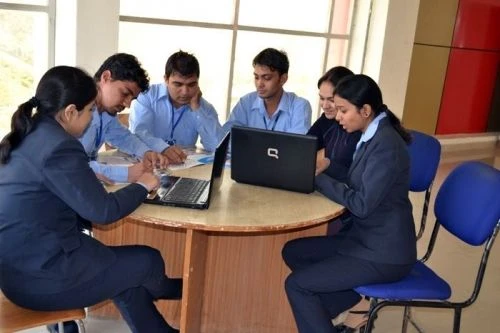
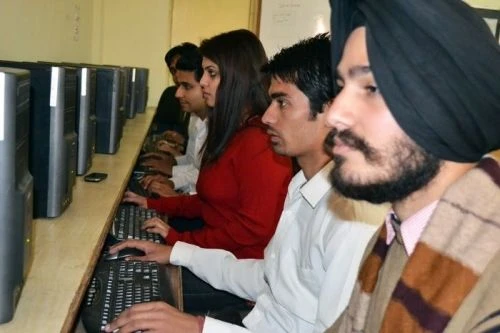
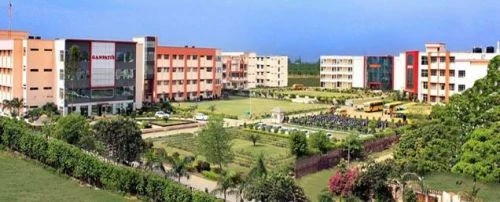
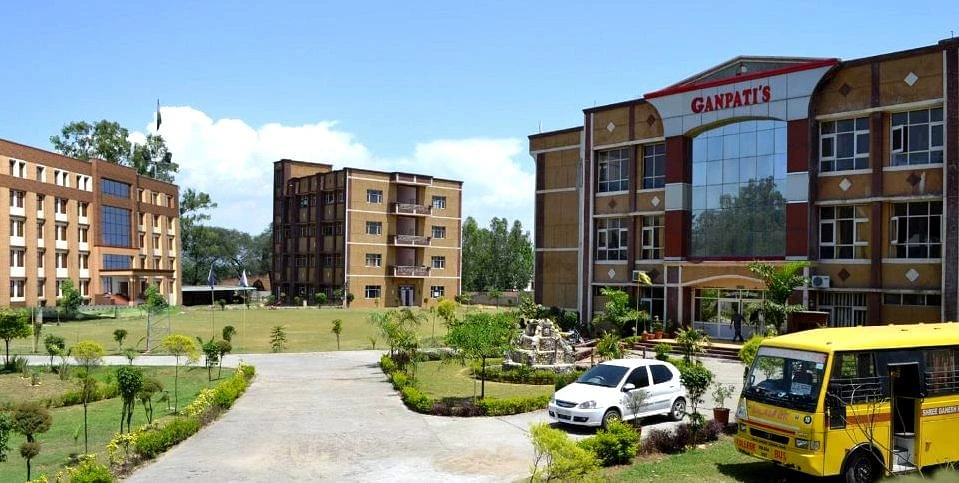
The 42-acre campus is GITM's undeniable physical asset. Described as "lush green" with "world-class infrastructure," it includes the expected auditoriums, seminar rooms, and classrooms. Reviews consistently rate the overall infrastructure as "good." Labs for IT and chemical sciences are noted as well-equipped, though a minor gripe about the occasional unavailability of lab assistants pops up.
Hostels are separate for boys and girls, but the quality gets an "average" tag from students. The mess food, however, seems to be a point of satisfaction, frequently rated as "good." The Wi-Fi coverage across campus is considered just "average."
Facilities are a mixed bag. There's a canteen, sports grounds with regular activities, and transport for students and staff. Medical facilities are confusingly reviewed—one source says they're "good," another flatly states "No medical facilities available," and it's noted a multispeciality hospital is 20 km away. There's no on-campus bank.
Social life gets a yearly highlight with "Utkarsh," a two-day annual function featuring cultural events (dance, music) and technical activities like paper presentations and LAN gaming. It's a decent effort to break the routine.
Synthesizing the sentiment is straightforward. The median student consensus is that GITM is an average college. The positives are tangible: the infrastructure and campus are good, the mess food is palatable, and sports are regularly organized. It's a physically comfortable place to study.
The negatives, however, are substantial and career-focused. The placement scenario is the overwhelming complaint, characterized by low percentages, low packages, and perceived lack of institutional support. A serious allegation mentioned in reviews is that the college "takes AICTE student money," which, if true, points to potential administrative malpractice. Other issues like fluctuating faculty and average Wi-Fi are secondary but add to the overall picture of an institution that meets basic needs but falls short on delivery and trust in key areas.
GITM presents a classic value-for-money dilemma in the tier-3 private college landscape. If your priority is a affordable engineering or management degree from an AICTE-approved, university-affiliated college with a decent-sized campus and acceptable living conditions, and you are a self-driven student who does not expect active placement cell support, GITM can be a functional choice. It serves a local need.
However, if your primary goal is strong campus placements, a dynamic academic environment with stable faculty, or a college with a strong reputation, you should almost certainly look elsewhere. The student-reported placement data is a major red flag. The total cost of a B.Tech degree (approx. ₹9 lakhs+) is a significant investment, and the return, in terms of average salary outcomes, appears disproportionately low. Your decision hinges on whether you view the degree as a bare-minimum credential you'll leverage yourself, or as an investment in a supported launchpad for your career. For the latter, GITM seems like a risky bet.
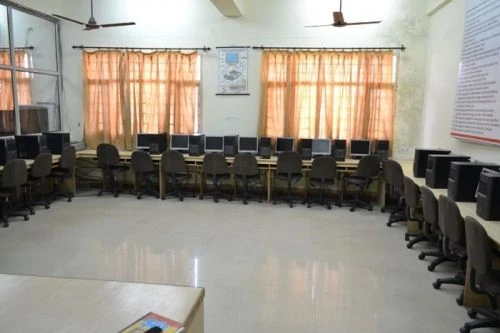
In this preview: 5 photos · 0 videos
GITM offers undergraduate programs like Bachelor of Technology (B.Tech) and Bachelor of Business Administration (BBA), along with postgraduate programs such as Master of Technology (M.Tech) and Master of Business Administration (MBA/PGDM). The institute has a total student intake capacity of 588 across all its courses.
For the 2025-2026 academic year, the total tuition fees for B.Tech programs range from INR 1,72,000 to INR 2,20,000, with the first-year fee being around INR 2,26,000. For MBA/PGDM programs, the total tuition fees are between INR 1,32,000 and INR 1,40,000, with the first-year fee at approximately INR 1,04,000.
GITM accepts scores from various entrance exams including JEE Main, HSTES, HSTES LEET, GATE, and MAT for admission to its engineering and management programs. Additionally, 25% of the seats for B.Tech, MBA, and B.Pharma courses are allocated through a Management Quota.
Student reviews indicate that placements at GITM are generally low, with reported percentages ranging from 4% to 20% and average packages between 1.5-3.6 LPA. There are complaints about the lack of a dedicated placement cell. However, the infrastructure, including labs, library, and sports facilities, is generally considered good, though Wi-Fi quality is rated as average.
GITM provides a campus spread over 42 acres with world-class infrastructure, including auditoriums, seminar rooms, and classrooms. It offers separate hostel accommodations for boys and girls, well-equipped academic labs, a fully automated library with over 40,000 books, and sports facilities. A canteen and transport services for students and staff are also available.
Share what future students should know about GITM.
Student voices are not rewritten by colleges. We remove spam and abuse.
Wider admission question? Community PulseWhat should future students know?
Tell us which course you're considering. We'll help you work out the next step.
Get instant Partner access after mobile verification. Your public edits are reviewed before they go live.
Claim this college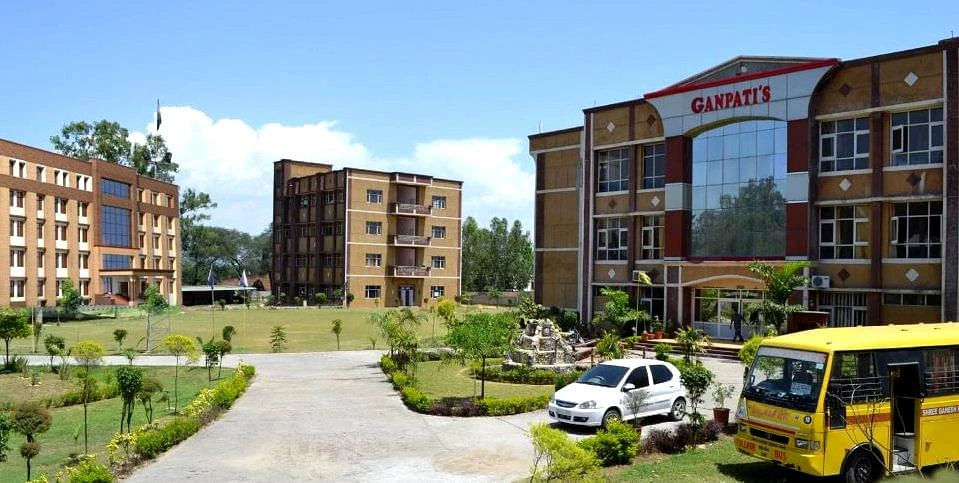
 Auditorium
 Cafeteria
 Computer Labs
 Gym
Gym Hostel
 Medical
 Science Labs
 Sports Complex
 Study Library