Loading Admission Guardian content
Loading Admission Guardian content
Find a program, read its fee details and explore the admission requirements.
Summary of the programs shown below. Fee periods can differ by program. Check the note beside each amount before comparing costs.
| Course | Stream | Fees |
|---|---|---|
| Master of Engineering [ME] (Industrial Engineering) | Engineering | 40925 |
| Master of Engineering [ME] | Engineering | 57375 |
| Bachelor of Engineering [BE] | Engineering | 92500 |
| Ph.D | Engineering |
Specializations
All accepted exams
Eligibility: Pass in Graduation + GATE
Specializations
All accepted exams
Eligibility: Pass in Graduation + GATE
Specializations
All accepted exams
Eligibility: 10+2
Specializations
Eligibility: Post Graduation
 Andrew Yule & Co.
 Bharti Telenet
 Burckhardt Compression
 Bureau Veritas
 CG Global
 L&T Infotech
 Mahindra & Mahindra
 Marico Industries Ltd.
 MRF
MRF Quest Global
 SAP
SAP Satyam Venture Engineering Services
 Siemens
 Syngenta Biosciences
 Tata Elxsi
 Tata Infotech
 Vedanta
 Visteon Corporation
 Wipro
WiproGoa College of Engineering (GEC) in Ponda is a bit of an anomaly. It's a sprawling, 268-acre government campus on a quiet hilltop, far from the state's tourist beaches, yet it's produced a surprisingly eclectic list of alumni—from a Morgan Stanley co-head to a national cricketer. Established in 1967, it's Goa's oldest and most prominent engineering college, and its shift to JEE Main for B.E. admissions from 2025 signals a move towards a more national student pool. But the real story here is the trade-off: you get a massive, green campus with a waterfall and incredibly affordable fees, but you also get the logistical headache of its remote location and placement stats that vary wildly by department. It's a solid, no-frills government institute where your branch choice will heavily dictate your outcome.
GEC offers a standard suite of engineering programs, but with a government-institute practicality. At the undergraduate level, the eight B.E. programs include the usual suspects—Civil, Mechanical, Electrical, and Computer Engineering. A newer addition is Electronics Engineering in VLSI Design and Technology, introduced in 2022, which shows an attempt to keep the curriculum current. The total B.E. intake is either 450 or 840 seats, a decent size. For postgraduates, the M.E. offerings are more specialized, with programs like Microelectronics, Structural Engineering, and Industrial Automation. The college also runs Ph.D. programs across five core departments.
The faculty strength is 95, which, for the intake, suggests a decent but not exceptional student-teacher ratio. The academic culture is what you'd expect from a long-standing government college: structured, traditional, and heavily reliant on the affiliating university's framework. A notable academic feature is the Memorandum of Understanding (MoU) with IIT Bombay, which could facilitate some faculty or resource exchange, though the tangible impact on the average undergraduate isn't always clear.
This is where you need to read between the lines. The official 2025 numbers point to a highest package of INR 15 LPA (from a company called TurtleShell) and an average of INR 6 LPA. The median package for recent UG batches hovered between INR 3.6 and 4 LPA. That's a more telling figure than the average—it means half the placed students got less than that.
The real split, however, is by department. Student sentiment consistently highlights that Computer Science and IT see the highest placement rates and better averages, likely pulling the overall average up. Core branches like Mechanical and Civil Engineering have significantly lower placement rates. The overall placement percentage is reported between 50% and 78%, but that wide range itself tells a story. It's probably safe to assume the lower end of that spectrum is more realistic for non-IT branches.
The recruiter list is respectable for a regional government college, featuring a mix of IT service giants (TCS, Infosys, Wipro, Accenture), core engineering firms (L&T, Tata Projects, Siemens, Bosch, Vedanta), and some product companies. Many students get help securing internships, particularly in software. The verdict? If you're in CS or IT, GEC provides a functional launchpad into the IT services sector at a very low cost. If you're in a core branch, you'll need to be more proactive, and the on-campus opportunities will be thinner.
This is arguably GEC's strongest card. The fees are remarkably low for a full-fledged engineering degree. The first-year tuition for the B.E. program in 2025 is INR 92,500, leading to a total course cost of about INR 3.7 lakhs over four years. An M.E. costs roughly INR 1.15 lakhs for two years. Hostel fees are equally affordable: rent is INR 3,400 per semester, and with a mess, you're looking at INR 13,500 to INR 19,000 per semester. All in, the total cost of a B.E. degree with hostel is a fraction of what most private colleges charge for a single year.
To make it even more accessible, the college lists a vast array of scholarships, primarily state and central government schemes. These include the Gagan Bharari Shiksha Yojana for ST students, the Goa Government's Diamond Jubilee Gift scheme (50% fee reduction for Goan families earning under INR 8 lakhs), the AICTE tuition fee waiver (bringing fees down to INR 6,000/semester for eligible students), and schemes for SC/OBC students, girls (PRAGATI), and differently-abled students. The Bursary Scheme is also there for students who don't qualify for other government aid. Financially, it's a very low-risk proposition.
The admission process has undergone a key change. For B.E. programs, GEC has moved from the state-level Goa Common Entrance Test (GCET) to the national JEE Main from the 2025-26 academic year onwards. That's a significant shift, opening doors to a wider applicant pool and raising the college's profile. Admission is purely based on the entrance exam rank, followed by a centralised counselling process.
Eligibility requires passing 10+2 with Physics, Chemistry, and Mathematics, and a minimum of 45% aggregate (40% for reserved categories). For M.E., a relevant B.E./B.Tech degree and a valid GATE score are mandatory.
With GCET, historical data suggested a rank within 1500 was needed for a shot at the popular branches. Specific JEE Main cutoffs for GEC aren't available yet, as the 2025-26 cycle will be the first. But you can expect them to be moderately competitive, likely lower than the NITs but respectable for a government college. The application deadline for B.E. admissions based on JEE Main 2026 is February 25, 2026.
The campus is a paradox. It's enormous and beautiful, set on a forested hilltop with its own waterfall—the GEC waterfalls are a legit point of pride. The library is one of the largest in Goa. There's a well-equipped computing centre, a large auditorium, and sports facilities for football, cricket, basketball, badminton, and swimming. The social life is anchored by cultural festivals like "Happenings" (started in 1981) and "Tandav," and there are active clubs for coding, drama, astronomy, and professional societies like IEEE.
And then there are the compromises. The hilltop location is serene but isolated. The college bus is not always available, and students often face a 1 km walk to the main bus stand. The hostel situation is a mixed bag. There are five boys' and two girls' hostels, with rooms typically shared by three. Some students report good infrastructure with free Wi-Fi and geysers; others say they're "not maintained properly." Mess food reviews are famously mixed—"not good but the menu is quite vast" sums it up. Ragging is strictly prohibited, with instant expulsion as the penalty, which is a strong positive.
Talking to students and scanning reviews paints a consistent picture. The overwhelming positives are the campus environment ("large, calm, surrounded by trees") and the generally kind, helpful faculty that creates a "homely" atmosphere. The value-for-money fee structure is a constant highlight. People call campus life "pretty chill."
The negatives are just as consistent. The remote location and transport issue is the number one complaint. Hostel maintenance and food quality are frequent gripes. On placements, there's a clear acknowledgment that your department dictates your fate—CS/IT students are satisfied with the opportunities, while core branch students often feel the need to look beyond campus for jobs.
It's not a college known for cutting-edge academic pressure or glamour. It's known for being a peaceful, affordable, and decently reputable government option where you need to manage your own mobility and career hustle, especially outside of IT.
Goa College of Engineering is a very specific kind of good deal. It's absolutely worth it if you are a cost-conscious student who has secured a seat in Computer Engineering, IT, or Electronics & Telecommunication, and you don't mind a secluded, nature-heavy campus life. The ROI, given the sub-INR 4 lakhs total degree cost and decent IT placement track record, is excellent.
Think twice if you're aiming for Mechanical or Civil Engineering and banking solely on on-campus placements—the support there is noticeably weaker. The location is also a genuine consideration; if you crave an urban, connected campus life with easy access to a city, the Farmagudi plateau will feel isolating.
Ultimately, GEC is a no-nonsense, government workhorse of an institution. It provides fundamental engineering education, a massive campus, and a pathway to the workforce at a price that's almost impossible to beat. It won't hand you a dream career on a platter, but for the right student in the right branch, it offers a solid, low-debt foundation to build one.
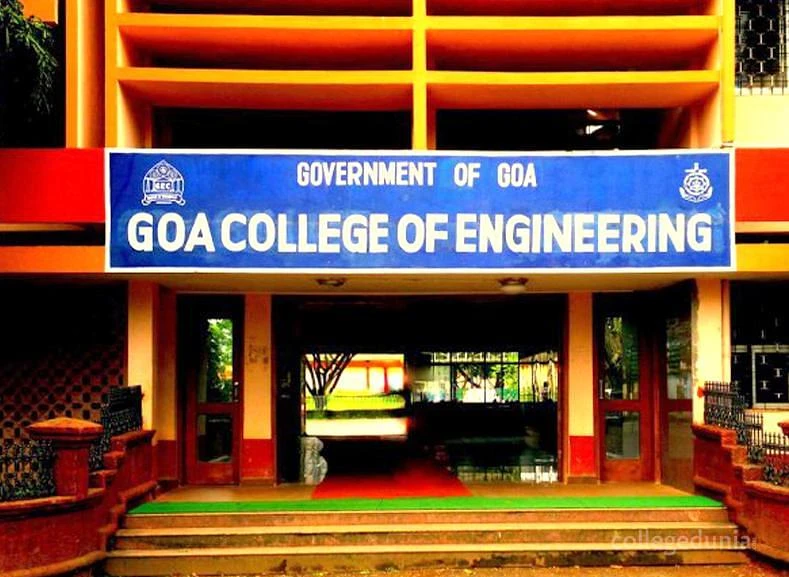
In this preview: 1 photo · 0 videos
For B.E. programs, admission is based on the JEE Main score, which replaced the old Goa Common Entrance Test (GCET) starting from the 2025-26 academic year. For M.E. programs, a valid GATE score is required.
For the B.E. program, the first-year tuition fee for 2025 is INR 92,500, with a total approximate course cost of INR 3.7 lakhs over four years. The M.E. first-year fee is INR 57,375. Hostel rent is INR 3,400 per semester, and with mess charges, the total hostel cost ranges from INR 13,500 to INR 19,000 per semester.
As per 2025 data, the highest package offered was INR 15 LPA. The average package stands at INR 6 LPA, though this varies by branch. Placement percentages range between 50% and 78%, with Computer Science and Information Technology departments consistently recording higher rates.
GEC offers numerous government scholarships. Key schemes include the Gagan Bharari Shiksha Yojana for ST students, the Goa Government's Diamond Jubilee Gift scheme (50% fee reduction), the AICTE tuition fee waiver, PRAGATI for girls, and various post-matric scholarships for SC/ST/OBC students. The Bursary Scheme covers students not eligible for other government aid.
Students praise the large, green 268-acre campus and its peaceful environment, including a waterfall. Faculty are generally considered helpful. Common criticisms involve the hilltop location, inconsistent college bus service, and mixed reviews on hostel maintenance and mess food quality. The college has active clubs and hosts major cultural festivals.
Share what future students should know about GEC.
Student voices are not rewritten by colleges. We remove spam and abuse.
Wider admission question? Community PulseWhat should future students know?
Tell us which course you're considering. We'll help you work out the next step.
Get instant Partner access after mobile verification. Your public edits are reviewed before they go live.
Claim this college
 Auditorium
 Cafeteria
 Computer Labs
 Gym
Gym Hostel
 Medical
 Science Labs
 Smart Classrooms
 Sports Complex
 Study Library