Loading Admission Guardian content
Loading Admission Guardian content

Provisional score based on available data. It may change as more information is verified.
Selected ranking categories, with the recorded year beside each result. Open all records for the complete history.
6 published records · Lower numeric ranks are stronger
IIRF
Engineering · public
#262022
IIRF
B.Tech · public
#262022
Find a program, read its fee details and explore the admission requirements.
Summary of the programs shown below. First-year fee. Check the note beside each amount for inclusions and exclusions.
| Course | Stream | Fees |
|---|---|---|
| Ph.D | Science | 64460 |
| Bachelor of Technology [B.Tech] | Engineering | 69015 |
| Master of Computer Applications [M.C.A] | Computer Applications | 80015 |
| Master of Technology [M.Tech] | Engineering | 80015 |
Specializations
Eligibility: Post Graduation
Specializations
All accepted exams
Eligibility: 10+2 with 75% + JEE Main
Eligibility: Graduation
Specializations
All accepted exams
Eligibility: Pass in Graduation + GATE
If you're looking at engineering colleges in Uttarakhand, Govind Ballabh Pant Institute of Engineering & Technology (GBPIET) in Pauri Garhwal is a name that comes up with a starkly divided reputation. It's a government institute with fees that are almost laughably low, set against a backdrop of Himalayan views so stunning they call the campus 'The Second Taj Mahal.' But that's the postcard version. The real story is about what you trade for that scenery and affordability: profound isolation, a campus life punctuated by water shortages and monkey raids, and a placement scene where self-motivation isn't just an asset—it's a survival requirement. For a certain student, one who thrives on solitude and is laser-focused on cracking GATE or UPSC, this place can be a hidden gem. For anyone dreaming of a vibrant campus life and a smooth ride to a corporate job, it's a potential trap. Let's unpack the reality.
The academic offering is standard for a state engineering college, with B.Tech as the main draw. The total intake is around 420-480 per year, spread across eight specializations. Computer Science & Engineering and its newer sibling, CSE with a specialization in Artificial Intelligence & Machine Learning, are the most sought-after, each with 60 seats. They're followed by Electronics & Communication, Electrical, Mechanical, and Civil Engineering. Biotechnology is also offered, which includes a unique 30-seat scheme for students from a PCB (Physics, Chemistry, Biology) background—a rare pathway into engineering.
Where GBPIET punches above its weight class is in faculty qualifications. About 60-70% of the permanent faculty hold PhDs, many from IITs and NITs. That's a significant strength for a remote government college. The teaching style, however, is often described as traditional and theory-heavy. Don't expect cutting-edge pedagogical innovation here. The autonomy status, recently extended by the UGC until 2028-29, should theoretically allow for more flexible curricula, but students frequently report administrative chaos around exam schedules as the institute grapples with this autonomy. For postgraduates, M.Tech programs in eight specializations and a two-year MCA are available, primarily filled via GATE and state entrance scores.
This is where you need to read between the lines. The official placement percentage is touted around 70-80%. Talk to students and alumni on forums like CollegeDunia and Reddit, and a different picture emerges. The working number they cite for on-campus offers is closer to 40-50%. That gap tells you everything.
Placements are heavily skewed towards IT. If you're in CSE or ECE, you have a decent shot at an offer from mass recruiters like TCS Ninja, Infosys, Wipro, or smaller firms like Rubico and BigOH. The average package for these branches hovered between 4.5 and 5.12 LPA for the 2024 batch. The median was 4.5 LPA. The highest on-campus package was 12 LPA from Bharat Electronics Ltd (BEL), a coveted PSU. But note the off-campus outlier: an ECE student reportedly landed a 97 LPA offer. That's the exception that proves the rule—success here is overwhelmingly self-driven.
For core branches like Civil, Mechanical, or Biotechnology, on-campus opportunities are scant. A few might get into L&T or Mahindra, but most students in these streams pivot early towards preparing for GATE, aiming for PSUs or higher studies. The college's isolation, ironically, fuels a strong GATE/IES/UPSC preparation culture. The placement cell exists, but it's not a powerhouse. You'll be supplementing its efforts with your own off-campus hustle.
This is GBPIET's undisputed winning card. The cost of a four-year B.Tech degree is almost unbelievably low for a government autonomous institute. First-year tuition is about ₹37,980, and the total tuition over four years sums to roughly ₹1.52 lakhs. Even with all other academic fees, the total course cost stays around ₹3.04 lakhs.
Add in hostel and mess charges, and you're looking at an annual outlay of approximately ₹40,000 to ₹45,000. All in, a student can get through a year at GBPIET for under ₹80,000. That's a fraction of the cost of most private colleges. Scholarships are available through the National Scholarship Portal (NSP) and Uttarakhand state schemes for SC/ST/OBC and EWS categories, further reducing the burden. The Return on Investment (ROI), if you secure even an average IT package, is excellent purely from a financial standpoint.
Admission to the B.Tech programs is primarily through JEE Main scores. The process is centralized under the Uttarakhand Technical University (UTU) counseling. Spot rounds are conducted physically on the Pauri campus, so being present or having a local contact can be crucial in later stages.
The 2024 cutoff ranks (Round 3 closing) give a clear hierarchy. CSE and CSE (AI & ML) are the most competitive, with cutoffs around the 143,000 mark. ECE follows near 193,000, and Electrical Engineering at 282,000. For Civil Engineering, the cutoff plummets to nearly 700,000, and for Biotechnology, it's beyond 1.5 million. These ranks, especially for the lower-demand branches, indicate that admission is accessible for a wide range of JEE Main scores, particularly if you have the Uttarakhand state domicile advantage. You can check the official NIRF Rankings for context on where the institute stands nationally.
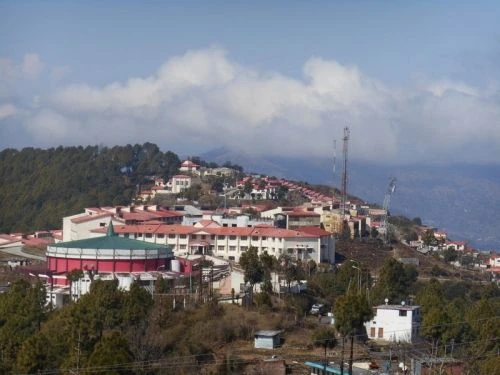
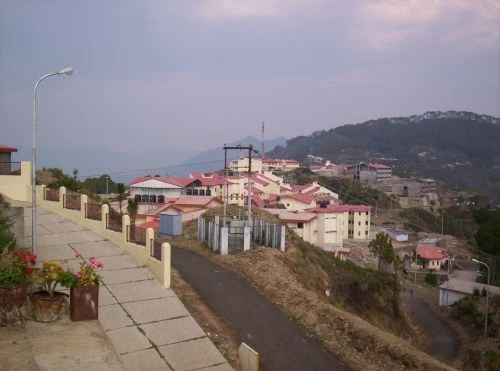
You don't come to GBPIET for a metropolitan campus experience. You come for the mountains. The 169-acre campus offers breathtaking, panoramic views of the Himalayas. The air is clean, the environment is serene. And then you get to the hostel.
There are separate hostels for boys (Kailash, Trishul, Alaknanda) and girls (Vishveshvariya). Rooms are reportedly spacious, but maintenance is slow. Two issues dominate hostel talk: water and wildlife. Severe water scarcity during the summer months is a chronic problem. And the 'monkey menace' is real—not just a nuisance, but a security issue, with monkeys frequently entering rooms and snatching belongings. It's a unique daily challenge.
Infrastructure is a mixed bag. The mechanical workshop and some CSE labs are well-equipped. Others, especially in core engineering departments, run on older, sometimes non-functional equipment. The library has digital access but isn't the 24/7 haven it's sometimes advertised as. Campus Wi-Fi is patchy, and in the hostels, it's often unreliable or absent. The social scene is what you make of it within the campus bubble. There's a strict 6:00 or 7:00 PM curfew for girls, a point of contention cited as gender discrimination, while boys have more freedom. Transport to Pauri town (11 km away) is limited, especially after dark, reinforcing the feeling of isolation.
Scouring review platforms reveals a consistent, almost schizophrenic narrative. The positives are powerful but specific. The natural beauty is universally praised. The value-for-money is unquestioned. The high qualifications of the faculty are respected, even if their teaching doesn't always inspire. And the intense, focused atmosphere for competitive exam preparation (GATE, UPSC) is seen as a major plus for the right student.
The negatives are equally visceral and practical. The isolation wears on many. Administrative unpredictability, especially around exams and the autonomy status, causes significant stress. The hostel issues—water, monkeys, slow internet—are not minor complaints but major quality-of-life factors. The placement reality for non-IT branches is demoralizing. There are also concerning, if sporadic, reports of ragging-like 'intro sessions' for freshers, despite official bans. It's a college that demands resilience.
GBPIET is a classic 'know what you're signing up for' institution. It is absolutely worth it for a specific profile: a financially constrained, highly self-motivated student who is either aiming for a cost-effective IT degree (and is prepared to hustle off-campus) or is dead-set on using the isolated, distraction-free environment to crack GATE, IES, or UPSC. For them, the low fees and stunning, study-conducive location are unparalleled advantages.
However, it's a poor fit for students who thrive on city life, need robust campus placement support, prioritize modern infrastructure and consistent amenities, or are entering core engineering branches like Civil or Biotech with hopes of direct campus recruitment. The challenges—isolation, infrastructure gaps, and administrative hiccups—are real and persistent.
In essence, GBPIET is not a college that will carry you. It's a stark, beautiful platform from which you must launch yourself. If you have the internal drive to do that, the return on your minimal investment can be significant. If you don't, the mountains might start to feel like walls. For the latest official information, always refer to the GBPIET website.
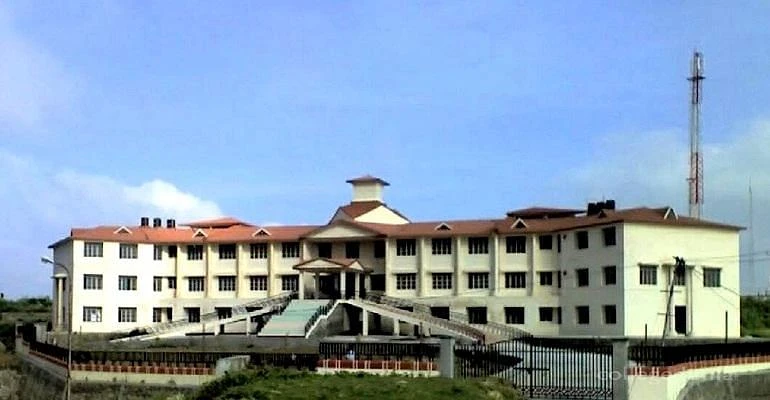
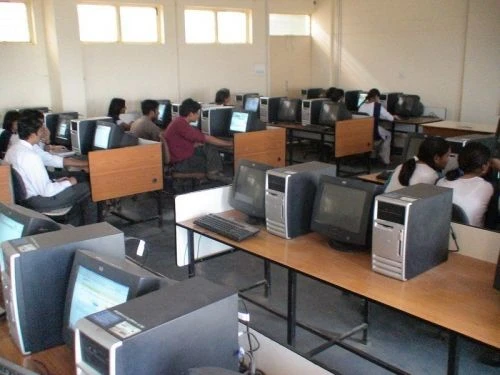
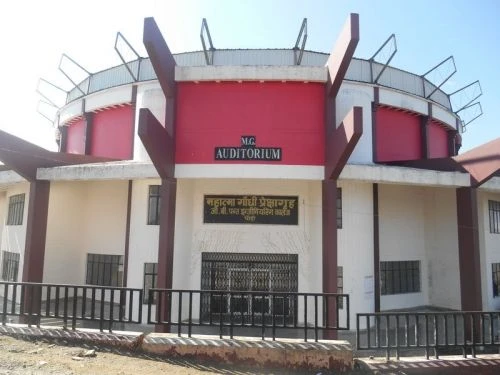
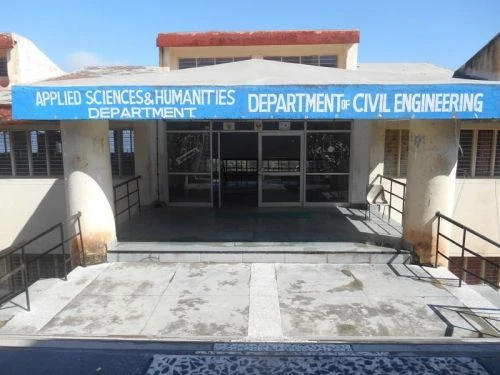
In this preview: 5 photos · 0 videos
Yes, CSE is considered the best branch at GBPEC in terms of faculty quality and placement opportunities, with an average package of around 5 LPA. Students should note that securing higher packages often requires self-driven coding practice and pursuing off-campus opportunities.
GBPUAT in Pantnagar is an older, more established university with a larger campus and stronger industry connections, generally leading to better placement records. GBPIET in Pauri is a specialized engineering institute located in a hill station, offering a different campus environment.
Hostel life at GBPEC Pauri is a mix of scenic beauty and practical challenges. Students enjoy the pleasant weather and strong friendships but commonly face issues with monkeys, water supply, and slow internet connectivity.
Admission to the CSE branch with a 2 lakh JEE Main rank is difficult, as the cutoff is typically around 1.4 lakh. However, for branches like ECE, EE, or Mechanical, you have a very high chance, especially if you are eligible for the Uttarakhand Home State quota.
Yes, as of September 2024, the University Grants Commission (UGC) has extended GBPEC's autonomous status for another five years, which will last until 2029.
Share what future students should know about GBPEC.
Student voices are not rewritten by colleges. We remove spam and abuse.
Wider admission question? Community PulseWhat should future students know?
Tell us which course you're considering. We'll help you work out the next step.
Get instant Partner access after mobile verification. Your public edits are reviewed before they go live.
Claim this college
 Auditorium
 Cafeteria
 Computer Labs
 Gym
Gym Hostel
 Medical
 Science Labs
 Sports Complex
 Study Library