Loading Admission Guardian content
Loading Admission Guardian content
Find a program, read its fee details and explore the admission requirements.
Summary of the programs shown below. Fee periods can differ by program. Check the note beside each amount before comparing costs.
| Course | Stream | Fees |
|---|---|---|
| Advanced Diploma in Engineering (Polytechnic) | Engineering | 52000 |
| Diploma in Engineering (Polytechnic) | Engineering | 52000 |
Specializations
Eligibility: 10th
Specializations
Eligibility: 10th
If you're looking for a typical college experience—campus fests, a relaxed schedule, maybe a bit of fun—the Indo Swiss Training Centre (ISTC) in Chandigarh is not that place. But if you want a near-guaranteed, well-paying job in core engineering straight out of a diploma, and you're willing to trade freedom for a world-class workshop, this 60-year-old government institute is arguably unmatched. Founded in 1963 and operating under the prestigious CSIR-Central Scientific Instruments Organisation, ISTC has built a reputation as a 'Mini-Germany' in India. Its graduates are snapped up by giants like Maruti Suzuki and Tata Motors, often with starting salaries that rival many B.Tech degrees. The trade-off is a rigid, intensely practical environment that feels more like a high-stakes apprenticeship than a college.
ISTC's entire identity is built around its 'Swiss-style' pedagogy, which flips the standard Indian engineering model on its head. Theory takes a backseat. The real curriculum happens in the workshops. The institute offers a tightly focused set of programs, all with extremely limited seats, which keeps the student-to-faculty ratio at an enviable 1:10.
The core offerings are the three-year Diploma in Mechanical Engineering (Tool & Die) and Diploma in Electronics Engineering, each with 54 seats. From these pools, top-performing students can opt for a fourth year to earn an Advanced Diploma in Die & Mould Making or Advanced Diploma in Mechatronics & Industrial Automation (18 seats each). There are also one-year Post Graduate Diplomas in CAD/CAM and Mechatronics for graduates.
The grading system tells you everything. Passing requires 40%, but a massive chunk of your marks—often 200+ per semester—comes from Workshop Practice. You're evaluated on your ability to actually make things, not just solve equations. Lectures are traditional, but the workshop instructors, many with decades of industry experience, are the real stars here. The institute's strong MoUs with companies like Maruti Suzuki and Wipro 3D ensure the machinery and curriculum aren't just modern; they're what the industry uses right now.
This is where ISTC's value proposition becomes crystal clear. For a diploma holder, the placement outcomes are exceptional. The official claim is 100% placement for students with over 60% aggregate and no backlogs. While that 100% figure should be viewed as an aspirational target, the consensus from student reviews is that placement support is incredibly strong and the vast majority of eligible students do secure core engineering roles.
The official highest package for 2024 was ₹9.00 LPA, though students report peers getting ₹11-12 LPA from recruiters like Trident and Wipro. The working average package sits between ₹4.00 and ₹4.50 LPA, with a likely median around ₹3.8 LPA. That's a solid return on a total education cost of under ₹3 lakhs.
The recruiter list is a who's who of manufacturing and engineering: Maruti Suzuki, Tata Motors, Honda, Hero MotoCorp, Tata Steel, Godrej, Titan, Daikin, L&T, Wipro, Samsung Display, and Schlumberger (SLB). Roughly 80% of graduates go into core engineering and manufacturing, 15% into electronics and R&D, and a small slice into IT or sales. It's a focused, high-efficacy system designed to produce immediately useful technicians and engineers.
As a government institute under CSIR, ISTC is heavily subsidized. The cost is a fraction of what a private engineering college charges. For the 2025-26 session, the tuition fee is ₹17,500 per semester. Hostel rent adds ₹6,000 per semester, and monthly mess charges run ₹3,000 to ₹4,000. There's a one-time, refundable security deposit of ₹2,000.
Do the math. The total estimated cost for the full four-year advanced diploma program, including hostel and mess, is between ₹2.5 and ₹3 lakhs. That's for the entire degree. Financial aid includes a 100% tuition fee waiver for the top two or three rankers in each batch, and merit-cum-means scholarships are available through CSIR channels. The value-for-money equation here is almost unbeatable for a technical education.
There is no management quota. No donation seats. Admission is 100% merit-based through the institute's own ISTC Entrance Exam, conducted by CSIR-CSIO. The competition is fierce for just 144 total seats across all diploma programs.
Eligibility requires passing the 10th standard with Mathematics, Science, and English, and a minimum of 50% aggregate (40% for SC/ST). There's a strict age limit: for the 2025 cycle, general category candidates must be born on or after August 1, 2006, with a three-year relaxation for SC/ST candidates.
The entrance exam itself is 100 multiple-choice questions covering Mathematics, Science, English, Aptitude, and General Knowledge. You have 100 minutes, and there's a negative marking of 0.25 per wrong answer. The application window for 2025 is from May 6 to June 5, with an application fee of ₹1,200 (General/OBC) or ₹600 (SC/ST). All details are available on the official ISTC website.
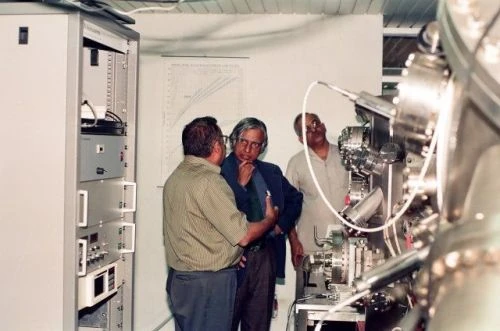
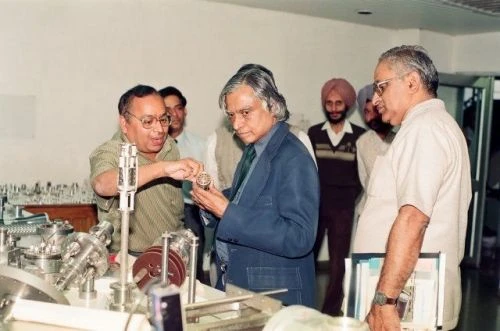
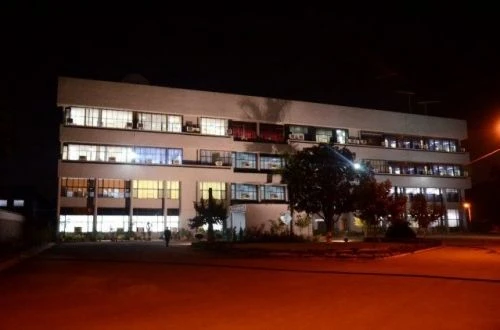
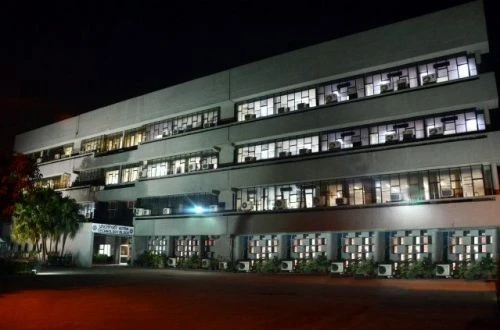
The campus is a dedicated wing within the massive, secure CSIR-CSIO complex. The infrastructure for learning is top-notch: state-of-the-art CNC labs, robotics labs, and a workshop filled with industry-grade equipment that's regularly updated.
The hostel situation is functional. Separate boys' and girls' hostels have limited capacity, with priority for outstation students. Rooms are typically shared by three. The food in the canteen is described as average but hygienic, served via a coupon system—don't expect fast food. A major perk is student access to the main CSIR-CSIO library, one of the largest technical libraries in the region.
Now, the student life part. This is the trade-off. ISTC is famously strict. 85% attendance is mandatory and enforced. Social events or fests are rare, maybe once a year. The atmosphere is disciplined and academic, with the ever-present influence of the CSIO scientific community. Ragging is strictly prohibited and reportedly non-existent. The Wi-Fi is good in academic blocks but can be spotty in hostels. It's not a 'campus life' institute; it's a training centre. That's by design.
Scour forums like CollegeDunia, Shiksha, or alumni groups on LinkedIn, and a consistent picture emerges. The praise is effusive for the career launchpad. "The practical knowledge here is better than most B.Tech colleges," is a common refrain. Another: "If you have 60% marks, you are guaranteed a job in a top MNC." The low fee for high-quality training is a universal positive.
The criticisms are just as consistent and focus on lifestyle. "It feels like a school," many say, chafing under the strict attendance and rigid rules. "Social life is almost zero." Some note that the management can be slow to address student grievances. The teaching in theory classes is considered standard, but the workshop instructors are universally revered. The overall sentiment? It's a grind, but most agree it's a grind worth enduring for the outcome.
The answer depends entirely on what you want. If your goal is to build a career in core manufacturing, automotive, or precision engineering with minimal debt and maximum practical skill, ISTC is arguably one of the best choices in India at the diploma level. It's a direct pipeline to reputable companies. The ROI is exceptional.
However, if you value a traditional college experience—campus clubs, a vibrant social scene, academic flexibility—you will likely find ISTC stifling. It's a professional training institution first and foremost. It's best for disciplined, focused students who see education as an investment in a specific career path, not a broader life experience. For that target student, it's not just worth it; it's a unique and powerful opportunity. For others, the trade-offs might be too significant. Check the official AICTE portal for approved institutions to cross-verify its standing.
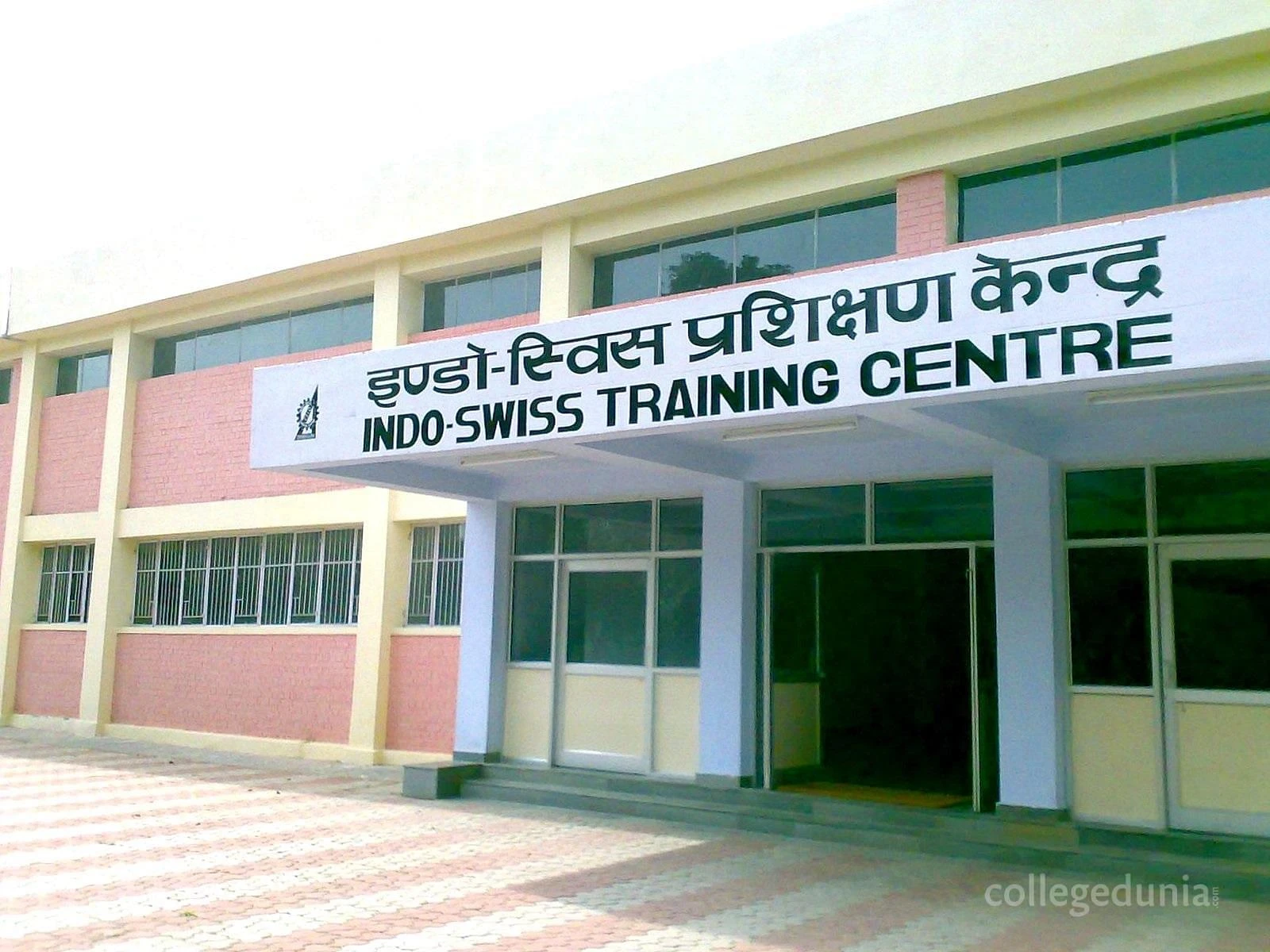
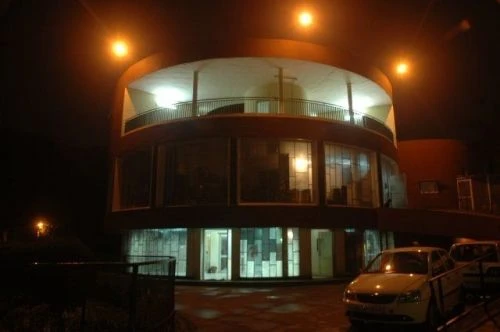
In this preview: 5 photos · 0 videos
Yes, the Indo Swiss Training Centre (ISTC) is considered better than a regular polytechnic in terms of its industry reputation and the quality of its practical equipment. Graduates from ISTC are often preferred by multinational corporations (MNCs) over graduates from regular polytechnic institutions.
Yes, students who complete a diploma from the Indo Swiss Training Centre (ISTC) are eligible for Lateral Entry (often through LEET exams) directly into the second year of a B.Tech program at various engineering colleges and universities.
The ISTC entrance exam is moderately difficult. It focuses on the 10th-grade CBSE syllabus for Science and Mathematics. The competition is high due to the limited number of available seats, with only 144 seats in total.
No, the Indo Swiss Training Centre (ISTC) does not have a management quota. Admission is 100% based on merit, determined solely by a candidate's rank in the official entrance exam merit list.
The key difference is that the 4-year program includes an additional "Advanced Diploma" year. This fourth year focuses on specialized, high-demand areas like Mechatronics or Die & Mould Technology, which typically leads to higher starting salaries for graduates.
Share what future students should know about ISTC.
Student voices are not rewritten by colleges. We remove spam and abuse.
Wider admission question? Community PulseWhat should future students know?
Tell us which course you're considering. We'll help you work out the next step.
Get instant Partner access after mobile verification. Your public edits are reviewed before they go live.
Claim this college
 Auditorium
 Cafeteria
 Computer Labs
 Science Labs
 Sports Complex
 Study Library