Loading Admission Guardian content
Loading Admission Guardian content

Provisional score based on available data. It may change as more information is verified.
Find a program, read its fee details and explore the admission requirements.
Summary of the programs shown below. Fee amounts are not listed. Contact the college for its current fee schedule.
| Course | Stream | Fees |
|---|---|---|
| Master of Arts [MA] (Economics) | Arts | |
| Master of Business Administration [MBA] | Management | |
| Master of Science [M.Sc] (Science Communication) | Science |
Specializations
Eligibility: Graduation
Specializations
Eligibility: Graduation
Specializations
Eligibility: Graduation
If you're looking for a traditional college with fests, a sprawling campus, and corporate placement drives, the Institute for Studies in Industrial Development (ISID) is not it. But if you're a serious researcher, a policy wonk, or an aspiring academic with a deep interest in the mechanics of India's economy, this is arguably one of the most significant addresses in the country. Nestled in Delhi's Vasant Kunj, ISID isn't a teaching university—it's a think tank. A public-funded, autonomous research body under the Indian Council of Social Science Research (ICSSR), its currency is policy influence, not placement packages. In 2024, it formalized its academic role by launching a JNU-affiliated PhD program, creating a direct pipeline for the next generation of industrial policy experts.
Forget B.Tech, B.A., or MBA. ISID’s academic offering is laser-focused and postgraduate-only. Its core is the PhD in Economics and Public Policy (PEPP), affiliated with JNU. The intake is tiny—just nine scholars in 2024—ensuring intense mentorship. The program mandates a full year of coursework (17 credits) before dissertation work begins, covering advanced econometrics, industrial economics, and public policy analysis. The faculty, all PhD holders from places like JNU and IITs, are the institute's crown jewel. You're not just learning from professors; you're working alongside figures like Director Prof. Nagesh Kumar, a former UNESCAP Chief Economist. The academic culture is one of collaborative research, not lectures. Beyond the PhD, ISID runs ICSSR-sponsored workshops on research methodology and offers competitive internships for post-grads to work on live policy projects. Its most unique asset? The proprietary research databases, including an Online Index of 250+ Indian journals, which is a go-to resource for social scientists across India.
You won't find a TCS or Infosys visiting for campus placements here. That's not the point. Career progression at ISID is defined by impact and intellectual contribution, not starting salary packages. The institute prepares scholars for roles in government think-tanks (like NITI Aayog), international organizations (UN agencies, World Bank), academia (as professors), and research NGOs. Alumni typically become Assistant Professors, Policy Analysts, or Senior Researchers. The institute itself often acts as a feeder to organizations like ICSSR, the Ministry of Commerce, and various state planning boards. Financially, PhD scholars are supported via UGC/ICSSR Junior and Senior Research Fellowships (JRF/SRF), which provide a monthly stipend (around ₹31,000 to ₹37,000 plus HRA). It's a subsistence allowance that allows for full-time research, not a corporate salary. The “placement” is the expertise you build and the network you enter.
As a public-funded ICSSR institute, cost is arguably the least prohibitive factor for studying here. Tuition fees for the PhD program are nominal, aligned with JNU/ICSSR guidelines—think in the range of a few thousand rupees per semester, not lakhs. The major cost is living in Delhi. ISID helps by providing limited, subsidised on-campus accommodation in its guest house facility for long-term scholars. The real financial model is fellowship-based. ICSSR Doctoral Fellowships are available for full-time scholars, and the institute itself provides financial assistance to those who don't have a UGC-NET JRF. The total cost of a PhD here is primarily your living expenses, making it one of the most accessible high-quality research environments in the country. You can find official fellowship details on the ICSSR website.
The gateway to ISID’s PhD program is unequivocal: UGC-NET qualification is mandatory. There's no way around it. The selection process has two tracks. Category 1 is for JRF-qualified candidates—they proceed directly to an interview. Category 2 is for those who have cleared NET (for Assistant Professor/PhD eligibility); their selection is based on a 70% weightage to their NET score and a 30% weightage to the interview. The academic eligibility requires a Master’s degree in Economics, Development Economics, Public Policy, or Management with at least 55% marks (50% for SC/ST/OBC). The application window is typically in the summer; for the 2025-26 session, it was open until July 30, 2025. The application fee is modest, around ₹500-1000. It’s a process designed to filter for committed, exam-qualified researchers from the start.
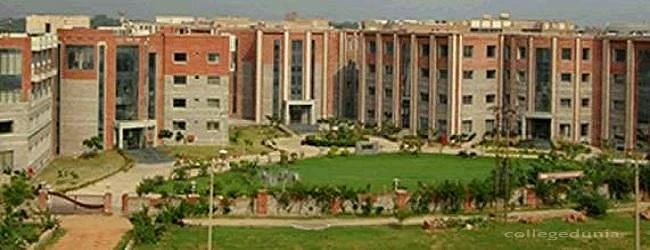
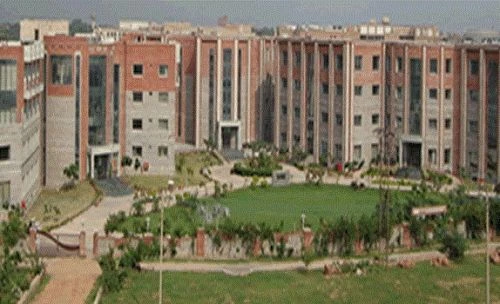
The 1.5-hectare campus in Vasant Kunj is best described as a serene, professional research enclave. The infrastructure is modern and purpose-built. The library is a standout—a specialist’s dream with deep collections on industrial economics and digital access to EconLit, JSTOR, and ScienceDirect. The convention centre, with a 200-seat auditorium, hosts the national and international conferences that form the backdrop of life here. There’s high-speed Wi-Fi everywhere. For accommodation, the on-site guest house has 28 AC rooms, primarily for visitors, but limited space is allocated to PhD scholars at subsidized rates. There’s a canteen for subsidized meals. But let’s be clear: this is not a “campus life” destination. There are no sports fests, cultural weeks, or buzzing student hubs. It’s quiet, almost austere, designed for uninterrupted work. The social life is what you make with your small cohort of fellow scholars.
Feedback from researchers and interns paints a consistent picture. The overwhelming positive is the research rigor and faculty access. Scholars call it “the best place in India to study the Indian corporate sector” and praise professors for being approachable and treating them as junior colleagues. The campus infrastructure and database access are universally lauded as world-class tools for research. The negatives are just as clear and stem from the institute's core identity. The atmosphere is “very quiet” and lacks any traditional collegiate social life. Some note that administrative processes, typical of public institutions, can be slow. A common point of confusion, echoed online, is that people mistake ISID for the Indian Statistical Institute (ISI) and arrive expecting a different set of programs altogether. The consensus? It’s a paradise for a specific type of student—the self-driven, intellectually curious policy researcher. For anyone else, it would feel isolating.
ISID is not for everyone. It's a niche, elite institution for a niche, driven cohort. If your goal is a high-paying corporate job straight out of a degree, look elsewhere—to the IITs or top management schools. But if you are passionate about understanding the structural forces shaping India's economy, if you aspire to a career in policy-making, academia, or high-level research, ISID offers an unparalleled environment. The access to pioneering faculty, unique datasets, and a policy-focused network is exceptional. The cost is negligible, but the intellectual demands are high. It’s best for the UGC-NET qualified scholar who values deep, impactful work over campus glamour. For that person, ISID isn’t just worth it; it’s probably the ideal launchpad. You can learn more about their research and program directly on their official site: isid.org.in.



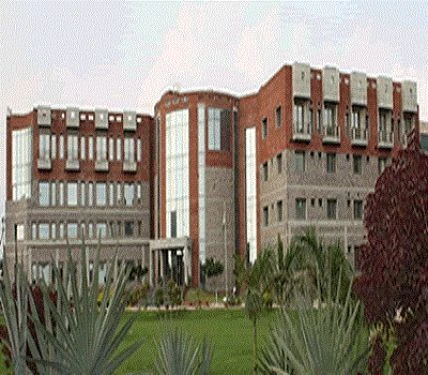
In this preview: 5 photos · 0 videos
No, the Institute for Studies in Industrial Development (ISID) is not the same as the Indian Statistical Institute (ISI) Delhi. While ISI focuses on statistics and mathematics, ISID is a research institution focused on industrial policy and economics.
No, the Institute for Studies in Industrial Development does not offer an MBA. It offers a PhD program in Economics and Public Policy. Some third-party websites may incorrectly label its research training as an MBA.
Yes, the PhD degree from ISID is valid and fully recognized. The degree is awarded by Jawaharlal Nehru University (JNU), which is a top-ranked central university in India.
While corporate placement is not the institute's primary focus, the quantitative skills and deep policy expertise gained during the PhD program are highly valued in corporate strategy, economic research, and consulting roles.
Yes, limited on-campus hostel accommodation is available for PhD students at the Institute for Studies in Industrial Development, located in Vasant Kunj, New Delhi.
Share what future students should know about Institute for Studies in Industrial Development.
Student voices are not rewritten by colleges. We remove spam and abuse.
Wider admission question? Community PulseWhat should future students know?
Tell us which course you're considering. We'll help you work out the next step.
Get instant Partner access after mobile verification. Your public edits are reviewed before they go live.
Claim this college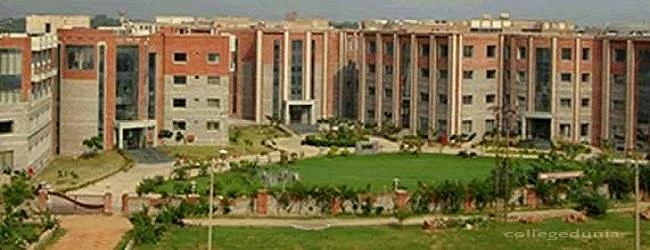
 Auditorium
 Cafeteria
 Computer Labs
 Science Labs
 Sports Complex
 Study Library