Loading Admission Guardian content
Loading Admission Guardian content
Provisional score based on available data. It may change as more information is verified.
Find a program, read its fee details and explore the admission requirements.
Summary of the programs shown below. Programs record different fee periods. Compare the individual amounts and their notes below.
| Course | Stream | Fees |
|---|---|---|
| Post Graduate Diploma in Information System | Engineering | 60000 |
| Post Graduate Diploma | Engineering | 70000 |
| Master of Technology [M.Tech] | Engineering | 138500 |
| Ph.D | Science |
Specializations
Specializations
Specializations
All accepted exams
Eligibility: Pass in Graduation + GATE
Eligibility: Post Graduation
1 exam with cutoff data available
 Jindal South West Steel ltd (JSW)
 Ranbaxy pvt ltd
 SIFY
SIFYThe National Institute of Electronics & Information Technology (NIELIT) in Calicut isn't your typical engineering college. It's a government-run scientific society under the Ministry of Electronics and IT, and that changes everything. Forget sprawling campuses packed with thousands; think of a focused, 25-acre hub where the curriculum is built by the very industry it serves. The vibe here is practical, hands-on, and intensely project-driven. If you're the type who learns by doing—by building circuits, writing code, and prototyping systems—this place feels designed for you. But that government-autonomy comes with its own quirks, a slower administrative pace, and placement numbers that are solid but not spectacular. It's a unique proposition in Kerala's technical education landscape, nestled right next to the giants NIT Calicut and IIM Kozhikode, offering a distinct path for students who want their education to feel less like theory and more like a job preview.
The academic portfolio here is lean and focused, heavily tilted towards electronics, IT, and their applied intersections. You won't find a dozen specializations, but the ones offered are built around industry labs and project work.
The undergraduate offering is straightforward: a four-year B.Tech in either Electronics & Communication Engineering (ECE) or Computer Science & Engineering (CSE). The real depth, however, is in the postgraduate programs. The M.Tech in Embedded Systems and M.Tech in Electronics Design & Technology are the flagship courses, each with an intake of 18 students. There's also an M.Tech in Automotive Electronics, and M.Sc programs in Computer Sciences and Data Science with an AI Specialization.
And then there are the PG Diplomas—this is where NIELIT's industry-training DNA shines. Programs in AI, Embedded Systems, Big Data Analytics, and Industrial Automation System Design (70 seats) are designed as fast-track, skill-oriented courses. They also run a vast array of short-term certification programs in areas like VLSI and cybersecurity.
The academic culture is defined by its labs. We're talking about five advanced laboratories for Embedded Systems, VLSI, IT, Product Engineering, and Industrial Automation. The standout is the 250-seater remote Virtual Prototyping Lab (SMART Lab) for Embedded and FPGA design. There's also an India AI data lab kitted with GPU workstations. Faculty reviews are a mixed bag. Many students praise teachers for being approachable, using real-life examples, and focusing on practical clarity over theoretical density. But you'll also find comments, particularly regarding some M.Tech courses, about young or less experienced faculty. The institute's recent MoU with NIT Calicut for collaborative research and training is a positive step for academic cross-pollination.
This is where you need to read between the official lines and the student chatter. The placement cell is active, organizing training sessions and workshops. The official claim for M.Tech placements is typically 60%-70%. Student reviews generally echo that range—you'll see "around 60%" and "70% got jobs" frequently. But you also find the more candid "only half got jobs through campus placements." So, the 60-70% figure is a decent ballpark, but it's not a guarantee for every batch or every department. Some reviews note placement is great for most departments except CSE, which is an interesting counterpoint.
The recruiter list is impressively diverse for a specialized institute. It spans from IT service giants like TCS, Infosys, Wipro, and Cognizant to core electronics and semiconductor heavyweights: Siemens, Texas Instruments, NXP Semiconductors, Analog Devices, Intel, and BEL Bangalore. Then there's a healthy layer of product and R&D firms like Ignitarium, Silizium Circuits, and Thinkpalm Technologies.
Package data requires a reality filter. The institute highlights a highest package of INR 10 LPA (2025). Student reviews, however, paint the average picture: figures like INR 5 LPA, INR 3.5 LPA, and a range of 2.7 to 4.5 LPA are what alumni consistently cite. There's an unverified student mention of packages "up to 50 LPA," but that's an outlier not reflected in the broader sentiment. The consensus? You can get placed into good, relevant companies, but the average compensation is modest compared to top-tier NITs or private colleges. Your project work and practical skills become the real differentiators.
Internship opportunities exist, but access seems uneven. Some students report "plenty of chances," while others say only about 40% secure internships, often with smaller local companies or through specific MoUs.
For a government institution with its lab infrastructure, the fee structure is relatively accessible. The annual tuition fee for the B.Tech program is around INR 1,10,000. For M.Tech, the fee is approximately INR 65,000 per semester (as per older data, likely still in a similar range). Hostel and mess fees are extra, but specific numbers aren't readily published in the latest brief.
Where NIELIT stands out is in its scholarship facilitation. Being a government body, it plugs directly into state and central schemes. The key offering is the Protsahan Puraskar Scheme for SC/ST/PwD and female candidates pursuing NIELIT's diploma (O/A/B/C level) courses. Eligibility usually requires clearing exams in the first attempt and a parental income ceiling (cited as either INR 1 Lakh or INR 2.5 Lakh per annum—check the official portal for current details). For M.Tech students, there's potential for an assistantship or stipend via the AICTE-Direct Benefit Transfer (DBT) portal, contingent on monthly attendance. The institute also facilitates applications through the National Scholarship Portal (NSP).
The gateway depends entirely on the program.
The application process is online through the NIELIT Calicut website.
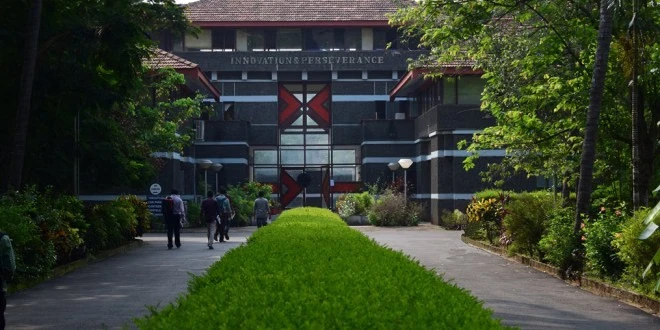
The 25-acre campus is described as green and modern, with Kerala-style architectural touches. Infrastructure highlights are academic: 1 Gbps NKN connectivity, 24/7 Wi-Fi across campus (though some older reviews complained about spotty coverage), a mini data centre, and smart classrooms.
Hostel life gets a "it's okay" consensus. There are separate hostels for men and women with a total capacity of 250+ students. The girls' hostel is inside the main campus, while the boys' hostel is about 650 meters away. Rooms are reported to be clean, airy, and furnished, but there's a recurring note that there's "not enough space for all students." Some hostels are old—over 50 years—but functional. Rules are considered pretty strict. The canteen and mess serve generally good food, but as with any institutional mess, students from other regions might need an adjustment period.
You won't find a bustling metropolitan social scene here. The location is academic-centric. The proximity to NIT Calicut is a huge plus, however, giving students access to major fests like 'Ragam' (cultural) and 'Tathva' (technical). On-campus, there are sports facilities including a playground, tennis and basketball courts, and indoor games. Clubs like NSS and NCC are present.
Synthesizing the feedback creates a clear, balanced picture.
The Good: The praise is overwhelmingly for the practical, hands-on learning approach. Students love the lab access—the SMART Lab and AI lab are frequently mentioned. Teachers are seen as friendly, helpful, and knowledgeable, often going beyond lectures to provide extra support. The infrastructure, while not massive, is considered very good for academic purposes. The placement cell's effort and faculty support in getting students job-ready are appreciated.
The Not-So-Good: The placement averages are a common point of contention—seen as modest. Some feel the management is slow and occasionally stingy with resources. A few reviews point to curriculum updates being needed to keep pace with industry trends. The hostel constraints (space, strict rules) and food adjustments are recurring themes. There's also a minority report on faculty experience, with some students feeling certain courses, especially some M.Tech streams, suffer from less qualified or inexperienced instructors.
The takeaway? Students who are self-starters and want to tinker in labs thrive. Those expecting a lavish campus life or guaranteed top-dollar placements might feel short-changed.
NIELIT Calicut is a specialist institution with a clear identity. It's best for students who are genuinely interested in electronics, embedded systems, VLSI, and applied IT, and who learn best through practical immersion. If your goal is to get your hands dirty in advanced labs, work on industry-aligned projects, and graduate with a solid portfolio of practical skills, this institute provides a strong, government-backed platform for that. The proximity to NIT Calicut is a significant cultural and academic bonus. The fee, for the infrastructure offered, is reasonable.
However, you should temper expectations on placement packages—the average is decent but not headline-grabbing. Campus life is adequate but not luxurious, and you need to be comfortable with a somewhat bureaucratic system. It's probably not the best fit for someone seeking a broad-based, theory-first engineering education or a hyper-competitive, high-stakes placement environment like an IIT or top NIT.
In short: Choose NIELIT Calicut for its practical pedagogy and core electronics/IT focus. Go in ready to leverage its labs and faculty support to build your own profile. If you do that, it can be a very worthwhile investment, especially for its cost.
NIELIT Calicut's key PG programs are the M.Tech in Embedded Systems and M.Tech in Electronics Design & Technology (18 seats each), along with M.Tech in Automotive Electronics, M.Sc in Computer Sciences, and M.Sc in Data Science (AI Specialization). Admission to the M.Tech programs is primarily based on a valid GATE score, followed by CCMT central counseling and often an interview. Non-GATE candidates from Kerala may be considered for vacant seats based on state nativity and merit. Admission to the M.Sc programs typically requires candidates to appear for an entrance examination conducted by the institute.
The campus spans 25 acres near NIT Calicut and features modern academic blocks with specialized, high-end laboratories. These include five advanced labs for Embedded Systems, VLSI, IT, Product Engineering, and Industrial Automation, a 250-seater remote SMART Lab for FPGA design, and an India AI data lab with GPU workstations. Infrastructure includes a central library with IEEE online access, 1 Gbps NKN connectivity, 24/7 Wi-Fi, a mini data centre, and smart classrooms. Separate hostels for men and women have a capacity of 250+ students.
Placement rates for M.Tech students are typically reported between 60% and 70%. The placement cell is active, and top recruiters include core electronics and IT companies like Intel, Texas Instruments, NXP Semiconductors, Siemens, TCS, Infosys, and Wipro. The highest package highlighted for 2025 is INR 10 LPA, but average packages as reported by students generally range from INR 2.7 LPA to INR 5 LPA. Success often hinges on the practical skills and project work developed in the institute's advanced labs.
Yes, NIELIT Calicut offers several scholarship avenues. The prominent Protsahan Puraskar Scheme provides financial assistance to SC/ST/PwD and female candidates pursuing NIELIT's diploma-level courses, with eligibility based on first-attempt exam clearance and parental income limits. M.Tech students may be eligible for a monthly assistantship/stipend through the AICTE-Direct Benefit Transfer (DBT) portal. The institute also facilitates access to various central and state government scholarships via the National Scholarship Portal (NSP).
Students frequently praise the teaching quality, highlighting a practical-oriented approach, knowledgeable and friendly faculty, and the use of smart classrooms and extra support sessions. Hostel reviews are mixed; rooms are generally described as clean and furnished, but space can be limited and rules are considered strict. The campus canteen and mess food is rated as good by many, though students from different culinary backgrounds may need time to adjust. The overall sentiment points to a strong academic environment focused on hands-on learning, with functional but basic residential facilities.
Share what future students should know about NIELIT.
Student voices are not rewritten by colleges. We remove spam and abuse.
Wider admission question? Community PulseWhat should future students know?
Tell us which course you're considering. We'll help you work out the next step.
Get instant Partner access after mobile verification. Your public edits are reviewed before they go live.
Claim this college Auditorium
 Cafeteria
 Computer Labs
 Hostel
 Science Labs
 Sports Complex
 Study Library