Loading Admission Guardian content
Loading Admission Guardian content

Provisional score based on available data. It may change as more information is verified.
Selected ranking categories, with the recorded year beside each result. Open all records for the complete history.
3 published records · Lower numeric ranks are stronger
IIRF
Physiotherapy
#312022
Find a program, read its fee details and explore the admission requirements.
Summary of the programs shown below. Total course fee. Check the note beside each amount for inclusions and exclusions.
| Course | Stream | Fees |
|---|---|---|
| Master of Science [M.Sc] (Nursing) | Paramedical | 207000 |
| Master of Physiotherapy [MPT] | Medical | 217000 |
| Bachelor of Science [B.Sc] | Paramedical | 285000 |
| Master in Hospital Administration [MHA] | Management | 291000 |
| Bachelor of Physiotherapy [BPT] | Medical | 325000 |
Specializations
Eligibility: Graduation
Eligibility: B.P.T.
Specializations
Eligibility: 10+2
Specializations
Eligibility: Graduation
Eligibility: 10+2
1 exam with cutoff data available
Acharya Institute of Health Sciences (AIHS) in Bangalore is a name that comes up consistently for students looking at private paramedical and nursing colleges in South India. Established back in 1997, it’s built a solid reputation, particularly for its Bachelor of Physiotherapy (BPT) and B.Sc Nursing programs. The big draw here isn't just the academics—it's the access. The institute leverages its affiliation with Rajiv Gandhi University of Health Sciences (RGUHS) and a network of over 30 affiliated hospitals, including major names like NIMHANS and Fortis, to provide serious clinical exposure from year one. That’s the core promise. But it comes wrapped in the reality of a sprawling 120-acre campus that feels a world away from central Bangalore, a system that can be notoriously strict, and placement outcomes that vary sharply by program. It’s a trade-off many are willing to make for a foot in the door of India’s healthcare sector.
AIHS runs on the RGUHS yearly system, not semesters, which is standard for health sciences in Karnataka. The course portfolio is broad, split between the older, established nursing and physiotherapy wings and the newer Allied Health Sciences division. The B.Sc Nursing and 4.5-year BPT programs are the traditional strengths, with intakes between 40-60 students. The newer tech-focused degrees—B.Sc in Medical Lab Technology (BMLT), Medical Imaging Technology (BMIT), Anaesthesia, and Renal Dialysis—have smaller batches of 20-40, which can mean more focused attention.
Postgraduate options are solid, especially M.Sc Nursing with five specializations and Master of Physiotherapy (MPT) with tracks in Musculoskeletal, Neurology, and Sports. The Master of Hospital Administration (MHA) is also offered, though its placement pathway is less defined than the clinical courses.
The faculty count sits around 112. You’ll find about 15-20% of senior faculty hold PhDs, while most clinical instructors are highly qualified practitioners with M.Sc or MPT degrees. The teaching feedback is a mixed bag—some professors are praised as brilliant mentors, while others are noted for sticking closely to PowerPoints. The proctorial system, where each student gets a faculty mentor, is a plus for guidance. But the real academic engine is the mandatory clinical posting. Rotations through top-tier hospitals are non-negotiable and form the backbone of the AIHS experience.
This is where you need to read between the lines. The official placement claim is 90%+, but student reviews consistently peg the on-campus drive success rate closer to 70-75% for core clinical roles. The rest find jobs off-campus through the network built during those extensive internships. Placements in healthcare aren't about mass recruitment days; they’re about converting clinical training into a job offer.
The highest package cited for 2024-25 was 8 LPA, typically for an M.Sc Nursing or MPT graduate landing a specialized role in a premium private hospital. The average package bands between 3.5 to 5 LPA, with a median likely around 4 LPA. For B.Sc Nursing and BPT graduates, that’s a decent starting point in the industry. For BMLT, BMIT, and especially the Hospital Administration courses, the process is more self-driven.
Top recruiters are a who’s who of healthcare providers: Apollo, Fortis, Manipal, Narayana Health, and Aster CMI hospitals. Diagnostic chains like Dr. Lal PathLabs and Neuberg also recruit, and GE Healthcare or Siemens Healthineers pick up imaging tech graduates. The 6-month to 1-year mandatory internship is a critical bridge, though stipends are tokenistic—often just ₹5,000 to ₹10,000 per month in private setups.
Costs are quintessentially private-institute, with a sharp divide between government quota (via KCET) and management quota seats. For a B.Sc Nursing seat, annual tuition can range from ₹90,000 to ₹1.5 lakhs. BPT is slightly higher, from ₹1 lakh to ₹1.6 lakhs. The allied health B.Sc programs start around ₹70,000 annually. Over a full 4-year course, the tuition alone can stack up to ₹3.5 to ₹7 lakhs.
And that’s just tuition. Hostel and mess fees add another significant layer. A triple-sharing room runs about ₹1.3 lakhs per year, while a quadruple-sharing setup is around ₹95,000. Single occupancy can skyrocket to ₹3 lakhs annually. Add one-time charges for registration (₹25,000), uniforms, books, and annual university exam fees, and the total cost of attendance needs careful calculation.
Scholarships are available. Karnataka state SC/ST/OBC students can access government schemes. The institute itself offers merit-based waivers for students who scored 90%+ in their 12th-grade PCB subjects.
The gateway depends on where you’re from. Karnataka residents primarily compete for government quota seats through the KCET (Karnataka Common Entrance Test). For everyone else, the management quota is the main route, based on 10+2 (or equivalent) marks in Physics, Chemistry, and Biology. NEET scores are sometimes considered for merit but aren’t mandatory for BPT or Nursing admissions here.
The cutoff is relatively accessible. For the general category, an aggregate of 45-50% in PCB is typically the threshold. For SC/ST candidates, it drops to around 40%. The process is straightforward: apply based on merit, undergo document verification, potentially face an interview for PG courses, and then secure your seat with a fee payment. The application fee is nominal, between ₹500 to ₹1,000.
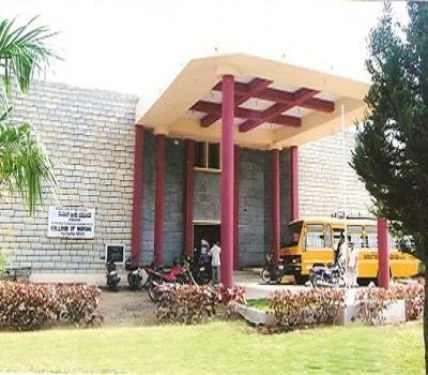
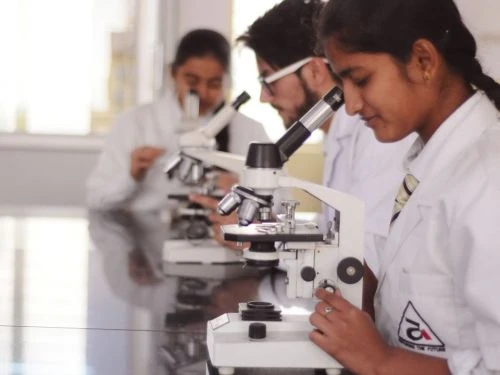
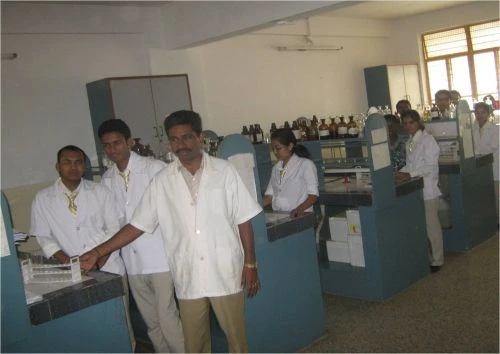
The 120-acre integrated Acharya campus is a double-edged sword. It’s lush, green, and has impressive infrastructure—a 10,000-seater stadium, basketball courts, a gym, and a massive 36,000 sq. ft. library (the Learning Resource Centre) with strong digital access via the RGUHS HELINET consortium. The academic labs for anatomy, physiology, and imaging tech are well-equipped.
But it’s isolated. Soladevanahalli is far from Bangalore’s urban core. A trip to MG Road can take 90 minutes. The nearest metro, Dasarahalli, is 6 km away. You’re living in a bubble.
Hostel life is regulated. There are 12 separate residences (5 for boys, 7 for girls), housing over 1,500 students. Rooms are clean but can feel cramped in quadruple sharing. The biggest points of contention are the strict wardens and early in-times, especially for female students (often 7:30 PM). Anti-ragging policies are enforced strictly, which students appreciate. The food in the mess gets a mediocre 3/5 rating—hygienic but monotonous, leading many to the variety of on-campus canteens.
Synthesizing feedback from platforms like CollegeDunia and Shiksha, a clear consensus emerges. The clinical exposure is unanimously praised. As one review put it, “Getting rotations at NIMHANS and Fortis is invaluable experience you won’t get in many private colleges.” The campus beauty and diversity are also big pluses, with a strong community of students from Kerala, the Northeast, and over 75 countries.
However, the negatives are just as consistent. Administrative processes are described as slow and frustrating. The 80% mandatory attendance rule is strictly enforced, with parents being notified quickly for lapses. The placement cell is seen as most effective for Nursing and BPT, while MHA and BHA students often feel they’re on their own. And that location—it’s a constant gripe for anyone wanting a taste of city life.
AIHS is a solid, if somewhat traditional, choice for a specific kind of student. If your primary goal is to become a physiotherapist or a nurse and you want the clinical pedigree of RGUHS-affiliated hospital rotations from day one, it’s a strong contender. The infrastructure is good, the brand is recognized, and the path to a 3.5-5 LPA starting job in a reputable hospital is well-trodden by its graduates. The strict, campus-bound environment might even be a plus for focused study.
But look elsewhere if you prioritize a vibrant urban college experience, expect proactive placement support for non-clinical roles like hospital administration, or chafe under rigid disciplinary systems. The value is heavily concentrated in the hands-on clinical training. You’re paying for that access and the RGUHS degree. For a student clear on a clinical career path, willing to trade city life for that opportunity, AIHS delivers. For others, the trade-offs might not add up.
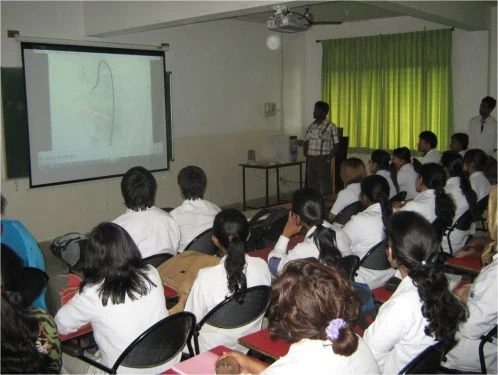

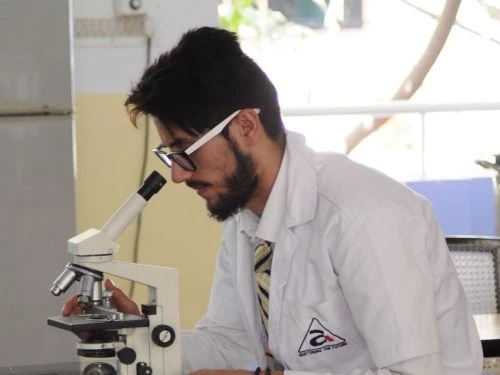
In this preview: 5 photos · 0 videos
Yes, Acharya Institute of Health Sciences is considered one of the top private choices in Bangalore for a Bachelor of Physiotherapy (BPT). This is due to its affiliation with the Rajiv Gandhi University of Health Sciences (RGUHS) and its strong clinical tie-ups with reputed hospitals like NIMHANS.
Acharya Institute of Health Sciences (AIHS) is the older, parent institution focusing on programs like Nursing and Physiotherapy. Acharya's Allied Health Sciences is a newer division, established in 2019, which focuses on specialized fields like laboratory technology, medical imaging, and operation theatre technology.
Yes, Acharya Institute of Health Sciences does have a management quota for its Nursing programs. A significant portion of seats are filled via direct management admission, which is typically based on 10+2 academic merit.
Reviews regarding the hostel food at Acharya Institute of Health Sciences are mixed. While the food is maintained hygienically, students from regions like North India and Kerala often find the taste to be average. Many students prefer eating at the various "Acharya Habba" canteens available on the campus.
Placements for the Master of Hospital Administration (MHA) program at Acharya Institute of Health Sciences are moderate. Most students secure roles in hospital operations or quality departments, often through opportunities provided by their final semester internships.
Share what future students should know about AIHS.
Student voices are not rewritten by colleges. We remove spam and abuse.
Wider admission question? Community PulseWhat should future students know?
Tell us which course you're considering. We'll help you work out the next step.
Get instant Partner access after mobile verification. Your public edits are reviewed before they go live.
Claim this college
 Auditorium
 Cafeteria
 Computer Labs
 Medical
 Science Labs
 Sports Complex
 Study Library