Loading Admission Guardian content
Loading Admission Guardian content
Provisional score based on available data. It may change as more information is verified.
Selected ranking categories, with the recorded year beside each result. Open all records for the complete history.
2 published records · Lower numeric ranks are stronger
IIRF
Nursing
#1012022
Find a program, read its fee details and explore the admission requirements.
Summary of the programs shown below. Total course fee. Check the note beside each amount for inclusions and exclusions.
| Course | Stream | Fees |
|---|---|---|
| Bachelor of Science [B.Sc] (Nursing) | Paramedical | 154000 |
| Auxiliary Nursing Midwifery [ANM] (Nursing) | Paramedical | |
| Master of Science [M.Sc] | Paramedical | |
| P.B.Bachelor of Science [B.Sc] (Nursing) | Paramedical |
Specializations
Eligibility: 10+2
Specializations
Specializations
Eligibility: Graduation
Specializations
Eligibility: 10+2
Adarsh College of Nursing in Patiala has built a reputation over two decades as a practical, no-frills institution for aspiring nurses. Affiliated with the government-run Baba Farid University of Health Sciences (BFUHS), its biggest selling point is direct, extensive clinical exposure at the massive Rajindra Hospital. That's a decent outcome for a private college with a relatively manageable fee structure. The atmosphere is disciplined—some would say strict—and the location is a bit isolated, but for students focused squarely on a nursing career without the distractions of a large university campus, it gets the job done.
The college offers a standard ladder of nursing qualifications, from diplomas to post-graduation. The B.Sc. Nursing program is the main draw, with an annual intake of 60 students. For those already in the field, the Post Basic B.Sc. (40 seats) and M.Sc. Nursing (25 seats total) provide upgrade paths. The M.Sc. program offers five specializations—Medical-Surgical, Community Health, Obstetric & Gynecological, Pediatric, and Psychiatric Nursing—each taking about 5 students. The diploma courses, GNM (60 seats) and ANM (50 seats), cater to students seeking a faster entry into the workforce.
Academically, it's a traditional setup. Instruction is in English, and the college follows the BFUHS calendar and percentage-based grading. The real academic strength, however, lies in clinical training. The primary tie-up with the 1000-bed Rajindra Hospital, a government tertiary care facility, provides volume and variety of cases that few private hospitals can match. A secondary link with Columbia Asia Hospital (now Manipal) offers a glimpse into corporate healthcare protocols. The faculty, led by Principal Dr. Rajinder Kaur Bajwa, is reported by students to be supportive and knowledgeable, maintaining a decent 10:1 student-to-faculty ratio in clinical settings. It's practical, hands-on learning.
Nursing placements don't work like engineering drives. There's less fanfare, but arguably more consistent demand. The college officially claims a 90-95% placement rate. Talking to students, you get a more nuanced picture: most graduates find jobs, but often through their own applications or the college's clinical network rather than formal on-campus recruitment events.
Packages vary widely. A fresh B.Sc. graduate joining a private hospital in India can expect an average starting salary in the ₹2.4 to ₹3.6 LPA range. For M.Sc. postgraduates or those landing roles in premium corporate chains or overseas, the ceiling is higher, estimated between ₹7 and ₹10 LPA. Top recruiters that have picked up students include major healthcare names like Fortis, Max Super Speciality, Apollo, and Medanta. A significant number of alumni also secure government jobs by clearing Punjab Health Department exams. The path to working abroad—in the UK, Canada, or Australia—is well-trodden, though that journey requires additional country-specific licensing exams post-graduation. The mandatory 6-month internship in the final year is often a direct pipeline to a first job.
For a private institution, the fees are on the more accessible side, which is a consistent positive in student reviews. For the flagship B.Sc. Nursing program, the total estimated cost for four years, including hostel and mess, ranges from ₹4.5 to ₹6.0 lakhs. That breaks down to roughly ₹1.2 - ₹1.6 lakhs per year. Diploma courses (GNM/ANM) are more affordable, with a total cost around ₹1.5 - ₹2.5 lakhs for the full program.
Financial aid primarily comes through government schemes. SC/ST/OBC students from Punjab can apply for the state's Post-Matric Scholarship. The managing society, Nova Educational Society, also occasionally offers merit-based fee concessions, but these aren't guaranteed or widely advertised. It's worth checking the official college website for any current announcements.
Admission routes differ by program. For the sought-after B.Sc. Nursing seats, the gateway is the PPMET (Punjab Para Medical Entrance Test) conducted by BFUHS. Eligibility requires 10+2 with Physics, Chemistry, Biology, and English, and a minimum aggregate of 45-50%. Selection happens through centralized state counseling based on the PPMET rank. For M.Sc. Nursing, it's the separate BFUHS Entrance Test, and candidates must be Registered Nurses.
The diploma courses (GNM and ANM) are typically merit-based, using the candidate's 10+2 marks. The application window for most courses is usually between May and July, aligning with the BFUHS academic schedule. It's a streamlined, exam-focused process.
The campus is functional rather than luxurious. Spread over 3-5 acres on the Patiala-Samana Road, its location is a double-edged sword. It's peaceful and secure, especially for the predominantly female student body, but it's also about 15-18 km from Patiala city center. That means limited spontaneous outings.
Infrastructure is geared towards training. Labs for fundamentals, nutrition, community health, and maternal-child care are adequately equipped. The library stocks over 4,000 textbooks and provides digital access via the BFUHS network. A dedicated bus fleet ferries students to clinical postings at Rajindra Hospital and rural health centers—a critical service given the distance.
Hostel life is a big part of the experience, with facilities for about 150 students (mostly girls). Rooms are generally praised as clean and well-maintained, typically on a twin-sharing basis. The mess serves vegetarian food, described by students as "average to good" but sometimes repetitive. The overarching theme here is discipline. Attendance rules are rigid (80% for theory, 100% for practicals), uniform codes are enforced, and hostel outings are regulated. The warden is often described as strict but protective. If you're looking for a vibrant campus fest culture, you won't find it here. Social life is quiet.
Sifting through feedback on portals like CollegeDunia and Shiksha reveals a clear consensus. Students value the strong clinical exposure at Rajindra Hospital above all else. They feel it prepares them for real-world nursing. The faculty gets high marks for being supportive and knowledgeable. The fee structure is repeatedly cited as a pro, being more feasible than many other private nursing colleges in the region. Parents appreciate the safe, secure environment for their daughters.
The negatives are just as consistent. The remote location is a frequent gripe, making commutes and city access a hassle. The strict disciplinary regime—from attendance to hostel rules—can feel oppressive to some. The limited on-campus social activities and fests mean your life revolves almost entirely around academics and clinicals. And while placement support exists, there's an understanding that securing a job often requires proactive personal effort, not just waiting for a recruiter to show up on campus.
Adarsh College of Nursing is a specific choice for a specific student. It's best for someone who is dead-serious about a nursing career, wants extensive hands-on hospital experience from day one, and prefers a disciplined, focused environment. The value comes from the BFUHS affiliation, the prime clinical attachment at Rajindra Hospital, and a total cost that doesn't spiral into debt. If your goal is to become a competent, employable nurse without unnecessary distractions, this college delivers on that promise efficiently.
But you should look elsewhere if a vibrant, multi-disciplinary campus life is important to you, or if you chafe under strict rules and a somewhat isolated location. It's a professional training ground, not a traditional college campus. For the right student—one with clear-eyed focus—Adarsh provides a solid, practical foundation for a career in nursing, both in India and abroad.
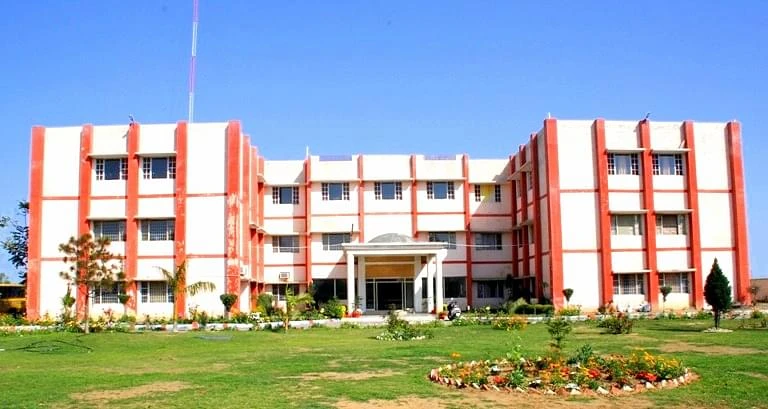
In this preview: 1 photo · 0 videos
Adarsh College of Nursing is a private institution. However, it is officially affiliated with a government university, Baba Farid University of Health Sciences (BFUHS).
The total approximate cost for the four-year B.Sc. Nursing program, including hostel charges, ranges between ₹4.5 Lakhs to ₹6.0 Lakhs.
The college does not have its own hospital. Instead, it has a primary clinical attachment with the government-run Rajindra Hospital in Patiala, which is a large 1000-bed facility for student training.
Yes, qualifying the Punjab Para-Medical Entrance Test (PPMET), which is conducted by BFUHS, is a mandatory requirement for securing admission to most seats in the B.Sc. Nursing program.
Yes, the college is co-educational and admits boys into its nursing programs. It is noted, however, that the majority of the student body and the hostel facilities are female-centric.
Share what future students should know about Adarsh College of Nursing.
Student voices are not rewritten by colleges. We remove spam and abuse.
Wider admission question? Community PulseWhat should future students know?
Tell us which course you're considering. We'll help you work out the next step.
Get instant Partner access after mobile verification. Your public edits are reviewed before they go live.
Claim this college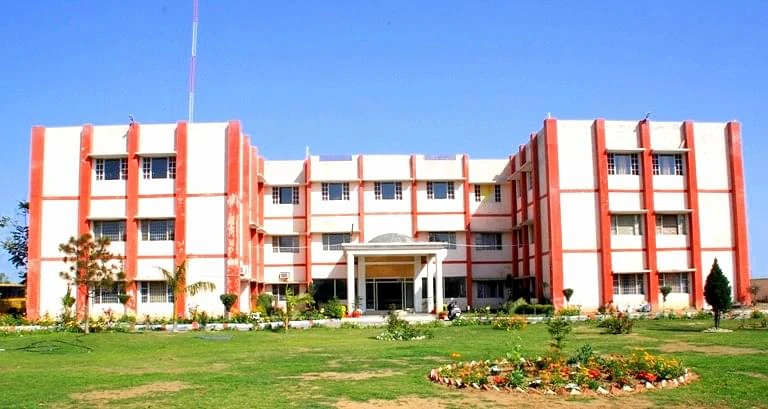
 Auditorium
 Cafeteria
 Campus Shuttle
 Computer Labs
 Science Labs
 Sports Complex
 Study Library