
Loading Admission Guardian content
Loading Admission Guardian content

Provisional score based on available data. It may change as more information is verified.
Find a program, read its fee details and explore the admission requirements.
Summary of the programs shown below. First-year fee. Check the note beside each amount for inclusions and exclusions.
| Course | Stream | Fees |
|---|---|---|
| PG Diploma in Clinical pastoral Counselling | Medical | 38200 |
| Master of Theology [M.Th] | Arts | 38700 |
| Bachelor of Divinity [B.Div] | Arts | 41600 |
| Ph.D. (Theology) | Arts | 74450 |
| Certificate Course in Christian Studies | Arts |
Specializations
Eligibility: Graduation
Eligibility: 10+2
Specializations
Eligibility: Post Graduation
Specializations
Founded in 1907, Aizawl Theological College (ATC) isn't just another college in Northeast India—it's the intellectual and spiritual engine room of the Mizoram Presbyterian Church. Perched on a 21.6-acre mountaintop in Durtlang, with a view that can silence any argument, this institution operates on a different plane. Forget corporate placements and NIRF rankings. Here, the currency is theological scholarship, ministerial formation, and a 100% placement rate back into the church. It's a world of rigorous academic discipline, subsidized education, and a daily schedule that starts before dawn. If you're called to ministry, this is arguably the most significant seminary in the region. If you're not, you probably wouldn't get past the gate.
ATC is a specialist institution. Its entire academic structure is designed for theological education and pastoral training under the Senate of Serampore, one of India's oldest degree-granting universities.
The core is the Bachelor of Divinity (B.Div.), a 4-year program for graduates or a 5-year track for HSSLC holders. Intake is selective, around 30-40 per year. The medium is English, though a Hindi B.Div. stream also exists. For postgraduate scholars, the Master of Theology (M.Th.) is a 2-year research-intensive degree with specializations ranging from Old Testament and Christian Theology to Missiology and Christian Counselling. The pinnacle is the 3-year residential Doctor of Theology (D.Th.).
And the faculty? That's where ATC punches well above its weight. With about 27 regular faculty, over 80% hold doctorates (D.Th. or Ph.D.), many from prestigious international universities like Princeton and Edinburgh. You're not just learning theology; you're being taught by scholars who've contributed to global theological discourse. The grading follows the Senate's strict 10-point CGPA system, and maintaining a 'B' grade (60%+) is non-negotiable for progression.
Let's be clear: you won't find Amazon or Deloitte recruiting here. The placement concept is entirely different. For the vast majority of students who are sponsored by the Mizoram Presbyterian Church, placement is guaranteed and stands at 100%. Graduates are absorbed directly into church service, starting as Probationary Pastors for 2–3 years before ordination.
Career paths are in ministry, theological education, chaplaincy, NGO work linked to church missions, and global mission fields. The alumni network is the church leadership. Most moderators of the Mizoram Presbyterian Church and senior figures in bodies like the National Council of Churches in India are ATC graduates. Success is measured in spiritual leadership and theological contribution, not lakhs per annum.
This is one of ATC's most defining features. Fees are heavily subsidized by the Mizoram Presbyterian Church. For the 2024-25 session, estimates put the total cost for a B.Div. at around ₹1,62,000 for the entire program, with annual academic fees near ₹41,000. The M.Th. totals about ₹78,200, and the D.Th. around ₹1,89,000.
The critical detail? Full sponsorship. Most students from the Mizoram Synod have their tuition, hostel, and mess fees completely covered. Hostel life is mandatory and included in this structure for residential students. For self-financing students, the costs are still remarkably low for a private institution of this caliber. Additional small fees include a ₹100-200 application fee and Senate examination fees.
Admission is a holistic, church-centered process. It starts with a mandatory church recommendation for the residential B.Div., M.Th., and D.Th. programs. The college then conducts its own Entrance Examination, testing Bible Knowledge, General English, and General Knowledge.
Clearing the written test leads to a Personal Interview by the Theological Education Board (TEB). The application window typically opens in September/October, with exams in January/February.
Eligibility is specific:
The campus is stunning, peaceful, and isolated. It's a 21.6-acre hilltop community with views that make the climb worthwhile. Infrastructure is functional and focused on academic and spiritual life.
The hostel, with a capacity for about 200 students, is known for its cleanliness and order (rated 4.5/5 by students), but also for its strict discipline. Separate wings for men and women. The routine is legendary: a 5:00 AM wake-up, mandatory morning and evening devotions, and fixed study hours. It's formative, but it's not for everyone.
The crown jewel is the library. With over 60,000 volumes, digital access to the ATLA database, and special archives on Mizo Christian history, it's one of the finest theological libraries in India. Unique features like the Zoram Galili (a model of the Sea of Galilee), the Biblical Garden, and the 24-hour prayer mount (Beth-Tepilah) make the campus a living learning lab. Social life is centered on choir, the Student Christian Movement, and the Annual Retreat. You don't come here for fests.
The consensus from former students is clear, and it splits neatly into pros and cons.
On the positive side, the academic rigor and faculty quality are almost universally praised. "World-class scholars who've studied globally" is a common refrain. The environment is described as uniquely peaceful and conducive to study and reflection. And the financial support for sponsored students is seen as a tremendous blessing, removing a major barrier to education.
The negatives revolve around intensity and isolation. The strict discipline is the biggest adjustment. The schedule is grueling, free time is minimal, and the environment is often compared to a monastery. Location logistics are a practical headache; Durtlang is far from central Aizawl, making trips to the city infrequent and costly. Some also note that while the main facilities are good, maintenance in older hostel blocks can be inconsistent.
The answer is entirely dependent on your vocation. For a candidate called to ministry within the Presbyterian tradition—especially the Mizoram Synod—ATC isn't just "worth it"; it's essential. The academic pedigree, full financial sponsorship, guaranteed church placement, and deep community immersion are an unmatched package. You graduate as part of the church's leadership pipeline.
For an independent student seeking a general liberal arts education or a casual interest in theology, it's a poor fit. The discipline is intense, the social life is restricted, and the entire model presupposes a commitment to church service. Even the external B.C.S. program is best suited for those with a clear religious study goal. In short, ATC is a premier, authoritative institution for a very specific purpose. It excels at that purpose without apology. If that's your calling, look no further.
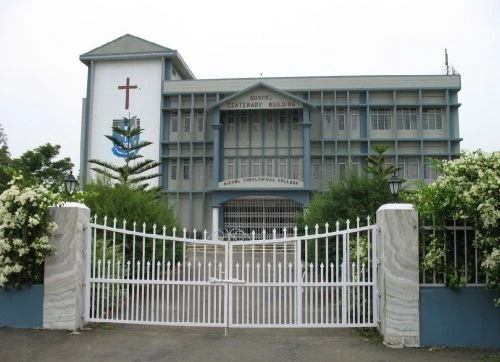
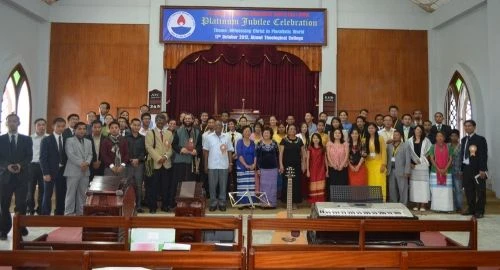
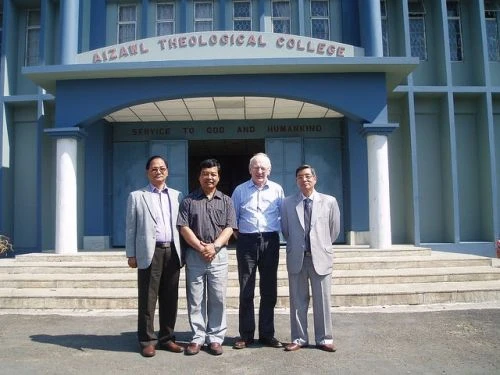
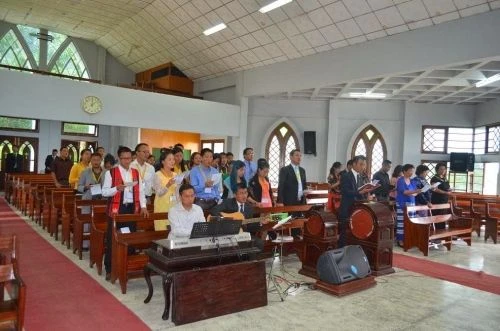
In this preview: 5 photos · 0 videos
No, Aizawl Theological College (ATC) is not a government college. It is a private theological institution owned and operated by the Mizoram Presbyterian Church.
Admission policies vary by program. While the college primarily serves ministerial training, its external Bachelor of Christian Studies (BCS) and Diploma in Christian Studies (Dip.CS) programs are often more flexible. However, admission to residential programs like the Bachelor of Divinity (B.Div) or Master of Theology (M.Th) typically requires a recommendation from a church.
The "Zoram Galili" is a well-known physical scale model of the Sea of Galilee located within the college's Biblical Garden. It is used as an educational tool for students and is also a point of interest for visitors and tourists.
Yes, Aizawl Theological College offers distance education through specific programs. These include the Bachelor of Christian Studies (BCS) and the Diploma in Christian Studies (Dip.CS), which are conducted under the Senate of Serampore University.
Hostel life at Aizawl Theological College is known to be very structured and strict. The rules include mandatory participation in morning and evening devotions, fixed study hours, and a scheduled wake-up time at 5:00 AM.
Share what future students should know about ATC.
Student voices are not rewritten by colleges. We remove spam and abuse.
Wider admission question? Community PulseWhat should future students know?
Tell us which course you're considering. We'll help you work out the next step.
Get instant Partner access after mobile verification. Your public edits are reviewed before they go live.
Claim this college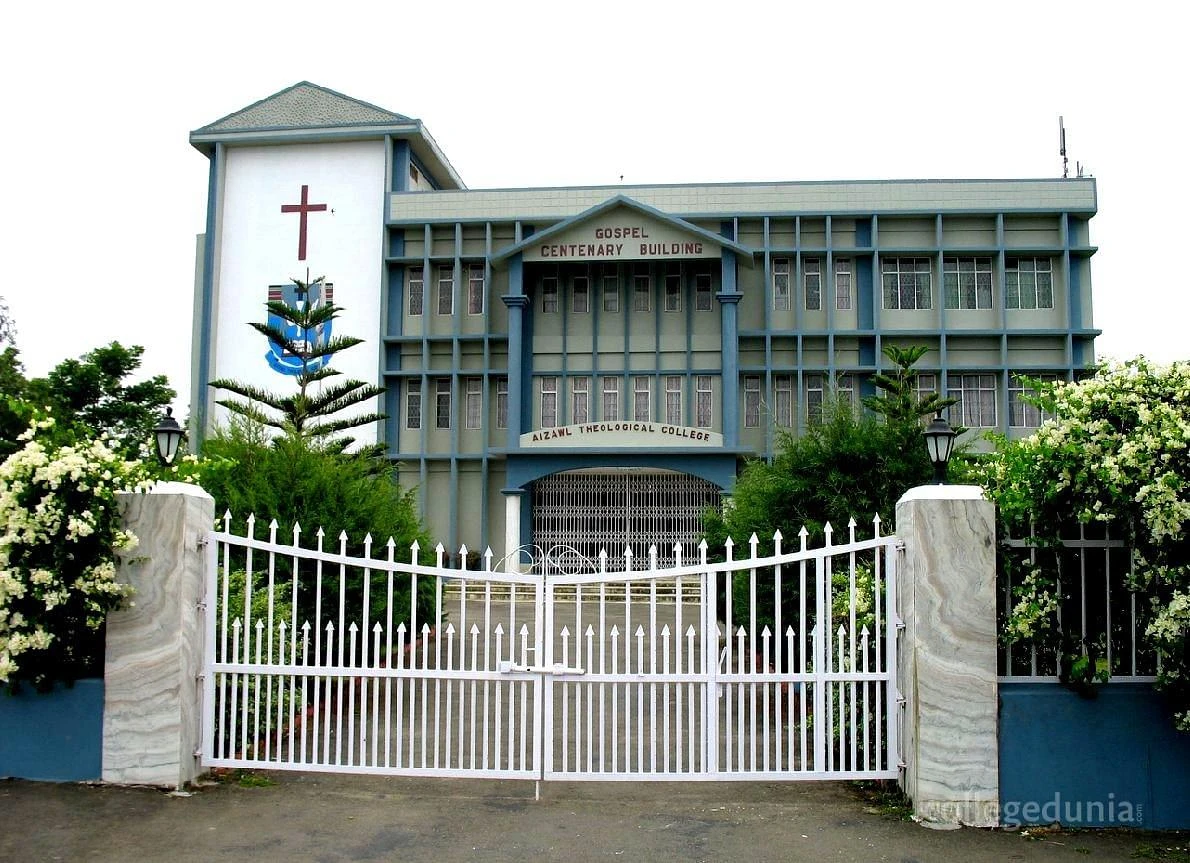

 Auditorium
 Cafeteria
 Computer Labs
 Gym
Gym Hostel
 Medical
 Science Labs
 Sports Complex
 Study Library