Loading Admission Guardian content
Loading Admission Guardian content

Provisional score based on available data. It may change as more information is verified.
Find a program, read its fee details and explore the admission requirements.
Summary of the programs shown below. First-year fee. Check the note beside each amount for inclusions and exclusions.
| Course | Stream | Fees |
|---|---|---|
| Diploma in Engineering (Polytechnic) | Engineering | 15500 |
| Master of Business Administration [MBA] | Management | 36000 |
| Bachelor of Technology [B.Tech] | Engineering | 45000 |
Specializations
Eligibility: Pass in 10th + TS POLYCET
Specializations
All accepted exams
Eligibility: Graduation with 50% + CMAT
Specializations
All accepted exams
Eligibility: 10+2 with 45% + TS EAMCET
3 exams with cutoff data available - showing recent entries
Aizza College of Engineering and Technology (AZCET) is a study in regional pragmatism. Established in 1999 and affiliated with Jawaharlal Nehru Technological University, Hyderabad (JNTUH), it serves a specific purpose: providing an affordable, accessible engineering education for students in the Adilabad/Mancherial belt of northern Telangana. If you're looking at colleges in Hyderabad, this isn't one of them. Its 26-acre campus is situated off the Nizamabad-Mancherial highway, about 250 kilometers from the state capital. That distance defines much of the AZCET experience—it's a local solution for local students, particularly from minority communities, who need a budget-friendly option close to home. The college's standout feature is its Mining Engineering program, a rarity in private institutions, which leverages its location in the Singareni coal belt. For everything else, especially placements and modern infrastructure, expectations need to be managed. Reviews from students on platforms like Shiksha and CollegeDunia paint a consistent picture: a functional college that gets you a degree, but leaves the job hunt largely up to you.
AZCET offers the standard suite of programs you'd expect from a regional engineering college, with one notable exception. At the undergraduate level, B.Tech programs are offered in Computer Science & Engineering (CSE), Electronics & Communication Engineering (ECE), Electrical & Electronics Engineering (EEE), Civil Engineering (CE), and Mechanical Engineering (ME). Intakes vary between 30 and 60 seats per branch. The standout is the B.Tech in Mining Engineering, with an intake of around 60. It's a pragmatic offering given the college's location in a mining region, and student reviews consistently highlight it as the most relevant department.
The college also runs an MBA program with specializations in Finance, HR, and Marketing, and a range of three-year Diploma (Polytechnic) courses in fields like Mining, CSE, and EEE.
Academically, the college follows the JNTUH R22/R18 regulations with a Choice Based Credit System (CBCS). The teaching style, as described by students, is traditional and syllabus-focused, geared heavily towards securing internal marks and passing JNTUH exams. Faculty strength is around 62, with most holding M.Tech degrees and a limited number of PhDs. The recent signing of an MoU with the Telangana Global Inbound Center (TGIC) to set up an Innovation & Entrepreneurship Cell is a positive step, but its on-ground impact remains to be seen.
This is where the gap between official claims and student-reported reality is most pronounced. The college's placement cell exists, but its efficacy is a major point of criticism in student reviews.
Let's look at the numbers. The highest package cited in recent years (around 2020-2021) was in the range of ₹3.5 to ₹4 LPA. For the 2024-25 cycle, there's no official data, but student anecdotes mention offers from BPO companies in the range of ₹1.2 to ₹1.8 LPA. The average package is estimated to be around ₹2.2 LPA.
The placement percentage tells a clearer story. While the college may claim around 60-70% placement, the consensus from alumni on review platforms suggests a different figure. They report that only about 10-20% of students secure core or IT roles through on-campus drives. The majority either find off-campus jobs, often through their own efforts at companies like TCS, Wipro, or Infosys, or end up in BPO/support roles.
Top recruiters historically include service-based IT firms like TCS and Wipro (typically through pooled or off-campus drives), BPOs like Agna Global Solutions, and local mining and construction firms for the Civil and Mining branches. A critical point noted by students is that the college does not facilitate internships; students are expected to find their own during summer breaks.
The verdict here is straightforward. Don't count on the college for high-quality placements. Treat the degree as a baseline qualification and plan for an aggressive, self-driven job search from day one.
Affordability is AZCET's strongest card. The fees are regulated and are among the more reasonable in the state for a private institution.
For the 2024-25 academic year, the annual tuition fee for B.Tech programs is between ₹45,000 and ₹50,000. Over four years, that totals an estimated ₹1.8 to ₹2 lakhs. The MBA program costs about ₹35,000-₹37,000 per year. Diploma courses are around ₹15,500 annually.
Hostel accommodation costs an additional ₹11,000 to ₹21,000 per year, with mess charges separate, typically running ₹2,500 to ₹3,500 per month.
The key financial aid mechanism is the state government's TS RTF (Reimbursement of Tuition Fee) scheme. Students from SC, ST, BC, and Minority communities are eligible for full tuition fee reimbursement, which makes the college a viable, near-zero-cost option for many in the region. Always verify the latest fee structure directly with the college or the official website before admission.
Admission to AZCET is primarily entrance-exam based and follows the Telangana state counseling process.
The selection follows the standard 70:30 rule: 70% of seats are filled through the Convener Quota (state counseling), and 30% are Management Quota seats.
The cutoff ranks give you a sense of the college's positioning. For the 2024/2024 cycle, the closing ranks for the General/Minority quota were relatively high, indicating lower demand. For example, CSE closed around ranks 148,000 – 153,000, EEE at 101,000, and Mining between 141,000 and 169,000. These ranks are a clear indicator that AZCET is typically a choice for students with lower EAMCET scores who are looking for an affordable seat. Management quota seats are available at a higher cost, reportedly between ₹60,000 to ₹80,000 per year depending on the branch.
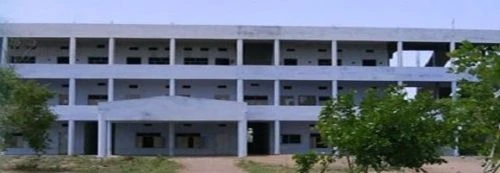
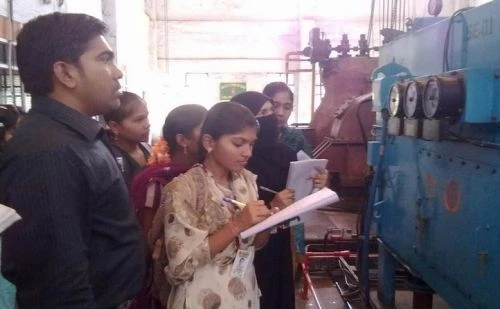
The infrastructure at AZCET is functional but dated, a fact repeatedly mentioned in student feedback. The campus is spread over 26 acres, housing department-specific labs that students describe as having "functional but aging" equipment. The library has a collection of over 20,000 volumes, but digital resources are limited.
One of the most consistent complaints across recent reviews is the lack of Wi-Fi for general student use. It's a significant gap in 2024. The canteen is noted as being small with limited options.
Hostel facilities exist separately for boys and girls, but reviews on their quality and management are mixed. Some students have indicated that hostels may be off-campus or third-party managed, so it's wise to verify the current arrangement directly.
On the extracurricular front, sports facilities for volleyball, badminton, and cricket are available. A notable positive highlight from many students is the active NCC (National Cadet Corps) unit, which provides good training and is a valued part of campus life. The college provides bus transport covering a 30-40 km radius around Mancherial.
Synthesizing feedback from CollegeDunia, Shiksha, and Careers360 reveals a clear, unfiltered consensus. Students don't mince words.
The positives are specific and pragmatic. Faculty are often described as accessible and friendly, more approachable than in some larger city colleges. The Mining Engineering department gets genuine praise for its regional relevance. And the affordability, especially with fee reimbursement, is the top reason many choose AZCET. It's a safety net that provides a degree without financial strain.
The negatives are more numerous and relate to opportunity and infrastructure. Placement quality is the biggest gripe. One paraphrased review from 2020 still resonates: "Mostly only BPO companies will hire... they offered us 8,000 per month." The remote location limits exposure to industry events and guest lecturers. The infrastructure gaps—no Wi-Fi, basic labs—are frequently cited. A 2024 Shiksha review stated bluntly, "To be frank, we don't have any hostel and Wi-Fi facility in our college... but we have good NCC training."
The academic culture is seen as passable but not inspiring, with a curriculum that lags behind current tech trends like AI/ML in practical application.
AZCET is a college with a very specific purpose and a clear set of trade-offs. It is not a destination for those seeking a vibrant campus life, top-tier placements, or cutting-edge facilities. If those are your priorities, you should look elsewhere, likely in Hyderabad.
However, it can be a rational, worthwhile choice for a particular student profile. If you are a student from the northern Telangana region with a modest EAMCET rank, limited financial means (especially if eligible for full fee reimbursement), and a need to stay close to home, AZCET provides a legitimate, affordable path to a JNTUH B.Tech degree. It's particularly relevant if you're interested in Mining Engineering, where its location is an actual advantage.
Think of it as a launchpad, not a launch. You'll get the degree, but building a career will be almost entirely your own responsibility. Success here is defined by using the low cost and time to prepare independently for GATE, off-campus placements, or government exams. For the right student, with managed expectations and self-drive, it serves a need. For anyone else, it's likely to be a disappointment.


In this preview: 5 photos · 0 videos
Yes, Aizza College of Engineering and Technology (AZCET) is considered a good option for Mining Engineering. It is one of the few private colleges in Telangana offering this program, and its location near the Mancherial coal belt provides a significant advantage for practical field visits and industry exposure.
The EAMCET (now TS EAMCET) counseling code for Aizza College of Engineering and Technology (AZCET) is AIZA. Use this code during the state engineering admission counseling process.
No, Aizza College of Engineering and Technology (AZCET) does not provide 100% placements. The college offers placement assistance, but the majority of students secure jobs through off-campus recruitment drives and their own efforts.
Yes, Aizza College of Engineering and Technology (AZCET) provides a hostel facility inside the campus. However, prospective students are advised to check the current maintenance status and facilities directly, as reviews and conditions have been noted to vary from year to year.
The fee for a Management Quota seat at Aizza College of Engineering and Technology (AZCET) typically ranges from ₹60,000 to ₹80,000 per year. The exact amount depends on the chosen branch of engineering, with Computer Science and Engineering (CSE) generally being at the higher end of this range.
Share what future students should know about AZCET.
Student voices are not rewritten by colleges. We remove spam and abuse.
Wider admission question? Community PulseWhat should future students know?
Tell us which course you're considering. We'll help you work out the next step.
Get instant Partner access after mobile verification. Your public edits are reviewed before they go live.
Claim this college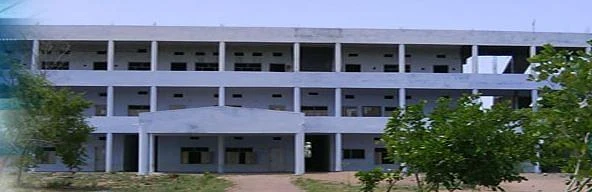

 Auditorium
 Computer Labs
 Hostel
 Medical
 Science Labs
 Sports Complex
 Study Library