Loading Admission Guardian content
Loading Admission Guardian content
Provisional score based on available data. It may change as more information is verified.
Find a program, read its fee details and explore the admission requirements.
Summary of the programs shown below. First-year fee. Check the note beside each amount for inclusions and exclusions.
| Course | Stream | Fees |
|---|---|---|
| Master of Business Administration [MBA] | Management | 68000 |
| Bachelor of Technology [B.Tech] | Engineering | 84500 |
| Master of Technology [M.Tech] | Engineering | 84500 |
| Ph.D | Management |
Specializations
Eligibility: Graduation
Specializations
Eligibility: 10+2 with 45% + RPET
Specializations
Eligibility: Graduation
Specializations
Eligibility: Post Graduation
 Accenture
 Axis Bank
 Eureka Forbes
 Genpact
 Indian Army
 InterGlobe Technologies
 Kotak Mahindra Finance
 Tech Mahindra
 Wipro
WiproAlwar Institute of Engineering and Technology (AIET) sits in a bit of a paradox. It’s a private college with the infrastructure and campus life that can genuinely impress, but its placement record tells a more grounded, sometimes frustrating story. Established in 2005 under the older IET Group banner, it’s a fixture on the Alwar-Delhi highway, drawing students from across Rajasthan and neighboring states. The college has even secured TEQIP-II funding from the World Bank, which is a notable achievement for a private institute. But the real experience here is defined by that gap—between the polished campus and the pragmatic hustle most students need for a decent job. You don’t come here for brand-name prestige; you come for a functional degree from a decently-run private college, with the understanding that your career launchpad will likely be your own effort.
AIET runs the standard RTU curriculum across its core engineering disciplines. The B.Tech program offers about 264 seats split between Computer Science, Mechanical, Electronics & Communication, Electrical, and Civil Engineering. There’s also lateral entry for diploma holders. At the postgraduate level, you can pursue an M.Tech in CSE or Power Systems, or an MBA with various specializations. The college also offers Ph.D. programs.
Academically, it’s a mixed bag with some bright spots. The faculty count is around 120 across the group, and about 65% of senior faculty in top departments hold or are pursuing PhDs. That’s a decent ratio for a private college in this tier. Students often describe professors as accessible and helpful with academic doubts. The college has also inked MoUs with names like Wipro (Mission 10X), IBM, and Oracle for faculty development and student certification programs. It’s a positive signal, though the direct impact on the average student’s classroom experience can be limited. The academic rhythm is dictated entirely by RTU’s semester schedule, which means standardised exams and a syllabus that can feel a step behind the industry curve at times.
This is the section where you need to read between the lines. The official placement cell claims a 75-85% placement rate. But dig into student reviews on platforms like CollegeDunia and Shiksha, and a different picture emerges. The working number alumni cite is closer to 20-40% for genuine, on-campus core engineering roles. Many students end up finding jobs through off-campus drives or in local units within the adjacent Matsya Industrial Area.
The highest package touted is around 10-13 LPA, but treat that as a rare peak. There’s a mention of a 30 LPA outlier in one review, but that’s almost certainly an off-campus achievement. The realistic average package for the graduating cohort sits firmly in the 2.5 to 3.6 LPA range. For CSE, it might nudge toward 4 LPA.
Recruiters like Wipro, Infosys, TCS, HCL, and IBM do visit, but their intake is often small. The list also includes core manufacturing firms like Havells, Bosch, Ashok Leyland, and Eicher Tractors—a direct benefit of the college’s industrial area location. Don’t be surprised, though, if many of the offers are for sales or support roles in banking and IT services. The verdict from a typical student review sums it up: "If you want a degree with good campus life and are willing to work for off-campus placements, it's fine. Don't rely solely on the college for a high-paying job."
The cost structure is fairly transparent. For the 2024-25 session, the B.Tech tuition fee is approximately ₹84,500 per year. Over four years, you’re looking at a total tuition cost of ₹3.16 to 3.4 lakhs. Add to that hostel and mess charges, which range from ₹50,000 to ₹65,000 annually depending on whether you opt for a 2-seater or 3-seater room. There are additional development and university exam fees, plus a one-time refundable security deposit.
Scholarship support primarily follows state government schemes for SC/ST/OBC (Non-Creamy Layer) and Minority students. General category students typically only qualify if they fall under the Economically Weaker Section (EWS) bracket. The management does occasionally offer merit-based fee waivers, but these aren’t guaranteed or widely advertised. It’s worth checking the official IET Group website for the latest fee and scholarship bulletins.
Admission to the B.Tech program is primarily through the Rajasthan Engineering Admission Process (REAP), which uses your JEE Main rank. If you haven’t taken JEE Main, you can also apply based on your Class 12 marks (with a minimum of 45% aggregate in PCM).
The cutoffs aren’t fiercely competitive. For the 2024 cycle, expect the CSE branch to require a JEE Main rank around 92,000. For other branches like Mechanical, Civil, or ECE, admission is generally accessible for ranks up to 2,00,000 or even through the 12th-grade merit list. Remember, 15% of seats are reserved for management quota, which operates through direct admission, often at a higher fee.
The process is centralized and straightforward: qualify through JEE or 12th marks, register for REAP counseling, and choose AIET in your preferences. It’s a system that favors students with moderate scores looking for a reliable, AICTE-approved college in Rajasthan.
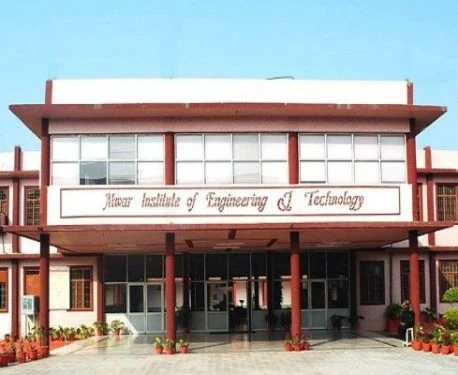
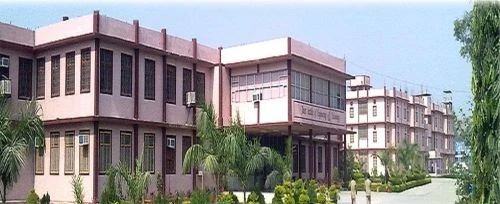
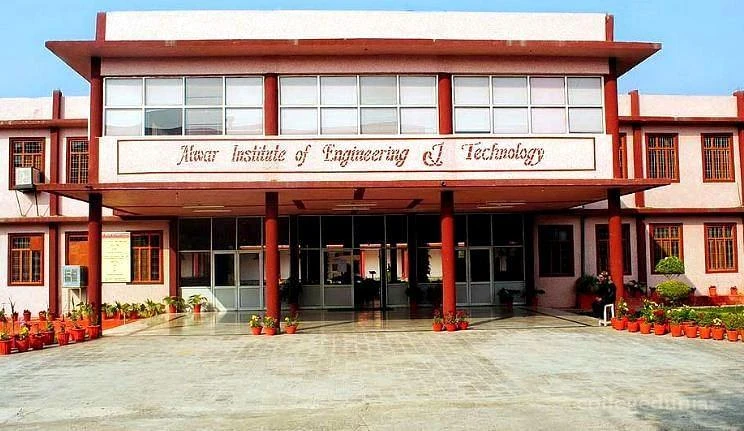
This is where AIET consistently wins points. The campus is spread over about 10 acres (part of a larger 35-acre group estate) and is repeatedly praised as the best in Alwar. It’s green, spacious, and well-maintained. Infrastructure is solid—over 120 specialized labs, a central library with digital journal access, and decent sports facilities including large grounds and a gym.
The hostels (6 for boys, 2 for girls) have a capacity for about 1,800 students. Quality is rated around 3.5/5; they’re functional but not luxurious. A common complaint is inconsistent Wi-Fi speed in the rooms. The mess food gets the universal "average" rating you’d expect from a large hostel kitchen.
But the campus life is vibrant. The annual fest "TechEstasy" is a major highlight, pulling in crowds and creating a real buzz. And there’s a genuinely unique feature: the college runs its own community radio station, "Alwar Ki Aawaz" (90.4 FM), where students get hands-on broadcasting experience. The social scene is active, which is a significant plus given the college’s location in an industrial area, a good 12-15 km from Alwar Junction railway station.
Synthesizing the consensus from review platforms paints a clear, two-sided picture.
The Good: The infrastructure is the top compliment. Students feel the campus environment is conducive to learning and socializing. Faculty accessibility is another plus, with many noting that professors are approachable. The annual fest and overall atmosphere are seen as definite advantages over more rigid local colleges.
The Not-So-Good: Placement quality is the overwhelming criticism. The gap between the official brochure and the on-ground reality leads to frustration. Administrative hassles pop up frequently in reviews—talk of unexpected "extra fees" and strict policies, like holding original documents until the final year (though this is unverified). The 75% attendance rule is enforced strictly, with fines for shortages. And again, the mess food isn’t winning any awards.
The takeaway from alumni is pragmatic: manage your expectations, enjoy the campus, but start preparing for placements on your own from day one.
AIET is a specific choice for a specific type of student. It’s worth it if you have a JEE Main rank in the 1-2 lakh range and are prioritizing a solid, spacious campus with an active student life over top-tier placement guarantees. It’s a good option for students from the region or those comfortable with the idea of leveraging its industrial area location for local job opportunities. The infrastructure is genuinely good, and the college is professionally run.
But you should probably look elsewhere if your primary goal is a high-paying, on-campus placement from a brand-name recruiter. The placement cell here provides a base layer of opportunity, not a launchpad. Success will require significant self-driven effort in skills development and off-campus job hunting. For a student who understands that trade-off—a pleasant campus experience in exchange for taking greater personal responsibility for their career—AIET can be a perfectly functional and even enjoyable choice for an engineering degree.
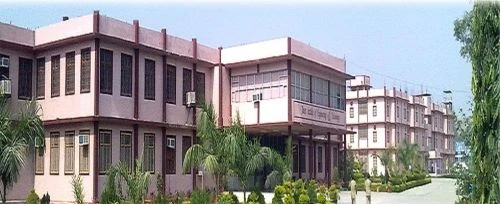
In this preview: 5 photos · 0 videos
AIET has a longer history and better infrastructure. However, MITRC Alwar is currently perceived as more aggressive in securing recent placement tie-ups, which may be a key factor for some students.
The realistic average placement package for Computer Science and Engineering (CSE) students at AIET is between 3.0 and 4.0 Lakhs Per Annum (LPA).
No, hostel stay is not mandatory. However, it is recommended for outstation students because the college is located in an industrial area, which is far from Alwar's main city center.
General category students can receive scholarships only if they qualify under the Economically Weaker Section (EWS) category or through specific university-level merit awards.
Yes, Alwar Institute of Engineering and Technology is active and is accepting admissions for the 2024-25 and 2025-26 academic cycles. The college often operates under the broader "IET Group" branding.
Share what future students should know about AIET.
Student voices are not rewritten by colleges. We remove spam and abuse.
Wider admission question? Community PulseWhat should future students know?
Tell us which course you're considering. We'll help you work out the next step.
Get instant Partner access after mobile verification. Your public edits are reviewed before they go live.
Claim this college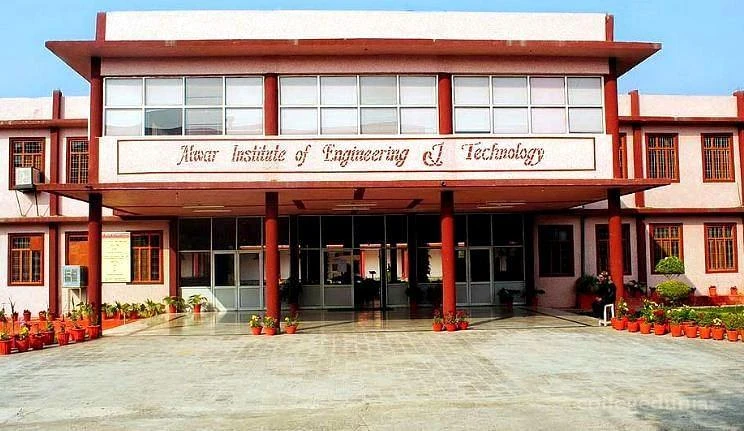
 Auditorium
 Cafeteria
 Computer Labs
 Hostel
 Science Labs
 Sports Complex
 Study Library