Loading Admission Guardian content
Loading Admission Guardian content
Provisional score based on available data. It may change as more information is verified.
Find a program, read its fee details and explore the admission requirements.
Summary of the programs shown below. First-year fee. Check the note beside each amount for inclusions and exclusions.
| Course | Stream | Fees |
|---|---|---|
| Diploma in Engineering (Polytechnic) | Engineering | 35035 |
| Diploma in Engineering (Polytechnic) {Lateral} | Engineering | 35035 |
| Bachelor of Technology [B.Tech] | Engineering | 83325 |
| Bachelor of Technology [B.Tech] {Lateral} | Engineering | 83325 |
Specializations
Specializations
Specializations
All accepted exams
Eligibility: 10+2 with 75% + JEE Main
Specializations
All accepted exams
Eligibility: 10+3 with 75% + JEE Main
 Autodesk
 Beta Soft
 eClerx Services
 Hero Cycles
 Rail Tel
 SwipeCubes
 Tata Consultancy Services
 TCIL
TCILAnand College of Engineering and Management (ACEM) in Kapurthala is a study in contrasts. It’s a private college with a sprawling, green 10-acre campus that looks the part, but its academic and placement performance firmly places it in the category of a budget-friendly, local option. Established in 2010 and affiliated with I.K. Gujral Punjab Technical University (IKGPTU), ACEM serves a specific demographic: students from the Kapurthala, Jalandhar, and surrounding regions who need an AICTE-approved degree without the premium price tag of a Chandigarh University or LPU. The official placement brochure will show you one picture, but student reviews across platforms paint another, more grounded reality. If you’re looking at ACEM, you’re likely weighing cost against opportunity, and that’s the central calculation you’ll need to make.
ACEM offers a fairly standard mix of programs you’d expect from a technical and management college in Punjab. The B.Tech programs are the main draw, with Mechanical Engineering having the largest intake at 120 seats, followed by Computer Science and Civil at 60 each. Electronics & Communication Engineering (ECE) is also offered, though with a smaller, unverified intake. Beyond engineering, they run BBA, BCA, B.Com, and some vocational B.Sc and B.Voc programs. At the postgraduate level, MBA, MCA, and M.Com are available.
The academic rhythm follows the IKGPTU semester system. Faculty strength is around 76, and while many hold M.Tech degrees, the number of PhDs is noted to be relatively low. That’s not unusual for a younger private college, but it’s a factor. A notable feature is the mandatory 6-month industrial training in the final B.Tech year. The college has MoUs with firms like Netmax Automations and EME Technologies for this, though students often report securing these internships on their own. The grading is the standard 10-point CGPA system. It’s a straightforward, no-frills academic setup designed to deliver the university curriculum.
This is where you need to read between the lines. The official data and student experiences don’t fully align, and that gap is telling.
The college’s official placement report for 2023 cites a highest package of 6.0 LPA and an average of 3.5 LPA. They claim a placement percentage of around 50-60% for registered students. The top recruiters listed include TCS, Wipro (often noted as off-campus), Netmax, Swipecubes, and local manufacturing units linked to the nearby Rail Coach Factory.
Now, the student consensus from review platforms like CollegeDunia and Shiksha tells a different story. The working average package alumni cite is consistently between ₹1.8 to ₹2.5 LPA. Placement rates for core engineering roles are estimated closer to 30-35%. Many reviews describe placements as "mostly for show" or dominated by low-paying customer support and sales roles. The big-name IT recruiters like TCS do visit, but the number of offers is limited.
So, what’s the real picture? ACEM’s placement cell facilitates opportunities, but it’s not a high-throughput pipeline to premium jobs. Success stories exist, often for CSE graduates landing roles at mid-sized IT firms in Mohali or Noida. But for many, the degree serves as a baseline qualification for pursuing off-campus drives or government sector exams. If you’re coming here, plan on being proactive from day one.
Affordability is ACEM’s strongest card. For the 2024-25 session, the annual tuition for B.Tech programs ranges from ₹81,750 to ₹88,200. Over four years, you’re looking at a total tuition cost of roughly ₹3.3 to ₹3.66 lakhs. That’s significantly lower than the big private universities in the state. Other UG programs like BBA, BCA, and B.Com cost between ₹47,000 to ₹59,000 per year. Diploma fees are around ₹29,000-30,000 annually.
On top of tuition, factor in the hostel and mess charge of ₹55,000 per year for a twin-sharing room. There’s also a one-time refundable security deposit of ₹4,000 and semester-wise university exam fees.
Financial aid is modest. The college offers a 25% tuition fee waiver for branch toppers. The primary avenue for support is the Punjab Government’s Post-Matric Scholarship (PMS) scheme for SC/ST/OBC students. You won’t find a wide range of merit-based scholarships here, which aligns with its budget positioning.
Admissions are relatively straightforward and not intensely competitive. For B.Tech, the preferred entrance is JEE Main. However, the majority of seats are actually filled via 12th standard merit (Direct Admission). That means for many students, their Class 12 PCM percentage is the key. There’s no publicly available high cutoff; the college typically admits students who meet the basic eligibility and apply through the centralized counseling conducted by IKGPTU or via direct walk-in for management quota seats.
A 15% management quota exists, which often has more flexible criteria. For Diploma programs, admission is through the state’s Joint Entrance Test (JET) or 10th-grade marks. The application window usually runs from May through August. It’s a process that favors local students who can visit the campus directly.
The infrastructure is frequently praised. The main college building and hostels are modern and set in a well-maintained, green 10-acre campus. It’s a quiet location opposite the Rail Coach Factory, away from city chaos—good for study, less so for entertainment.
Hostels are separate for boys and girls, and students rate them around 3.5/5. Rooms are called spacious but basic. The canteen food gets an average 3/5 rating, described as edible but repetitive. The college provides 24/7 Wi-Fi in hostels and academic blocks, though students note the speed is just "average."
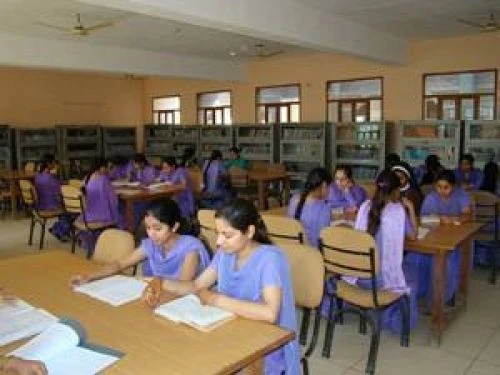
Labs are a decent point. The mechanical and civil workshops are well-equipped, and computer labs house over 125 systems. The library has a collection of 6,000+ books and access to DELNET. There’s an on-campus dispensary with an ambulance tie-up for medical needs.
Social life is limited. Fests and events are small-scale and, according to some reviews, often funded by student collections. Don’t expect a vibrant cultural scene.
Synthesizing feedback from CollegeDunia, Shiksha, and MouthShut reveals a clear consensus. ACEM is seen as a "value-for-money" institute for a PTU degree. The positives are consistent: great infrastructure, affordable fees, and generally helpful, accessible faculty.
But the negatives are equally consistent and serious for some. The most common complaint is the placement reality not matching the brochure. Several reviews mention a language barrier, with some local faculty teaching in Punjabi, which can disadvantage non-native students. Management is described as strict, with a "fine culture" for attendance shortfalls. The social and extracurricular scene is acknowledged to be weak.
It’s a practical, somewhat transactional feedback loop. Students who wanted a decent campus to earn a degree at low cost are satisfied. Those who arrived with high corporate placement expectations leave disappointed.
ACEM is a very specific kind of college. It’s worth considering if: you are a student from the Kapurthala/Jalandhar region with a budget constraint, your primary goal is to secure an AICTE-approved B.Tech or other degree from PTU, and you are prepared to be entirely self-driven for placements and skill development. The campus is nice, the fees are low, and you’ll get the degree.
You should probably look elsewhere if: your decision hinges on strong campus placements, a nationally competitive academic environment, a vibrant student life, or exposure to a diverse, pan-India peer group. The college’s own official website has been under maintenance, which doesn’t inspire confidence, and its absence from rankings like NIRF places it in the vast pool of Tier-3 private colleges.
In short, ACEM is a functional, affordable local institution. It provides a platform, but the onus of building a career on that platform rests almost entirely on the student. For the right candidate with managed expectations, it serves its purpose. For others, it might feel like a missed opportunity.
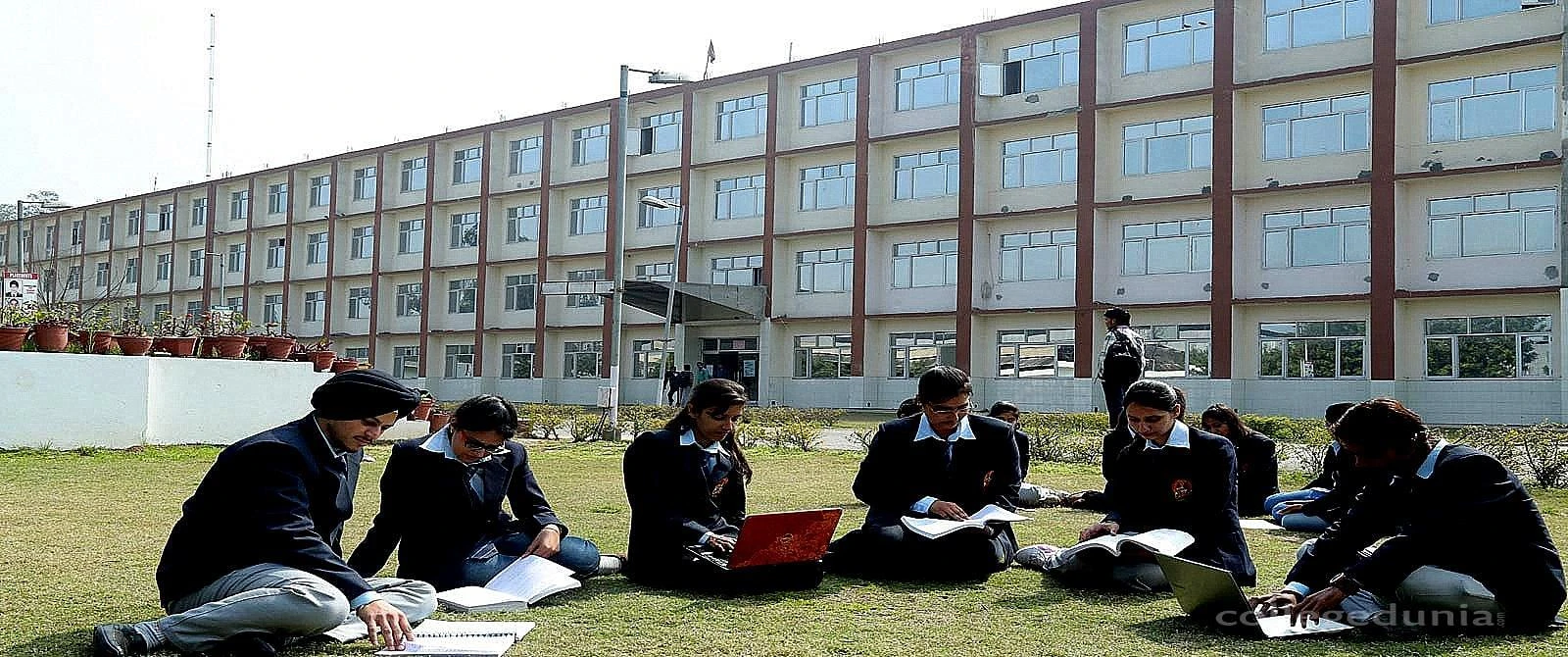
In this preview: 2 photos · 0 videos
It is considered adequate for obtaining a degree. However, students should note that securing higher salary packages typically requires pursuing off-campus placement opportunities.
Realistic average placement packages at Anand College of Engineering and Management typically range between ₹2 Lakhs Per Annum (LPA) and ₹3 LPA.
Yes, ACEM is affiliated with I.K. Gujral Punjab Technical University (IKGPTU), Jalandhar, which was formerly known as Punjab Technical University (PTU).
Yes, the college has a secure and separate girls' hostel located on its campus.
Student reviews regarding the mess food are mixed, with most describing it as "average" or noting it is edible but can become repetitive.
Share what future students should know about ACEM.
Student voices are not rewritten by colleges. We remove spam and abuse.
Wider admission question? Community PulseWhat should future students know?
Tell us which course you're considering. We'll help you work out the next step.
Get instant Partner access after mobile verification. Your public edits are reviewed before they go live.
Claim this college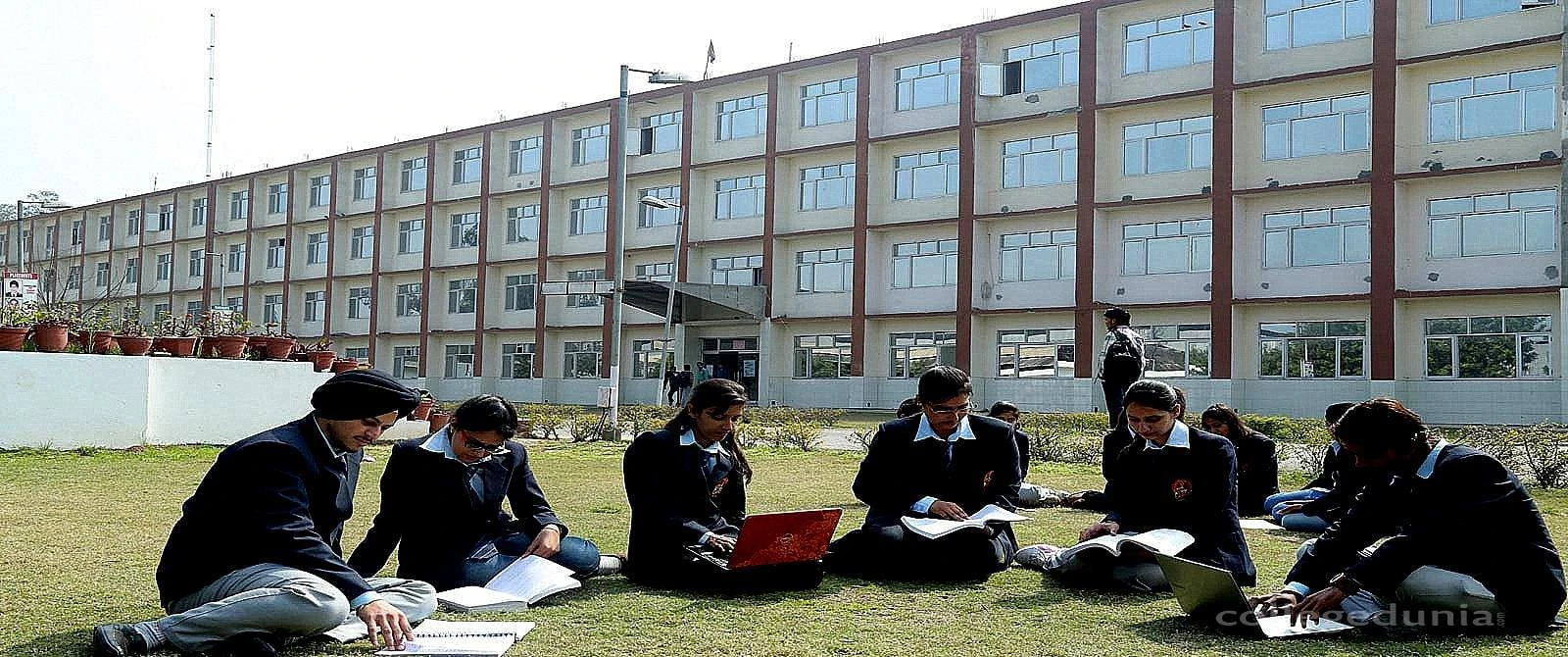
 Auditorium
 Cafeteria
 Computer Labs
 Gym
Gym Hostel
 Medical
 Science Labs
 Sports Complex
 Study Library