Loading Admission Guardian content
Loading Admission Guardian content

Provisional score based on available data. It may change as more information is verified.
Find a program, read its fee details and explore the admission requirements.
Summary of the programs shown below. First-year fee. Check the note beside each amount for inclusions and exclusions.
| Course | Stream | Fees |
|---|---|---|
| Bachelor of Science [B.Sc] (Nursing) | Paramedical | 80500 |
| Diplomate National Board [DNB] | Medical | 125000 |
| Master of Science [M.Sc] (Nursing) | Paramedical | 150000 |
| Diploma | Medical |
Specializations
Eligibility: 10+2
Specializations
All accepted exams
Specializations
Eligibility: Graduation
Specializations
2 exams with cutoff data available
If you're looking at nursing or paramedical colleges in Kerala, you'll hear one name repeated for its clinical training: Ananthapuri Hospitals and Research Institute (AHRI). This isn't a sprawling university campus. It's a 500-bed, NABH-accredited super-specialty hospital that also runs a college. That integration is its entire value proposition. Students walk from lecture halls directly into high-pressure environments like cardiac surgery units and transplant wards. For a prospective nurse or technician who wants to be job-ready from day one, that's a powerful draw. But it comes with trade-offs. There's no typical 'college life' here—the focus is intensely professional, the workload is heavy, and the rules are strict. This profile cuts through the marketing to give you the real picture, based on official data and the consensus from students who've been through it.
The academic structure here is straightforward and hospital-centric. Everything feeds into the operational needs of a major healthcare facility.
For undergraduates, the B.Sc. Nursing program is the main attraction, with an intake of 60. Alongside it, the institute offers paramedical degrees like B.Sc. Medical Laboratory Technology (MLT) and B.Sc. Perfusion Technology, though intakes for these are smaller, sometimes just a handful of seats.
Where AHRI stands out significantly is in postgraduate medical education. It's a recognized Diplomate of National Board (DNB) training center. That means post-NEET-PG doctors come here for residency in broad specialties like General Medicine, Surgery, Paediatrics, and Anaesthesiology. They also offer super-specialty DNB courses in Cardiology, Gastroenterology, Nephrology, and Neurology. This creates a layered learning environment where nursing students interact with resident doctors, mimicking a real hospital hierarchy.
There's also a suite of diploma programs for operation theatre, cardiovascular, dialysis, and radiology technology. The academic calendar follows KUHS, but the real curriculum happens on the wards. Faculty includes over 100 full-time hospital consultants who double as guides and lecturers. It's a practical, no-frills system. You won't find elaborate research facilities, but you will find unmatched patient access.
Forget the campus recruitment drives you see in engineering. Placement here works differently, and that's crucial to understand.
For B.Sc. Nursing and paramedical diploma graduates, the primary recruiter is Ananthapuri Hospital itself. A decent chunk of each batch is absorbed internally based on performance and vacancies. It's not a guaranteed job, but it's a strong inside track. External placements see graduates moving to major chains like Aster DM Healthcare and Apollo Hospitals, or securing government jobs through the Kerala PSC.
The salary reality for nursing freshers in Kerala is modest. The starting range is typically ₹15,000 to ₹22,000 per month. That's the market rate, and AHRI doesn't magically override it. What the institute provides is the robust clinical experience that makes graduates attractive candidates, both domestically and internationally.
And that's the other big placement story: global mobility. The college has a strong reputation for students migrating to the UK, UAE, Canada, and Germany. The high-volume, advanced clinical exposure is perfect for building the competency needed to pass exams like the NCLEX-RN (for the USA) or the OET/IELTS for the UK and Australia. Alumni networks in the NHS (UK) and Middle Eastern hospitals are active.
For DNB residents, 'placement' is the residency itself, which comes with a stipend as per NBE guidelines (₹45,000 to ₹60,000 per month). Post-residency, these doctors often move into consultant roles in government or private setups.
Fees for nursing in Kerala are regulated, which brings some predictability. For the 2024-25 academic year, the annual tuition for B.Sc. Nursing is approximately ₹73,025 for government quota seats and up to ₹95,000 for management quota seats.
On top of tuition, budget for a refundable caution deposit of ₹10,000 and first-year charges for university registration, ID cards, and uniforms (around ₹15,000). Hostel and mess fees run between ₹5,000 to ₹7,000 per month.
A rough total cost for the four-year B.Sc. Nursing program, including hostel, lands between ₹5.5 lakhs to ₹7 lakhs. It's a manageable investment for a professional degree. Financial aid primarily comes through government scholarships like E-Grantz for SC/ST/OBC students and minority scholarships from the Ministry of Minority Affairs (MOMA). The college administration can guide eligible students through the application processes.
The path in depends entirely on the course.
For B.Sc. Nursing, the main gateway is the state merit list prepared by the LBS Centre for Science & Technology. Admission is based on your marks in Physics, Chemistry, and Biology in the Kerala Higher Secondary exam (or equivalent). To have a shot at a merit seat in a college of AHRI's standing, you generally need a rank within the top 5,000 to 8,000. Management quota seats (about 50% of the 60 seats) are filled based on 10+2 marks directly, and there's a 15% NRI quota. The application window usually opens in June-July.
Admission to DNB programs requires clearing NEET-PG (for broad specialties) or NEET-SS (for super-specialties) and then participating in the centralized counseling conducted by the National Board of Examinations (NBE).
For paramedical and diploma courses, the process is more direct. It's typically based on 10+2 merit (with PCB subjects) followed by a personal interview conducted by the hospital management. There's usually no state-level entrance exam for these.
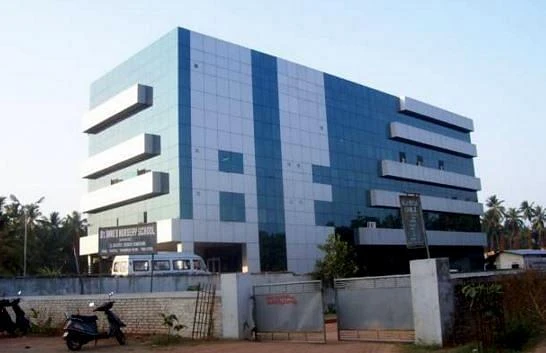
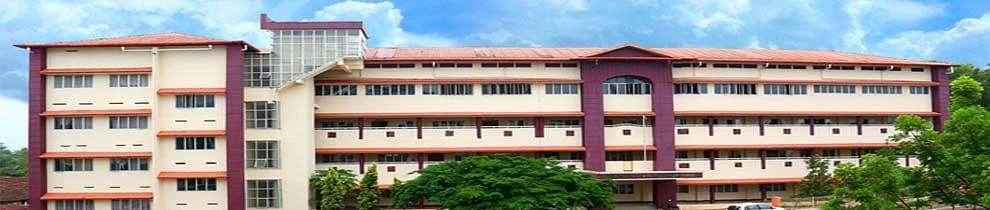
Let's be clear: this is a hospital campus with an attached college, not the other way around. The 10-12 acre integrated complex is dominated by the hospital buildings. The infrastructure students care about—the labs for Nursing Foundation, Anatomy, and Nutrition—are functional and geared for practice. The real 'lab' is the hospital itself, with its 12+ operation theatres and advanced cath labs.
Hostel facilities, primarily for girls, are on-campus or very close by. Reviews describe them as "functional and clean" but also highlight strict rules. Curfews are enforced, and leave isn't easily granted. Male students, given the lower intake in nursing, often arrange private accommodation nearby.
The canteen provides Kerala-style meals, often termed "average but hygienic" by students. There's no large sports ground or vibrant student union. Social life is minimal. The hospital provides bus transport for community health postings. Parking is a known headache due to constant patient traffic.
Sifting through forums like Reddit, Quora, and review sites, a consistent picture emerges. The praise is focused and specific; the complaints are about lifestyle, not education quality.
The overwhelming positive is clinical exposure. Students constantly say they see rare and advanced cases that peers in smaller hospitals don't. "Because it's a super-specialty hospital, you see cases that students in smaller hospitals never see," is a common sentiment. They also appreciate the professional environment and the accessibility of faculty for academic doubts.
The negatives revolve around workload and restrictions. The workload is heavy, with long hours on clinical postings. The hostel rules are frequently described as "old-school" and very strict. The biggest adjustment for many is the lack of a traditional campus life—no fests, limited socializing, and a 95% focus on academics and clinical work. One paraphrased review sums it up: "If you want to learn the job, Ananthapuri is great. If you want to enjoy 'college life' like in the movies, don't come here."
AHRI is a specialist institution with a very clear purpose. It's an excellent choice for a specific type of student: one who is dead-serious about a hands-on career in nursing or paramedical sciences and values clinical rigor over collegiate experience. The direct access to a major, accredited hospital is a legitimate advantage that few private colleges can match. It builds confidence and a strong resume, particularly for those aiming for international careers. The fee is reasonable for the sector, and the internal absorption rate adds a layer of security.
But you have to want what it offers. If you're looking for a balanced college life with extracurriculars, sports, and social freedom, you will be disappointed. The environment is disciplined, the rules are strict, and the schedule is demanding. It's a professional training ground, not a traditional campus.
So, is it worth it? For a career-focused student in healthcare, absolutely. It provides a direct pipeline into the real world of high-stakes medicine. For someone unsure about the commitment or hoping for a more rounded university experience, it might feel like too much, too soon. Your decision hinges entirely on which of those two profiles fits you best.
For the most current fee structure and application details, always refer to the official Ananthapuri Hospitals website.
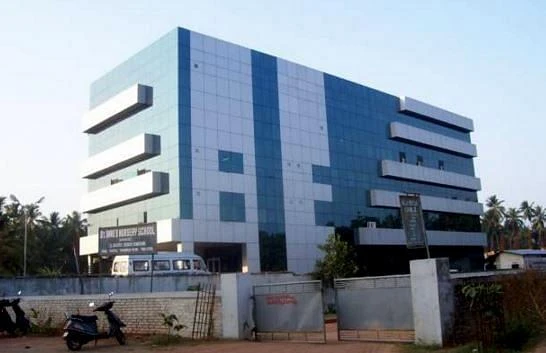
In this preview: 1 photo · 0 videos
Yes, Ananthapuri College of Nursing is considered one of the best in Trivandrum for B.Sc. Nursing, particularly noted for its excellent clinical exposure provided by its parent super-specialty hospital.
The fee structure for Management seats in Nursing typically ranges from ₹85,000 to ₹95,000 per year. This fee does not include the cost of hostel accommodation and mess charges.
Yes, the college provides placement opportunities, and many graduates are offered roles such as staff nurse or technician at the Ananthapuri Hospitals and Research Institute (AHRI) upon course completion, though this placement is not mandatory.
For Paramedical courses, there is usually no state-level entrance exam. Admission is typically based on the candidate's 10+2 academic marks and performance in a personal interview conducted at the hospital.
The girls' hostel at Ananthapuri is safe and conveniently located close to the hospital. It is known for maintaining strict rules regarding student timings and outings.
Share what future students should know about Ananthapuri Hospitals and Research Institute.
Student voices are not rewritten by colleges. We remove spam and abuse.
Wider admission question? Community PulseWhat should future students know?
Tell us which course you're considering. We'll help you work out the next step.
Get instant Partner access after mobile verification. Your public edits are reviewed before they go live.
Claim this college