Loading Admission Guardian content
Loading Admission Guardian content

Provisional score based on available data. It may change as more information is verified.
Find a program, read its fee details and explore the admission requirements.
Summary of the programs shown below. First-year fee. Check the note beside each amount for inclusions and exclusions.
| Course | Stream | Fees |
|---|---|---|
| Diploma in Engineering (Polytechnic) | Engineering | 50000 |
| Bachelor of Technology [B.Tech] | Engineering | 80500 |
| Bachelor of Technology [B.Tech] {Lateral} | Engineering | 80500 |
| Master of Business Administration [MBA] | Management | 83500 |
Specializations
Specializations
All accepted exams
Eligibility: 10+2 with 75% + UPTAC
Specializations
All accepted exams
Eligibility: 10+3 with 75% + UPTAC
Specializations
All accepted exams
Eligibility: Graduation with 50% + UPSEE MBA
3 exams with cutoff data available
 Accenture
 Aircel
 Ashok Leyland
 Aviva
Aviva Axis Bank
 Coca-Cola India
 Cognizant
 Dell
Dell Eureka Forbes
 Genpact
 HDFC Bank
 Hindustan Copper Limited (HCL)
 ICICI Bank
 Indigo
 Infosys
 Kotak Mahindra Old Mutual Life Insurance Limited
 Pepsico Holdings (I) Pvt. Ltd.
 Reliance
 Syntel
 TCS
TCS Tech Mahindra
 Vodafone
 Wipro
WiproApollo Institute of Technology (AIT) in Kanpur is a private engineering college that’s built a specific reputation. It’s not the place for students chasing top-tier NIRF rankings or dream packages. Instead, it’s a functional, affordable option for a large segment of students from Uttar Pradesh who clear JEE Main but land in the higher percentile brackets. The campus is surprisingly green and modern for its fee bracket, and the faculty gets decent marks for being supportive. But the trade-offs are clear: you’re getting a basic AKTU degree with placement outcomes that are modest, at best. The college’s own marketing might flash a 25 LPA figure, but the real on-campus story is a cluster of mass recruiters offering roles in the 3.5 to 4.5 LPA range. For many families, that’s the pragmatic calculation here—a low-cost degree with a shot at a stable, if unspectacular, job.
AIT runs a standard set of AKTU-affiliated programs. The B.Tech is the main draw, with Computer Science and Engineering having the largest intake at 120 seats. Information Technology, Mechanical, Civil, Electronics & Communication, and Electrical Engineering each take in 60 students. There’s also an MBA program and some diploma courses in engineering.
The academic rhythm is entirely dictated by AKTU’s calendar. Faculty strength is estimated between 60-80, with a handful of PhD holders like Dr. T. B. Singh and Dr. Kamlesh Kumar Tripathi leading departments. Student feedback consistently points to the teaching staff as a positive—they’re described as approachable and focused on helping students clear university exams. That’s a practical strength for a college at this level. The curriculum isn’t groundbreaking, but it’s delivered. Labs are equipped to meet AKTU’s syllabus requirements, with a computer center of 200+ systems and a robotics lab mentioned as highlights. Some older reviews hint at maintenance issues in core engineering labs, but that’s a common gripe across many private colleges.
This is where you need to separate the brochure from the ground report. The college’s official communications might cite a highest package of 12-25 LPA. In reality, that 25 LPA figure is almost certainly an off-campus, outlier achievement by a student. The verified on-campus range for top offers is more like 6 to 8 LPA.
The real meat is in the average and median numbers. The average package for the 2024-25 cycle hovered between 3.5 and 4.5 LPA. The median was around 3.2 LPA. That tells you most students are clustering in that band.
Placement percentage claims also have a gap. Officially, it’s 80-100%. Talking to students and scanning reviews on platforms like Shiksha and CollegeDunia paints a different picture—a working figure of 60-70% for on-campus offers seems more accurate. And the nature of these jobs matters. Top recruiters listed include TCS, Wipro, Infosys, HCL, and Genpact. However, student sentiment frequently notes that many of these roles are in sales, support, or BPO operations, not core software development or engineering. Sectors break down to roughly 60% IT/Software, 25% Sales/Marketing, and 15% Core Engineering.
So, the placement cell is active, but it’s facilitating access to India’s mass recruitment engine. If your goal is a stable entry into an IT services firm, AIT can be a conduit. If you’re aiming for product-based companies or high-stakes core engineering roles, you’ll be building that path almost entirely on your own.
The fee structure is AIT’s most compelling argument. Regulated by the state’s Fee Fixation Committee, annual B.Tech tuition is kept between ₹55,000 and ₹67,000. Over four years, you’re looking at roughly ₹2.5 lakhs in tuition fees. That’s undeniably low for a private engineering college.
Other costs add up. Hostel and mess fees run another ₹50,000 to ₹70,000 per year. There’s also a one-time admission charge of around ₹39,000 covering security deposits, uniforms, and registration. The primary financial aid route is the UP Government’s Post-Matric Scholarship (Dashmottar) for SC, ST, OBC, and General (EWS) category students. The college itself doesn’t appear to offer major merit-based scholarships.
For B.Tech, the gateway is JEE Main. Admission is processed through the state’s centralized UPTAC counseling. A full 85% of seats are filled this way. The remaining 15% are management quota seats, which can be accessed via direct admission based on merit or other criteria.
Cutoffs for AKTU colleges are notoriously fluid. For the General All-India quota in recent cycles, the Computer Science branch at AIT has seen opening ranks around 2.4 lakh and closing ranks spiraling down to nearly 11 lakh. For branches like Mechanical or Civil, seats are often available at much lower percentiles, sometimes even for students who haven’t cracked a high JEE Main score. The MBA program accepts scores from CUET-PG, CAT, and MAT.
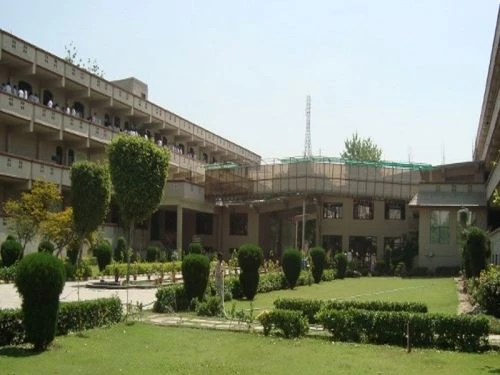
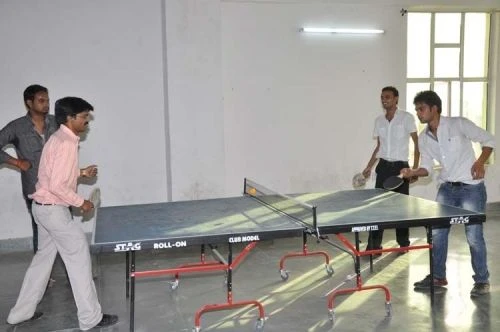
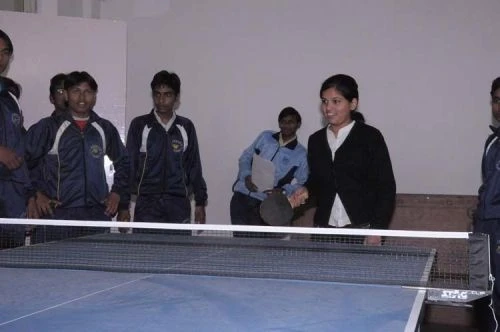
The 35-acre campus is consistently praised. It’s lush, green, and the academic buildings are modern—a visual step above many peers in this fee range. Infrastructure includes a library with over 40,000 volumes, large sports grounds for cricket and football, and indoor facilities. The college runs a bus fleet to connect with Kanpur city.
The hostels, separate for boys and girls, have a capacity of about 300. Reviews rate them a middling 3 out of 5. The food in the mess is described as average but edible. A common complaint is about connectivity: Wi-Fi is available in specific zones like the library but is reported to be unreliable in hostels. And then there’s the location. Being in Sarsaul on the highway means you’re isolated. It’s a quiet, almost secluded environment, which some appreciate for studies but others find cut off from Kanpur’s social and coaching hub energy. The administration is noted for being strict, enforcing a 75% attendance rule and maintaining an environment some compare to a school.
Synthesizing feedback from CollegeDunia, Shiksha, and Quora gives you a clear, consistent profile. The positives are practical: helpful teachers, a pretty campus, and exceptional value for money given the low fees. It’s seen as a no-frills place to get your degree without financial strain.
The negatives are equally practical. Placement quality is the biggest gripe, with a sense that the "top recruiter" list doesn’t reflect the quality of roles offered. The remote location is a drag. Administrative strictness can chafe. And there’s a persistent sense of infrastructural gaps, like spotty Wi-Fi. One paraphrased Quora review sums it up: "If you want a degree without much hassle and are okay with a 3-4 LPA job, it's fine. Don't expect Google to come here." Another on Shiksha noted, "The campus is beautiful, but the Wi-Fi never works when you actually need to code."
Apollo Institute of Technology serves a specific niche. It’s worth serious consideration if you are a cost-conscious student from UP, have a JEE Main rank in the higher lakhs, and your primary goal is to secure an affordable AKTU B.Tech degree with a realistic shot at a 3.5-4.5 LPA job from a mass recruiter. The decent faculty and pleasant campus are bonuses. However, look elsewhere if you have a rank that can get you into a higher-tier private college (like PSIT, which outperforms AIT in placements but costs more), if you’re targeting top-tier software or core engineering roles, or if you value an urban, socially vibrant campus life. AIT is a pragmatic choice, not a aspirational one. It delivers on its basic promise—a low-cost degree pathway to the entry-level IT workforce—without overpromising.


In this preview: 5 photos · 0 videos
Yes, the CSE branch at Apollo Institute of Technology is considered the most active branch and has the best placement record in the college, with placements often coming from mass recruiters.
Yes, direct admission to Apollo Institute of Technology is possible through the management quota, which covers 15% of seats, or if seats remain vacant after the standard counseling process.
No, hostel accommodation is not mandatory at Apollo Institute of Technology. Students who are day scholars can use the college's bus facility for commuting.
While PSIT is generally considered superior in terms of placements and infrastructure, it is also significantly more expensive and has a stricter environment compared to Apollo Institute of Technology.
No, Apollo Institute of Technology does not provide laptops to students. However, the college does provide access to its computer labs during college hours.
Share what future students should know about AIT.
Student voices are not rewritten by colleges. We remove spam and abuse.
Wider admission question? Community PulseWhat should future students know?
Tell us which course you're considering. We'll help you work out the next step.
Get instant Partner access after mobile verification. Your public edits are reviewed before they go live.
Claim this college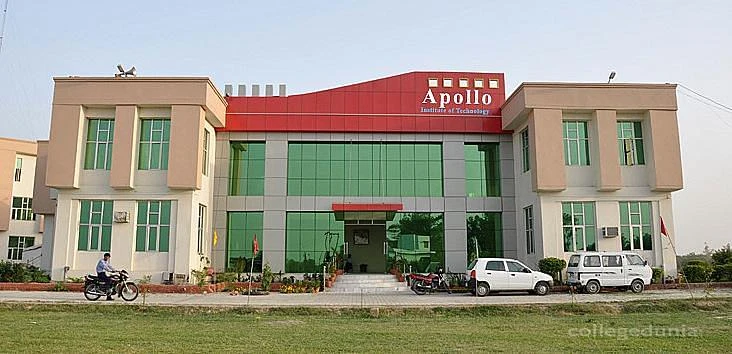
 Auditorium
 Cafeteria
 Campus Shuttle
 Campus Wi-Fi
 Hostel
 Medical
 Science Labs
 Sports Complex
 Study Library