Loading Admission Guardian content
Loading Admission Guardian content
Provisional score based on available data. It may change as more information is verified.
Find a program, read its fee details and explore the admission requirements.
Summary of the programs shown below. Total course fee. Check the note beside each amount for inclusions and exclusions.
| Course | Stream | Fees |
|---|---|---|
| Bachelor of Physiotherapy [BPT] | Medical | 39000 |
Eligibility: 10+2
If you're looking for a physiotherapy college where the textbook meets the treatment bed from day one, Apollo College of Physiotherapy (ACP) in Hyderabad’s Jubilee Hills is a serious contender. Established in 1999 and part of the massive Apollo Health City campus, this isn't a typical college. It's a training ground embedded within a working hospital. That's the core pitch. You trade a vibrant, fest-filled campus life for a front-row seat to complex clinical cases. The Apollo brand carries undeniable weight in the healthcare sector, which is a major draw for students focused purely on building a rock-solid clinical foundation and securing a job. But is that trade-off worth it? Let's break it down.
The academic offering is focused and professional. The undergraduate Bachelor of Physiotherapy (BPT) is a 4.5-year program, which includes a mandatory 6-month rotatory internship. Intake is around 50-60 students per year. For postgraduates, the Master of Physiotherapy (MPT) is a 2-year program with specializations that typically include Orthopedics, Neurology, Cardio-Pulmonary, and Sports Physiotherapy, though availability can shift annually. The total PG intake is small, around 15-20 seats.
What defines the academic experience here isn't the breadth of programs, but the depth of practical training. The curriculum follows the KNRUHS schedule, but the teaching is heavily supplemented by clinicians. The faculty of about 44 includes visiting consultants from the attached Apollo Hospitals, meaning your professor might literally walk out of a lecture to treat a patient. That's the environment. Students frequently mention workshops on techniques like Mulligan, Dry Needling, and Kinesio Taping, which are valuable for building a practical skill set beyond the syllabus.
This is where the college's proposition gets real. The official placement percentage is high, around 90-95%, and that's largely believable because of the primary recruiter: the Apollo Hospitals group itself. A significant number of graduates are absorbed internally. Other top recruiters are major Hyderabad hospital chains like KIMS, Yashoda, Continental, and Care Hospitals.
Now, the salary numbers need a reality check. You'll see a "highest package of ₹8 LPA" floated around. That figure, while possible for a senior international role or a very niche specialization, is not the norm for a fresh BPT graduate. The working average that alumni consistently cite is between ₹2.4 and ₹3.6 Lakhs Per Annum. That translates to a monthly starting salary of ₹20,000 to ₹30,000. It's a modest start, but it's fairly standard for the physiotherapy field in India for freshers. The real value, as students stress, isn't the starting paycheque but the "Apollo" experience on your CV and the clinical competence you gain, which sets you up for faster career growth.
Internships are guaranteed—100% of students do their compulsory 6-month stint at Apollo Hospitals, Jubilee Hills. Don't expect a stipend; it's usually minimal or non-existent, which is typical for clinical internships.
For the BPT program, annual tuition fees range from ₹1.25 lakh to ₹1.5 lakh, with the variation depending on whether you secure a seat through the state convener quota or the management quota. The MPT program is costlier, at about ₹1.5 to ₹2 lakh per year.
Hostel and mess fees add another ₹35,000 to ₹50,000 annually for basic non-AC accommodation. AC rooms and attached bathrooms cost extra. When you tally it all up—tuition, hostel, and other university fees—the total cost for the 4-year BPT course lands somewhere between ₹6.5 and ₹8 lakhs.
Financial aid primarily comes in the form of government scholarships for SC/ST/OBC candidates, which are processed through the Telangana State e-Pass portal. The college itself doesn't prominently advertise a wide range of merit-based scholarships.
Admission is a two-track process. For 50% of the seats (Category A), selection is through state-level counseling conducted by KNRUHS based on your rank in the TS EAPCET entrance exam. While NEET UG is increasingly a baseline eligibility requirement for allied health sciences in Telangana, TS EAPCET remains the primary ranking exam for this college. For the General category, you typically need a rank under 15,000–20,000 to have a serious shot at a convener quota seat.
The remaining 50% of seats (Category B/Management/NRI) are filled through direct admission. This is based on your 10+2 merit (Physics, Chemistry, Biology, and English), usually requiring a minimum of 50-80% in PCB. The application window generally opens around May-July. The basic eligibility is non-negotiable: 10+2 with PCB and English.
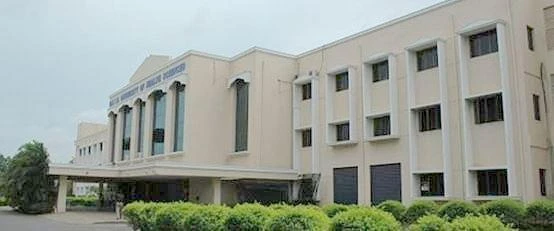
The campus is essentially a dedicated academic block within the 10-acre Apollo Health City. This integration is its greatest strength and, for some, a limitation. You have 24/7 library access, well-equipped labs for anatomy, physiology, and therapy, and sports facilities for badminton, volleyball, and a gym. The canteen is shared with hospital staff.
The hostels are separate for boys and girls, with the girls' hostel being closer to the academic block. Reviews on hostel quality are mixed, averaging around a 3.5/5. The positives are security and proximity. The negatives students mention include strict timings, average mess food, and occasional maintenance issues like unclean toilets in older blocks. The medical facility, of course, is world-class—you're inside a major hospital.
Social life is academic-centric. Don't expect large cultural fests. The vibe is professional and disciplined.
Talking to students and scanning forums reveals a clear, consistent consensus. This college is for the clinically ambitious, not the socially thirsty.
The praise is overwhelmingly focused on clinical exposure. Students say they see and handle cases in the attached Apollo Hospitals that they simply wouldn't encounter elsewhere in the state. The faculty's real-world expertise as practicing clinicians is highly valued. And the brand value of "Apollo" is repeatedly cited as a major career accelerator.
But there are consistent gripes. The environment is strict—attendance, uniforms, and timings are enforced. The management can be slow on administrative issues. And yes, the social scene is quiet. The teaching is traditional but effective, and internal marks are known to be fair but tough to score high in.
On placements, alumni are the best reality check. They acknowledge the modest starting salaries but emphasize that the hands-on experience is the real ROI, making them job-ready from day one. Many have gone on to practice in the USA, UK, and Australia, noting the curriculum helps with international credentialing.
Apollo College of Physiotherapy is a very specific kind of bet. It's best for the student who views their undergraduate degree as a direct vocational pathway into clinical practice. If your priority is unparalleled, daily hospital-based training, a disciplined environment, and leveraging a powerful brand name for your first job, ACP delivers convincingly. The clinical exposure here is arguably its unique selling proposition in the Telangana region.
However, if you're looking for a "typical" college experience with a vibrant campus life, big fests, and a more relaxed atmosphere, you'll likely find ACP stifling. The fees are on the higher side for a BPT program, and the starting salaries are modest, so the financial equation only works if you value the practical training as a long-term investment.
In short, choose Apollo if you are all-in on becoming a skilled physiotherapist. Look elsewhere if you want the full, rounded college life. It's a trade-off, and the college makes no secret about which side of that deal it focuses on.
For the most official and current information, always refer to the college's website and the KNRUHS notifications for admissions.
In this preview: 1 photo · 0 videos
Yes, Apollo Physiotherapy College is considered good for placements, primarily due to the internal absorption of graduates into the extensive Apollo Hospitals network and the institution's strong reputation in the healthcare industry.
For admission to the Bachelor of Physiotherapy (BPT) program under the Convener Quota, a TS EAPCET rank under 15,000–20,000 is typically required for candidates in the General category.
Yes, the college provides separate hostel facilities for both boys and girls. It is noted that the girls' hostel is located closer to the main academic block.
As of 2024, the primary entrance exam for BPT is TS EAPCET. However, qualifying the NEET exam is often a mandatory prerequisite for the subsequent counseling process conducted by KNRUHS (Kaloji Narayana Rao University of Health Sciences).
The clinical training is widely regarded as the college's strongest feature. Students gain extensive hands-on experience by rotating through various specialized departments at Apollo Health City, including the ICU, Orthopedics, and Neurology.
Share what future students should know about Apollo Physiotherapy College.
Student voices are not rewritten by colleges. We remove spam and abuse.
Wider admission question? Community PulseWhat should future students know?
Tell us which course you're considering. We'll help you work out the next step.
Get instant Partner access after mobile verification. Your public edits are reviewed before they go live.
Claim this college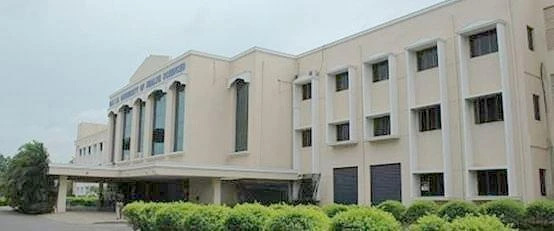
 Auditorium
 Cafeteria
 Medical
 Science Labs
 Sports Complex
 Study Library