Loading Admission Guardian content
Loading Admission Guardian content
Provisional score based on available data. It may change as more information is verified.
Find a program, read its fee details and explore the admission requirements.
Summary of the programs shown below. First-year fee. Check the note beside each amount for inclusions and exclusions.
| Course | Stream | Fees |
|---|---|---|
| Aircraft Maintenance Engineering [AME] (Avionics Stream) | Aviation | 160500 |
Specializations
 Air India
 GO-AIR Airlines
 Indigo
 Jet Airways
 Spice Jet
If you're looking at Aircraft Maintenance Engineering (AME) colleges in North India, the Azad Institute of Aeronautics and Engineering (AIAE) in Lucknow is a name that comes up consistently. It's not a typical engineering college chasing NIRF rankings. This is a specialized, DGCA-approved training ground where the goal is a license, not just a degree. And that focus is its biggest strength. Walking past a Hawker executive jet parked in its own hangar on campus makes that clear from day one. The institute, established in 2005, operates under the strict regulations of DGCA CAR-147, and its entire three-year program is built around the singular objective of preparing you to pass the DGCA module exams and secure that coveted AME license. It's a practical, hands-on path into aviation, but one that requires serious self-discipline. The gap between the institute's official placement claims and the reality students describe is the critical detail every prospective student needs to understand.
AIAE doesn't offer a buffet of engineering programs. It does one thing: AME. And it structures that one program with a clear, industry-mandated rhythm. You'll spend five semesters on campus, split between theory classes governed by DGCA's CAR-66 syllabus and extensive practical work in the institute's labs and hangar. The sixth and final semester is dedicated to On-Job Training (OJT) at a DGCA-approved Maintenance, Repair, and Overhaul (MRO) facility or an airline—a crucial bridge to the industry.
The two streams are Avionics (covering Electrical, Instrument, and Radio Navigation systems) and Mechanical (focusing on Airframe and Powerplants). Intake for each stream varies between 60 and 120 students per year. The faculty, reportedly around 15-20 for the aeronautics department, includes retired Air Force personnel and experienced AMEs. That's a decent mix for imparting practical knowledge. The academic calendar syncs with the DGCA exam cycle (February, June, October), which dictates the pace of your progress. It's a rigid system, but that's the nature of the aviation maintenance field.
This is where you need to read between the lines. AME placements don't work like campus drives for software engineers. The institute officially claims 80-100% "assistance" in placements. What that often translates to, according to student reviews, is securing the mandatory OJT slot for you. That's valuable, but it's not a job offer.
The real placement—a salaried position as a trainee or licensed engineer—hinges almost entirely on you clearing the DGCA module exams. The college can introduce you to recruiters, but your license is your ticket. Alumni sentiment suggests the effective placement rate for direct, on-campus job offers is closer to 60-70%. Those who do land roles start with salaries in the ₹3.5 to ₹6 LPA range. Top recruiters who visit for OJT and recruitment include airlines like IndiGo, Air India, and SpiceJet, and major MROs like Air India Engineering Services Ltd (AIESL) and GMR Aero Technic. The reported highest package of ₹10 LPA is likely for other programs within the Azad Group; for AME, a starting point of ₹4 LPA is a more realistic average for a fresh license holder.
The total cost for the three-year AME program is estimated between ₹3.81 lakhs and ₹4.5 lakhs, covering tuition, registration, and uniforms. The annual tuition fee for 2024-25 is approximately ₹1,60,500. On top of that, hostel and mess charges add another ₹60,000 to ₹75,000 per year, depending on whether you opt for AC accommodation. Additional costs include a one-time admission fee (around ₹10,000), refundable caution money, and the all-important DGCA exam fees, which are paid per module as you attempt them.
Financial aid is available. Merit-based scholarships are offered through the AME CET entrance exam rank. Students from Uttar Pradesh can also apply for state government scholarship schemes for SC/ST/OBC and EWS categories. It's worth checking the official AIAE website for the latest fee breakdown and scholarship forms.
Admission is primarily driven by two pathways: the national-level AME CET entrance exam or the state-level UPTAC counseling. Direct merit-based admission is also an option if seats remain. The basic eligibility is passing 10+2 with Physics, Chemistry, and Mathematics (PCM) and a minimum of 50% aggregate. Diploma holders in relevant engineering fields are also eligible.
The selection process is straightforward: a merit list is prepared based on your entrance exam rank or 12th-grade marks. But there's a non-negotiable extra step—a medical fitness certificate. This is compulsory for any aviation role, and you'll need to clear it to confirm your admission. The application window typically runs from January through July, aligning with the DGCA training cycle.
The campus, shared with the broader Azad Technical Campus, spans a reported 25-60 acres. The infrastructure is heavily geared towards its core function. The hangar with the Hawker jet and helicopters is the crown jewel for hands-on learning. Labs for Airframe, Engine, and Avionics systems are the daily classrooms. There's a central library with over 10,000 books and DGCA documents. For recreation, there's a large playground, basketball courts, and indoor games facilities.
Hostels are separate for boys and girls, with a total capacity of around 400. Reviews on hostel quality are mixed, averaging a 3.5/5 rating. The most common complaint isn't about the rooms but the mess food—students often describe it as repetitive and occasionally a concern for hygiene. Wi-Fi is available but is frequently cited as having average speed, especially in the hostel blocks. The location is a bit off the main city hub, which can feel isolating but does minimize distractions.
The consensus from forums like CollegeDunia and Shiksha paints a picture of a competent, no-frills training institute. The praise is consistently directed at the practical facilities and the faculty's industry experience. "Having a real jet to work on is a game-changer," is a common refrain. The ex-Air Force instructors, in particular, get respect for their depth of knowledge.
But the criticisms are just as consistent. Administrative processes—getting fee receipts, documents verified—are often described as slow and bureaucratic. The placement narrative is the biggest point of contention. Many students feel the "80-100% placement" claim is marketing spin, clarifying that the institute's primary role is to facilitate OJT, after which you're largely on your own to clear exams and find a job. The hostel food, as mentioned, is a frequent grievance. Attendance is strict at 75%, and your internal marks are tied to it.
AIAE Lucknow is a solid, mid-tier choice for AME aspirants in North India, but with very specific conditions. It's worth it if you are a self-motivated student who understands that the institute provides the platform (DGCA approval, hangar, OJT connections) and the necessary training, but the ultimate responsibility for passing the license exams and landing a good job rests with you. If you want a vibrant campus life or a degree-granting program, look elsewhere. This is a professional certification track. It's best for students who are passionate about aircraft mechanics, comfortable with a structured, disciplined environment, and prepared to put in the independent study required to crack the DGCA modules. For that student, AIAE offers a legitimate, practical pathway into the aviation maintenance industry. For someone expecting a traditional college experience with high placement guarantees, it might be a frustrating fit. Always verify the latest fees and DGCA approval status directly with the institute before committing.
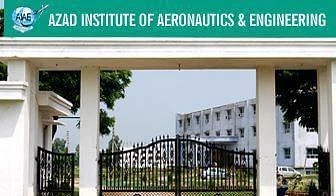
In this preview: 1 photo · 0 videos
Yes, the Azad Institute of Aeronautics and Engineering (AIAE) in Lucknow holds a valid DGCA CAR-147 (Basic) approval. This approval covers both Avionics and Mechanical streams for its Aircraft Maintenance Engineering (AME) courses.
At the Azad group, AME (offered at AIAE) is a license-based professional course focused on aircraft maintenance. In contrast, a B.Tech in Aeronautical Engineering (offered at AIET) is a 4-year degree program oriented towards aircraft design, manufacturing, and broader engineering principles.
No, the AME course itself is a professional certificate program that leads to a DGCA license. Students often pursue a separate private degree, such as a B.Sc. in Aviation or a B.Tech, concurrently to obtain an academic degree alongside the AME certification.
Placements for On-Job Training (OJT) as part of the AME course are reported to be decent. However, securing a permanent position with an airline typically requires students to first clear the mandatory DGCA module examinations after completing the course.
No, hostel stay is not mandatory for students. Those who prefer off-campus living can opt for private paying guest (PG) accommodations available in nearby areas such as Bijnor and Aashiyana.
Share what future students should know about Azad Institute of Aeronautics and Engineering.
Student voices are not rewritten by colleges. We remove spam and abuse.
Wider admission question? Community PulseWhat should future students know?
Tell us which course you're considering. We'll help you work out the next step.
Get instant Partner access after mobile verification. Your public edits are reviewed before they go live.
Claim this college
 Auditorium
 Cafeteria
 Computer Labs
 Hostel
 Science Labs
 Study Library