Loading Admission Guardian content
Loading Admission Guardian content

Provisional score based on available data. It may change as more information is verified.
Find a program, read its fee details and explore the admission requirements.
Summary of the programs shown below. First-year fee. Check the note beside each amount for inclusions and exclusions.
| Course | Stream | Fees |
|---|---|---|
| Bachelor of Technology [B.Tech] | Engineering | 152500 |
| Bachelor of Technology [B.Tech] {Lateral} | Engineering | 152500 |
Specializations
All accepted exams
Eligibility: 10+2 with 75% + JEE Main
Specializations
All accepted exams
Eligibility: 10+3 with 75% + JEE Main
 Accenture
 Bank of Baroda
 Bell Technology
 CMS Info Systems
 Cognizant
 Ericsson India Pvt Ltd
 First India
 HCL Technologies
 IBM
IBM Indian Oil Corporation Ltd (IOCL)
 Infosys Technologies
 Integra Micro Systems
 JC Antiques & Crafts
 L&T Infotech
 Maruti Suzuki
 Motif Inc
 NIIT
NIIT Reckon Infosystem
 SAG InfoTech
 Syntel
If you're searching for Baldev Ram Mirdha Institute of Technology (BMIT) in Jaipur for admissions in 2025 or 2026, you need to know this first: the college is closed. It's defunct. While automated listings on education portals might still pop up, the institute has been removed from the Rajasthan Technical University's active affiliation lists. This profile isn't a guide for future students; it's a historical record of a private engineering college that opened during India's tech boom, struggled, and eventually shut its doors. It's a case study in what happened to many Tier-3 private institutes when placements dried up and student intake plummeted.
BMIT operated across two campuses in Sitapura—Main and East—with a combined B.Tech intake of around 630 seats. The bread-and-butter programs were Computer Science, Electronics & Communication, and Electrical Engineering, each with 120 seats. Mechanical had between 90 and 120, while Civil was primarily at the East Campus. Information Technology was phased out in the later years.
They also ran an MBA program and M.Tech in Digital Communications and Computer Science. The academic calendar strictly followed the RTU semester system. At its peak, the institute claimed a faculty strength of 280, a number that reportedly dwindled to around 58 active professionals in its final years. A notable figure was Dr. Rajendra Kumar Khanna, with a PhD from IIT Madras and a UK post-doc, who provided academic leadership. But student reviews from 2017-2020 consistently mention high faculty attrition, with experienced professors leaving and classes often taken by junior lecturers or cancelled outright.
This is where the story turns. Placements were the single biggest point of student grievance and a likely key factor in the institute's decline.
The official claims and ground reality diverged sharply. The college brochure would tout a 70-80% placement rate. Students and alumni on forums like Quora and Reddit put the real on-campus placement figure for engineering roles closer to 30-35%. The highest package ever reported was around 8 LPA back in 2015-2016. By the 2019-2020 cycle, the top offers had fallen to between 3.5 and 4.5 LPA.
The average package settled in the 2 to 3 LPA range. You'd see recruiter names like Infosys, Wipro, IBM, Tech Mahindra, and Accenture on the placement brochures. The problem, as multiple alumni pointed out, was that many of these companies hadn't visited campus in years. When companies did come, students reported they were often BPOs like Teleperformance or Genpact, offering roles unrelated to engineering. The "IT Park" location, initially a selling point, failed to translate into meaningful campus recruitment from nearby businesses.
As a private, self-financing college, BMIT's fees were regulated by the Rajasthan state government. The last known annual tuition fee for B.Tech was in the range of INR 70,000 to 77,000. Over four years, that meant a total tuition cost of approximately INR 2.8 to 3.15 lakhs.
On top of that, hostel and mess fees added about INR 72,000 per year. There was also a one-time, refundable caution deposit of INR 7,500—a fee that students on Reddit complained was difficult to get back from the management. For high achievers, the college offered scholarships, including up to a 50% tuition waiver for state-level rank holders.
The admission process was centralized through the state system. Eligibility hinged on performance in JEE Main or, for remaining seats, Class 12th marks. Admissions were conducted via the Rajasthan Engineering Admission Process (REAP) counseling based on the candidate's rank.
In its last active cycles, the cutoffs reflected its Tier-3 status. For the coveted Computer Science branch, you needed roughly between the 85th and 90th percentile in JEE Main. For core branches like Mechanical or Civil, the cutoff dropped to the 60-75 percentile range. A 15% management quota was also in operation, which allowed for direct admissions under certain conditions.
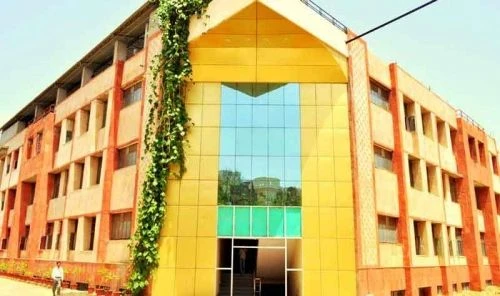
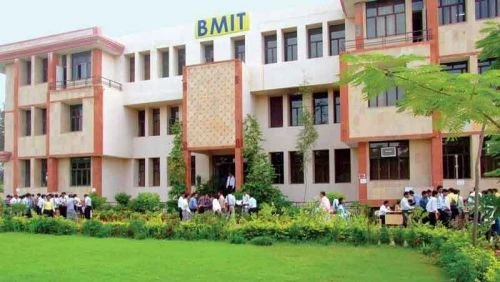
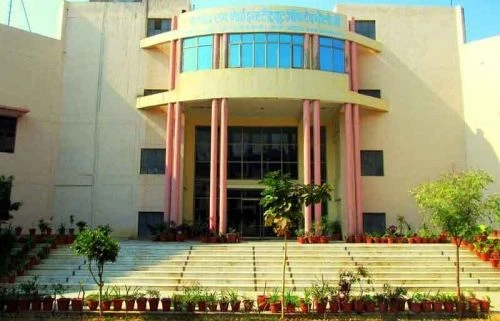
The physical infrastructure was often cited as a positive. The 10-acre campus in the Sitapura IT Park had "attractive" and "well-maintained" buildings and labs. Specialized labs for Digital Electronics, Microprocessors, and Electrical Machines were decently equipped. The library housed around 12,000 books and journals. The campus was Wi-Fi enabled.
Hostel capacity was for 580 boys and 250 girls. Reviews rated the hostel quality a middling 3 out of 5—rooms were average but well-ventilated. The canteen served basic North Indian fare. The real black mark was the mess food, consistently rated a 2/5 by students for poor variety and hygiene.
Where student life shone was in its annual events. The cultural fest "Synergia" and the technical fest "Ultima Tryst" were highly regarded and drew participation from other colleges in Jaipur, providing a much-needed social outlet.
Synthesizing over 50 reviews from platforms like Shiksha, Careers360, Quora, and Reddit paints a clear picture of the student experience, especially in the years leading to closure.
The positives were the infrastructure, the strategic location (at least in theory), and the vibrant annual fests. Students felt the campus looked the part of a modern engineering college.
But the negatives were pervasive and severe. The most common complaint was the placement scenario, described by many as misleading or even a "scam." The management was frequently labeled "money-minded" and unresponsive. The strict 75% attendance rule felt punitive when the quality of instruction was falling. The high faculty turnover meant inconsistent learning. One recurring sentiment, paraphrased from a 2019 alumni quote, was: "The college is like a beautiful body without a soul." Another warned plainly on Quora: "Don't be fooled by the 'IT Park' location."
The question is moot because BMIT is closed. But its history offers a clear lesson. For a prospective engineering student in Rajasthan evaluating similar private colleges, BMIT's trajectory is a cautionary tale. It was an institute that, at its best, provided adequate infrastructure and a degree from a recognized university (RTU). It was never highly ranked—it never featured in the NIRF Rankings—and was firmly in the Tier-3 category.
It was best suited for students with modest percentile scores who prioritized getting any engineering degree and were prepared to hustle for off-campus placements from day one. For anyone aiming for strong core branch placements, a vibrant research environment, or a degree with brand value, it was a poor choice even when operational. The closure underscores the risks associated with private institutes that fail to deliver on their core promise of employability. For former students, all academic records and degree verifications are now the responsibility of Rajasthan Technical University, Kota, the affiliating body that outlived the college.
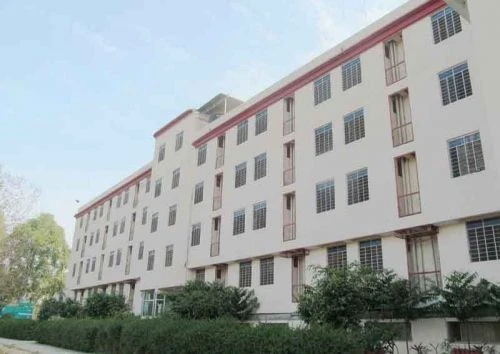
In this preview: 5 photos · 0 videos
No. Baldev Ram Mirdha Institute of Technology (BMIT) Jaipur is currently closed and is considered a defunct institution. It is not accepting admissions for any academic year.
BMIT Jaipur closed due to a sharp decline in student intake and the poor quality of its placement records. This was a common fate for many private engineering colleges in the Sitapura area of Jaipur during the consolidation of the private engineering sector.
No, they are completely different institutions. MNIT Jaipur (Malaviya National Institute of Technology) is a prestigious government-funded Institute of National Importance. BMIT Jaipur was a private engineering college and is now closed.
Since BMIT was affiliated with Rajasthan Technical University (RTU), all degree verification and official transcript requests must be directed to Rajasthan Technical University (RTU), Kota. The college itself is defunct and cannot process these requests.
Historical placement records for BMIT Jaipur were poor. The average package was typically in the range of 2-3 LPA (Lakhs Per Annum), and students often had to rely heavily on off-campus job opportunities.
Share what future students should know about BMIT.
Student voices are not rewritten by colleges. We remove spam and abuse.
Wider admission question? Community PulseWhat should future students know?
Tell us which course you're considering. We'll help you work out the next step.
Get instant Partner access after mobile verification. Your public edits are reviewed before they go live.
Claim this college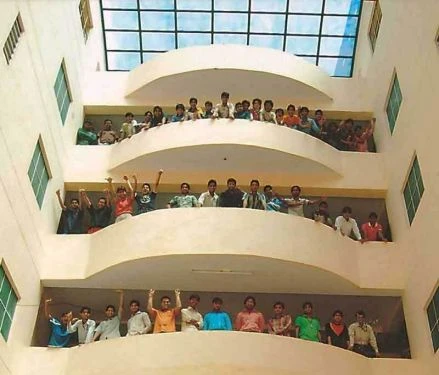
 Auditorium
 Cafeteria
 Computer Labs
 Gym
Gym Hostel
 Medical
 Science Labs
 Sports Complex
 Study Library