Loading Admission Guardian content
Loading Admission Guardian content
Selected ranking categories, with the recorded year beside each result. Open all records for the complete history.
6 published records · Lower numeric ranks are stronger
Indiatoday
Medical
#122022
Find a program, read its fee details and explore the admission requirements.
Summary of the programs shown below. Fee periods can differ by program. Check the note beside each amount before comparing costs.
| Course | Stream | Fees |
|---|---|---|
| Bachelor of Science [B.Sc] {Lateral} | Medical | 17970 |
| Bachelor of Science [B.Sc] | Paramedical | 17970 |
| Diploma | Paramedical | 20000 |
| M.B.B.S. | Medical | 70200 |
| Doctorate of Medicine [MD] | Medical | 125500 |
Specializations
Eligibility: Diploma
Specializations
Eligibility: 10+2
Specializations
All accepted exams
Eligibility: 10+2 with 50% + NEET
Specializations
All accepted exams
Eligibility: Post Graduation with 55%
3 exams with cutoff data available - showing recent entries
If you want to learn medicine by doing it, surrounded by a relentless tide of humanity in need, there’s arguably no better classroom in South India than Bangalore Medical College and Research Institute. Established in 1955 and now an autonomous government institution, BMCRI isn't a serene, gated campus. It's a sprawling, 200-acre network of hospitals in the heart of Bangalore's Fort area, where theory is learned in lecture halls but medicine is truly mastered in the crowded corridors of Victoria Hospital. The prestige of being a 'BMCite' is hard-earned, born from an intensity of clinical exposure that few colleges can match, all for a tuition fee that feels almost anachronistic in today's era of crore-rupee medical seats. That's the core trade-off here: world-class training in a setting that is, by many accounts, physically demanding and administratively complex.
BMCRI’s academic structure is a classic, rigorous government medical model, tightly coupled to its massive hospital network. The MBBS program, with an intake of 250 seats (potentially 300 soon), is the undisputed centerpiece. The 4.5-year course followed by a mandatory rotating internship is where the BMCRI identity is forged. And that internship comes with one of the highest government stipends in the country—INR 30,000 to 35,000 a month. It's a decent financial cushion for the exhausting workload.
Postgraduate studies are a major strength. With about 280 MD/MS seats across 22 disciplines and another 18-20 super-specialty (DM/M.Ch) seats, BMCRI is a powerhouse for specialization. The college has a high PG conversion rate, feeding many top rankers into INI-CET and NEET-PG. Beyond the core medical degrees, it also runs B.Sc. programs in Nursing and Allied Health Sciences (like Medical Lab Technology), admitting about 50 and 420 students annually, respectively.
The faculty, numbering over 500, are often described as brilliant but stretched thin. A common student refrain is that academics are "self-study heavy." Professors are senior clinicians first, often busy with patient care, so learning is heavily observational and hands-on. The college follows the RGUHS academic calendar and grading system, where internal assessments are critical. Research collaborations exist, notably with the ICMR and private chains like Apollo Hospitals for super-specialty training, but the primary research lab is the hospital floor itself.
In a government medical college, "placements" means something different. There's no corporate recruitment drive. Career progression is via internships, postgraduate seats, and subsequent employment.
The 100% internship placement is a given—it's compulsory. The real metric is what happens after. BMCRI’s brand and clinical rigor make its graduates highly sought after. For an MBBS graduate, typical pathways include joining as a Government Medical Officer (average package cited around INR 8-12 LPA) or building a private practice. The big financial leaps come post-PG. Alumni networks and college reputation help specialists land roles in top corporate hospitals. While an official highest package isn't published, student reviews suggest specialists can command INR 25–35 LPA in the private sector.
Top recruiters for post-PG roles are a mix of the government hospitals students train in—Karnataka State Health Services, Victoria, Vani Vilas—and major private healthcare groups like Apollo, Manipal, Fortis, and Narayana Health. The placement percentage for final employment isn't tracked like an engineering college, but the employability of a BMCRI postgraduate is rarely in question. The path is just longer and more self-directed.
This is where BMCRI delivers staggering value. For a top-20 medical college in India, the fees are almost symbolic. The annual tuition for an MBBS seat under the government quota is between INR 60,000 and 75,000. Over the entire 5.5-year duration, you're looking at a total cost of roughly INR 3.5 to 4 lakhs. Compare that to private institutions where a single year can cost ten times that.
Hostel fees are minimal, around INR 3,000 to 4,500 per month, covering basic room rent and variable mess charges. Other annual fees (university, library, development) add another INR 10,000-15,000. The proposed NRI quota for new seats, however, swings to the other extreme—a reported INR 25 lakhs per year, highlighting the subsidy the government student receives.
Financial aid is robust for eligible students. The State Scholarship Portal (SSP) provides for SC/ST/OBC candidates, and there's a full fee waiver for SC/ST students with family income below INR 10 LPA. The Foundation for Excellence (FFE) scholarship is also popular among students here. The system ensures that financial background isn't a barrier to accessing this level of education.
Admission is a straight meritocracy based on national and state entrance exams. For MBBS, it's NEET-UG. For MD/MS, it's NEET-PG. For DM/M.Ch super-specialties, it's NEET-SS. The B.Sc. programs typically use the state's KCET exam, managed by the Karnataka Examination Authority (KEA).
The cutoffs are fiercely competitive, reflecting BMCRI's stature. For the 2024 admission round, a General category student needed an All India Rank (AIR) between 1,300 and 1,500 to secure a seat through the 15% All India Quota. For the 85% Karnataka state quota, the AIR cutoff was slightly more forgiving but still steep, around 4,500 to 6,500. You can check the official counseling authorities for the latest data: the Medical Counseling Committee (MCC) for AIQ and the Karnataka Examination Authority (KEA) for state seats.
A critical point is the compulsory service bond. As a Karnataka government college, MBBS graduates must undertake one year of rural service or pay a penalty (currently around INR 10-15 lakhs). Also, for the 2025-26 session, a 15% NRI quota on additional seats has been proposed, a significant change for a college that historically had no management quota.
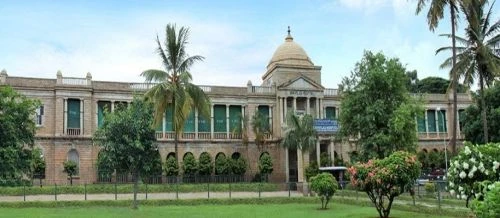
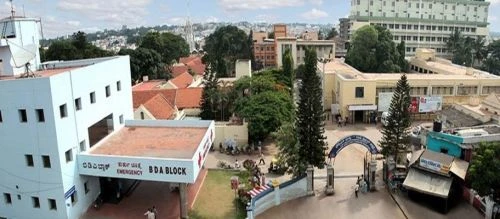
Forget the idea of a unified, leafy campus. BMCRI is an urban ecosystem. Its infrastructure is its hospitals—spread across the crowded Fort area near City Market. The clinical facilities are a mix of the historic and the modern: the massive but aging Victoria Hospital, the busy Vani Vilas, the specialized Minto Eye Hospital, and the newer PMSSY Super Specialty Hospital and Trauma Centre. This setup defines the student experience.
Hostel quality is a lottery. The newly constructed Bheema Boys Hostel gets positive reviews for attached bathrooms and better maintenance. The older Tunga and Kaveri hostels, however, are frequently cited in student reviews as basic, overcrowded, and plagued by issues like bed bugs. The overall hostel rating from students is a middling 3.5/5.
The library is a strong point, with a 24/7 digital section offering access to key resources like UpToDate and ClinicalKey, plus a vast physical collection. Sports facilities are limited—a basketball and volleyball court on-site. Students often head to nearby public grounds for cricket or football. The canteen is considered average; most students explore the countless food options in the vibrant, chaotic KR Market area just outside the gates. The location is a double-edged sword: incredible connectivity and city access, but constant noise and crowds.
The student consensus paints a clear, consistent picture of a demanding but rewarding institution.
The positives are powerful. The clinical exposure is unanimously called "unmatched." As one review put it, "If you can handle a patient at Victoria, you can handle a patient anywhere." The prestige of the BMCRI name carries immense weight in the medical community. The affordability is a huge relief. Students also praise a strong, supportive senior-junior culture with a strictly enforced no-ragging policy.
But the negatives are real and recurring. Infrastructure decay in the older hospital wards and hostels is a frequent complaint—described as "crumbling" and "unhygienic." The patient load is overwhelming, leading to legendary 36-hour shifts for interns. Government bureaucracy slows down every administrative process. And the spread-out, noisy, non-traditional campus lacks the cohesive community feel of a residential college.
You have to weigh the quotes. "The academics are self-study heavy. Professors are brilliant but busy with patients; you learn by watching and doing." Against: "Hostel bed bugs are a real issue in the older blocks. If you get Bheema, you're lucky." The experience is defined by this contrast.
BMCRI is not for everyone. If you prioritize a clean, organized campus with modern amenities and a predictable schedule, look at the top private or deemed universities. You'll pay a crore for it.
BMCRI is for the resilient, pragmatic student who views medicine as a tough, hands-on vocation. It's for those who want to be diagnosticians and clinicians forged in fire, who value unparalleled real-world experience over comfort, and for whom the economics of education are a serious concern. For a fraction of the cost, you get a degree that commands immense respect and a training ground that will leave you unshockable by any clinical scenario. The trade-off is a grueling, often chaotic environment. If you can endure the infrastructure hassles and administrative red tape to tap into that deep well of clinical knowledge, BMCRI represents one of the highest value propositions in Indian medical education. Just go in with your eyes wide open.
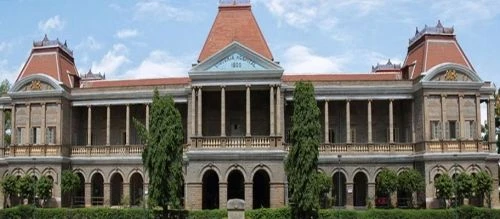
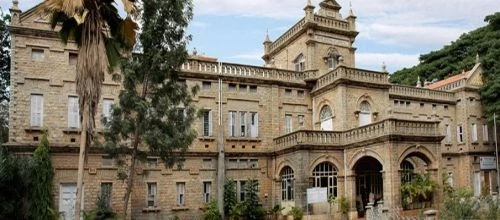
In this preview: 5 photos · 0 videos
BMCRI is often preferred for its extensive clinical exposure and significantly lower tuition fees. KMC Manipal is generally favored for its modern infrastructure, robust research facilities, and comprehensive campus life.
For a General category candidate to secure a government quota ("free") seat at BMCRI, you typically need an All India Rank (AIR) under 1,500 for the All India Quota or under 5,000 for the Karnataka State Quota.
Yes. As a Karnataka government college, BMCRI requires MBBS graduates to sign a compulsory one-year rural service bond. Students who do not wish to serve must pay a penalty, which is currently around INR 10-15 Lakhs.
The student-managed mess at BMCRI provides food that is generally rated as "decent" to "good" by students, often around 3.5 out of 5. The menu has a strong focus on South Indian cuisine.
Yes, for the 2025-26 academic session, the Karnataka government has introduced a 15% NRI quota at BMCRI. This quota applies specifically to newly added seats in the institution.
Share what future students should know about BMCRI.
Student voices are not rewritten by colleges. We remove spam and abuse.
Wider admission question? Community PulseWhat should future students know?
Tell us which course you're considering. We'll help you work out the next step.
Get instant Partner access after mobile verification. Your public edits are reviewed before they go live.
Claim this college Auditorium
 Cafeteria
 Computer Labs
 Gym
Gym Hostel
 Medical
 Science Labs
 Sports Complex
 Study Library