Loading Admission Guardian content
Loading Admission Guardian content

Provisional score based on available data. It may change as more information is verified.
Selected ranking categories, with the recorded year beside each result. Open all records for the complete history.
19 published records · Lower numeric ranks are stronger
IIRF
Overall · university
#1042022
IIRF
Physiotherapy
#832022
Find a program, read its fee details and explore the admission requirements.
Summary of the programs shown below. First-year fee. Check the note beside each amount for inclusions and exclusions.
| Course | Stream | Fees |
|---|---|---|
| Bachelor of Science [B.Sc] | Science | 119000 |
| Bachelor of Business Administration [BBA] | Management | 134000 |
| Master of Science [M.Sc] | Science | 140000 |
| Bachelor of Physiotherapy [BPT] | Medical | 169000 |
| Master of Business Administration [MBA] | Management | 260000 |
Specializations
Eligibility: 10+2
Specializations
Eligibility: 10+2
Specializations
Eligibility: Graduation
Eligibility: 10+2 with 40%
Specializations
All accepted exams
Eligibility: Graduation with 50%
2 exams with cutoff data available
 Accenture
 Adiquity
 Aditya Birla Group
 Aegon Business Services
 Agilent Technologies
 Air India
 Akamai Technologies
 Amazon.com
 American Express
 Anarock Property Consultants Private Limited
 Apollo Healthcare
 AXA Business Services
 Axis Bank
 Bajaj Capital
 Bharti AXA Life Insurance
 BioCon Ltd.
 BNP Paribas
 Bosch Limited
 Bosch Ltd
 British Biologicals
 Business Fundamentals
 Byju's
 Capgemini
 Cipla Limited
 Citi Bank
 Coca-Cola
 Cognizant
 Concentrix
 Dell
Dell Deloitte
 Deutsche Bank
 Domino's Pizza
 Dr. Reddy's Laboratories
 EMC Corporation
 Ernst & Young
 Federal bank
 Fortis Healthcare
 Glaxo Smithkline Consumer Ltd (GSK)
 Goldman Sachs
 Google
 Hewlett-Packard (HP)
 Hilton Hotels & Resorts
 Hindustan Copper Limited (HCL)
 HSBC Bank
 IBM
IBM ICICI Bank
 IGATE
IGATE Indegene
 Indian Express
 Indigo
 Indo American Hybrid Seeds
 Infosys
 Intel Technology India Pvt Ltd
 Jaro Education
 Jubilant Biosys
 Karur Vysya Bank
 Kotak Mahindra Bank
 KPMG
KPMG L&T Infotech
 Macmillan India Ltd.
 Merck
Merck Microsoft
 Monsanto
 Myntra
 NDTV
NDTV
Garden City University (GCU) in Bangalore presents a classic trade-off. You get a genuinely beautiful, sprawling campus with a surprisingly strong reputation in niche health sciences, but you also sign up for a rigid administrative system and placement outcomes that vary wildly by your chosen program. The university, which transitioned from a college in 2013, has leveraged its NAAC 'A+' grade accreditation and prime location to build a diverse, international student body. But student reviews consistently draw a line between the resort-like aesthetics and the school-like rules. For the right student—particularly one aiming for physiotherapy, forensic science, or a business degree with a global peer group—it can be a solid choice. For an aspiring computer scientist eyeing top-tier tech packages, the reality might not match the brochure.
GCU operates through a cluster of specialized schools, offering over 70 programs. That breadth is a double-edged sword. It means you can find a focused path in something like B.Sc. Genetics or BBA in Aviation, but the academic rigor and outcomes aren't uniform across the board.
The Dr. A.P.J. Abdul Kalam School of Engineering offers B.Tech in standard and trendy specializations—Computer Science, AI & Machine Learning, Data Science, Cyber Security. The curriculum is industry-linked, with MoUs in place with firms like Deloitte and KPMG. But feedback suggests the labs are decent, not exceptional. Where GCU truly shines is in its School of Health Sciences. The Bachelor of Physiotherapy (BPT) program is highly ranked nationally (#11 in India by Outlook-ICARE) and the faculty there receives consistent praise for being supportive and expert. The School of Sciences is another stronghold, with well-regarded B.Sc. programs in Forensic Science, Biotechnology, and Food Science.
A defining feature is the mandatory 6-month internship for most professional courses, which is a practical plus. They also push a "Joy of Learning" concept, blending life skills with technical knowledge. It sounds good, though some students see it as marketing. The faculty pool is sizeable, with a good portion holding PhDs, particularly in the sciences and management departments. You can find the full list of programs on the GCU official website.
This is where you need to read between the lines. The official placement claims and the student-reported reality often tell different stories.
The university marketing might highlight a highest package of ₹16-18 LPA. The verified, student-reported high is more like ₹10-12 LPA, typically for a top CSE graduate or an MBA in Business Analytics. The average package sits in the ₹4.5-5.5 LPA range. The most authoritative numbers come from the government's NIRF Rankings report for 2024, which lists a median package of ₹3.60 LPA for 4-year UG programs and ₹6.00 LPA for 2-year PG courses. That's a more grounded figure to budget around.
The placement percentage also has two versions. The official claim is 80%+. The consensus from alumni reviews on platforms like Shiksha and CollegeDunia suggests the core placement rate is closer to 65-70%, heavily skewed towards IT and Management streams. Students in core engineering branches or pure sciences report significantly fewer on-campus opportunities.
The recruiter list is impressive on paper: Google, Deloitte, Infosys, TCS, Wipro, Amazon, Bosch, KPMG, EY, and healthcare firms like Cipla. IT/Software accounts for about 40% of hiring. The gap between the official narrative and the graduate experience is notable, but not uncommon for private universities in this tier. The takeaway? If you're in CSE, IT, or MBA, you have a reasonable shot at a brand-name recruiter with a moderate salary. If you're in Mechanical Engineering or Microbiology, you'll likely need to hustle off-campus.
GCU is a private institution, and the fees reflect that. For the 2025-2027 cycle, B.Tech in CSE or AI can cost between ₹3.4 to ₹4.8 lakhs per year in tuition alone. Over four years, you're looking at a total cost estimate of ₹13.55 to ₹19.28 lakhs. That's a substantial investment. Other programs are relatively more affordable: BBA runs about ₹1.1-1.5L per year, and the highly-touted BPT program is around ₹1.3-1.5L annually.
On top of tuition, you must factor in hostel and mess fees, which range from ₹60,000 to a steep ₹1,80,000 per year depending on whether you opt for a single/double room or AC. There are also additional costs like a one-time caution deposit (₹5,000), application fee (₹2,000), and per-semester exam fees (~₹3,500). Student reviews frequently mention "hidden costs" or unexpected fines, so it's wise to budget a buffer.
Financial aid exists. There are merit-based scholarships for high scorers in 12th grade, the SSP scheme for Karnataka students, and concessions for SC/ST/OBC categories. These can provide some relief, but they're competitive and rarely cover the full cost.
Admission routes depend entirely on your program. For B.Tech, they accept scores from KCET (the state exam), COMEDK UGET, and JEE Main. The 2024 cutoff ranks give a sense of the competition—or lack thereof. For General Category, B.Tech CSE through COMEDK had a closing rank around 54,280, and through KCET it was near 77,959. These are not highly competitive ranks, indicating that admission is accessible for many. For MBA, they accept a wide array of exams: CAT, MAT, XAT, KMAT, CMAT, and PGCET.
For many other UG programs like BBA, B.Sc., or B.Com, admission is primarily merit-based on your 10+2 marks. A key policy is the 40% seat reservation for Karnataka domicile students, filled through state counseling. The selection process typically involves an online application, scrutiny of academic/entrance scores, and a Personal Interview (PI) for MBA and Ph.D. applicants. Management quota seats are available for most courses, offering a direct (but more expensive) admission path.
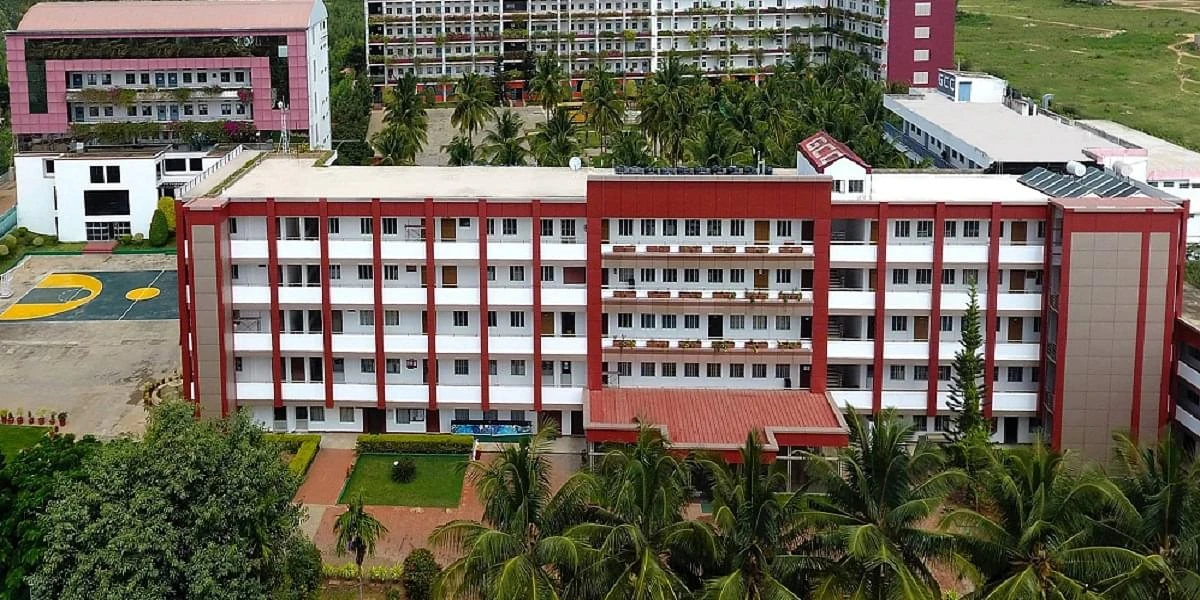
The campus is GCU's undisputed star. Spread over 50-52 acres, it's lush, green, and meticulously maintained. It genuinely lives up to the "Garden City" name. The infrastructure includes eight separate hostels (four each for boys and girls), rated around 3.7/5 by students. They offer basic amenities: Wi-Fi, laundry, security, and lockers, though the internet speed in rooms is famously inconsistent.
The labs for specialized programs like Forensic Science and Biotechnology are well-equipped. The engineering labs are described as adequate. There's a digital library, sports grounds, a gym, and on-campus medical support. But there's a catch. The main playground is considered too small for the student population, a frequent gripe.
Social life is vibrant. The annual fest "Gardenia" is a major event, and there are numerous clubs. The student body is remarkably diverse, with a large international contingent from over 80 countries. This multicultural environment is a huge draw for many. The food in the hostels gets mixed reviews—decent and hygienic, but monotonous over time.
Synthesizing feedback from CollegeDunia, Shiksha, Reddit, and Quora reveals a clear, consistent pattern.
The positives are strong. The campus beauty and cleanliness are almost universally praised. The diversity and international exposure are highlighted as unique advantages. Faculty in the Life Sciences and Physiotherapy departments are repeatedly called out as being knowledgeable, approachable, and supportive. The event calendar is full.
But the negatives are just as consistent. The 75% mandatory attendance rule is strictly enforced, with students barred from exams for falling short. The phrase "college looks like a resort, but the rules are like a school" is a Reddit mantra. Administrative processes are described as slow and sometimes unhelpful, with a perception that the management is more focused on fees than student service. Placement disparity between IT and core fields is a major concern. And those hidden costs keep popping up in reviews.
The most telling consensus quote? "If you are in Physiotherapy or Forensic Science, it's one of the best in Bangalore. For Engineering, it's average." That sums up the GCU experience better than any brochure.
It depends entirely on your program and priorities. Garden City University is an excellent fit for students targeting its strength areas: Physiotherapy, Forensic Science, Biotechnology, and perhaps Business Administration. Here, the quality of education, faculty support, and program reputation justify the cost for many. The stunning campus and diverse, international peer group are significant value-adds for those seeking a vibrant college life.
However, for aspiring engineers, especially in Computer Science, it's a harder sell. While placements exist, the median packages are modest, and you're paying a premium for the infrastructure and brand. The strict attendance policies and bureaucratic hassles can be a drain. If your KCET or COMEDK rank can get you into a older, more established engineering college in Bangalore, that might be the wiser career move. GCU is a good university with standout departments, but it's not a top-tier tech or engineering school. Choose the program, not just the campus.



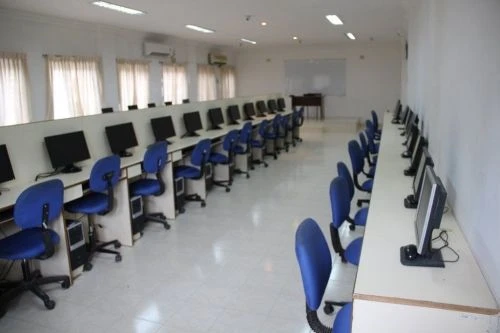

In this preview: 5 photos · 0 videos
Garden City University is considered a Tier 3 institution for engineering. It offers good infrastructure and decent placements for B.Tech CSE, with reported packages typically ranging from 3 to 6 LPA. However, it is not generally ranked alongside top-tier engineering colleges in Bangalore.
The attendance policy at GCU is strict, with a mandatory requirement of 75%. Students frequently report facing penalties such as fines or being barred from examinations for failing to meet this attendance threshold.
Reviews of the hostel food at GCU are mixed. Most students find the food to be edible and hygienic, especially during the initial months. However, many note that the quality and variety can feel repetitive over time.
Garden City College was previously affiliated with Bangalore University. Garden City University (GCU) is now an autonomous private university that awards its own degrees, operating independently from its earlier affiliated college structure.
Yes, Garden City University offers direct admission for many non-technical undergraduate courses based on merit. For programs like B.Tech and MBA, entrance exam scores are preferred, but management quota seats are also available.
Share what future students should know about Garden City University.
Student voices are not rewritten by colleges. We remove spam and abuse.
Wider admission question? Community PulseWhat should future students know?
Tell us which course you're considering. We'll help you work out the next step.
Get instant Partner access after mobile verification. Your public edits are reviewed before they go live.
Claim this college Novartis
 Oberois Group
 Ogilvy & Mather
 Oppo
Oppo Oracle
 Parametrix
 Parle Agro
 Pinclick
 Practo
 Quintiles IMS
 Ranbaxy Laboratories
 Reliance
![Reliance Industries Limited [RIL]](https://assets.admissionguardian.com/imgproxy/insecure/w:64/h:64/rt:fit/el:0/f:avif/q:82/sm:1/plain/local%3A%2F%2F%2Fimages%2Frecruiter_logos%2Freliance-industries-limited-ril-logo.webp) Reliance Industries Limited [RIL]
Reliance Industries Limited [RIL] Reliance Life Sciences
 Saint Gobain Glass
 Shangri-La
 Standard Chartered
 Syngene International Pvt. Ltd.
 Taj Group of Hotels
 Tally
Tally Tata Consulting Engineers Ltd.
 TCS
TCS Tech Mahindra
 TESCO
TESCO The Leela
 The Ritz Carlton
 Thermo Fisher
 Thomas Cook
 Thomson Reuters
 Times of India
 Wipro
Wipro97 named recruiters in the recorded data. Company names are deduplicated.
 Auditorium
 Bank & ATM
 Cafeteria
 Campus Security
 Computer Labs
 Gym
Gym Hostel
 Medical
 Science Labs
 Sports Complex
 Study Library