Loading Admission Guardian content
Loading Admission Guardian content

Provisional score based on available data. It may change as more information is verified.
Find a program, read its fee details and explore the admission requirements.
Summary of the programs shown below. Fee amounts are not listed. Contact the college for its current fee schedule.
| Course | Stream | Fees |
|---|---|---|
| Diplomate National Board [DNB] | Medical | |
| General Nursing and Midwifery [GNM] | Paramedical | |
| Master of Science [M.Sc] (Nursing) | Paramedical |
Specializations
All accepted exams
Eligibility: MBBS + NEET
Specializations
Eligibility: Graduation
2 exams with cutoff data available - showing recent entries
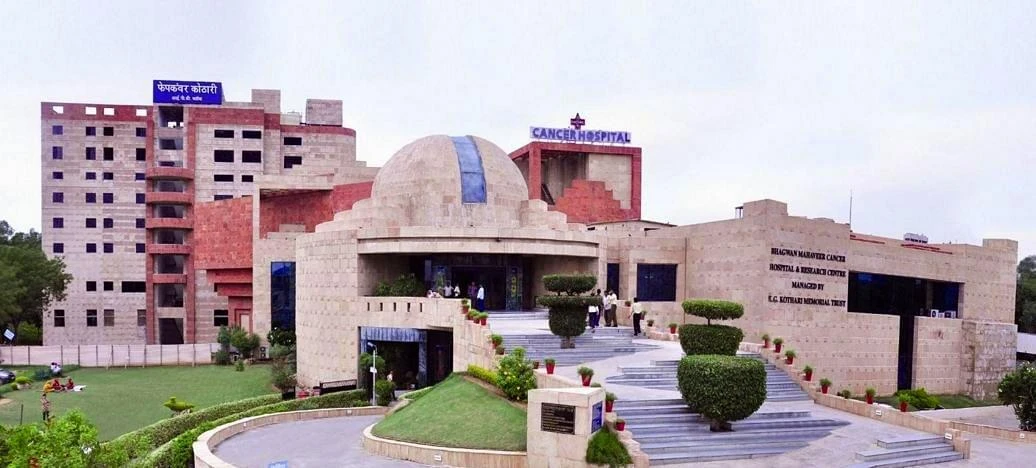
Bhagwan Mahaveer Cancer Hospital & Research Centre (BMCHRC) in Jaipur isn't your typical college campus. It’s a working, 300-bed super-specialty hospital first, and its academic programs—nursing, paramedical, and postgraduate medical (DNB)—are built directly into its clinical fabric. That’s the single most compelling fact for any prospective student. If you want to learn oncology in an environment where theory meets practice from day one, this is a serious contender, especially in North India. But you should know upfront: this isn't about campus fests or a relaxed social life. The reviews are clear—it’s a place of intense, often emotionally taxing, clinical work. The institution’s reputation, underscored by its No. 1 Single Specialty Hospital in North Zone ranking in the Times Health Survey 2024, is built on that very intensity.
The academic structure here is entirely healthcare-focused and bifurcated by governing bodies. For nursing and paramedical courses, the university affiliate is RUHS. For the postgraduate medical programs, it's the National Board of Examinations (NBE). That distinction matters for your syllabus, exams, and degree.
Under the BMCHRC College of Nursing, you have the standard tracks: a 4-year B.Sc Nursing (30-40 seats), a 3-year GNM (40 seats), and a 2-year M.Sc in Medical-Surgical Nursing (10 seats). The Paramedical programs, run in collaboration with ICRI, include B.Sc degrees in Radiology & Imaging Technology and Medical Laboratory Technology (MLT).
The real prestige, however, lies in the DNB (Diplomate of National Board) programs. These are residency-level courses for doctors who have cleared NEET-PG or NEET-SS. BMCHRC offers super-specialties like Surgical Oncology (4 seats) and Medical Oncology, along with broad specialties like Radiation Oncology, Pathology, and Palliative Medicine. The faculty aren't just teachers; they're practicing senior oncologists like Dr. Ajay Bapna and Dr. Sanjeev Patni. The academic calendar is rigorous, following RUHS or NBE schedules, but the defining feature is the clinical exposure. Students rotate through specialized oncology wards, advanced modular operation theatres, and NABL-accredited diagnostic labs from the very start.
There are also niche Fellowships and Certificate courses, like the one-year Fellowships in Advance Reconstructive Microsurgery or Geriatric Oncology, which attract practicing doctors looking to sub-specialize.
You don't get a traditional placement drive here. The model is different, and that's actually a strength for the right student. For Nursing and Paramedical graduates, a significant number are absorbed directly into BMCHRC itself or its network. It's a pipeline. Other top recruiters for nursing alumni include major hospital chains like Narayana, Fortis, and Apollo. Many graduates also secure government jobs through exams like NORCET.
The salary data is a bit fuzzy from public sources. A commonly cited, though unverified, range for fresh B.Sc Nursing graduates in the private sector in this region is ₹15,000 to ₹25,000 per month. It's not glamorous, but it's a start in a field where experience is currency.
For DNB residents, the "package" is the government-mandated stipend, which at BMCHRC follows NBE norms. That translates to roughly ₹60,000 to ₹75,000 per month, increasing with each year of residency. The real "placement" value of a DNB from BMCHRC is the brand name and the high-volume surgical/clinical training, which opens doors for consultantships later. The hospital reports 100% internship completion for all students within its own facility, which is a given for a teaching hospital.
The fee structure is relatively straightforward and, for a private specialty institution, not exorbitant. It's important to note fees are subject to RUHS and state government regulations.
On top of tuition, hostel fees are a major component, ranging from ₹55,000 to a steep ₹1,25,000 per year depending on whether you opt for AC or non-AC and the room occupancy. There's also a standard refundable caution deposit of ₹5,000.
For financial aid, the primary avenue is through Rajasthan Government schemes like the Samaj Kalyan Scholarship for SC/ST/OBC and students from Below Poverty Line (BPL) families. You won't find extensive merit-based scholarships from the trust itself, given its charitable hospital focus.
The gateway depends entirely on the program. There's no common entrance.
For B.Sc Nursing, GNM, and Paramedical courses, you must appear for the RUHS Entrance Exam conducted by the Rajasthan University of Health Sciences. Selection is through centralized state counseling based on your merit rank.
For the DNB programs, you're in the national pool. Admission to Broad Specialties (like Radio-Diagnosis or Anaesthesiology) requires a qualifying rank in NEET-PG. For the coveted Super Specialties like Surgical or Medical Oncology, you need to clear NEET-SS. The 2024 cutoffs give a sense of the competition: the first-round closing rank for DNB Medical Oncology was around 131, and for DNB Surgical Oncology, it was about 385 in the NEET-SS counseling. The application windows follow the NBE calendar for DNB and the RUHS schedule (usually May-July) for nursing courses.
Forget sprawling quads and student centers. The "campus" is the hospital. Academic blocks, hostels, and libraries are integrated into the hospital complex on JLN Marg. This has major implications for daily life.
The infrastructure for learning is top-notch and directly relevant: a well-stocked library with oncology journals, high-end NABL-accredited labs (Molecular Biology, Histopathology), and access to equipment like PET-CT and Linear Accelerators. The hospital's ESMO accreditation for palliative care is a point of pride.
Hostel facilities are segregated. There's a dedicated girls' hostel for nursing students, which reviews describe as "functional and safe," rating it around 3.5/5. DNB residents and fellows get separate accommodation based on availability. The presence of "Acharya Hasti Bhawan," a dharamshala for patient attendants, reinforces the institution's charitable ethos but also reminds you of the environment's primary purpose.
Social life is the biggest trade-off. There are no annual fests, sports galas, or typical college cultural events. Your life revolves around clinical shifts, wards, and the hostel. The location in Jaipur is good for connectivity—the airport and railway station are within a 15-20 minute drive—but students report having little time to explore.
Synthesizing feedback from platforms like Shiksha and Quora reveals a consistent, almost unanimous, narrative.
The positives are powerful and career-defining: "Unmatched clinical exposure." Students and residents emphasize the sheer volume and complexity of cancer cases, providing a depth of hands-on experience hard to find in general hospitals. The reputation of BMCHRC is repeatedly cited as a major career boost in North India's healthcare circles. They also note a highly disciplined, professional environment with access to cutting-edge surgical and diagnostic technology.
But the negatives are equally stark and deal with quality of life. "Extremely high workload and stress" is universal feedback. Long hours are the norm. The emotional toll of working in a high-stakes cancer care setting is frequently mentioned. A limited, almost non-existent, social life is the expected compromise. Some also point to administrative rigidities and a strict hierarchical system within the hospital management.
The consensus, often paraphrased in reviews, is this: "If you want to become an expert in oncology nursing or surgery, this is arguably the best place in Rajasthan to learn. But don't come expecting a fun 'college life.' You're here to work."
BMCHRC isn't for everyone. It's a highly specialized, no-frills clinical training ground. If you are a student who prioritizes deep, immersive, hands-on medical training above all else—especially in the field of oncology—and you're willing to forego the traditional campus experience, then BMCHRC is an excellent choice. Its reputation, faculty, and case load are genuine assets. For a doctor aiming for a DNB in Surgical Oncology, the high patient inflow and ESMO recognition make it a strong option. For a nursing student determined to specialize early, the direct pathway to employment in major hospitals is a clear advantage.
However, if you value a balanced college life with extracurricular activities, a vibrant peer social scene, or a more relaxed academic pace, you will likely find BMCHRC overwhelming and isolating. It demands resilience and single-minded dedication. Your decision hinges entirely on what you want from your professional education: a comprehensive life experience or an intensive clinical boot camp. For the latter, BMCHRC delivers effectively.
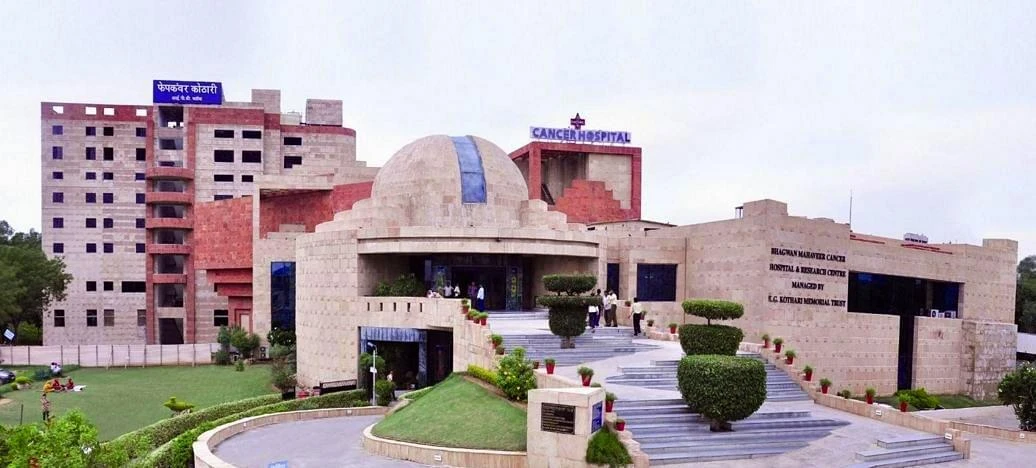
In this preview: 1 photo · 0 videos
BMCHRC Jaipur is a private, non-profit charitable institution. It is affiliated with a government university, the Rajasthan University of Health Sciences (RUHS).
The stipend for DNB residents at BMCHRC follows the guidelines set by the National Board of Examinations (NBE). It typically ranges from ₹60,000 to ₹75,000 per month.
While the college does not have a formal placement cell like business schools, its strong clinical reputation ensures that B.Sc Nursing graduates achieve almost 100% employment, primarily in major hospitals.
Hostel accommodation is generally preferred for nursing students due to safety considerations and the demanding timings of clinical shifts. However, the specific rules regarding mandatory hostel stay can vary by academic year.
The patient load is very high. As a major cancer referral center for Rajasthan, Haryana, and Madhya Pradesh, DNB residents gain extensive hands-on clinical experience.
Share what future students should know about BMCHRC.
Student voices are not rewritten by colleges. We remove spam and abuse.
Wider admission question? Community PulseWhat should future students know?
Tell us which course you're considering. We'll help you work out the next step.
Get instant Partner access after mobile verification. Your public edits are reviewed before they go live.
Claim this college