Loading Admission Guardian content
Loading Admission Guardian content

Provisional score based on available data. It may change as more information is verified.
Find a program, read its fee details and explore the admission requirements.
Summary of the programs shown below. Fee amounts are not listed. Contact the college for its current fee schedule.
| Course | Stream | Fees |
|---|---|---|
| Bachelor of Physiotherapy [BPT] | Medical | |
| Auxiliary Nursing Midwifery [ANM] (Nursing) | Paramedical | |
| Certificate Course in Medical Laboratory Technology | Paramedical | |
| Diploma | Paramedical | |
| General Nursing and Midwifery [GNM] | Paramedical |
Eligibility: 10+2
Specializations
Specializations
Specializations
If you're looking at nursing or paramedical colleges in Bhubaneswar, the Bhava Institute of Medical Science and Research (BIMSR) is a name that pops up consistently. It's not the biggest or flashiest institute, but for over three decades, it's been quietly training students for jobs in Odisha's healthcare sector. That's its core identity: a practical, no-frills private college where the goal is to get you qualified, registered with the council, and into a hospital or pharmacy. Don't expect a sprawling campus or a vibrant social calendar. Do expect a focus on clinical rotations and the paperwork needed to make your degree valid. It's an institution that serves a specific, local need, and understanding that is key to deciding if it's the right fit for you.
BIMSR's portfolio is squarely in the allied health space. Think nurses, pharmacists, physiotherapists, and lab technicians—the essential support staff for any healthcare system. The B.Sc Nursing and General Nursing (GNM) programs are the main draws, with annual intakes between 40-60 and 35-40 students respectively. The B.Pharma program is another significant offering, taking in about 60 students per batch. Other courses like Auxiliary Nursing (ANM), Physiotherapy (BPT), Medical Lab Technology (DMLT), and a Master's in Hospital Administration (MHA) round out the catalog.
The academic approach is traditional. Faculty strength is around 25-30 core members, with seniors holding M.Sc or Ph.D. qualifications. Teaching often relies on lectures and PowerPoints. Where the real learning happens, though, is outside the classroom. The college has clinical tie-ups with government hospitals like the Capital Hospital and Bhubaneswar Municipal Hospital, where students complete mandatory rotations and a 6-month internship. This practical exposure is the most valuable part of the curriculum, giving students hands-on experience in a real-world setting. The academic calendar follows the state nursing council's schedule, typically starting in late summer.
This is where you need to read between the lines. The institute's promotional material might mention a highest package of ₹12.5 LPA, but that's almost certainly an outlier, perhaps for an MHA graduate landing a corporate role outside Odisha. For the vast majority of nursing and pharmacy graduates, the reality is more grounded.
The working average sits between ₹2.5 to ₹4.2 lakhs per annum. That's a standard starting salary for staff nurses and junior pharmacists in the region. Placement assistance is provided, with claimed rates of 90-100%. The real on-campus placement rate is closer to 80%, and it's important to understand what that means. Top recruiters include major hospital chains like Apollo, Fortis, AMRI, and Care Hospitals, alongside pharma companies like Sun Pharma and Glenmark for B.Pharma grads.
But many students secure jobs "off-campus"—through state government NHM (National Health Mission) contracts or by directly applying to hospitals after getting their council registration. The institute provides the qualification and the gateway to the council exam; a significant number of graduates then find their own path to employment. It's a decent outcome for a private college in this tier, but don't confuse it with guaranteed, high-flying corporate placements.
Fees are course-dependent and can feel a bit opaque with various components. For the flagship B.Sc Nursing, total course fees range from ₹4.5 to ₹5.5 lakhs over four years, breaking down to roughly ₹1.2L - ₹1.4L annually. The B.Pharma program is more expensive, with total costs between ₹8.0 to ₹8.7 lakhs. The shorter diploma courses like ANM and DMLT are more affordable, starting around ₹70,000 for the full program.
On top of tuition, budget for hostel and mess charges of approximately ₹48,000 per year. There are also one-time costs like admission fees (₹10,000) and uniform kits (₹4,000-6,000), plus annual library and lab charges (₹5,000-8,000).
Financial aid primarily comes through state government schemes. SC/ST/OBC students can apply for scholarships via the Odisha State Scholarship Portal (PRERANA). The institute itself occasionally offers merit-based fee waivers to the top 5% of a batch, but these are not guaranteed or widely advertised.
The gateway to BIMSR depends on your chosen field. For nursing programs—B.Sc, GNM, ANM—selection is primarily through the Odisha Nursing Central Counseling, which is based on your 10+2 merit scores. You need Physics, Chemistry, Biology, and English with a minimum of 45% aggregate for B.Sc Nursing (40% for GNM).
For the B.Pharma program, you must appear for the Odisha Joint Entrance Examination (OJEE). Admissions for BPT and MHA are usually merit-based or involve an institute-level entrance test.
The application window typically opens in November and runs through January. You'll need to keep an eye on the official website for notifications, though the site is known to have downtime. The application fee is between ₹1,000 to ₹1,200. The process is straightforward but follows state-mandated counseling rounds, so patience is required.
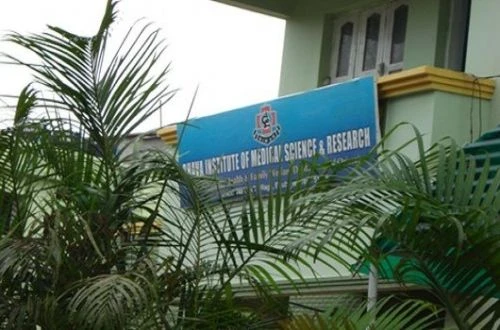
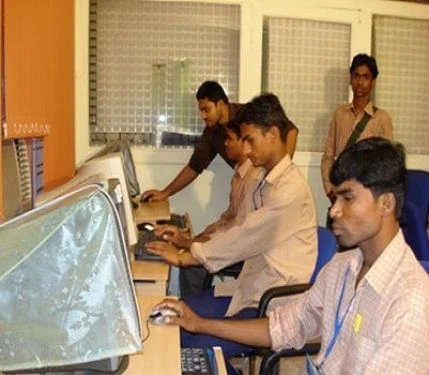
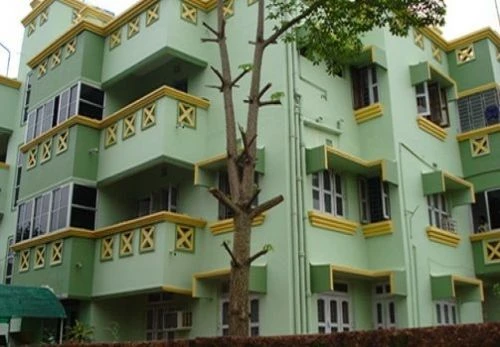
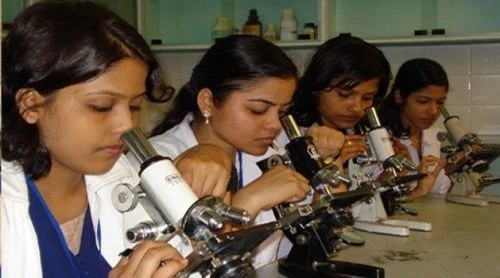
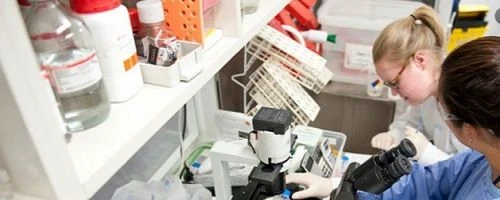
BIMSR's campus is compact and urban, spread over 2-5 acres in the educational hub of Nayapalli. It's a functional space, not a picturesque one. Infrastructure includes six specialized labs for nursing, anatomy, and biochemistry, and a library with around 2,372 books and 25 journals. The campus has Wi-Fi, though students report the speed as just "average."
Hostel life is a major part of the experience, especially for nursing students with early clinical shifts. There are separate facilities, with a significantly larger girls' hostel (approx. 210 beds) compared to the boys' (approx. 16 beds). Safety is a noted positive, particularly for female students in a secure part of the city. The trade-off? Rooms are often cramped with triple-sharing, and the mess food is a frequent complaint—described as monotonous and oily in online reviews.
Social life is very limited. This isn't a campus with large cultural fests or a buzzing student crowd. Activities are mostly confined to professional observances like Nurses' Day, an Annual Sports Day, and traditional celebrations like Saraswati Puja. If you're looking for a vibrant college experience beyond your studies, you'll likely be disappointed.
Scouring platforms like CollegeDunia and Shiksha reveals a consistent, pragmatic consensus. Teaching quality gets a middling 3.5/5. The methods are old-school and attendance is strictly enforced (75-80% mandatory), which some appreciate for the discipline and others find stifling.
The management is often described as bureaucratic. Administrative processes are slow and paperwork-heavy. Grievance redressal systems exist but aren't known for being proactive.
On placements, students confirm the gap between the official claim and reality. Most do find work, but there's a clear understanding that the "100% placement" tag is marketing. Many jobs come through personal effort or government schemes post-graduation. The clinical internship, however, is almost universally praised as the most valuable part of the education.
It's a mixed bag. You get safety, a focused (if rigid) academic environment, and a pathway to a healthcare job. You sacrifice space, culinary variety, and a dynamic social scene.
BIMSR is a specific solution for a specific need. It's worth serious consideration if you are a student from Odisha or neighboring regions looking for a straightforward, affordable route into a stable nursing or paramedical career within the state. Its strengths are its practical clinical training, necessary council approvals, and decent local industry connections. You'll graduate qualified and employable.
Look elsewhere if you prioritize campus life, modern teaching pedagogy, or are aiming for high-paying, national-level corporate careers in healthcare. The infrastructure is basic, the administration can be frustrating, and the placement ceiling is regionally typical, not exceptional.
In short, BIMSR is a workmanlike institution. It does the job of training allied health professionals without pretension. For the right student—one focused on getting a credential and a job close to home—it represents a viable, pragmatic choice. Just go in with clear eyes about what it is, and what it isn't.
In this preview: 5 photos · 0 videos
Bhava Institute of Medical Science and Research (BIMSR) in Bhubaneswar is a private institution.
The annual fee for the B.Sc Nursing program at Bhava Institute is approximately ₹1.2 lakhs to ₹1.4 lakhs, with the total course cost being around ₹5 lakhs.
While the college provides strong placement assistance and most nursing graduates secure employment, claiming "100% campus placement" is an overstatement. Many students also find jobs independently through other avenues.
No, hostel stay is not compulsory at BIMSR. However, it is highly recommended, especially for nursing students, due to the practical requirements of early morning clinical shifts and training.
BIMSR has a historical affiliation with the Orissa University of Agriculture and Technology (OUAT) for several of its paramedical and science courses. Its nursing programs are governed by the Odisha Nursing and Midwives Council (ONMC).
Share what future students should know about BIMSR.
Student voices are not rewritten by colleges. We remove spam and abuse.
Wider admission question? Community PulseWhat should future students know?
Tell us which course you're considering. We'll help you work out the next step.
Get instant Partner access after mobile verification. Your public edits are reviewed before they go live.
Claim this college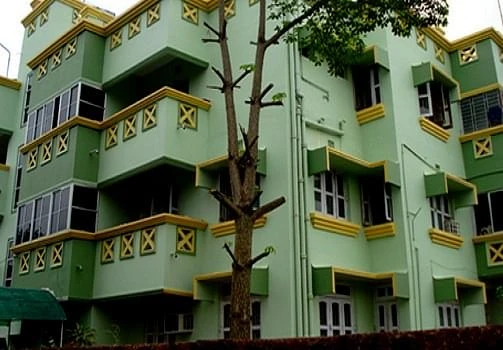
 Auditorium
 Cafeteria
 Computer Labs
 Medical
 Science Labs
 Study Library