Loading Admission Guardian content
Loading Admission Guardian content
Provisional score based on available data. It may change as more information is verified.
Find a program, read its fee details and explore the admission requirements.
Summary of the programs shown below. Programs record different fee periods. Compare the individual amounts and their notes below.
| Course | Stream | Fees |
|---|---|---|
| Master of Computer Applications [M.C.A] | Computer Applications | 80000 |
| Bachelor of Engineering [BE] | Engineering | 110000 |
| Master of Technology [M.Tech] | Engineering | 195000 |
All accepted exams
Eligibility: UG with 50% + Karnataka PGCET
Specializations
All accepted exams
Eligibility: 10+2 with 45% + KCET
Specializations
All accepted exams
Eligibility: UG with 50% + Karnataka PGCET
3 exams with cutoff data available - showing recent entries
 Accenture
 Cognizant
 IBM
IBM Indian Army
 Infosys
 Integra Micro Systems
 Sobha Developers Ltd.
 Syntel
Bheemanna Khandre Institute of Technology (BKIT) in Bhalki is a bit of an anomaly. Established way back in 1982, it's a private engineering college that's been around long enough to see trends come and go. And that's its biggest strength and weakness. It's got a sprawling 35-acre campus in a semi-rural part of Bidar district, far from the tech hubs of Bangalore or Hyderabad. But it's also one of the few institutes in the region offering a surprisingly wide array of modern specializations like AI & ML, Cyber Security, and Data Science. The official placement claims are ambitious, but student reviews paint a more grounded picture. If you're looking for a low-cost, VTU-affiliated engineering education with decent infrastructure away from city distractions, BKIT is a contender. Just go in with your eyes wide open about the placement scene.
BKIT's academic portfolio is broader than you might expect for its location. At the undergraduate level, they offer B.E. programs across a dozen specializations. The intake is standard VTU fare, with about 60 seats per branch, adding up to roughly 630 total B.E. seats. The traditional cores—Civil, Mechanical, Electrical—are all there. But where BKIT tries to stay relevant is with its newer offerings: Artificial Intelligence & Machine Learning, Data Science, Cyber Security, and even a CSE program in Robotics & AI. That's a decent spread for a college in Bhalki.
Postgraduate options include M.Tech programs in Digital Communication, CSE, and Water Resources, plus an MBA and MCA. They also run Ph.D. programs in several engineering disciplines and basic sciences, which is a point they emphasize.
Academically, it's a standard VTU-affiliated institute. The curriculum, exams, and grading are dictated by the university. Faculty strength is listed at 94 members. Student reviews often mention "well experienced" teachers, which in this context usually means faculty who've been in the system a long time and know the VTU ropes. The college has some notable academic features: it's a center for VTU's satellite-based EDUSAT program, runs a solar energy park initiative, and acts as a monitoring center for a free computer literacy program for government schools. They also have VTU-approved research centers. It's not a research powerhouse, but it shows an effort to engage beyond just classroom teaching.
This is where you need to read between the lines. The official claims and the ground-level student feedback don't always align.
Let's start with the numbers the college publishes. They claim an annual placement rate of 85-90%. For 2023-24, they posted some specific, and wildly varying, branch-wise percentages: 100% for Mechanical, ECE, and Chemical Engineering, but only 50.39% for CSE and 21.74% for Civil. That's a huge spread. The highest package touted is ₹15 LPA for CSE from Amazon, with other notable highs being ₹10 LPA in ECE and ₹7 LPA in Civil. Average packages are quoted in the ₹4.9 LPA (Civil) to ₹6 LPA (CSE) range.
Now, the student review reality check. On platforms like CollegeDunia and Shiksha, the consensus is less rosy. Multiple alumni and current students state that around 40-50% of students get placed from campus. One review for the CSE (AIML) branch said only 10% got placed in their batch. The average packages cited in reviews often hover around the ₹3.5 to ₹5 LPA mark for most branches, which is more in line with regional averages for VTU colleges outside major cities.
The recruiter list is long—Infosys, Wipro, TCS, Capgemini, L&T, Bosch, and many mid-sized IT and core engineering firms. The presence of names like Amazon, Microsoft, and Qualcomm on the list is notable, but it's crucial to understand these are likely for a handful of top performers, not mass recruiters here.
The verdict? It's a mixed bag that depends heavily on your branch, your personal skills, and the economic climate. The college provides a platform and brings companies, but the onus is on the student. Don't bank on the 90% figure.
Fee structures in Karnataka are complex due to the government quota system. For a general estimate, the annual tuition fee for a B.E. program under the "general merit" or management quota is around ₹85,000 per year. This is based on student-shared data. Government seat fees, secured through the KCET counseling process, are much lower—historically around ₹56,000 per year or less, as they are subsidized.
Older data suggests fees vary by branch even under management, with Chemical Engineering once quoted at ₹1.2L, CSE at ₹90,000, and Civil at ₹65,000. For postgraduate courses, the MBA program is approximately ₹1-1.2 Lakhs per year, and the MCA is around ₹1.1-1.3 Lakhs.
Hostel fees are separate. The data is incomplete, but it's a separate cost to factor in. Information on substantial college-specific scholarships is not prominently available. Financial aid would primarily come through state or central government schemes for eligible students.
Admission to the B.E./B.Tech programs is primarily through the Karnataka Common Entrance Test (KCET). A smaller portion of seats might be available through the COMEDK UGET exam. For MBA and MCA, the Karnataka PGCET is the main gateway.
The process is centralized. You take the entrance exam, participate in the state counseling (KCET/COMEDK/PGCET), and choose your college and branch based on your rank. Cutoffs for BKIT are not highly publicized because they fluctuate each year based on applicant pool and seat matrix. As a VTU college in Bhalki, it's generally considered a "mid-rung" option. Cutoffs for popular branches like CSE and AIML will be higher than for Civil or Mechanical. You can expect the KCET cutoff ranks for CSE to be in the lower ten-thousands to higher twenty-thousands range, but this is an estimate—always check the official Karnataka Examination Authority website for final seat matrices.
Eligibility requires passing 10+2 or equivalent with Physics, Mathematics, and Chemistry/ Biotechnology/ Computer Science as compulsory subjects, with a minimum percentage as prescribed by VTU (typically 45% aggregate for general category).
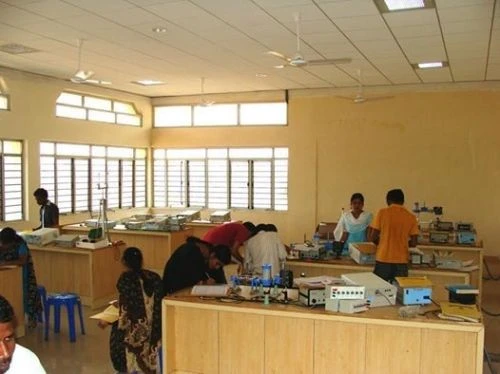
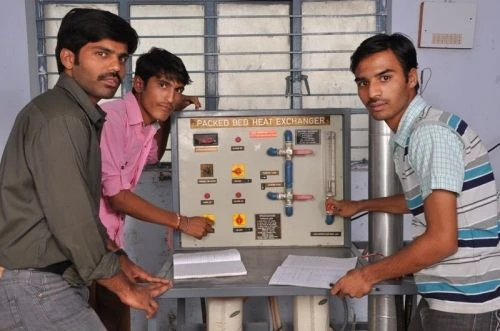
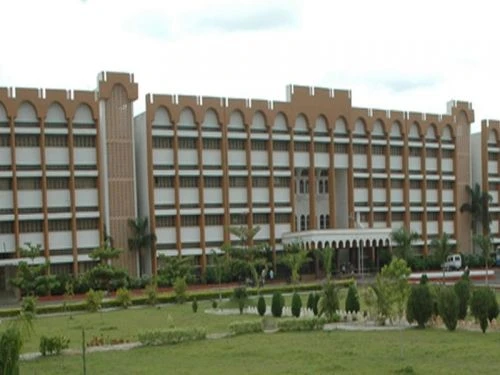
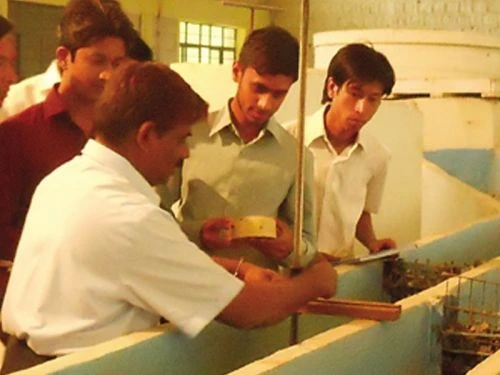
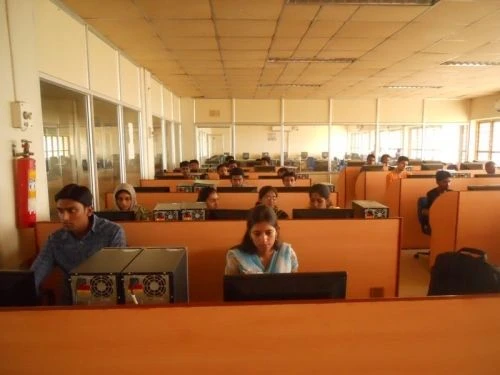
The 35-acre campus is a definite plus. It's spacious, green, and provides all the basic academic infrastructure: libraries, labs for each department, workshops, and computer centers. The labs are described as adequate for the curriculum. It's a self-contained environment.
Hostels are available for both boys and girls. Reviews suggest the hostels are functional but not luxurious. The usual rules apply. The mess food gets the typical student complaints—edible but repetitive. Being located on the outskirts of Bhalki town, the campus is quiet. Some might call it peaceful, others might find it isolated. The nearest major city for entertainment or major shopping is Hyderabad, which is a few hours away.
Social life revolves around campus festivals, technical symposiums, and college events. There are clubs and associations for various technical and cultural activities. Sports facilities are present. It's not a "happening" metro campus, but if you're self-motivated and can create your own fun within the college community, it works.
Synthesizing the feedback gives you a balanced, human perspective.
The good? Students consistently praise the campus size and greenery. They find many faculty members to be knowledgeable, helpful, and experienced. The low cost of education (especially for government seat holders) is frequently highlighted as a major advantage. For students from surrounding districts, it's an accessible engineering option. The library and basic facilities are deemed satisfactory.
The not-so-good? Placement statistics are the biggest point of skepticism. Many feel the official numbers are inflated and that the placement cell could be more proactive. The location is a double-edged sword—great for focus, but a hurdle for internships, industry interaction, and weekend life. Some reviews mention administrative red tape and a rigid system, which is common in older, established institutions. A few point out that while the newer branches (AIML, Data Science) are offered, the depth of specialization might not match a top-tier city college due to resource constraints.
The overall tone isn't one of bitter disappointment, but of pragmatic acceptance. It's seen as a decent college that gives you a VTU degree and a chance, but you have to work hard to make the most of it, especially in securing a good job.
BKIT is a very specific proposition. It's best for students from North Karnataka or surrounding regions who have secured a government seat through KCET. At that subsidized fee (around ₹56k/year), it represents solid value for money—a recognized VTU degree, a large campus, and adequate teaching. It's a practical choice for families looking for an affordable engineering education without the high costs and competition of Bangalore colleges.
It's also a viable option for students keen on core engineering branches (Civil, Mechanical, Chemical) who are comfortable with the placement reality that these fields often involve off-campus efforts or further studies.
Who should probably look elsewhere? If your primary goal is a high-probability, high-paying campus placement in IT, and you have the rank to get into a college in Bangalore, Mysore, or Mangalore with a stronger industry connect, that's likely a better path. Similarly, if you thrive in a fast-paced, urban environment with easy access to internships and events, the isolation of Bhalki will feel like a constraint.
In short, BKIT is a workmanlike institution. It won't hand you a dream career on a platter, but for the right student—cost-conscious, self-driven, and from the region—it provides a legitimate platform to build one. Just manage your expectations, especially regarding placements, and be prepared to supplement the college's efforts with your own.
In this preview: 5 photos · 0 videos
The average placement package varies significantly by branch. Official figures cite ranges like ₹6 LPA for Computer Science, ₹5.7 LPA for ECE, and around ₹4.9 LPA for Civil Engineering. However, student reviews often mention overall averages closer to ₹3.5 to ₹5 LPA. The highest reported package is ₹15 LPA for CSE from Amazon.
Fees depend on the seat type. For a general management quota seat, the annual tuition is approximately ₹85,000. Government seats, secured through KCET counseling, are heavily subsidized and historically cost around ₹56,000 per year. Hostel and mess charges are additional.
Placements for CSE are the strongest among all branches at BKIT, but with caveats. The college claims placement percentages above 95% for CSE and AI/ML, but more recent official data showed 50.39% for CSE in 2023-24. Top recruiters include Infosys, Wipro, TCS, and occasionally Amazon. The average package for CSE is quoted around ₹6 LPA, but student success heavily depends on individual skill development.
Admission to B.E./B.Tech programs primarily requires a valid rank in the Karnataka Common Entrance Test (KCET). Eligibility also includes passing 10+2 or equivalent with Physics, Mathematics, and Chemistry/Biotechnology/Computer Science with a minimum aggregate score (usually 45% for general category) as prescribed by VTU.
BKIT can be a good, value-for-money option for certain students. Its strengths include a large 35-acre campus, low fees (especially for government seats), a wide range of branches including modern ones like AI & ML, and experienced faculty. Its weaknesses are its semi-rural location, which limits industry exposure, and a placement record that is decent but not exceptional. It is best suited for cost-conscious students from the region who are self-motivated.
Share what future students should know about BKIT.
Student voices are not rewritten by colleges. We remove spam and abuse.
Wider admission question? Community PulseWhat should future students know?
Tell us which course you're considering. We'll help you work out the next step.
Get instant Partner access after mobile verification. Your public edits are reviewed before they go live.
Claim this college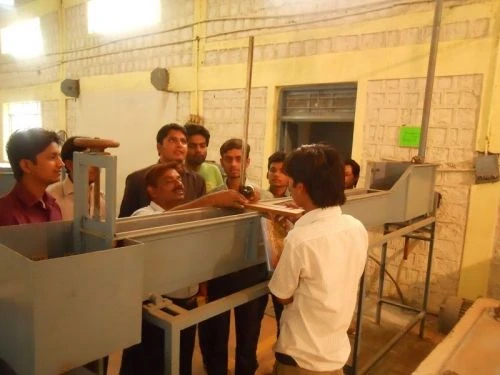
 Auditorium
 Cafeteria
 Gym
Gym Hostel
 Medical
 Science Labs
 Sports Complex
 Study Library