Loading Admission Guardian content
Loading Admission Guardian content
Find a program, read its fee details and explore the admission requirements.
Summary of the programs shown below. Fee periods can differ by program. Check the note beside each amount before comparing costs.
| Course | Stream | Fees |
|---|---|---|
| Doctorate of Medicine [MD] | Medical | 38900 |
| M.B.B.S. | Medical | 128749 |
Specializations
All accepted exams
Eligibility: MBBS + PGNEET
All accepted exams
Eligibility: 10+2 with 50% + NEET
3 exams with cutoff data available - showing recent entries
If you're looking for a medical college where you'll learn by doing, not by watching, Bidar Institute of Medical Sciences (BRIMS) demands attention. This government-run institute, established in 2005, is built around a single, powerful asset: a massive 750-bed teaching hospital that sees over 1,400 outpatients every single day. That patient load is the school's entire identity. You won't find sprawling, manicured lawns or luxury hostels here. What you will find is a relentless, hands-on clinical training ground that turns students into competent, unflappable doctors. It's a place for those who prioritize practical experience over campus aesthetics, and who are comfortable with the realities—both good and challenging—of a state-run institution in a tier-2 city.
BRIMS is fundamentally an MBBS factory, and that's its strength. The undergraduate program takes in 150 students annually, a number boosted from 100 in 2017. They also run B.Sc Nursing and paramedical diplomas, but the MBBS course is the undisputed core. Postgraduate studies are a major focus too, with about 52 MD/MS seats across specialties like General Medicine, Paediatrics, and Surgery. The academic rhythm is set by RGUHS, starting in August or September. Grading is percentage-based, with internal marks coming from three assessment exams.
The faculty roster has its stars. Dr. Syed Abdul Jaweed, HOD of Biochemistry, is a notable name—he's a contributor to the widely-used "Rafi MD" textbook. That kind of academic heft in a basic science department is a real plus. The teaching, from what students say, tends to be more supportive and less intimidating than at some older, more rigid government colleges. It's a practical, patient-first academic culture.
Let's be clear: in a government medical college, "placements" don't mean campus recruitment drives. Your career path is built on two things: the compulsory internship and your performance in the NEET-PG exam. On that front, BRIMS sets you up well. The compulsory rotating internship happens right at the attached hospital, and the stipend is a solid ₹30,000 per month, as per Karnataka government norms.
The real "placement" advantage is the clinical exposure for your PG prep. With 1,400+ OPD patients daily, you will see textbook cases and rare presentations constantly. That volume is invaluable. Most graduates either crack NEET-PG for seats at institutes like BMCRI or AIIMS, or they enter the Karnataka Health Services. There is, however, a mandatory one-year rural service bond after MBBS. It's a trade-off for the subsidized education.
A recent reality check, though, points to systemic strains. In late 2024, reports emerged of a funds crunch leading to 40 contract doctors being let go, causing issues in departments like Radiology. It's a reminder that even the best clinical training depends on a functioning system, and state-run institutes can face administrative hiccups.
This is where government colleges shine. The cost of an MBBS degree at BRIMS is a fraction of what you'd pay privately. For the state quota, tuition is about ₹65,150 per year. The All India Quota fee can be even lower, sometimes dipping to around ₹24,865. Over the full 5.5 years (including internship), the total tuition cost is roughly ₹3.22 to ₹3.58 lakhs.
Add in hostel and mess, and the complete picture emerges. Hostel room rent is between ₹10,000–20,000 annually. The student-union-run mess costs ₹2,500–5,000 per month. All told, you're looking at a total 5.5-year cost of ₹4.5 to ₹6 lakhs. That's astonishingly affordable for a medical education. There aren't elaborate scholarship schemes per se—the low fee is the scholarship.
Your ticket in is NEET. For MBBS, you compete through two channels: 15% of seats (All India Quota) are filled by the Medical Counseling Committee (MCC), and the remaining 85% (State Quota) go through the Karnataka Examination Authority (KEA).
The 2024 cutoff ranks tell a story of accessibility. For the General category in Round 1, the All India Quota rank ranged from about 12,991 to 20,181. For the Karnataka state quota, it was much higher, around 57,430 to 58,007. But there's a huge caveat: reservation. Under Article 371(J), a full 70% of state quota seats are reserved for students from the Hyderabad-Karnataka region. This dramatically impacts the cutoffs for the "general" state seats, making them highly competitive. You must understand your category. For MD/MS, it's all NEET-PG and KEA counseling. Paramedical and nursing courses use the KCET exam.
Don't expect a resort. The 45-acre campus is functional, centered on the imposing 8-story hospital block inaugurated in 2017. The infrastructure does the job—modern OTs, ICUs, a central lab. The library has over 10,000 books and digital access via HELINET. There's an auditorium and decent sports access next to Nehru Stadium.
The hostels are a mixed bag. Rooms are reportedly spacious, which is a win. But the negatives are consistent across student reviews: lifts break down, power cuts happen, and maintenance can be sluggish. It's a typical government hostel experience. The mess food is called "mediocre" and "repetitive," though students concede that their own union-run system is better than an outside contractor.
Location-wise, BRIMS is brilliantly connected. The railway station is 1.2 km away, the bus stand 800 meters, and the airport just over 5 km. You're in the heart of Bidar, so everything is accessible. The city itself is peaceful and safe.
The student consensus is remarkably clear. BRIMS is a high-workload, high-reward clinical training ground. The praise is fervent where it counts: "The patient load is huge; you see rare cases every day that you won't see in private colleges," is a typical refrain on Quora and Reddit. Faculty in core departments like Biochemistry and Pharmacology get top marks for being supportive and knowledgeable.
A major social positive is the near-universal report of no ragging. Seniors are described as "sweet and caring," with anti-ragging policies strictly enforced. That's a significant relief for newcomers.
The criticisms are practical. Infrastructure maintenance headaches (lifts, power) come up constantly. The language barrier is real—Bidar is a multilingual mix of Kannada, Marathi, Telugu, and Hindi, which can be initially challenging for North Indian students. And the recent administrative turmoil with contract doctors has shaken confidence, highlighting the vulnerability to state government funding issues.
BRIMS Bidar is an excellent, no-frills choice for a specific type of student. If your primary goal is to become a clinically sharp doctor and you value immense hands-on experience over campus luxury, this college delivers exceptional value for money. The affordable fees and massive patient exposure are a powerful combination for NEET-PG preparation. It's ideally suited for Karnataka residents, especially those from the HK region who benefit from reservation, and for All India Quota students who secure a seat here.
You should probably look elsewhere if you prioritize a polished, predictable campus life with flawless infrastructure and administrative smoothness. The recent funding issues are a red flag to watch. BRIMS is a workhorse, not a showhorse. It prepares you for the gritty reality of medical practice in India, often by immersing you in it from day one. For the right student, that's exactly what's needed.
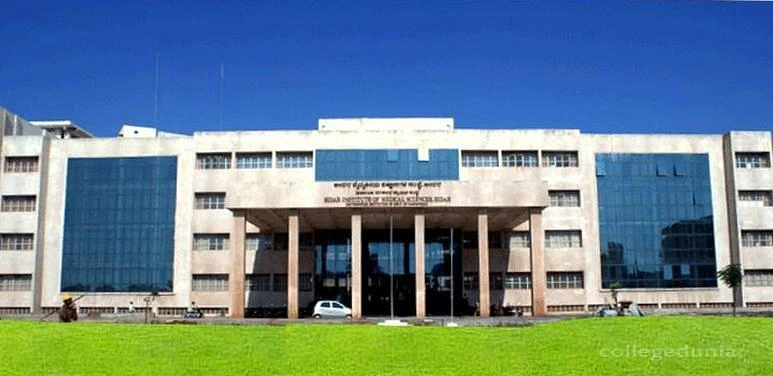
In this preview: 1 photo · 0 videos
BRIMS Bidar is a 100% government-run autonomous institute, not a private college.
For students admitted under the state quota, the total tuition fee for the entire 5.5-year MBBS duration is approximately ₹3.22 Lakhs.
Yes, there is a mandatory service bond. All MBBS students at BRIMS Bidar must complete a 1-year rural service bond after their studies.
The clinical exposure is excellent due to a very high patient load. BRIMS Hospital handles over 1,400 patients in its Outpatient Department (OPD) daily.
Yes, Bidar is considered a peaceful city and is safe for students from other states. Students should be prepared for a multilingual local environment.
Share what future students should know about Bidar Institute of Medical Sciences.
Student voices are not rewritten by colleges. We remove spam and abuse.
Wider admission question? Community PulseWhat should future students know?
Tell us which course you're considering. We'll help you work out the next step.
Get instant Partner access after mobile verification. Your public edits are reviewed before they go live.
Claim this college
 Cafeteria
 Computer Labs
 Hostel
 Medical
 Science Labs
 Study Library