Loading Admission Guardian content
Loading Admission Guardian content
Provisional score based on available data. It may change as more information is verified.
Find a program, read its fee details and explore the admission requirements.
Summary of the programs shown below. First-year fee. Check the note beside each amount for inclusions and exclusions.
| Course | Stream | Fees |
|---|---|---|
| Bachelor of Technology [B.Tech] | Engineering | 50000 |
| Master of Technology [M.Tech] | Engineering | |
| Master of Business Administration [MBA] | Management |
Specializations
All accepted exams
Eligibility: 10+2 with 50% + KEAM
Specializations
All accepted exams
Eligibility: Pass in Graduation + GATE
Specializations
All accepted exams
Eligibility: Pass in Graduation + XAT
 Spectrum softtech solutions pvt ltd
 Suntech
 Unitech
Caarmel Engineering College (CML) presents a unique and cautionary case study in the Kerala engineering landscape. Established in 2002, this private institution in the scenic but remote Perunad hills of Pathanamthitta was once a functional college. But here's the critical fact every prospective student must know first: the college officially ceased operations in July 2018. It is defunct. If you encounter any website or portal listing "Admission 2025-26" for CML, it's displaying outdated, auto-generated data. This profile serves as a historical record and a vital warning to avoid confusion with similarly named, still-active colleges.
Before its closure, CML offered a standard suite of programs typical of a mid-tier private engineering college in Kerala. All courses operated under the semester system of its affiliating university, initially Mahatma Gandhi University and later APJ Abdul Kalam Technological University (KTU). The B.Tech program had an annual intake of roughly 360-420 students, spread evenly across six branches: Computer Science, Electronics & Communication, Electrical & Electronics, Mechanical, Civil, and Information Technology (60 seats each). At its peak, the college maintained a student-faculty ratio of about 1:15. Postgraduate options included an MBA with standard specializations and M.Tech programs in Communication Engineering, Computer Science, Power Electronics, and VLSI Design. The academic culture, as described by alumni, was heavily influenced by the managing trust's emphasis on discipline, which translated into strict attendance policies and a structured, some would say restrictive, daily routine.
Placement performance was a significant pain point and a contributing factor to the college's declining admissions. Official claims from its final years hovered around a 50-60% placement rate. And you'll still see that figure on some old listings. But the consensus from student reviews on platforms like Shiksha and Quora (2016-2018) paints a starkly different picture. The working number alumni cite is closer to 20-25% for genuine on-campus engineering roles.
The highest package reported in its later years was an unverified 5-6 LPA, circa 2015-2016. The average package for placed students was typically between ₹2.4 and 3 lakhs per annum. Recruiters were a mix of IT service giants and local firms—TCS, Infosys, UST Global, and Sutherland Global Services were the most frequent names. A notable complaint from students was the prevalence of BPO and customer support roles in campus drives, rather than core engineering positions. Placements for Civil and Mechanical graduates were particularly scarce. The remote location didn't help; many companies preferred conducting pool drives in more accessible colleges, leaving CML students at a logistical disadvantage.
Based on the last recorded data, the fee structure was competitive for a private college in Kerala. Annual tuition fees ranged from approximately ₹50,000 to ₹75,000 for the government merit quota, while the management quota could cost ₹95,000 or more per year. Adding in hostel and mess charges, which were about ₹4,000 to ₹5,500 per month, the total estimated cost for a four-year B.Tech could land between ₹4.5 and ₹6 lakhs. The institution, through the Believers Church, did offer scholarships for economically backward students and merit-based fee waivers for those securing high ranks in the KEAM entrance exam. That was a decent support system for eligible students while it lasted.
Admission to CML's B.Tech programs was conducted through the KEAM (Kerala Engineering Architecture Medical) entrance exam and subsequent state counseling. The college code was CML. The selection process followed the standard Kerala model: 50% of seats were filled through government merit counseling based on KEAM rank, and the remaining 50% were reserved for the Management/NRI quota. By the college's final operational years, cutoffs had risen significantly, reflecting a broader slump in engineering admissions across the state. In 2017, for instance, the closing rank for the Computer Science branch could exceed 40,000. Less popular branches like Civil and Mechanical often had seats going vacant. Crucially, the code 'CML' no longer appears in the official KEAM seat allotment matrices for 2024 or 2024. Its absence is the definitive administrative proof of its closure.
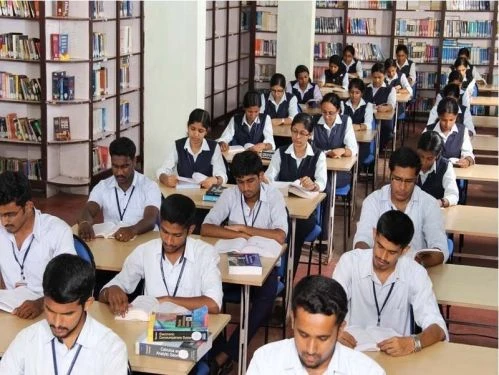
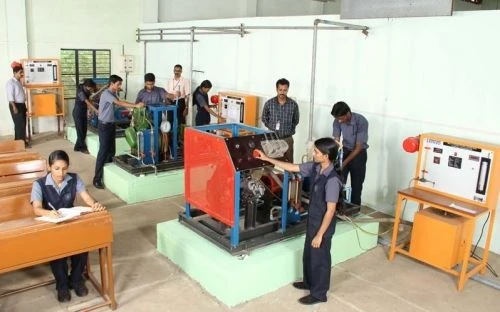
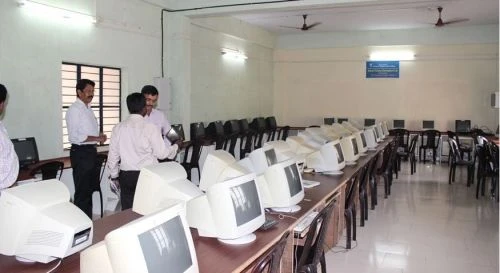
The campus was, without a doubt, its most distinctive feature. Spread over 120 acres in the foothills of the Western Ghats, it was repeatedly described by students as "resort-like" for its greenery and misty mornings. It was peaceful. Isolated, but peaceful. The infrastructure included separate hostels for boys and girls, generally rated as average (around 3/5) in terms of amenities and upkeep. Labs for CSE and mechanical workshops were noted as being reasonably well-equipped for their time. The library housed over 20,000 volumes with digital access. However, the remote location in Perunad was a double-edged sword. Getting to the nearest town, Ranni, required reliance on college buses, which operated on fixed schedules. Social life was limited. The management enforced strict rules—dress codes, curfews, and high penalties for low attendance were common grievances. It felt more like a disciplined boarding school than a typical college campus. That environment appealed to some parents but chafed against the expectations of many students seeking a more autonomous university experience.
Synthesizing archived reviews from 2014-2018 reveals a clear, divided consensus. The positives are almost poetic: an overwhelmingly beautiful, serene campus that offered a distraction-free environment for study. Many alumni hold genuine affection for individual faculty members in the ECE and CSE departments, recalling them as supportive and knowledgeable.
But the negatives are practical and severe. The "school-like" atmosphere with rigid rules was a frequent complaint. The placement cell's performance was a major source of frustration, with students feeling misled by official statistics and underserved by the quality of visiting companies. In the final two years before the shutdown, a palpable "sense of doom" set in. Students reported faculty attrition and a decline in campus maintenance as the financial crisis deepened. The most common piece of advice from alumni? It was a college for nature lovers who prioritized a quiet environment, but a poor choice for anyone prioritizing robust placements, a vibrant social scene, or urban convenience. One paraphrased review sums it up: Awesome for nature, a nightmare for placements and social life.
This isn't a question of worth—it's a question of validity. Caarmel Engineering College (CML) is closed and is not an option for any prospective engineering student. The primary purpose of this profile is to prevent wasted effort and confusion. Students must not mistake it for the still-operational Carmel College of Engineering and Technology (CMA) in Alappuzha, a separate institution. Historically, CML served a specific niche: students seeking a low-cost, disciplined, and scenic campus who were also comfortable with the high risk of modest placement outcomes. Its closure in 2018, following years of poor admissions and a failing placement record, underscores the intense market pressures on remote, mid-tier private engineering colleges. If you are looking for colleges in a similar region or fee bracket, focus on verified, active institutions. All academic records for former CML students are now managed directly by KTU or MG University. For anyone building a college list today, CML should be firmly crossed off—not as a poor choice, but as a non-existent one.
In this preview: 5 photos · 0 videos
No. Caarmel Engineering College (CML) in Pathanamthitta closed in 2018 and is no longer operational. It has not admitted a fresh batch of students since 2017 and is no longer part of the KEAM allotment process.
When the college closed in 2018, existing students were transferred to other engineering colleges under APJ Abdul Kalam Technological University (KTU) to complete their degrees. This transfer followed significant student protests.
Since the college is closed, all academic records are handled by the affiliated universities. You must contact either APJ Abdul Kalam Technological University (KTU) or MG University directly, depending on your batch year, to request transcripts or degree certificates.
No, they are completely different institutions. Carmel College of Engineering and Technology (CMA) in Punnapra, Alappuzha, is an active and functioning college. Caarmel Engineering College (CML) in Pathanamthitta is closed and should not be confused with the active college in Alappuzha.
For current admission options in the region, prospective students should consider other active institutions such as Musaliar College of Engineering or Mount Zion College of Engineering. Any online listing for Caarmel Engineering College (CML) for the 2024-2025 session or beyond is outdated and should be ignored.
Share what future students should know about CML.
Student voices are not rewritten by colleges. We remove spam and abuse.
Wider admission question? Community PulseWhat should future students know?
Tell us which course you're considering. We'll help you work out the next step.
Get instant Partner access after mobile verification. Your public edits are reviewed before they go live.
Claim this college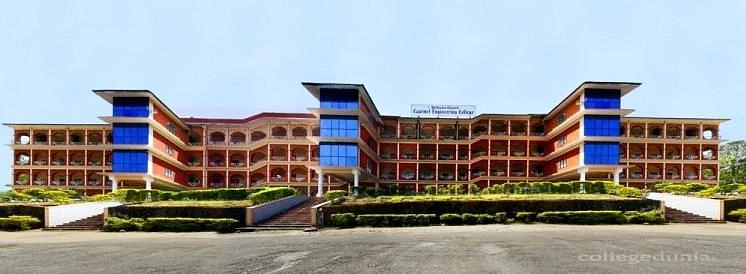
 Auditorium
 Cafeteria
 Computer Labs
 Gym
Gym Hostel
 Medical
 Science Labs
 Sports Complex
 Study Library