Loading Admission Guardian content
Loading Admission Guardian content

Provisional score based on available data. It may change as more information is verified.
Find a program, read its fee details and explore the admission requirements.
Summary of the programs shown below. First-year fee. Check the note beside each amount for inclusions and exclusions.
| Course | Stream | Fees |
|---|---|---|
| Bachelor of Technology [B.Tech] | Engineering | 80000 |
| Bachelor of Technology [B.Tech] {Lateral} | Engineering | 80000 |
Specializations
All accepted exams
Eligibility: 10+2 with 45% + JEE Main
Specializations
All accepted exams
Eligibility: 10+3 with 45% + WBJEE
3 exams with cutoff data available - showing recent entries
 Asahi India Glass Ltd.
 Essel Propack
 Galacon Infrastructure
 GLS Films Industries Pvt. Ltd.
 India Japan Lighting
 JBM Group
 JMC Projects (India) Ltd.
 Juspay
 Maven Infotech
 Pubmatic
 Sanmar Group
 Simplex Infrastructure ltd
 Spatial Geotech Pvt. Ltd.
For students in the Bardhaman-Durgapur belt looking at a budget-friendly engineering option, Camellia Institute of Engineering and Technology (CIET) is a name that comes up. Established in 2010, it’s a relatively young, private college that’s carved out a niche as a low-cost alternative to pricier Kolkata institutes. It’s affiliated with Maulana Abul Kalam Azad University of Technology (MAKAUT) and approved by the AICTE. But the reality check is immediate: it lacks NBA or NAAC accreditation, and its placement packages are modest. The college serves a specific purpose—providing an accessible technical education for those with mid-tier WBJEE ranks. It’s not a destination for high-flyers, but for some, it’s a pragmatic start.
CIET offers a standard set of B.Tech programs under MAKAUT, each with an annual intake of 60 students. The Computer Science and Engineering (CSE) and its newer specialization in Artificial Intelligence & Machine Learning are predictably the most sought-after. The other core branches—Civil, Mechanical, Electrical, and Electronics & Communication—round out the offerings. There are also three-year Diploma programs in these core engineering fields.
The academic culture is what you'd expect from a smaller, teaching-focused college. The faculty strength is around 55-60, with most holding M.Tech degrees. There are a few PhD holders, like Prof. Dripta Saha in Civil, but it's not a research-intensive faculty. The feedback from students consistently highlights that teachers are accessible and supportive, often going the extra mile with remedial classes. The college has implemented a mentoring system and even runs a Language Lab for soft skills. It’s a structured, syllabus-driven environment. You follow the MAKAUT calendar, you’re graded on a 10-point CGPA system, and the pace is manageable. Don’t expect cutting-edge electives or prolific research publications. The value here is in consistent, baseline instruction.
This is where you need to separate the brochure from the bench talk. The college's official placement percentage claims have fluctuated—78% in 2023, 65% in 2022. But dig into student reviews on platforms like CollegeDunia and Shiksha, and a different picture emerges. Alumni suggest the actual on-campus placement rate for core branches (Mechanical, Civil, Electrical) is closer to 30-50%. It’s better for CSE, but still not stellar.
The packages tell a clear story. The verified highest package for the 2024-25 cycle was in the ₹3.3 to ₹3.5 LPA range. You might see sensational claims of a ₹30 LPA outlier on some aggregator sites—treat that as unverified marketing, likely a group-level anomaly. The average package sits at ₹2.0 to ₹2.2 LPA, with the median likely around ₹1.8 LPA. That translates to monthly salaries of ₹15,000-₹20,000 for many graduates.
Recruiters are a mix of IT service giants and core sector companies. TCS, Wipro, Cognizant, and Capgemini are regulars for CSE grads. For core branches, names like JMC Projects, Sanmar Group, Tata Motors (for Diploma), and Simplex Infrastructure show up. FMCG companies like Coca-Cola and Dabur also recruit for sales and support roles. About 60-70% of students secure internships, often with state-level bodies like PWD or Eastern Railway.
The verdict? The placement cell facilitates opportunities, but they are largely with mass recruiters offering entry-level roles. For a better career launch, students here often rely on off-campus drives or further studies. As one alum put it online, "Don't rely solely on the placement cell."
CIET’s strongest selling point is its affordability. The annual tuition fee for B.Tech is between ₹80,000 and ₹85,000. Over four years, you’re looking at a total tuition cost of roughly ₹3.3 to ₹3.5 lakhs. That’s significantly lower than most private engineering colleges in and around Kolkata.
There are additional costs, of course. The first semester usually includes a bundled payment of around ₹40,000 covering admission, library, and development fees. Hostel and mess fees add another ₹40,000-₹46,000 per year for a non-AC room, with monthly mess charges around ₹4,000.
For financial support, students can apply for the West Bengal state government’s Swami Vivekananda Merit-cum-Means (SVMCM) Scholarship. The college also provides guidance on the West Bengal Student Credit Card scheme and offers an internal Chairman’s Scholarship based on merit.
Admission to the B.Tech programs is primarily through the West Bengal Joint Entrance Examination (WBJEE). JEE Main scores are also accepted. For lateral entry into the second year, the JELET exam is the gateway.
The cutoffs reflect the college's position in the state's pecking order. They are not highly competitive. For the 2024/2024 academic year, the Round 1 General All-India closing rank for Electrical Engineering was 52,465. For Computer Science & Engineering, it was 79,061—and these ranks often extend well into the 90,000s in later counseling rounds. You can check the official WBJEEB website for the latest cutoff trends.
The selection process is centralized through the WBJEEB counseling. However, like many private colleges, CIET does have a management quota, accounting for roughly 10% of seats. Securing a seat through this channel requires direct contact with the college's admission cell and typically involves a higher fee.
The campus is situated off National Highway 2, near Mankar Railway Station (about 1.5 km away). Its size is listed officially as 10 acres, though the broader Camellia Group claims 34. The location is a double-edged sword. It’s easily accessible for day scholars from the region, but Bud Bud is a quiet, semi-rural area. Social life is limited on campus, so students often travel to Durgapur or Bardhaman city for entertainment.
Infrastructure is functional but shows its age in places. There are over 40 departmental labs, though student reviews note equipment in core branches can be "functional but aging." The library houses over 12,100 books, but the collection isn't known for being current. Campus Wi-Fi is available but is frequently criticized for being slow.
Hostel capacity is limited—150 seats for boys and 50 for girls. Rooms are shared between 2-4 students. The girls' hostel has 24/7 security and a warden, which addresses safety concerns. The food in the mess is generally considered hygienic, if a bit repetitive. Sports facilities include a large playground for cricket and football, plus indoor options like table tennis.
A historical note that still surfaces in local discussions: in 2012, a tragic incident involving the death of a third-year student occurred on campus. While over a decade old, it’s part of the college's history that prospective families sometimes inquire about regarding past safety protocols.
Synthesizing feedback from review sites and forums, a clear consensus forms. CIET is seen as a "value-for-money" college for students with moderate ranks and budgets.
The positives are consistent. Faculty accessibility is the most praised aspect. Students repeatedly say teachers are helpful and approachable. The low fee structure is the primary reason many choose CIET over other options. The proximity to the railway station is a practical plus for commuters.
The negatives are equally consistent. Placement quality and packages are the biggest concern, with many graduates feeling the on-campus offers are underwhelming. Infrastructure maintenance is another gripe, from old library books to unreliable internet. The remote location leads to a "thin" campus crowd and a quiet, sometimes monotonous, student life.
A telling paraphrased quote from a review sums up the pragmatic attitude needed: "If you have courage and are ready to learn on your own, this college is okay." Another mentioned the campus vibe is "good but the crowd is thin." Ragging was reported as an issue in the past, but students note the anti-ragging squad is now more active.
CIET is a very specific proposition. It’s worth serious consideration if you are a student from the Bardhaman, Durgapur, or surrounding regions with a WBJEE rank between 50,000 and 100,000, and you have a tight budget. For roughly ₹3.5 lakhs in total tuition, you get an AICTE-approved degree from a MAKAUT-affiliated college with decent, supportive teaching. It’s a legitimate, low-cost launchpad if you plan to leverage the degree for government exams, pursue an MBA later, or are confident in your ability to secure a job off-campus.
You should probably look elsewhere if you have a rank that can get you into a government engineering college, a top-tier private institute in Kolkata, or if a robust campus placement drive with higher packages is your non-negotiable priority. CIET’s placements are real, but they are modest. The social scene is quiet. Don’t come here expecting a transformative, high-flying engineering school experience. Come here for an affordable, functional education that puts the onus on you to build your career from a solid, if basic, foundation.
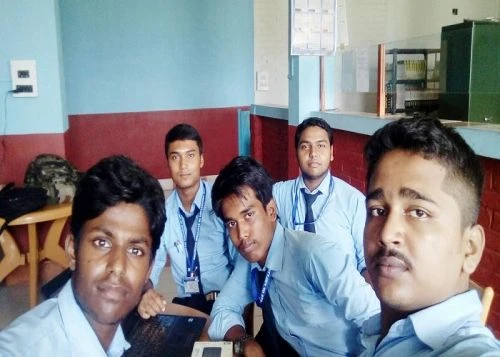
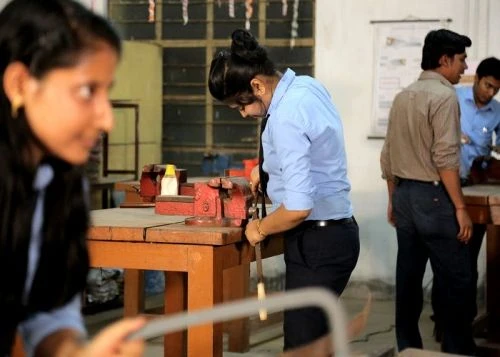
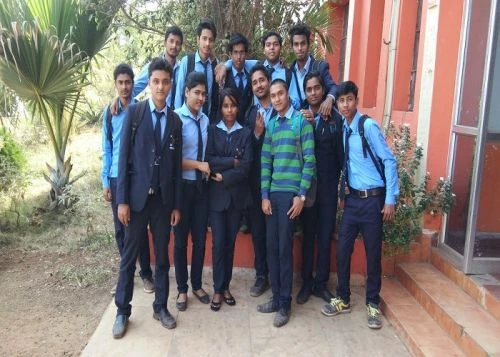
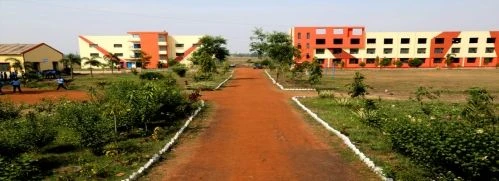

In this preview: 5 photos · 0 videos
The institute is considered average for CSE. While the faculty is supportive, students aiming for high-end technology placements typically need to pursue off-campus opportunities in addition to the college's placement cell.
The average placement package for students at Camellia Institute of Engineering and Technology is approximately ₹2.2 Lakhs Per Annum (LPA).
Yes, the college provides a separate girls' hostel that is considered safe. It features 24/7 security and has a warden present on the premises.
The college is conveniently located about 1.5 kilometers from Mankar Railway Station. It is easily accessible by a short rickshaw ride or even by walking.
Historically, the college offered free bus services from Kolkata. For the current 2025-26 academic year, it is recommended to check directly with the college administration to confirm whether transport services are still free or if they operate on a fee-based model.
Share what future students should know about CIET.
Student voices are not rewritten by colleges. We remove spam and abuse.
Wider admission question? Community PulseWhat should future students know?
Tell us which course you're considering. We'll help you work out the next step.
Get instant Partner access after mobile verification. Your public edits are reviewed before they go live.
Claim this college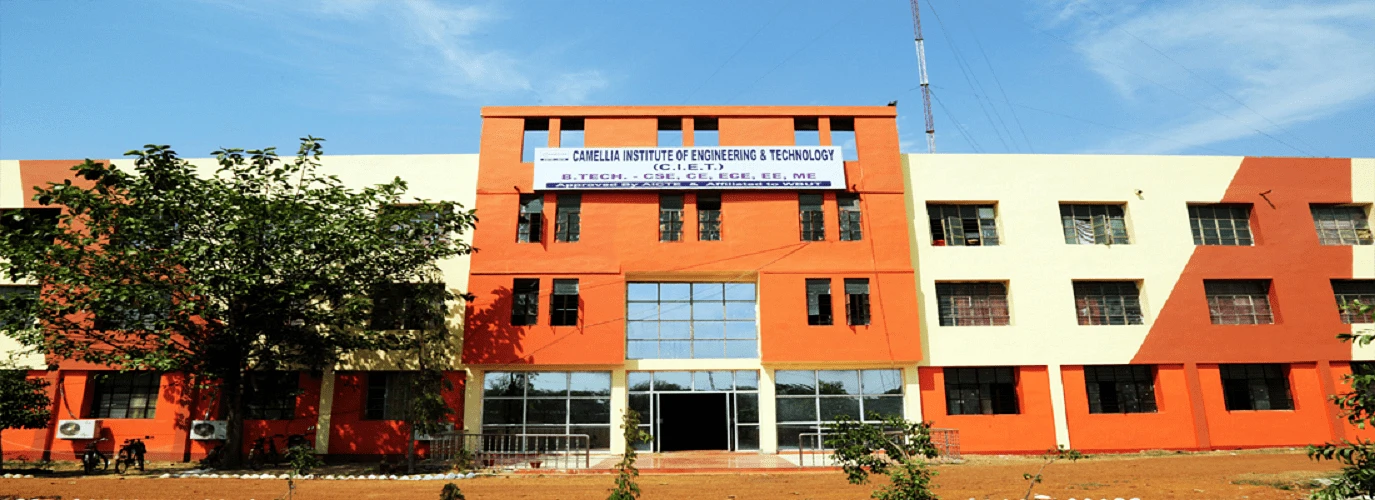
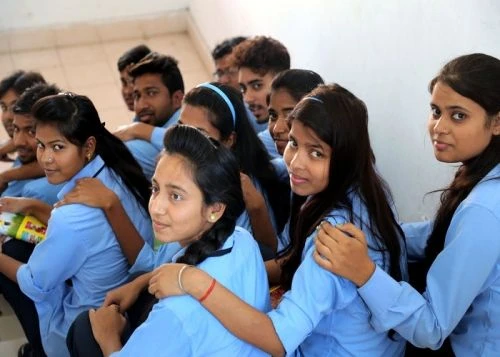
 Auditorium
 Cafeteria
 Computer Labs
 Medical
 Science Labs
 Sports Complex
 Study Library