Loading Admission Guardian content
Loading Admission Guardian content

Provisional score based on available data. It may change as more information is verified.
Find a program, read its fee details and explore the admission requirements.
Summary of the programs shown below. Fee amounts are not listed. Contact the college for its current fee schedule.
| Course | Stream | Fees |
|---|---|---|
| Master of Computer Applications [M.C.A] | Computer Applications | |
| Bachelor of Technology [B.Tech] | Engineering | |
| Bachelor of Technology [B.Tech] {Lateral} | Engineering | |
| Master of Business Administration [MBA] | Management |
All accepted exams
Eligibility: Graduation + OJEE
Specializations
All accepted exams
Eligibility: 10+2 with 75% + JEE Main
Specializations
All accepted exams
Eligibility: 10+3
Specializations
All accepted exams
Eligibility: Graduation + OJEE
2 exams with cutoff data available - showing recent entries
Capital Engineering College (CEC) in Khorda presents a straightforward proposition. It’s a private, AICTE-approved college affiliated with Biju Patnaik University of Technology (BPUT), offering B.Tech, MBA, MCA, and diploma programs at a tuition fee that’s notably low for the sector—just ₹59,000 a year. For students with JEE Main or OJEE ranks that land them in the 7-15 lakh range, it’s a pragmatic, budget-conscious choice. The campus is peaceful, the infrastructure is decent for the price, and you’ll likely get a degree. But that’s the core of it: it’s a functional, no-frills institution where outcomes are largely what you make of them, with median placement packages hovering around ₹3.8 LPA. It doesn’t have NAAC or NBA accreditation, and it’s not ranked in the NIRF Rankings. For many in Odisha, that’s a trade-off they’re willing to make.
CEC’s academic structure is defined by its affiliation to BPUT. That means the syllabus, exam schedule, and 10-point CGPA system are all set by the state university. The college itself implements it. The B.Tech program has a total intake of 570 students, with Computer Science and Engineering being the largest branch (180 seats), followed by Mechanical and Electrical (120 each). Civil, Electrical & Electronics, and the niche Mining Engineering (30 seats) round out the options. There’s also a sizable MBA program (360 seats) and an MCA (120 seats).
Faculty numbers are reported between 91 and 141. Most are Assistant Professors with M.Tech qualifications—they’re often described in reviews as helpful and friendly, especially when prepping students for the tough BPUT semester exams. But there’s a catch, and it’s a common one at newer private colleges: high faculty turnover. Many young teachers stay for a year or two before moving on to government jobs or other opportunities. The senior leadership, like Principal Dr. S.P. Mishra, holds a PhD, but that density is low across the teaching staff. The college mentions an Industry Institute Cell and MoUs for virtual labs, but deep, corporate-driven academic partnerships aren’t prominently detailed.
This is where you need to read between the lines. The official statistics present a confusing picture. The college’s own website once listed a placement percentage of 19%, a figure so low it likely refers to something like the percentage of companies that visited versus those that hired. Student reviews across platforms like Shiksha and CollegeDunia give a more operational number: 60-80% for in-demand branches like CSE and Electrical. The consensus is that if you’re in a core branch like Civil or Mining, on-campus opportunities are slim.
The money is modest. The verified highest package for 2023 was ₹8.5 LPA. The average was ₹4.2 LPA, and the median—the more telling figure—was ₹3.8 LPA. You’ll see unverified student claims of ₹15-25 LPA, but those are almost certainly off-campus or extreme outliers. The regular recruiters are the familiar IT services names: TCS, Wipro, Infosys, Tech Mahindra, Accenture, and Capgemini. A few core engineering firms like Varroc Group and Flash Electronics also visit. For internships, the college reports an 80-90% rate, often fulfilled through mandatory BPUT industrial training, frequently with local firms.
So, the reality check? CEC is a pipeline to entry-level IT services roles for students with modest ranks. The placement cell works, but the packages are in the ₹3-4.5 LPA band for most. It’s a job, not a dream package. That’s the trade-off for the low fee.
The affordability is CEC’s strongest card. At ₹59,000 per year for B.Tech tuition, the total four-year cost is about ₹2.36 lakhs. MBA and MCA programs cost the same annually, totaling ₹1.18 lakhs for two years. Hostel fees add another ₹16,000 to ₹26,000 per year for a non-AC room. Then there are the ancillary costs: a one-time, refundable caution deposit of ₹2,000, annual transport fees between ₹9,600-₹14,400, and uniform costs ranging from ₹1,800 to ₹4,800.
It’s not nothing, but in the landscape of private engineering education, it’s on the very low end. To help, the college facilitates state government scholarships. Odisha students can apply for schemes like PRERANA, Medhabruti, and the Tuition Fee Waiver (TFW) scheme based on their OJEE rank. It’s a critical support system for many in the student body.
Admission is centralized through the Odisha Joint Entrance Examination (OJEE) counseling process. The college accepts both JEE Main and OJEE scores. You apply during the OJEE window, typically June-July, and your rank determines your branch during counseling.
The 2024 cutoff ranks for the General Home State category tell the story of demand and supply:
These are not highly competitive ranks. They indicate that CEC is an option for students whose scores place them in a broad, lower percentile of the national pool. If your rank is within these bounds, you have a realistic shot. The selection is purely rank-based through the OJEE portal; there’s no separate management quota or direct application to the college for the majority of seats.
The campus size is reported conflictingly—some sources say 15 acres, others 40. Either way, it’s described as spacious and peaceful, a remove from the hustle of Bhubaneswar. That remoteness is a double-edged sword: it’s quiet, but you’re reliant on the college bus or your own transport for city trips. The bus stand is 9 km away, the nearest major railway station 20 km, and the airport about 35 km.
Infrastructure is consistently rated as good for the fee. Academic labs, especially for CSE and Mechanical, are called “smart” and well-equipped. The library is automated with over 20,000 books. Wi-Fi covers the campus, though hostel speeds are called average. Sports facilities for cricket, football, basketball, and indoor games are available.
Hostels are separate for genders, secure, and rated around 3.5/5 for cleanliness. Rooms are basic—bed, table, chair, wardrobe. The canteen provides veg and non-veg options, but food quality is a perennial topic of mixed reviews, landing in the “average” category. Student life isn’t vibrant in a metropolitan sense, but it’s functional. The management is known to be strict on attendance, which can be a pain point or a necessary nudge, depending on your perspective.
Synthesizing the chatter from review sites and forums, a clear consensus emerges. Students agree the college offers “excellent infrastructure for the fee charged.” The faculty are generally supportive, particularly in guiding students through the BPUT exam system. The hostel environment is clean and the campus is peaceful.
But the negatives are just as consistent. The “high faculty turnover” is frustrating, disrupting continuity. While placements happen, “packages are mostly on the lower side (3 LPA).” And that “distance from Bhubaneswar” is a genuine logistical hurdle for internships, part-time work, or just a change of scene. The administration is seen as strict, but its grievance redressal is considered satisfactory. No one feels cheated, but few are blown away. It’s seen as a solid, budget pick.
Capital Engineering College is a value-for-money proposition with very clear parameters. It’s best for students from Odisha (or those comfortable there) with JEE Main/OJEE ranks in the 7-15 lakh range, whose primary constraints are budget and the need for a recognized BPUT degree. If your goal is to get into an engineering program, study in a decent environment, and land a baseline IT job in the ₹3-4 LPA range without accruing significant debt, CEC makes pragmatic sense. It’s particularly a considered choice for B.Tech in Computer Science, where placement activity is highest.
However, look elsewhere if you have a rank that can get you into a NAAC-accredited or NIRF-ranked institution, if you’re aiming for high-paying core engineering roles, or if you crave a dynamic, urban campus life with stable faculty. CEC is a stepping stone, not a destination. For the right student—one with realistic expectations and a tight budget—it’s a step that can work.
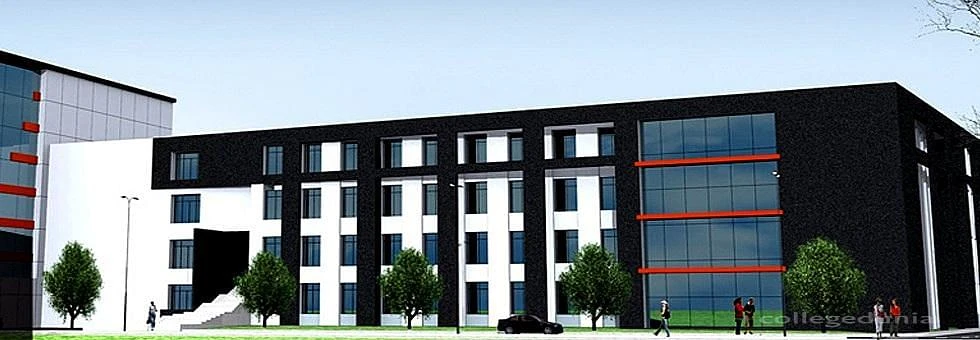
In this preview: 1 photo · 0 videos
Yes, Capital Engineering College is considered a value-for-money option for CSE. It has the highest placement rates among all branches offered at the college.
The tuition fee for B.Tech at CEC Khorda is approximately ₹59,000 per year. The total tuition cost for the 4-year program is around ₹2.36 Lakhs.
Yes, the college provides separate and secure hostel facilities for girls on campus. The hostels offer both Vegetarian and Non-Vegetarian food options.
The median placement package at CEC is around ₹3.8 LPA (Lakhs Per Annum). Most students secure packages in the range of ₹3 LPA to ₹4.5 LPA.
Yes, Capital Engineering College (CEC) Khorda is affiliated with Biju Patnaik University of Technology (BPUT), the state technical university of Odisha.
Share what future students should know about CEC.
Student voices are not rewritten by colleges. We remove spam and abuse.
Wider admission question? Community PulseWhat should future students know?
Tell us which course you're considering. We'll help you work out the next step.
Get instant Partner access after mobile verification. Your public edits are reviewed before they go live.
Claim this college
 Auditorium
 Cafeteria
 Computer Labs
 Gym
Gym Hostel
 Medical
 Science Labs
 Sports Complex
 Study Library