Loading Admission Guardian content
Loading Admission Guardian content
Provisional score based on available data. It may change as more information is verified.
Find a program, read its fee details and explore the admission requirements.
Summary of the programs shown below. Total course fee. Check the note beside each amount for inclusions and exclusions.
| Course | Stream | Fees |
|---|---|---|
| Master of Engineering [ME] | Engineering | 60000 |
| Bachelor of Engineering [BE] | Engineering | 220000 |
| Bachelor of Engineering [BE] {Lateral} | Engineering | 348000 |
Specializations
All accepted exams
Eligibility: Graduation with 50% + GATE
Specializations
All accepted exams
Eligibility: 10+2 with 50% + TNEA
Specializations
All accepted exams
Eligibility: 10+3 with 50% + TNEA
 First Source
Cauvery College of Engineering and Technology (CCET) in Tiruchirappalli is a study in practical expectations. Established in 2008 and affiliated with Anna University, it’s a private, self-financing institution that serves a specific purpose. For students from the region looking for an affordable, AICTE-approved engineering degree with decent faculty support, it fits the bill. But if you’re chasing top-tier NIRF rankings, high-stakes corporate placements, or a bustling urban campus life, you’ll likely be disappointed. The college’s reality is shaped by its location—a bit remote on Kulumani Main Road—and its position in the middle-tier of Anna University’s vast affiliate network. It’s a college where the outcome largely depends on what you bring to the table.
CCET offers a standard set of engineering programs under the Anna University curriculum. The intake is consistent across most branches, with 60 seats each for B.E. in Computer Science and Engineering (CSE), Electronics and Communication Engineering (ECE), Electrical and Electronics Engineering (EEE), Mechanical Engineering, and Civil Engineering. A smaller, unverified intake of about 30 is noted for Agriculture Engineering. At the postgraduate level, the college offers M.E. programs in Computer Science and Engineering and Industrial Safety Engineering, each with an intake of 18 students.
Academically, it’s a strict follower of the Anna University Choice Based Credit System (CBCS). The calendar is fixed—odd semesters from July to November, even from January to May. Faculty strength is estimated between 60-80 members, with about 15-20% holding PhDs. Student reviews consistently highlight faculty accessibility and a helpful rapport as a key strength. You won’t find a research-heavy environment here, but for getting through the university syllabus with support, the academic setup is considered adequate. The official college website has the detailed syllabus and regulations.
This is where the student narrative diverges from the official line. The college claims a placement percentage of 90%+. Talk to alumni, and the working number for on-campus roles in core engineering or IT is closer to 60-70%. The rest, as multiple reviews note, often find roles in the BPO and service sector. The highest package cited for the 2024-2025 cycle is an unverified 6.5 LPA. The average package, deduced from student reports of monthly salaries in the ₹30,000–₹40,000 range, sits between 3.2 and 4.8 LPA.
Recruiters are a mix of IT service giants and BPO firms. Top names include TCS (often through off-campus or pool drives), Accenture, IBM, Wipro, First Source, Omega Healthcare, and Sutherland Global Services. Core mechanical and civil firms also visit, but in smaller numbers.
The verdict from the ground? The placement cell provides opportunities, but the quality is mixed. As one 2023 alumnus put it, “The college is good for those who want a degree without much pressure, but for high-end placements, you have to work on your own.” That’s a fair summary. Don’t expect a flood of product-based companies or dream packages. Expect a baseline of IT service and support role offers, with the onus on you to upskill for better prospects.
The fee structure is where CCET presents a clear value proposition, especially for local students. Under the Tamil Nadu Engineering Admissions (TNEA) government quota, annual tuition fees are quite affordable, ranging from ₹50,000 to ₹65,000. Management quota seats are higher, between ₹85,000 and ₹1,10,000 per year.
On top of tuition, hostel and mess fees add another ₹50,000 to ₹55,000 annually. Factor in semester exam fees (around ₹2,500) and optional transport (₹10,000–₹15,000), and the total estimated cost for a four-year B.E. ranges from ₹4.5 lakhs to ₹6.5 lakhs. That’s undeniably low for a private engineering college.
Financial aid is primarily through state government scholarships. These include the First Graduate Scholarship (which offers a reduction of ₹25,000–₹27,500), and the standard SC/ST Post-Matric and BC/MBC scholarships as per Tamil Nadu norms. It makes the college financially accessible for a wide segment of the regional student population.
Admission for the B.E. programs is straightforward and centralized. It’s entirely based on your performance in the Tamil Nadu Higher Secondary (12th) board exams. The entrance mechanism is the Tamil Nadu Engineering Admissions (TNEA) counseling process. You apply through the TNEA portal during the May-June window, and seats are allotted based on your statewide merit rank.
The 2024 TNEA cutoff marks give a sense of the competition. For the sought-after Computer Science and Engineering program, the cutoff range was between 108.25 and 140.0 (out of 200). For Electronics and Communication Engineering, it was between 95.0 and 120.0. These marks indicate a moderate level of competition—accessible for many, but not open to all. For M.E. programs, admission is through the TANCET exam or a valid GATE score.
The campus, reportedly spread over 10-15 acres, is functional. Its location on Kulumani Main Road in Perur is a double-edged sword. It’s quieter and arguably safer, but it’s also 8-12 km from Trichy’s main railway stations, making it feel isolated. The college runs a bus fleet covering Trichy, Musiri, and Kulithalai to compensate.
Infrastructure is a mixed bag. Labs for CSE and Mechanical are noted as well-equipped, while civil labs are described as adequate. The library has a digital section and over 20,000 volumes. Wi-Fi is available in the main academic block but is frequently reported as poor or unstable in the hostels.
Hostels have separate blocks for boys and girls with a total capacity of around 300. Maintenance issues come up in reviews. Food in the mess gets an average rating of 3 out of 5, serving primarily South Indian vegetarian and non-vegetarian options. The overall student life is disciplined and routine-bound, which parents appreciate. There’s not much in the way of urban entertainment nearby, so campus events and sports facilities become the primary social outlets.
Synthesizing feedback from platforms like CollegeDunia and Shiksha, a clear consensus emerges.
The positives are consistent: helpful and accessible faculty, a strict and safe environment, and exceptional value for money for government quota students. It’s seen as a no-nonsense place to earn an Anna University degree without exorbitant costs.
And the negatives are just as consistent. Placement quality is the biggest gripe, with a significant chunk of roles being in BPOs. The remote location limits access to external coaching centers and city life. Infrastructure, especially hostel upkeep and internet connectivity, needs work. The social media presence is minimal, which sometimes reflects in a feeling of being disconnected.
The takeaway from students isn’t one of anger, but of managed expectations. They acknowledge the college for what it is—a budget-friendly, regional option—but are clear-eyed about its limitations in the broader engineering landscape.
It depends entirely on your profile and goals. If you are a student from Tamil Nadu, comfortable in Tamil, scoring in the 95-140 mark range in TNEA, and looking for the most economical path to an Anna University-affiliated B.E. degree, CCET is a sensible choice. The low fees under the government quota, combined with state scholarships, make it financially low-risk. The faculty support is a genuine plus for getting through the curriculum.
But you should look elsewhere if your aspirations are tied to high-paying campus placements, a vibrant college brand name, or a cosmopolitan campus experience. The placement outcomes are modest, and the location is isolating. This isn’t a college that will open doors for you on its own reputation. It provides a platform—a degree, basic placement opportunities, and a structured environment. The drive to convert that into a standout career has to come from you. For the right student, with the right expectations, that’s enough. For others, it might feel like a compromise.
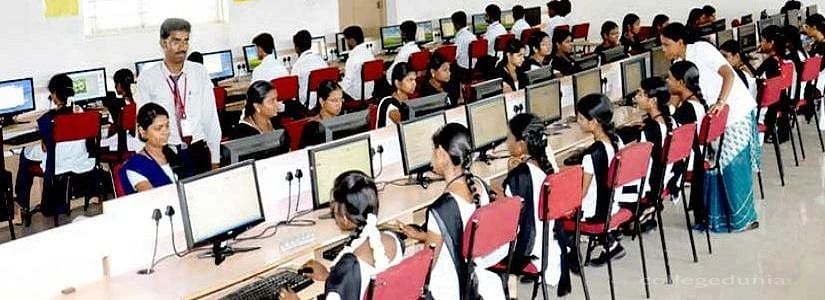
In this preview: 1 photo · 0 videos
The college is considered average for CSE. While the faculty are reported to be good, placements for CSE graduates are mostly in service-based companies.
The TNEA (Tamil Nadu Engineering Admissions) code for Cauvery College of Engineering and Technology, Trichy, is 3828.
Yes, the college provides bus facilities. It maintains a fleet of buses that cover routes in Trichy and the surrounding rural areas.
Yes, the college has a management quota. Approximately 35% of the total seats are filled through this quota.
The hostel fee is approximately ₹50,000 per year. This cost typically includes mess charges for food.
Share what future students should know about Cauvery College of Engineering and Technology.
Student voices are not rewritten by colleges. We remove spam and abuse.
Wider admission question? Community PulseWhat should future students know?
Tell us which course you're considering. We'll help you work out the next step.
Get instant Partner access after mobile verification. Your public edits are reviewed before they go live.
Claim this college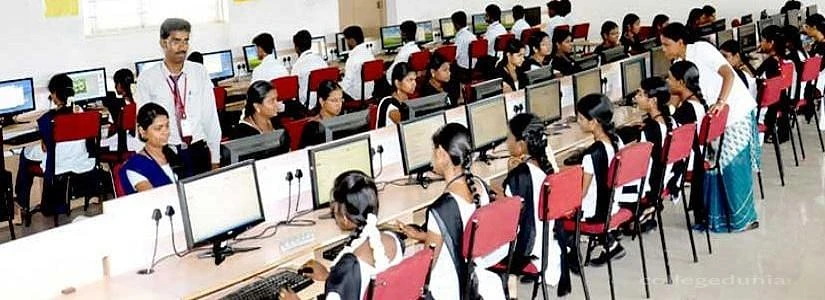
 Auditorium
 Cafeteria
 Computer Labs
 Gym
Gym Hostel
 Medical
 Science Labs
 Sports Complex
 Study Library