Loading Admission Guardian content
Loading Admission Guardian content

Provisional score based on available data. It may change as more information is verified.
Find a program, read its fee details and explore the admission requirements.
Summary of the programs shown below. First-year fee. Check the note beside each amount for inclusions and exclusions.
| Course | Stream | Fees |
|---|---|---|
| Bachelor of Business Administration [BBA] | Management | 47500 |
| Master of Computer Applications [M.C.A] | Computer Applications | 57500 |
| Bachelor of Technology [B.Tech] | Engineering | 69800 |
| Master of Technology [M.Tech] | Engineering | 69800 |
| Master of Business Administration [MBA] | Management | 77500 |
Specializations
Eligibility: 10+2 with 45%
Eligibility: Graduation
Specializations
All accepted exams
Eligibility: 10+2
Specializations
All accepted exams
Eligibility: Graduation + GATE
Specializations
Eligibility: Graduation
2 exams with cutoff data available
 Futures First
 Hindustan Copper Limited (HCL)
 Honeywell
 IBM
IBM Infosys
 L&T Infotech
 NIIT Ltd
 Oracle
 Reliance
 Sapient
 Siemens
 Symphony
 Tech Mahindra
 Wipro
WiproCBS Group of Institutions in Jhajjar is a study in contrasts. It’s a sprawling 32-acre campus that looks more like a resort than a college, famously winning an infrastructure award from Chetan Bhagat. But step off the manicured lawns and you’ll find a reality defined by remote location and placement numbers that don’t match the brochure. For students seeking a low-cost private B.Tech or MBA degree in the Delhi-NCR region, it’s a pragmatic, if uninspiring, option. Just don’t expect the college to hand you a career.
The college offers about 18-19 courses under the MDU Rohtak umbrella. The B.Tech program has an intake of 240-300 seats across five specializations: Computer Science, Mechanical, Civil, Electronics & Communication, and Electrical Engineering. There’s also lateral entry for diploma holders. For management, they run MBA and PGDM programs with specializations in Marketing, Finance, HR, and IT, alongside BBA, BCA, and MCA. M.Tech is available in areas like Structural Engineering and CSE.
Academically, it follows the standard MDU semester cycle with a 10-point CGPA system. The faculty strength is around 89, with a portion reported to be PhD holders. The academic culture is what you’d expect from a budget private college—it gets the job done. Exams are considered manageable with moderate study. The college mentions MoUs with local industrial units for visits, which is a common feature but doesn’t typically translate into deep academic integration. It’s a place where you can earn your degree without excessive academic pressure, but the onus for learning marketable skills falls heavily on you.
This is where the gap between marketing and ground truth is widest. The official website and brochures claim a highest package of 12-13 LPA and an average of 6-8 LPA, with 95-100% placement assistance. The consensus from student reviews on platforms like CollegeDunia and Shiksha paints a different picture.
The realistic median package for an average student is around 2.1 LPA. Placement percentages for core engineering or tech roles are estimated by alumni to be between 20-40%. Many batches, particularly in non-CSE branches, report negligible on-campus placement activity. The listed top recruiters—names like TCS, Wipro, Infosys, Samsung—do visit, but the volume of offers is low. A significant portion of placed students end up in BPO or sales roles, unrelated to their engineering discipline. The "100% assistance" often means access to a portal or notification board, not guaranteed interviews. For internships, the 6-8 week training is mandatory, but students frequently report having to secure these opportunities themselves.
If you’re coming here, plan from day one to target off-campus drives, competitive exams like GATE, or build a strong portfolio for direct applications. The placement cell’s role is limited.
The primary draw is affordability. For the 2024-25 session, B.Tech tuition is between ₹60,000 to ₹66,000 per year. That’s a total outlay of roughly ₹2.4-2.7 lakhs for the degree, which is exceptionally low for a private engineering college in the NCR.
MBA fees range from ₹70,000-77,000 annually, while BBA/BCA programs cost about ₹40,000-47,000 per year. These are just tuition. You must add MDU university fees (approx. ₹5,000/year) and a refundable caution deposit.
The big additional cost is the hostel, which many find necessary due to the remote location. Fees range from ₹80,000/year for a dormitory to over ₹1.2 lakhs for an AC room. When you factor in hostel costs, the annual expense can double. Scholarships are available for SC/ST/OBC students and for merit under Haryana state schemes, which can ease the burden significantly.
Admissions are split between state counseling and management quota. For B.Tech, 75% of seats are filled through the Haryana State Technical Education Society (HSTES) counseling based on your JEE Main rank. The remaining 25% are for direct admission.
The 2024 closing ranks for the General Home State category tell a story about demand: Computer Science Engineering closed at a rank near 1,173,293, while Civil Engineering was around 828,536. These are not competitive cutoffs, indicating that seats are often available. For MBA, scores from MAT or CMAT are accepted, though merit-based admission is also common. M.Tech prefers GATE scores, and BBA/BCA admissions are primarily based on Class 12 marks. The application window usually runs from June to August.
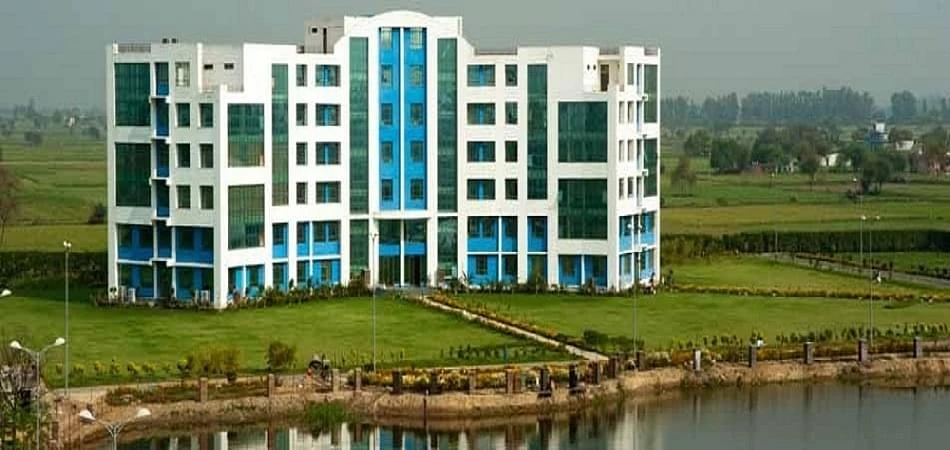
The 32-acre campus is, without doubt, the college’s strongest asset. It’s green, well-maintained, and the infrastructure—from the buildings to the lawns—is consistently praised. Facilities include computer labs with Wi-Fi (speed can be spotty in hostels), a library with over 10,000 books, and sports grounds for cricket and basketball.
The hostels, separate for boys and girls, have a capacity of about 250 each and offer apartment-style rooms. Student reviews rate them around 3.6/5—decent, but not luxurious. The core engineering labs, however, get mixed reviews, with some students noting a lack of modern equipment.
And then there’s the location. It’s remote. The college is on the Jhajjar-Kosli road, surrounded by agricultural land. The nearest bus stand is 13.5 km away, and there’s no metro connectivity. The college runs its own bus service from Jhajjar, Rohtak, and parts of Delhi, which becomes a lifeline. Without it, or your own vehicle, you’re isolated. Social life and extracurriculars are quiet; major fests are rare, and student complaints about management imposing fines for attendance or lab issues are common.
The online sentiment crystallizes around a specific archetype: CBS is a "Tier-3 Budget Option." It’s for students who need a recognized degree and a decent campus but can’t afford—or didn’t score high enough for—more established institutions.
The positives are always the same: "Great infrastructure," "Low fees," and "Easy to pass exams." It’s seen as a place where you won’t be burdened by crushing academic pressure and can focus on self-study for competitive exams or skill-building.
The negatives are equally consistent. Placement promises are the biggest sore point. One review summed it up: "The campus looks like a resort but the placement cell is like a ghost town." The isolation is a daily frustration. "Remote area. You need the college bus or your own bike; otherwise, you are stuck," says another. Faculty turnover and a reliance on less-experienced teachers are also cited as academic drawbacks.
The takeaway from alumni is bluntly practical. As one Shiksha review put it: "If you want a degree at a low cost and can study on your own for jobs, come here. Don't expect the college to get you a 10 LPA job."
It depends entirely on your circumstances and expectations. CBS Jhajjar is worth considering if you are a cost-conscious student with a moderate JEE Main rank, you view the degree as a basic qualification, and you are prepared to be entirely self-driven for career placement. Its low fees and good infrastructure provide a stable, if secluded, environment to complete your studies while you prepare for GATE, off-campus drives, or higher education.
You should probably look elsewhere if you prioritize a vibrant campus life, expect strong college-led placement support in core engineering fields, or want to be in a city with easy access to amenities and internships. The college’s remote location and the gap between its placement claims and reality are significant trade-offs. In essence, it’s a transactional choice: you trade lower fees and a nice campus for a remote location and the responsibility of forging your own career path.
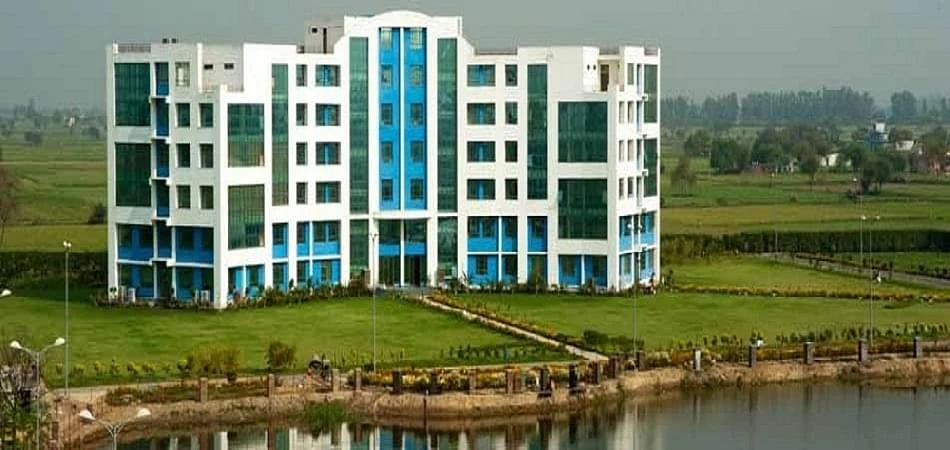
In this preview: 1 photo · 0 videos
While the college offers good infrastructure for CSE, students should be prepared for a strong emphasis on self-learning, particularly in Data Structures and Algorithms (DSA) and coding. For placements, students often need to rely on off-campus opportunities alongside the college's placement cell.
The college's official placement claims often cite 6-8 LPA. However, based on realistic student outcomes, the median package for an average student typically ranges between 2.0 to 3.5 LPA.
No, staying in the hostel is not compulsory. However, due to the institution's remote location and a lack of reliable public transport, many outstation students find it necessary to opt for on-campus hostel facilities.
Yes. Similar to many other private colleges in Haryana, CBS Group of Institutions typically requires students to wear a formal uniform.
Connectivity from Delhi is poor. The journey by road takes approximately 1.5 to 2 hours. For daily commuters from Delhi-NCR, the college buses are considered the only reliable mode of transport.
Share what future students should know about CBS Group of Institutions.
Student voices are not rewritten by colleges. We remove spam and abuse.
Wider admission question? Community PulseWhat should future students know?
Tell us which course you're considering. We'll help you work out the next step.
Get instant Partner access after mobile verification. Your public edits are reviewed before they go live.
Claim this college
 Auditorium
 Cafeteria
 Computer Labs
 Gym
Gym Hostel
 Medical
 Science Labs
 Sports Complex
 Study Library