Loading Admission Guardian content
Loading Admission Guardian content
Provisional score based on available data. It may change as more information is verified.
Selected ranking categories, with the recorded year beside each result. Open all records for the complete history.
1 published record · Lower numeric ranks are stronger
Find a program, read its fee details and explore the admission requirements.
Summary of the programs shown below. Programs record different fee periods. Compare the individual amounts and their notes below.
| Course | Stream | Fees |
|---|---|---|
| Diploma in Engineering (Polytechnic) | Engineering | 41550 |
| Post Diploma in Plastics Mold Technology | Engineering | 47450 |
| Post Graduate Diploma in Plastics Processing and Testing | Engineering | 48050 |
| Bachelor of Engineering [BE] (Manufacturing Engineering) | Engineering | 220000 |
| Bachelor of Technology [B.Tech] | Engineering | 220000 |
Specializations
Eligibility: 10th
Specializations
Eligibility: Graduation
Specializations
Eligibility: Graduation
Specializations
All accepted exams
Eligibility: 10+2 with 50%
Specializations
All accepted exams
Eligibility: 10+2
2 exams with cutoff data available
 Ernst & Young
 HCL Technologies
 HDFC Bank
 ICICI Bank
 ICICI Prudential
 Infosys
 ITC Hotels
 Motherson Molds & Diecasting Ltd
 Motherson Sumi System Limited
 Oyo Rooms
 Punjab National Bank
![Reliance Industries Limited [RIL]](https://assets.admissionguardian.com/imgproxy/insecure/w:64/h:64/rt:fit/el:0/f:avif/q:82/sm:1/plain/local%3A%2F%2F%2Fimages%2Frecruiter_logos%2Freliance-industries-limited-ril-logo.webp) Reliance Industries Limited [RIL]
Reliance Industries Limited [RIL] Smart Cube
 Tata Consultancy Services
 Trident Group
 Union Bank of India
 Valeo
Valeo Yes Bank
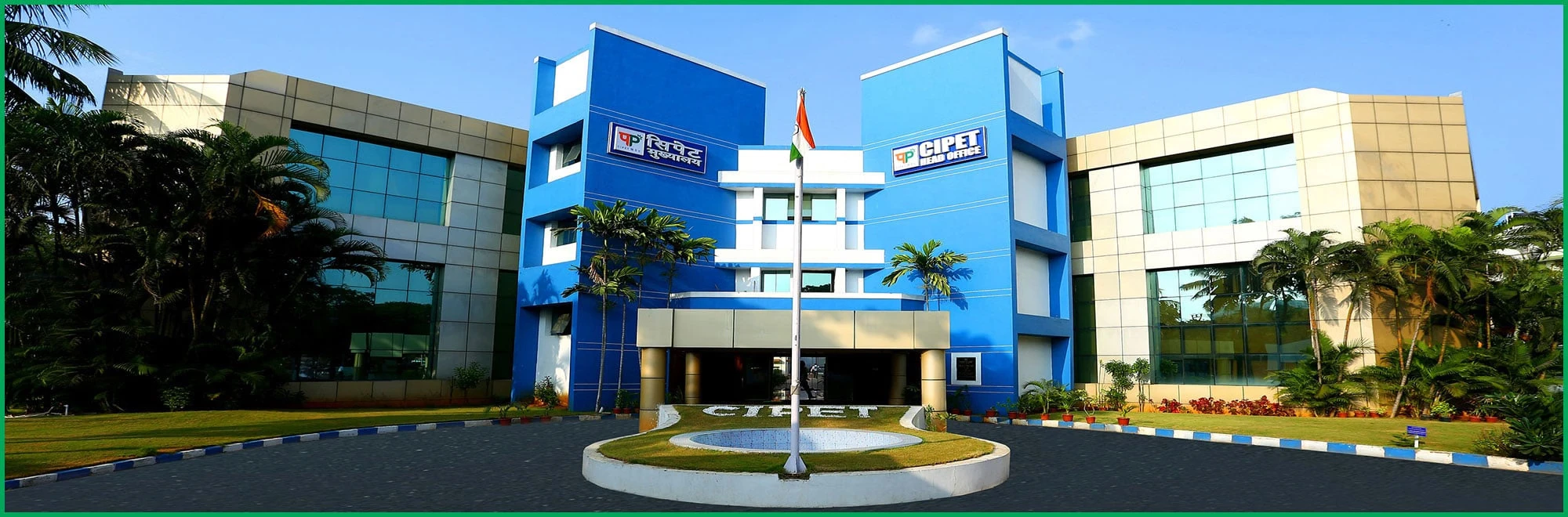
If you're looking for a traditional college experience with sprawling lawns and a buzzing social calendar, you won't find it here. What you will find at the Central Institute of Petrochemicals Engineering & Technology (CIPET): Institute of Petrochemicals Technology in Chennai is something arguably more valuable: a direct, no-frills pipeline into India's core manufacturing and polymer industries. Established in 1968 by the Government of India, this autonomous institute under the Ministry of Chemicals & Fertilizers has built a reputation as the undisputed specialist for plastics and polymer engineering. Its campus, tucked into the T.V.K. Industrial Estate in Guindy, feels less like an academic enclave and more like a working extension of the sector it serves. That's the point. For a student dead-set on a hands-on career in materials, automotive components, or petrochemicals, CIPET Chennai isn't just an option—it's often the first and best recommendation from industry insiders.
Don't come here expecting a buffet of computer science and electronics streams. CIPET's academic identity is laser-focused. At the undergraduate level, the two flagship programs are the B.Tech in Plastics Technology and the B.E. in Manufacturing Engineering, each with an intake of 60 students. For postgraduates, the M.Tech in Plastics Technology and M.E. in CAD/CAM (18 seats each) are the main draws, alongside an M.Sc. in Applied Polymer Science offered through the University of Madras. The institute also runs a separate CSTS wing for diploma and post-diploma courses, which are highly vocational and see near-perfect placement in shop-floor roles.
The academic culture is intensely practical. The grading follows Anna University's 10-point CGPA system, but the real learning happens outside the lecture hall. The campus houses the Advanced Research School for Technology & Product Simulation (ARSTPS), and students routinely work on production-grade injection moulding machines, CNC units, and advanced testing equipment like SEM and DSC. It's a curriculum built around tactile experience. Faculty strength sits around 45-50 core members at the Chennai center, with a high density of PhDs among senior staff, including Director General Prof. Shishir Sinha. The schedule is strict, mirroring Anna University's calendar, and the pedagogy is unapologetically industry-oriented. You're not just learning theory; you're being trained on the tools you'll use on day one of your job.
This is where CIPET's niche strength pays off. The official placement claim hovers above 90%, but talking to students paints a slightly more nuanced picture—for degree programs, a realistic, achievable figure seems to be between 80-85%. That's still a strong outcome, especially when you see where the jobs are. A solid 85% of placements are in core sectors: plastics processing, automotive manufacturing, and petrochemicals. The recruiters list reads like a who's who of Indian industry: Reliance Industries, L&T, Tata Motors, Maruti Suzuki, Motherson Sumi, and Ather Energy are consistent top visitors.
Packages for the 2024-25 cycle show a highest offer in the range of ₹10.0 – ₹12.0 LPA, reportedly from firms like Ather Energy and Reliance. The average package sits between ₹4.5 – ₹6.0 LPA, with Plastics Technology often commanding a premium. The median is estimated around ₹4.0 LPA. It's crucial to understand this context—these aren't the eye-watering IT salaries from campus drives at private colleges. They are, however, solid starting salaries in a specialized engineering field where CIPET's brand holds significant weight. The institute also mandates semester-long internships, with companies like Reliance and L&T being common destinations, offering stipends from ₹10,000 to ₹20,000 per month. If you want a software job, look elsewhere. But if you want a direct entry into core manufacturing, the placement cell here delivers with remarkable efficiency.
One of the compelling advantages of a government institute like CIPET is the cost. The tuition fee for the B.E./B.Tech programs is remarkably affordable, estimated at ₹60,000 to ₹65,000 per year. Over four years, the total tuition cost comes to roughly ₹2.6 lakhs. Postgraduate fees are slightly higher, in the ₹65,000–₹75,000 per year range. When you add in the one-time admission fee (₹1,000), a refundable caution deposit (₹750), and an annual development fee (₹5,000), the overall academic cost remains very manageable.
Hostel accommodation is available in a modern 8-floor building for boys and a separate facility for girls. Rent is about ₹10,000 per semester, with mess charges adding another ₹15,000 – ₹18,000 per semester (charged on actuals). The mess food, while hygienic, gets repetitive according to student reviews. Financial aid is robust, leveraging government schemes. Key scholarships include the Post-Matric Scholarship for SC/ST/OBC students, the First Graduate Scholarship for tuition fee waiver, and the AICTE Pragati Scholarship for girl students. Most schemes are accessible through the National Scholarship Portal (NSP).
Admission routes depend on the program. For the coveted B.E./B.Tech seats, the primary gateway is the Tamil Nadu Engineering Admissions (TNEA) counseling, which is based on Class 12 marks. There's also an All India Quota based on JEE Main scores, but the majority of seats are filled through TNEA. The 2024 cutoff ranks for the General Category tell a story of steady demand. For B.Tech Plastics Technology, the Round 1 closing rank was around 20,171, slipping to about 38,689 in Round 2. For B.E. Manufacturing Engineering, it was ~23,836 in Round 1 and ~40,811 in Round 2.
For M.E./M.Tech programs, selection is through the CEETA-PG exam or a valid GATE score. Diploma admissions (DPT, DPMT) are conducted through the institute's own CIPET Joint Entrance Exam (JEE). The application windows are typically May-June for TNEA and February-April for the CIPET JEE. The process is merit-based and follows centralized counseling, so it's relatively transparent but requires close attention to official announcements on the CIPET website and the Anna University portal.
Let's be direct: campus life at CIPET Chennai is not its selling point. The campus is compact and urban, located in a prime industrial hub. Its biggest advantage is location—the Ekkattuthangal Metro Station is literally a two-minute walk away, connecting students to all of Chennai. The infrastructure is a hybrid of academic and industrial facilities. The labs are world-class for the discipline, but sports facilities are limited to a small ground for volleyball or badminton. Students often head to nearby Anna University grounds for more extensive sports.
The hostel is modern and provides 24/7 water and Wi-Fi (with decent speeds of 20-50 Mbps), though rooms are typically shared by 3-4 students. The most common complaint, almost a universal chorus, is about the "school-like" discipline. Mandatory uniforms (shirt, trousers, formal shoes), strict 8:30 AM entry gates, and a rigid 75%+ attendance policy are enforced. There are very few major fests or cultural events. The gender ratio has been historically skewed but is improving, especially in the Plastics Technology program. The social life, therefore, is largely what you make of it outside the campus gates in Guindy and the rest of Chennai.
Synthesizing opinions from forums like Quora, Reddit, and review sites reveals a clear, consistent consensus. The positives are powerful and specific. Students and alumni relentlessly praise the unmatched practical exposure and the institute's reputation as the "Core King." The sentiment is, "You see the machine, you run the machine." The government tag and prime Chennai location are also huge pluses, opening doors for internships and jobs that other colleges can't.
The negatives are equally stark and revolve around lifestyle. The strict discipline is frequently cited as overbearing. The lack of a vibrant campus culture or frequent fests leads many to call the social life "non-existent." Administrative processes are often described as bureaucratic and slow. The verbatim takeaway from students is telling: "CIPET is not a place for fun; it's a place for a career. The labs are better than most IITs for plastics, but the campus life is non-existent." It's a trade-off every prospective student must weigh.
The answer is a firm yes, but only for a specific type of student. If your goal is to build a career in the plastics, polymer, automotive component, or allied manufacturing sectors, CIPET Chennai is arguably the best institute in India for that purpose. The value-for-money is exceptional, the industry connectivity is direct, and the placement record in its niche is superb. You graduate with a skillset and a brand name that carries real weight in core industry circles.
However, if you're looking for a holistic "college experience" with a vibrant campus life, diverse peer groups, and flexibility, you will likely be disappointed. The discipline is strict, the schedule is rigid, and the environment is intensely focused on professional training. It's a vocational powerhouse dressed in academic robes. So, choose accordingly. For the career-focused engineer passionate about materials and manufacturing, CIPET Chennai isn't just worth it—it's a strategic launchpad. For everyone else, it might feel like a four-year bootcamp.
No. CIPET is a niche institute specializing in Plastics and Manufacturing engineering. If your goal is to pursue a career in IT or software, you should consider other institutions. However, for core engineering in its specialized fields, CIPET is considered superior.
Yes, a full uniform consisting of a shirt, trousers, and formal shoes is mandatory for all B.Tech students on every working day.
Yes. CIPET students have a high success rate in the GATE exam, particularly in Polymer and Mechanical streams, and frequently secure admissions for higher studies at prestigious institutes like IIT Madras (IIT-M) and IIT Delhi (IIT-D).
The hostel food is generally considered average, with a menu that primarily follows South Indian cuisine. Many students prefer to eat out at local eateries in the Guindy area, especially on weekends.
Ragging is strictly prohibited on campus. CIPET enforces a zero-tolerance policy supported by an active anti-ragging committee. Student reviews indicate the institute is very safe for freshers.
Share what future students should know about CIPET Chennai.
Student voices are not rewritten by colleges. We remove spam and abuse.
Wider admission question? Community PulseWhat should future students know?
Tell us which course you're considering. We'll help you work out the next step.
Get instant Partner access after mobile verification. Your public edits are reviewed before they go live.
Claim this college Auditorium
 Cafeteria
 Computer Labs
 Hostel
 Medical
 Science Labs
 Sports Complex
 Study Library