Loading Admission Guardian content
Loading Admission Guardian content
Provisional score based on available data. It may change as more information is verified.
Find a program, read its fee details and explore the admission requirements.
Summary of the programs shown below. Programs record different fee periods. Compare the individual amounts and their notes below.
| Course | Stream | Fees |
|---|---|---|
| Diploma in Engineering (Polytechnic) | Engineering | 36050 |
| Post Diploma in Plastics Mold Technology | Engineering | 42750 |
| Post Graduate Diploma in Plastics Processing and Testing | Engineering | 42750 |
Specializations
Eligibility: 10th passed
Specializations
Specializations
Eligibility: Graduation
 HCL Technologies
 Motherson Molds & Diecasting Ltd
 Motherson Sumi System Limited
![Reliance Industries Limited [RIL]](https://assets.admissionguardian.com/imgproxy/insecure/w:64/h:64/rt:fit/el:0/f:avif/q:82/sm:1/plain/local%3A%2F%2F%2Fimages%2Frecruiter_logos%2Freliance-industries-limited-ril-logo.webp) Reliance Industries Limited [RIL]
Reliance Industries Limited [RIL] Valeo
ValeoIf you're looking for a traditional college experience with sprawling lawns and vibrant fests, keep looking. But if you want a near-guaranteed job in India's massive plastics and polymer manufacturing sector, Central Institute of Plastics Engineering and Technology (CIPET) in Bhopal is a different beast entirely. Established by the Government of India, this autonomous institute functions more like a high-stakes technical boot camp than a typical engineering college. Its reputation isn't built on NIRF rankings or campus life—it's built on a 90-100% placement rate directly into core industry roles. Students don't come here for the social scene; they come because they want to work on shop floors, in quality control labs, and R&D centers for companies like Reliance and Tata Motors. The trade-off is stark, and it defines everything about the CIPET Bhopal experience.
CIPET Bhopal's identity is split. It's a degree-granting institute affiliated with RGPV, but its soul is in the skill-focused diploma and PG diploma courses that are the hallmark of the CIPET ecosystem. The academic philosophy is brutally practical: a 60:40 ratio of hands-on work to classroom theory. You'll spend more time in the workshop than the lecture hall.
The flagship B.Tech in Plastic Technology (60 seats) and M.Tech (18 seats) follow the RGPV curriculum but are heavily supplemented by CIPET's industry workshops. The real volume, however, is in the diploma programs. The Diploma in Plastics Technology (DPT) and Diploma in Plastics Mould Technology (DPMT) together take in 180-240 students annually for their three-year programs. There's also a Post Graduate Diploma in Plastics Processing & Testing (PGD-PPT). These are the programs where CIPET's "job factory" reputation is forged.
Faculty are often industry veterans, which is a double-edged sword. Their practical knowledge is immense, but some students note a shortage of permanent faculty for non-core subjects like mathematics or communication skills. The learning environment is strict—75-80% attendance is non-negotiable. It feels more like a professional training center, which is exactly what many students sign up for.
This is the entire reason for CIPET's existence. The placement data is compelling, but it requires context. The institute officially claims a 90-100% placement rate for eligible candidates, and alumni reviews largely back this up for those willing to work in core manufacturing.
The numbers, however, tell a specific story. The highest package for the 2023-24 batch ranged between ₹6.5 to ₹9 LPA, typically from giants like Reliance Industries. The average package for B.Tech graduates sits in the ₹3-₹4.5 LPA range. For diploma holders, it's ₹1.8-₹2.5 LPA. That's a decent starting point for a government diploma, but it's not the software engineering money you hear about from NITs.
Top recruiters are a who's who of Indian manufacturing: Reliance Industries, Tata Motors, Supreme Industries, Motherson Sumi, Lumax, and Varroc Polymers. About 85% of roles are in core plastics processing—think production, machine operation, tooling. Another 10% are in quality control and testing, leveraging the institute's NABL-accredited lab. Only about 5% trickle into R&D.
The reality check students give is crucial. That near-100% placement often means roles on the "shop floor." These are hands-on, sometimes physically demanding jobs in factories. If you're dreaming of a software developer's desk job, you're in the wrong place. The placement cell is effective but narrowly focused. They deliver exactly what they promise: a job in the plastics industry.
Affordability is a major advantage. For a B.Tech degree, annual tuition is approximately ₹67,435, making the total four-year cost around ₹2.8 to ₹3.2 lakhs. That's a fraction of the cost of a private engineering college. Diploma fees range from ₹33,400 to ₹42,750 per year, and PG diplomas are around ₹40,000 per year.
Hostel fees are ₹10,000 per semester for room rent, with mess charges extra (approx. ₹2,500-₹3,500 per month). There are additional one-time costs for uniforms, safety shoes, and a refundable caution deposit.
As a government institute, standard state and central scholarship schemes apply. Students can avail benefits through the AICTE Pragati scheme for girls, post-matric scholarships for SC/ST/OBC candidates, and the National Scholarship Portal (NSP). The low base cost already makes it one of the most financially accessible technical educations in the country.
Admission routes differ by program. For the B.Tech in Plastic Technology, you need a JEE Main score. Selection happens through the MP DTE centralized counseling process. The niche nature of the branch works in applicants' favor—the closing rank in 2024 extended to 3,00,000 – 5,00,000+ CRL. That's a very accessible cutoff for a program with such strong industry linkages.
For all Diploma and Post Graduate Diploma programs, the gateway is the CIPET CAT (Common Admission Test). This national-level entrance is conducted annually, usually in June or July. Admission is strictly merit-based on this exam score, followed by counseling. The application window typically opens in February.
The process is straightforward and transparent, typical of government institutes. There's no complex portfolio or interview—your rank in the relevant entrance exam is what matters.
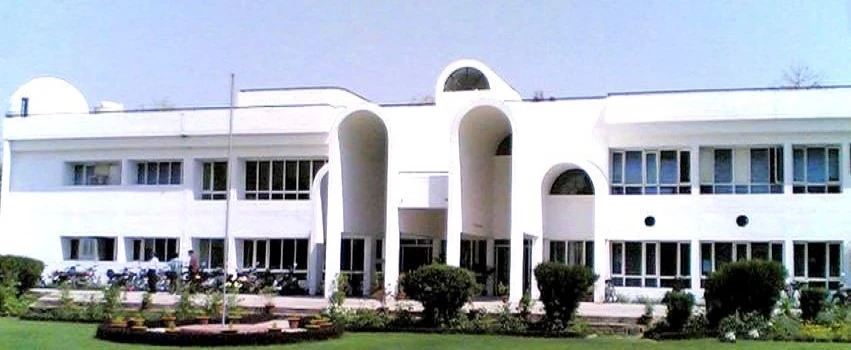
Let's be direct: campus life is not the selling point. The campus spans 6 acres in the middle of the Govindpura Industrial Area. The location is strategic for industry visits and training, but it's not picturesque. The nearest proper hangout spots are a drive away.
Infrastructure is focused on utility. The hostels (separate for boys and girls) are basic and functional—students rate them a 3.5/5. They're a place to sleep and study, not a vibrant social hub. The canteen provides basic meals, rated about 3/5 for variety and quality.
Where the infrastructure shines is in the labs and workshops, which are the crown jewels. The processing lab has industrial-grade injection molding, blow molding, and extrusion lines. The NABL-accredited testing lab features advanced equipment like UTM, DSC, and TGA testers. The tool room has CNC and EDM machines. This is equipment most private colleges can't match, and students get extensive hands-on time. The library is specialized, with over 3,500 volumes on polymer science. Wi-Fi is available but reported as "average."
There are no major cultural fests or a plethora of clubs. The student sentiment is clear: you come here to work.
Synthesizing feedback from forums like CollegeDunia and Shiksha, a consistent picture emerges. The overwhelming positive is the practical skill development and placement assurance. "If you want a guaranteed job in the plastic industry, this is the place," is a common refrain. Alumni appreciate the low fees and the unmatched hands-on experience with real machinery.
The criticisms are just as consistent. The environment is strict and regimented, feeling more like a school or training center than a college. The lack of a traditional "campus life" is the biggest complaint—no significant fests, limited clubs, and a location not conducive to socializing. Some note that teaching for non-core subjects can be lacking due to faculty shortages.
Most tellingly, alumni confirm the placement reality: the jobs are real and plentiful, but they are predominantly in manufacturing environments. It's perfect for someone who wants that career, but a poor fit for someone with different aspirations. The reviews don't sugarcoat it, which builds trust. You know exactly what you're getting into.
CIPET Bhopal is a specialist institution with a laser focus. It's not for everyone, but for its target student, it's exceptionally effective.
Choose CIPET Bhopal if: You are certain you want a career in the plastics, polymer, or allied manufacturing industries. You value practical, hands-on skill development over theoretical learning. Your primary goal is a cost-effective education with a near-guaranteed job at the end, and you're comfortable with roles in production, quality, or tooling. You're not bothered by a no-frills, disciplined environment lacking a typical college social scene.
Look elsewhere if: You crave a vibrant campus life with fests, clubs, and a strong peer social network. You are unsure about your specialization and want a broader engineering education. You aspire to careers in software, IT, finance, or core mechanical/civil roles outside of polymers. You learn best in a less regimented, more exploratory academic setting.
In essence, CIPET Bhopal is a trade. You exchange a conventional college experience for industry-specific skills and high job security in a niche sector. For the right candidate, that's a trade worth making. You can find the latest official information directly on the CIPET Bhopal website.
Central Institute of Plastics Engineering and Technology (CIPET) Bhopal is a 100% Government autonomous institute. It operates under the administrative control of the Ministry of Chemicals & Fertilizers, Government of India.
Yes, the B.Tech degree from CIPET Bhopal is fully valid for national-level competitive exams. The program is affiliated with Rajiv Gandhi Proudyogiki Vishwavidyalaya (RGPV) and is approved by the AICTE, which makes graduates eligible for GATE, IES, and other such examinations.
Getting a software job from CIPET is very difficult. Campus recruiters are almost exclusively from the core manufacturing and polymer industries. The institute's placement focus is specialized, targeting sectors like plastics engineering and polymer technology, not the IT or software services sector.
Yes, Plastic Technology is considered a good branch for the future, particularly for students interested in core engineering sectors. It offers strong prospects in manufacturing, advanced packaging, and emerging areas like electric vehicle (EV) manufacturing, where lightweight polymer components are in high demand.
The hostel food at CIPET is managed by a private contractor. Based on student feedback, the food is generally described as "manageable but repetitive," indicating it is acceptable for daily sustenance though lacking in variety.
Share what future students should know about CIPET Bhopal.
Student voices are not rewritten by colleges. We remove spam and abuse.
Wider admission question? Community PulseWhat should future students know?
Tell us which course you're considering. We'll help you work out the next step.
Get instant Partner access after mobile verification. Your public edits are reviewed before they go live.
Claim this college Cafeteria
 Computer Labs
 Hostel
 Medical
 Study Library