Loading Admission Guardian content
Loading Admission Guardian content
Provisional score based on available data. It may change as more information is verified.
Selected ranking categories, with the recorded year beside each result. Open all records for the complete history.
4 published records · Lower numeric ranks are stronger
IIRF
Engineering · public
#362023
Find a program, read its fee details and explore the admission requirements.
Summary of the programs shown below. First-year fee. Check the note beside each amount for inclusions and exclusions.
| Course | Stream | Fees |
|---|---|---|
| Master of Science [M.Sc] + Master of Technology [M.Tech] (Materials Science) | Science | 22145 |
| Bachelor of Technology [B.Tech] {Lateral} | Engineering | 31645 |
| Bachelor of Technology [B.Tech] | Engineering | 31960 |
| Master of Technology [M.Tech] | Engineering | 34645 |
| Master of Science [M.Sc] (Polymer Science) | Science | 42110 |
Specializations
Eligibility: Graduation
Specializations
All accepted exams
Eligibility: B.Sc or Diploma
Specializations
All accepted exams
Eligibility: 10+2
Specializations
All accepted exams
Eligibility: Graduation
Specializations
Eligibility: Graduation
2 exams with cutoff data available
If you want to work in the plastics industry, there is arguably no better place in India to study than the Central Institute of Plastics Engineering and Technology (CIPET) in Bhubaneswar. It’s a government-run, hyper-specialized institute where the factory floor and the R&D lab are the classrooms. That focus is its greatest strength and its most significant limitation. You won't find a vibrant campus life or a pipeline to high-paying software jobs here. What you will find is a direct, cost-effective route into the core polymer and manufacturing sectors, backed by over five decades of industry credibility. The institute operates across two distinct campuses in the city—the IPT campus for degree programs and the MCTI/CSTS campus for diplomas and skill training—each serving a different student need with a shared industrial ethos.
The academic structure is split cleanly between its two campuses. The IPT Campus is where you go for a full-fledged degree. Its flagship is the B.Tech in Plastics Engineering, but it also offers a B.Tech in Manufacturing Engineering & Technology. Postgraduate options include M.Tech specializations in Plastics Engineering and the more niche Polymer Nano-Technology, along with M.Sc. programs. The Integrated M.Sc. in Material Science & Engineering is a notable five-year offering for students coming straight from 12th grade. Over at the MCTI/CSTS Campus, the focus is on hands-on, skill-oriented training through three-year Diplomas in Plastics Technology (DPT) and Plastics Mould Technology (DPMT), plus shorter post-diploma and PG diploma courses.
The faculty strength is modest, around 30-40 permanent members, but a solid 60-70% of the core IPT faculty hold PhDs, many from IITs and NITs. The academic culture is known for its rigor and discipline—some call it strict. The institute follows the BPUT semester schedule and a 10-point CGPA system. It’s not a place for a laid-back college experience; the vibe is professional and industry-focused from day one.
This is where CIPET’s identity becomes crystal clear. The placement cell is specialized, and its success is measured by its penetration into core industries, not by headline-grabbing salary figures. For the 2023-2024 cycle, the highest package offered was ₹10.34 LPA, but that’s an outlier. The working average for a B.Tech graduate sits in the ₹3.5 LPA to ₹5.5 LPA range. The official placement claim is over 90%, but student reviews suggest a more realistic figure for B.Tech is 70-80%. For diploma holders, placement in shop-floor roles is often near 100%—that’s the institute's bread and butter.
About 80% of recruits go into core plastics and manufacturing. The recruiter list reads like a who’s who of that sector: Reliance Industries, Tata Steel, Haldia Petrochemicals, Supreme Industries, Nilkamal, and Sintex. Automotive giants like Maruti Suzuki, Motherson Sumi, and Tata Motors also recruit for their polymer components divisions. You’ll see very few, if any, pure-play IT or consulting firms on campus. As one alumnus put it online: "Placements are guaranteed if you have no backlogs, but don't expect a 20 LPA IT job. You will be on a factory floor or in a lab." That’s the honest trade-off.
The value proposition on cost is one of CIPET’s strongest points. For a B.Tech program, the tuition is remarkably low at roughly ₹30,000 – ₹35,000 per semester. Over four years, that totals just ₹2.5 to ₹3 lakhs in tuition fees. Adding in hostel accommodation (₹10,000-₹12,000 per semester) and mess charges (₹2,500-₹3,500 monthly), the entire cost of a four-year engineering degree can be under ₹5.5 lakhs. That’s a fraction of what most private engineering colleges charge. Diploma fees are even lower, around ₹16,700 – ₹20,000 per semester.
To support students, the institute facilitates several government scholarships. These include the AICTE Pragati Scheme for girls, various state government post-matric scholarships, and GATE stipends for M.Tech students. The low base cost combined with scholarship access makes it financially accessible for a wide range of students.
Admission routes depend on the program. For the B.Tech programs, you need a valid JEE Main or OJEE (Odisha Joint Entrance Examination) score. Admission is through the state's centralized OJEE counseling. The 2024 cutoff for the General Home State category gives a sense of the competition: the closing rank for B.Tech in Plastics Engineering was around 1,504,868 in the first round. For Diploma programs, CIPET conducts its own national-level entrance exam, the CIPET JEE. M.Tech admissions require a GATE score or performance in the OJEE PG exam.
The application window typically opens in February and runs through June. It’s crucial to apply through the correct portal—OJEE for B.Tech/M.Tech and the official CIPET website for diploma courses. The selection is merit-based, with counseling determining the final seat allocation.
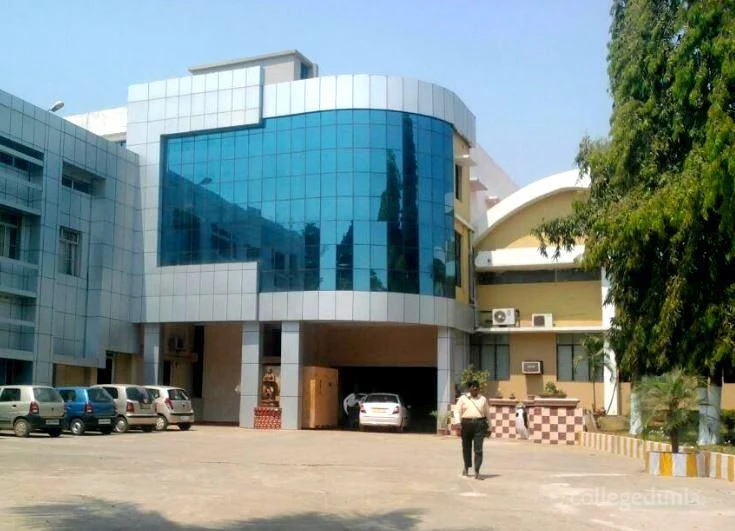
Let’s be direct: campus life at CIPET is not its selling point. The IPT campus in Patia is a 15-acre functional space. The MCTI campus in the industrial estate is even more utilitarian at 5 acres. Infrastructure where it counts—for learning—is excellent. The labs are state-of-the-art, filled with injection moulding machines, CNC units, and advanced polymer testing equipment. The library is well-stocked with digital access to journals like ScienceDirect. Wi-Fi is available but reported by students as just "average."
Hostels are separate for boys and girls, with limited capacity that prioritizes outstation students. Rooms are typically shared between 2-3 students. The quality is described as basic but secure, especially for girls, though with strict curfew timings. The most consistent complaint across student reviews is the canteen and mess food, often rated poorly for both variety and taste. Social and cultural events are minimal, especially when compared to the bustling campuses of neighboring private universities like KIIT. The atmosphere is disciplined, with mandatory uniforms and a strict 75%+ attendance policy. It feels more like a professional training academy than a typical college campus.
Synthesizing feedback from platforms like Quora, CollegeDunia, and Shiksha reveals a clear, consistent consensus. The positives are powerful but niche. Students universally praise the core industry expertise, the exceptional value for money, and the world-class research facilities at its SARP-LARPM centre. They feel the curriculum makes them job-ready for the plastics sector from day one.
The negatives are about the overall experience. The strict, school-like environment with uniforms and rigid rules is a frequent gripe. Many describe the administration as slow and bureaucratic. The lack of a vibrant social life or campus culture is a noted downside. Hostel food is a perennial complaint. In short, students feel they are trading a "typical" college experience for focused, affordable, industry-specific education. It’s a trade-off you need to be consciously willing to make.
The answer is a firm yes, but only for a specific type of student. If you are passionate about materials, polymers, and manufacturing, and you see your career on a plant floor, in quality control, or in polymer R&D, CIPET Bhubaneswar is arguably the best place in India to study. The industry connections, specialized curriculum, and ultra-low cost create an unbeatable package for that goal. The high placement rate in core sectors validates this path.
However, if you are unsure about your specialization, crave a vibrant campus life with fests and clubs, or harbor ambitions for a high-paying software engineering role, you should look elsewhere. CIPET does not offer those things. It’s a focused, no-frills institution that excels at one thing: creating industry-ready professionals for the plastics and manufacturing world. For the right candidate, that’s more than enough.
Yes, CIPET Bhubaneswar is considered good for a B.Tech degree, specifically for those interested in core plastics engineering and manufacturing fields. It is not recommended for students seeking careers in IT or software roles.
The IPT campus is dedicated to degree programs like B.Tech and M.Tech. The CSTS campus, also known as the MCTI campus, focuses on diploma courses and skill development training programs.
Yes, wearing a formal uniform is mandatory for all students at CIPET.
Getting a job in the IT sector from CIPET is difficult. Very few IT companies visit the campus for recruitment, as the majority of placement opportunities are in core plastics and manufacturing industries.
The girls' hostel at CIPET is reported to be safe and secure with strict timings. However, the infrastructure and amenities are described as basic.
Share what future students should know about CIPET.
Student voices are not rewritten by colleges. We remove spam and abuse.
Wider admission question? Community PulseWhat should future students know?
Tell us which course you're considering. We'll help you work out the next step.
Get instant Partner access after mobile verification. Your public edits are reviewed before they go live.
Claim this college Auditorium
 Cafeteria
 Computer Labs
 Hostel
 Science Labs
 Study Library