Loading Admission Guardian content
Loading Admission Guardian content

Provisional score based on available data. It may change as more information is verified.
Find a program, read its fee details and explore the admission requirements.
Summary of the programs shown below. Programs record different fee periods. Compare the individual amounts and their notes below.
| Course | Stream | Fees |
|---|---|---|
| Diploma in Engineering (Polytechnic) | Engineering | 40000 |
| Master of Engineering [ME] | Engineering | 42000 |
| Master of Technology [M.Tech.] (Mechatronics) | Engineering | 47000 |
| Certification | Engineering | 61000 |
| Post Graduate Diploma | Design | 76800 |
Specializations
Specializations
Eligibility: Graduation with 50% + CUCET
Specializations
Eligibility: Graduation with 50% + CUCET
Specializations
Specializations
All accepted exams
Eligibility: Graduation
Forget sprawling lawns and annual fests. The Central Institute of Tool Design (CITD) in Hyderabad’s Balanagar industrial belt is a different beast. Established in 1968 with UN support, this government institute under the Ministry of MSME has one mission: to produce some of India’s most skilled tool engineers and manufacturing specialists. Its reputation isn't built on NIRF rankings—it doesn't even appear there—but on a 75% practical curriculum where students handle real commercial orders on the shop floor. That certificate carries serious weight in the core engineering sector, a fact that defines everything about this unique, no-frills institution.
CITD’s entire identity is built around specialization. It doesn’t offer a standard B.Tech. Instead, its flagship is a rigorous 4-year Diploma in Tool, Die & Mould Making (DTDM), a program so respected it often outranks generic degrees in the eyes of manufacturing recruiters. Other 3-year diplomas cover Production Engineering, Electronics & Communication, and the newer Automation & Robotics. At the postgraduate level, you’ll find M.E. programs in Tool Design and CAD/CAM (affiliated with Osmania University) and an M.Tech in Mechatronics through JNTUH.
The academic culture is intensely practical. The institute functions like a working tool room, with students spending the vast majority of their time on the shop floor. They operate CNC machines, run EDM and wire-cut processes, and work on actual industry projects. It’s a curriculum aligned with the National Skills Qualification Framework (NSQF), designed to create job-ready technicians and engineers from day one. Faculty here are typically veterans of the industry, not career academics. That’s a major strength if you want to learn the how, not just the theory.
Placement data here requires a reality check framed by sector context. The highest package floated for 2023-24 was around ₹9 LPA, but that’s an outlier. The real working range is between ₹2.5 and ₹4.5 LPA, with a median likely around ₹3.2 LPA. You don’t come to CITD for IT-level salaries. You come for a near-guaranteed entry into the core engineering sector with a respected brand name.
The official placement claim is near 100% for the DTDM and M.E. programs. For the other diplomas, student reviews suggest a more modest 60-70% on-campus placement rate. The recruiters list tells the real story: Tata Advanced Systems, Skyroot Aerospace, DRDO (for internships), Maruti Suzuki, Hyundai, Mahindra, Siemens, and Godrej. These are heavyweight names in aerospace, automotive, and heavy engineering. The placement cell itself is small, but the institute’s industry connections run deep. Most students become employable through sheer skill acquisition.
One of CITD’s biggest advantages is its affordability, especially for a government-run center of excellence. Diploma programs cost about ₹24,000 per semester, so the total for the 4-year DTDM is roughly ₹1.92 lakhs. Postgraduate M.E./M.Tech fees are higher per semester (₹41,000-₹51,000) but still result in a total 2-year cost of only ₹1.64-₹2.04 lakhs.
Hostel fees are famously low, but you get what you pay for. A basic hall dormitory can be as cheap as ₹600 per month, while a shared room (4-6 students) is about ₹1,750. There’s a refundable caution deposit of ₹5,000-₹10,000. Financial aid primarily comes through government schemes, with SC/ST candidates often receiving full fee waivers. It’s a financially accessible path into a high-skill industry.
Admissions are strictly merit-based via entrance exams. For all diploma programs, you must take the institute’s own CITD Entrance Exam, which is conducted at an All-India level. For the M.E. and M.Tech programs, you need a valid GATE score or must appear for the state-level TS PGECET.
The selection process is transparent: ranks are generated based on entrance scores, followed by a centralized counseling round. The application window for diplomas typically runs from February to May, while postgraduate admissions happen between June and August. The application fee is ₹800 for general candidates and ₹400 for SC/ST. There’s no management quota or donation seats—it’s a pure meritocracy, which adds to the institute’s credibility.
Let’s be blunt: campus life at CITD is Spartan. The campus is compact, located in an industrial area, and feels more like a high-end technical training center than a traditional college. The infrastructure is a tale of two halves. The labs are world-class, packed with CNC machines, 3D printers, and high-end software like CATIA and ANSYS. The library has a solid collection of over 9,400 technical books.
The hostels, however, are consistently criticized in student reviews. Descriptions like “dilapidated” and “poorly maintained” are common, especially for bathrooms. The food in the canteen is subsidized and hygienic but rarely praised. Sports facilities are virtually non-existent—there’s no playground, just a small indoor space. Social and cultural life is minimal to zero. This is not a place for a vibrant “college experience.” It’s a place to work.
Synthesizing feedback from platforms like Shiksha and Quora reveals a clear, almost unanimous consensus. The positives are powerful and specific: “If you want to learn core mechanical engineering, there is no better place in South India.” Alumni relentlessly praise the unmatched hands-on experience and the immense industry respect the CITD name commands. They also confirm the campus is ragging-free, thanks to strict government discipline.
But the negatives are equally stark and repeated. Complaints about rude and allegedly corrupt administrative staff and hostel wardens are a persistent theme. The lack of any social life is a major point—it’s a factory-like atmosphere. Discipline is rigid, with an 80%+ attendance mandate. You have to really want this specific career path. As one Quora reviewer put it: “CITD is a place for hard workers. If you are looking for a 'campus life' with fests and fun, stay away.”
The Central Institute of Tool Design is a niche powerhouse. It is unequivocally worth it for a specific type of student: someone passionate about hands-on manufacturing, tool design, and core mechanical engineering, who prioritizes skill acquisition and industry reputation over campus life and high starting salaries. For that person, CITD offers an affordable, unparalleled education that opens doors to giants like DRDO, ISRO, Tata Advanced Systems, and major automotive players.
However, if you’re looking for a balanced college experience with extracurriculars, modern hostels, and a path into high-paying software or consulting roles, you will be deeply disappointed here. CITD demands a trade-off. You exchange a conventional campus life for a level of practical expertise few Indian institutions can provide. Choose accordingly.

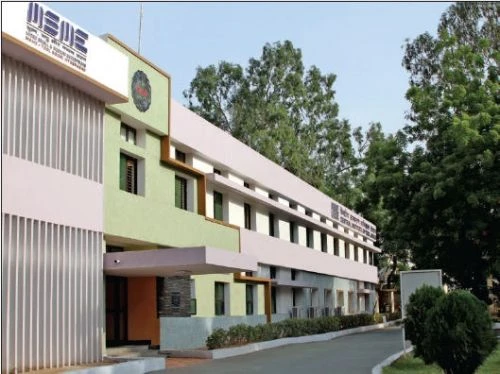
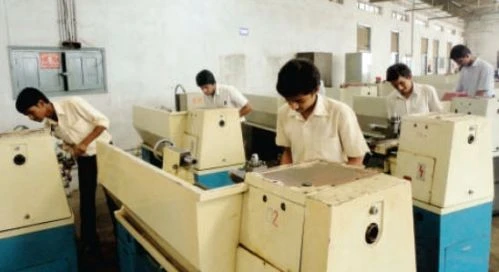
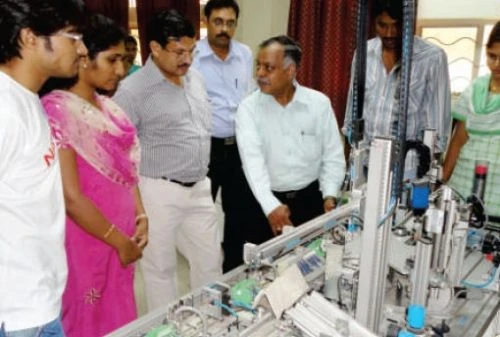

In this preview: 5 photos · 0 videos
Yes, the Central Institute of Tool Design (CITD) Hyderabad is a government institute. It functions as an autonomous body under the Ministry of Micro, Small and Medium Enterprises (MSME), Government of India.
No, CITD does not offer a direct B.Tech degree program. Its flagship program is a 4-year Diploma in Tool and Die Making (DTDM). However, after completing this diploma, students are eligible for lateral entry into the second year of a B.Tech program at other universities.
No, the CITD Diploma is not formally equivalent to a degree like a B.Tech. However, the 4-year DTDM is a highly specialized and industry-focused program. It is often preferred by core manufacturing and tooling companies over a general B.Tech degree for its practical expertise.
Placements for Mechanical (and related) students at CITD are excellent for core engineering roles in design, production, and tooling. The institute has a strong industry reputation. It is important to note that the average salary packages offered are typically modest, generally ranging from 3 to 5 Lakhs Per Annum (LPA).
No, based on consistent reviews, CITD Hyderabad is known to be a ragging-free campus. This is attributed to the strict government oversight, disciplined environment, and the institute's enforcement of anti-ragging policies.
Share what future students should know about CITD.
Student voices are not rewritten by colleges. We remove spam and abuse.
Wider admission question? Community PulseWhat should future students know?
Tell us which course you're considering. We'll help you work out the next step.
Get instant Partner access after mobile verification. Your public edits are reviewed before they go live.
Claim this college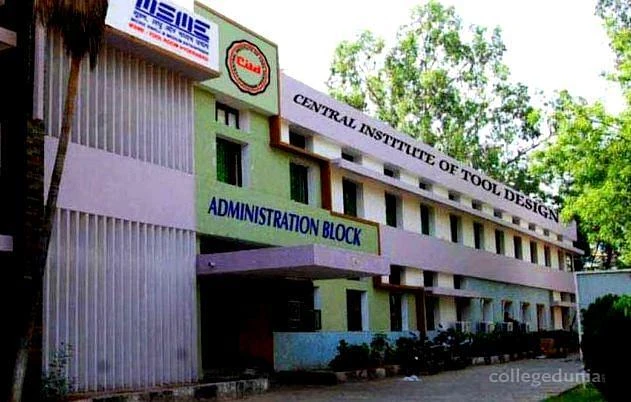

 Auditorium
 Cafeteria
 Campus Shuttle
 Computer Labs
 Hostel
 Medical
 Science Labs
 Sports Complex
 Study Library