Loading Admission Guardian content
Loading Admission Guardian content
Provisional score based on available data. It may change as more information is verified.
Find a program, read its fee details and explore the admission requirements.
Summary of the programs shown below. First-year fee. Check the note beside each amount for inclusions and exclusions.
| Course | Stream | Fees |
|---|---|---|
| Auxiliary Nursing Midwifery [ANM] (Nursing) | Paramedical | 40000 |
| General Nursing and Midwifery [GNM] | Paramedical | 100000 |
| Bachelor of Science [B.Sc] (Nursing) | Paramedical | 120000 |
| Post Basic Bachelor of Science [P.B.B.Sc] (Nursing) | Paramedical | 120000 |
| Master of Science [M.Sc] (Nursing) | Paramedical | 135000 |
Specializations
Specializations
Eligibility: 10+2
Specializations
Eligibility: 10+2
Specializations
Eligibility: Graduation
Forget the brochures. If you want to learn nursing by actually doing it, Chanchalben Mafatlal Patel College of Nursing (CMPCN) in Gandhinagar is built for that. Established in 2008, this private college operates under a unique Public-Private Partnership (PPP) with the Gujarat government, and that’s its defining feature. Your classroom is, quite literally, a major government hospital. The trade-off is clear from day one: you’ll get clinical exposure most private colleges can’t match, but you’ll follow a disciplined, no-nonsense schedule. It’s a place that produces capable nurses, not pampered students. The location, directly opposite the Gandhinagar bus stand, makes it accessible, but the vibe is strictly professional. As one alum bluntly put it, “If you want to learn real nursing, come here. If you want a chill college life, look elsewhere.”
CMPCN offers the standard ladder of nursing qualifications, from diplomas to post-graduation. The B.Sc. Nursing program is the main draw, with an intake of 60 students per year. They also run the 3-year General Nursing & Midwifery (GNM) and 2-year Auxiliary Nurse Midwifery (ANM) diplomas. For graduates, the M.Sc. Nursing program offers five specializations—Obstetric & Gynecological Nursing has the most seats (5), followed by Mental Health Nursing (4). The academic blueprint is the INC syllabus, so there are no surprises there.
What sets the academics apart is the execution. Theory happens in college classrooms, but practice is immediate and immersive. Your primary clinical training site is the Civil Hospital, Gandhinagar, which is on the same compound. That means high patient volume, a wide variety of cases, and a real-world public health setting from the first year. It’s a grind, but it builds competency fast. The faculty of about 45 is generally praised for being clinically experienced and helpful, though the overall academic culture is described as strict and focused. You don’t come here for elective seminars or a flexible curriculum; you come to master the core skills of the profession.
Placement talk in nursing is different from engineering. At CMPCN, the college reports a 90-100% placement rate for eligible students, and that’s probably accurate in spirit. Why? Because 100% of students complete a mandatory internship at the Civil Hospital and affiliated centers, which often leads directly to job offers. The pathway is more direct.
Now, the packages. You might see an unverified claim of a highest package of 8.5 LPA. That’s an outlier, likely for a specialized role in a metro city or abroad. The working average for a fresh B.Sc. graduate in Gujarat, echoed by student reviews, is between 3 to 4.5 LPA. That’s a decent, realistic starting point for the region. Top recruiters are a who’s who of Gujarat’s healthcare scene: Apollo Hospitals, Zydus Hospitals, Sterling Hospitals, and BAPS Pramukh Swami Hospital. A significant number also secure contractual positions at the Civil Hospital, Gandhinagar itself. The placement cell functions more as a facilitator, connecting students with this established network. So, while you won’t see a parade of Fortune 500 companies, job security for a competent graduate is high.
Fees are set under the purview of Gujarat’s Fee Regulatory Committee (FRC). For the 2024-25 estimates, the B.Sc. Nursing program costs ₹1,20,000 per year, totaling about ₹4.8 lakhs for the degree. The GNM diploma is ₹1 lakh annually, and the M.Sc. program is ₹1.35 lakh per year. These are squarely in the mid-range for private nursing colleges in the state.
Hostel fees, based on recent structures for KSV colleges, add a significant amount. A basic non-AC shared room runs ₹90,000-₹96,000 per year. AC rooms go from ₹1.07 to ₹1.23 lakhs. Add mess costs on top of that. It’s not cheap, and when you factor in exam and other miscellaneous fees, the total cost of attendance needs careful calculation. The college doesn’t prominently advertise a large scholarship program, so financial planning is largely on the student. You can find the official fee details on the college website when they are published.
The process is centralized and merit-based, which is a point of pride for the institution. For the flagship B.Sc. Nursing program, admission is strictly through the Admission Committee for Professional Medical Educational Courses (ACPC), Gujarat. There’s no separate college entrance exam. Selection is based on your 12th Science (PCB) board marks. The eligibility is a minimum of 45% aggregate for General category and 40% for SC/ST.
Cutoffs vary each year based on the applicant pool, but to have a serious shot, you typically need a merit rank within the top 2,000-5,000 in the state’s nursing merit list. The application window usually opens in June-July. Here’s a critical detail: the college’s managing trust claims to have surrendered all management quota seats to the ACPC. If true, that means every seat is filled via the central merit list, which adds a layer of fairness but also means there’s no backdoor option, even for a fee.
Let’s be direct: this isn’t a sprawling residential campus. The college is situated within the Civil Hospital compound, covering about 16,000 sq. meters. The infrastructure is functional. You’ll find well-equipped labs for foundations, community health, nutrition, and OBG. The library has over 1,300 books and journal access. There’s a canteen with average, hygienic food. It gets the job done.
The hostels (separate for boys and girls, capacity ~300) are a mixed bag. Student reviews rate them around 3.5/5. They’re adequate but not luxurious. The biggest advantage is proximity for those brutal early morning clinical shifts.
Campus life is where the college’s identity is most apparent. There’s very limited “fun” in the traditional sense—no big cultural fests or a vibrant social scene. The atmosphere is professional, even regimented. Strict attendance, mandatory uniforms, and disciplined timing are the norms. Your social life often revolves around your batchmates and the shared experience of clinical postings. For some, this feels restrictive. For others, it’s just part of the training.
Synthesizing feedback from CollegeDunia, Shiksha, and forums gives you a consistent picture. The praise is laser-focused on clinical exposure. Students repeatedly say the access to the Civil Hospital is invaluable, providing case variety that smaller private hospitals can’t match. They also appreciate the faculty’s practical knowledge and the college’s reputation for producing disciplined, job-ready nurses. The location, right by the bus stand, is a huge plus for commuters.
The criticisms are just as consistent. The strict rules on attendance and conduct are a common gripe. The campus life is seen as dull compared to multidisciplinary universities. Some feel the physical infrastructure, while sufficient, is basic and could use upgrades. The sentiment isn’t of disappointment, but of clear-eyed understanding: you trade a typical college experience for rigorous professional training.
CMPCN is a specialist institution with a very specific value proposition. It’s worth it if your primary goal is to become a clinically proficient nurse through intense, hands-on training in a government hospital setting. The PPP model and Civil Hospital integration are genuine advantages that translate directly to skill and employability. You’ll likely graduate job-ready with a solid network in Gujarat’s healthcare sector.
You should probably look elsewhere if you prioritize a vibrant campus life, extracurricular activities, or a more relaxed academic environment. The discipline is real, the schedule is demanding, and the social scene is minimal. The fees, especially with hostel costs, are substantial, so weigh the return on investment against other options. In short, CMPCN is a serious choice for serious students. It’s a bootcamp for nursing, not a retreat. If that aligns with your career mindset, it can be an excellent launchpad.
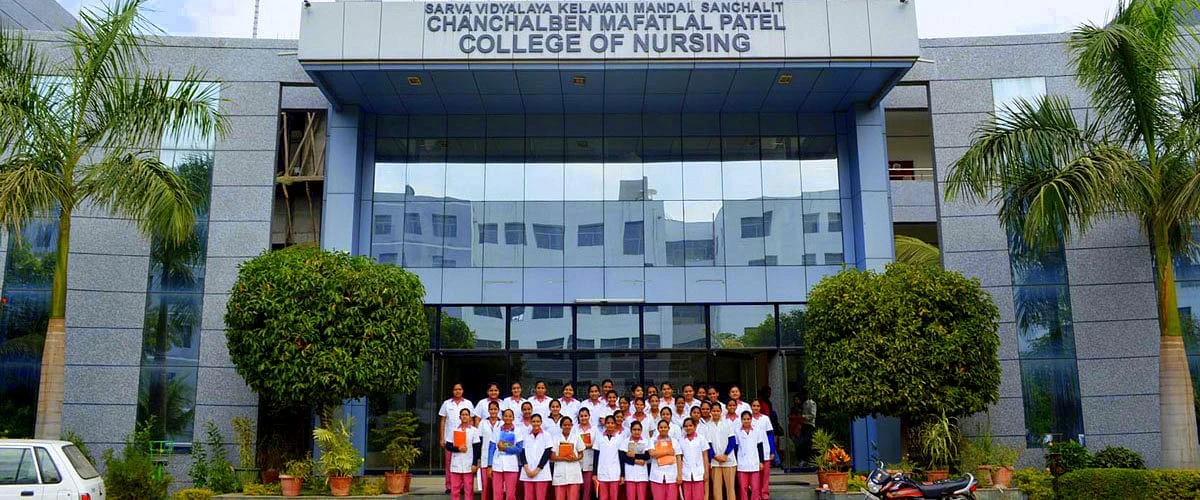
In this preview: 1 photo · 0 videos
CMPCN Gandhinagar is a private college, being a constituent of KSV University. However, it operates under a Public-Private Partnership (PPP) model with the Government of Gujarat.
The cutoff for the B.Sc. Nursing program varies each year. Typically, admission requires securing a merit rank within the top 2,000 to 5,000 in the Gujarat state nursing merit list.
Yes, the college has a strong placement record where most students secure job offers before graduation. These positions are primarily with private hospital chains or through government contracts.
No, hostel stay is not mandatory. However, it is highly recommended for students coming from outside Gandhinagar and Ahmedabad due to the requirement of attending early morning clinical shifts.
No, the college does not have a management quota. The trust surrenders all seats to the centralized, merit-based admission process managed by the Admission Committee for Professional Courses (ACPC).
Share what future students should know about CMPCN.
Student voices are not rewritten by colleges. We remove spam and abuse.
Wider admission question? Community PulseWhat should future students know?
Tell us which course you're considering. We'll help you work out the next step.
Get instant Partner access after mobile verification. Your public edits are reviewed before they go live.
Claim this college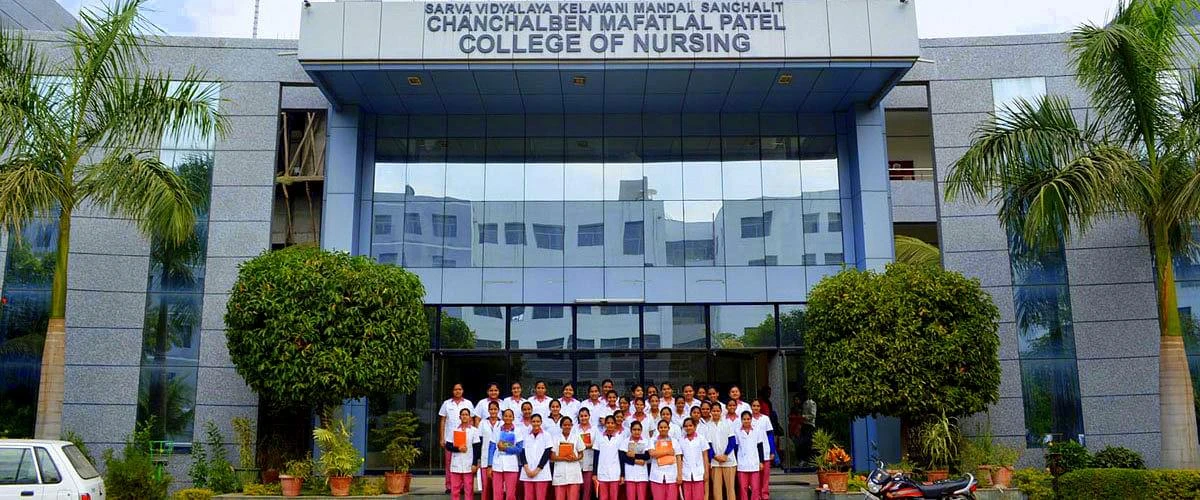
 Auditorium
 Cafeteria
 Computer Labs
 Hostel
 Medical
 Sports Complex
 Study Library