Loading Admission Guardian content
Loading Admission Guardian content
Provisional score based on available data. It may change as more information is verified.
Find a program, read its fee details and explore the admission requirements.
Summary of the programs shown below. First-year fee. Check the note beside each amount for inclusions and exclusions.
| Course | Stream | Fees |
|---|---|---|
| Diploma | Medical | 35000 |
Specializations
If you're looking for a paramedical college in a major metro, you won't find it here. But if you want a direct, clinical-heavy education that feels more like an apprenticeship than a traditional campus experience, Colaco Academy of Paramedical Sciences (CAPS) is a specific kind of option. Located in Mangalore—not Bangalore, despite what some online portals mistakenly say—this institution is essentially the training wing of the 250-bed Colaco Hospital. That's its biggest selling point and its entire identity. You won't get sprawling lawns or a buzzing social calendar. You will, however, get daily access to a working hospital from your first year, which for many students in this field is the entire point. It's a no-frills, practical choice for building a career as a lab tech, radiographer, or OT assistant, with fees that are relatively modest for a private institution. Just don't expect corporate recruiters or a typical college vibe.
The academic structure here is straightforward and focused. You choose a track—lab tech, imaging, or operation theatre—and you stick with it. The curriculum is dictated by the affiliating bodies: RGUHS for the three-year B.Sc. degrees and the Karnataka Para Medical Board for the three-year diploma programs (which include a mandatory 3-month internship).
Intake numbers tell a story. The Diploma in Medical Laboratory Technology (DMLT) has 100 seats, making it the largest program and the academy's core strength. The B.Sc. MLT has 40 seats. Other programs like Operation Theatre and Anaesthesia Technology (Diploma) and Medical Imaging Technology (both Diploma and B.Sc.) have smaller, unverified intakes. The faculty is a mix of permanent medical staff from Colaco Hospital and visiting consultants, totaling an estimated 15-20. The teaching style is practical. One student review put it bluntly: "self-study is essential" to pass the university exams, but the real learning happens during clinical rotations.
And that's the key differentiator. Your classroom is, quite literally, the hospital next door. From early on, you're observing and assisting in a real clinical environment with a steady patient flow. That's a significant advantage over colleges that have to bus students to distant partner hospitals for occasional visits.
Let's clear up a major point of confusion first. If you see any website claiming Colaco Academy has placements at Google or Amazon with packages of 12 LPA or more, ignore it. That's automated, incorrect template data. Paramedical placements don't work that way.
The reality is more localized and clinically focused. There isn't a formal, high-stakes campus recruitment drive with dozens of companies. Instead, placement operates more like a pipeline. The primary destination is the parent hospital, Colaco Hospital itself. Many graduates are absorbed there directly. Other common recruiters are local diagnostic chains like Accu Labs and the numerous private nursing homes and multispecialty hospitals in and around Mangalore, such as KMC or Father Muller Hospital.
The academy officially claims an 85% placement rate. Student sentiment suggests that while most do find work in the field, it's often through these established hospital networks or their own job searches post-internship, rather than a single "placement day." Salary expectations should be grounded in regional healthcare pay scales. Fresh diploma holders can expect starting salaries in the range of ₹1.8 to ₹2.6 lakhs per annum. B.Sc. graduates might start between ₹2.5 and ₹3.5 LPA. These aren't glamorous tech salaries, but they're realistic entry points for the allied health sector in this region.
For a private institution, the fee structure at CAPS is on the more affordable side, especially for the diploma courses. The tuition fee for the first year of a diploma is around ₹35,000. Over three years, that totals roughly ₹1.05 lakhs in tuition. B.Sc. programs are costlier, with estimated annual tuition fees between ₹75,000 and ₹95,000.
The major variable is hostel cost. The academy provides separate hostels for boys and girls, but the fees vary widely based on amenities:
There's also a one-time, refundable caution deposit of ₹5,000. Exam fees are paid separately as per RGUHS or Para Medical Board norms. For financial aid, the primary avenue is state government scholarships for SC/ST/OBC students, which can be applied for through the Karnataka State Scholarship Portal (SSP).
The admission process here is refreshingly simple—and entirely based on academic merit. There are no entrance exams for either the diploma or B.Sc. programs.
The application window typically opens around May and runs through August, aligning with the Karnataka academic schedule. The process is direct: you apply to the academy, submit your marksheets, and if you meet the cutoff (which fluctuates based on applicant pool but isn't typically astronomically high), you're in. It's also worth noting that a management quota exists for direct walk-in admissions, which can be an option if seats are available.
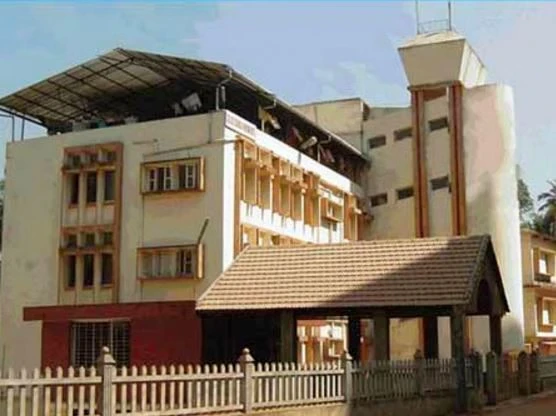
Calling it a "campus" might be a stretch. The academy operates from a 28,000 sq. ft. building that is integrated with the hospital complex. The infrastructure is functional and geared towards learning: you'll find specialized labs for Microbiology, Pathology, and Biochemistry, and a library that's well-stocked with medical books and journals, though its digital resources are noted to be limited.
The heart of the facility is the 250-bed Colaco Hospital, founded in 1955. It's fully equipped with modern diagnostic tools like CT scanners, X-Ray, and Ultrasound machines, which students train on. The hostel facilities are on-site or very nearby, with student reviews giving them an average rating of about 3.5 out of 5. The canteen mess provides standard, hygienic South Indian fare.
But this is where the "no-frills" tag truly applies. There are no large playgrounds, sports complexes, or expansive green spaces. Social and cultural life is minimal. As one student noted, it feels more like a hospital than a college. If a vibrant campus life with fests and events is important to you, you'll be disappointed. The location, however, is a plus—situated on the Kankanady Bypass in Mangalore, it's well-connected by city buses and is just about 3 km from the Mangalore Central Railway Station.
Scouring student reviews on platforms like CollegeDunia and Shiksha reveals a consistent, pragmatic consensus. The overwhelming positive is the clinical exposure. Students repeatedly praise the hands-on experience gained from day one, thanks to the direct hospital access. They feel it makes them job-ready. The location in central Mangalore is also seen as convenient, and the fee structure is considered affordable compared to larger private universities, especially in cities like Bangalore.
The negatives are just as consistent. Administrative management is a common pain point, with complaints about delays and unresponsive office staff. The infrastructure is seen as adequate but basic—it's a single building, so don't expect a sprawling campus. The lack of a traditional college social life is a recurring theme; there are "very few fests or cultural activities." Teaching quality gets mixed notes; while the faculty from the hospital are knowledgeable, the onus is on the student to prepare for the theoretical university exams.
Colaco Academy is a specialist institution with a very clear purpose. It's worth it if you are a student who prioritizes practical, hands-on clinical training above all else—especially if you want to work in the Mangalore region or similar healthcare markets. The direct pipeline to Colaco Hospital and other local facilities is a genuine career advantage, and the lower fees reduce financial pressure. It's a solid, pragmatic choice for becoming a skilled lab technician, radiographer, or OT assistant.
You should probably look elsewhere if you desire a comprehensive university experience with campus life, extensive extracurriculars, and a wide alumni network. The administrative hiccups and basic infrastructure might frustrate some. And crucially, if your ambition is to work in major corporate hospital chains in metros like Bangalore or Delhi, you might find that a degree from a larger, more nationally recognized college carries more weight. CAPS is a local player with local strengths. For the right student, that's exactly enough.
Colaco Academy of Paramedical Sciences is located in Mangalore. Listings on some online portals showing a Bangalore location are typically an error.
Yes, the academy is associated with its own 250-bed facility, Colaco Hospital, which provides practical training for students.
No, NEET is not required for the B.Sc. MLT program. Admission is based on the candidate's marks in Physics, Chemistry, and Biology (PCB) at the 12th-grade level.
Based on student reviews, the hostel food is described as standard South Indian fare and is generally rated as average.
No, the academy's placement opportunities are within the healthcare sector, specifically in hospitals and diagnostic centers. Claims of placements in large tech corporations like Google or Amazon should be disregarded.
Share what future students should know about Colaco Academy of Paramedical Sciences.
Student voices are not rewritten by colleges. We remove spam and abuse.
Wider admission question? Community PulseWhat should future students know?
Tell us which course you're considering. We'll help you work out the next step.
Get instant Partner access after mobile verification. Your public edits are reviewed before they go live.
Claim this college Computer Labs
 Hostel
 Science Labs
 Sports Complex
 Study Library