Loading Admission Guardian content
Loading Admission Guardian content

Provisional score based on available data. It may change as more information is verified.
Find a program, read its fee details and explore the admission requirements.
Summary of the programs shown below. First-year fee. Check the note beside each amount for inclusions and exclusions.
| Course | Stream | Fees |
|---|---|---|
| Diploma in Engineering (Polytechnic) | Engineering | 71000 |
Specializations
Eligibility: 10th passed
Cusrow Wadia Institute of Technology (CWIT) isn't your typical engineering college. It's a piece of Pune's academic history, established in 1938, and it operates with a distinct, practical-first philosophy. As a government-aided polytechnic, it offers three-year diploma courses that are a direct pipeline into the industrial heart of Maharashtra. The institute's autonomy, granted in 1985, lets it tailor its curriculum closely to industry needs, and its location—sandwiched between the Chakan-Bhosari automotive belt and Hinjewadi's IT hub—isn't an accident. It's a strategic choice. Students here get a no-frills, workshop-heavy education designed to produce job-ready technicians and engineers. The NAAC A+ grade and NBA accreditation for key programs like Computer and Electronics Engineering signal a baseline of quality that's been consistent for decades. But the real story, as always, is in the student experience—where excellent faculty and a sprawling campus meet some very real challenges with infrastructure and placements.
Forget B.Tech degrees here. CWIT's entire identity is built around three-year, full-time diploma programs in engineering. That's its lane, and it's stayed in it for over 80 years. The curriculum is revised every five years with direct input from industry professionals on the program-specific 'Boards of Studies'. That's a decent system for keeping things relevant.
The aided programs—Civil, Mechanical, Electrical, and Electronics & Telecommunication Engineering—each have an intake of 60 seats and come at a token fee. They represent the institute's original, state-supported mission. The unaided programs, where the real demand and fees are, include Computer Engineering (120 seats) and the newer Computer Engineering with Internet of Things (60 seats, started 2022).
The academic culture is heavily practical. They have extensive workshops for CNC, welding, carpentry, and pattern making. It's a hands-on place. The faculty, consistently praised in student reviews, is cited as the college's strongest asset. Described as experienced, dedicated, and personally invested in student counseling, they seem to be the glue that holds the student experience together. You can download the official academic calendar for the current terms directly from their website, which is a mark of operational transparency.
This is where the data gets messy, and a reality check is essential. The official claims and student sentiments don't always align neatly.
Let's start with the numbers the institute circulates. The highest package quoted floats between ₹3.6 LPA and a more eye-catching ₹9.5 Lacs. The average package is similarly variable, cited anywhere from ₹2.4 LPA to ₹5.0 LPA, with a median of ₹4.8 Lacs. The placement percentage claims are the widest gap: one official note mentions 32.5% of students securing jobs, while others tout 70-75%, or even 80-90%. That's a massive spread, and it tells you to dig deeper.
The recruiter list is solidly mid-tier and strong in core sectors: TCS, Wipro, Infosys for IT; Tata Motors, Bajaj Auto, Mahindra, Bosch, Cummins for automotive and manufacturing; and L&T, Shapoorji for construction. These are exactly the companies you'd expect a well-regarded Pune polytechnic to attract.
But student reviews inject a note of caution. Phrases like "college needs to improve placement opportunities" pop up. The consensus from the ground seems to be that while the top performers and those in high-demand branches like Computer Engineering can land decent roles, the process isn't as seamless or as high-reaching as the brochures might suggest. The 32.5% figure, if accurate for some cohorts, is a more sobering baseline. The verdict? Good industry connections exist, but securing a job requires significant individual initiative. Don't assume a guaranteed placement.
The fee structure is a tale of two systems, heavily dependent on whether you secure a government-aided seat or not. For the 2025 session, if you get into the aided Civil, Mechanical, Electrical, or ENTC programs, your annual tuition is just ₹8,204. That's an almost symbolic amount for a technical education.
The unaided programs—Computer Engineering, IoT, and some seats in other branches—cost ₹80,695 per year. That's a tenfold difference, placing it in the realm of private institution fees. Add to this the hostel fee, which is around ₹65,000 per year (paid in advance, including service charges). Mess fees would be extra, though the exact cost isn't specified.
Scholarships are a key part of the affordability picture, especially for aided seats. The institute actively facilitates scholarships through government schemes like MahaDBT. Notices for scholarship applications for the 2025-26 academic year are published, indicating an active support system for eligible students.
The gateway to CWIT is straightforward and centralized. Admission is merit-based, primarily through the Directorate of Technical Education (DTE) Maharashtra's Centralized Admission Process (CAP). The main requirement is passing Class 10th (SSC) with a minimum of 35% marks. There's also a lateral entry path to the second year for students who have completed relevant qualifications like 12th Science.
The CAP process typically runs from April to July. After the state-run CAP rounds conclude, the institute is allowed to fill any remaining vacant seats at its own level. This is where management-level admissions might occur, though specific details on an NRI quota aren't explicitly outlined. There's no mention of a separate entrance exam; it's all about your Class 10th marks and your rank in the CAP merit list. Specific cutoff percentages or ranks aren't provided in the data, but competition for the low-cost aided seats is understandably fierce.
The 5-acre campus in Bund Garden is repeatedly called "huge" by students, especially compared to other polytechnics. It houses 33 classrooms with projectors, 3 seminar halls, a large auditorium, and an Open Theatre for events. The library is a standout, reportedly housing over 50,000 books and thousands of journals.
But infrastructure reviews are mixed. Positively, the sports facilities are extensive—a 2.4-hectare playground, gymnasium, and options for both indoor and outdoor sports. Negatively, several students point out outdated IT infrastructure: old computer monitors, systems running Windows 7, and aging lab equipment. It's a place where the mechanical workshops might be better equipped than the computer labs.
Hostel life is a similar story. The capacity is substantial (a new block houses 352 boys and 264 girls, plus an older girls' hostel), and rooms are described as well-ventilated and furnished. The food in the mess, however, is a major pain point. Reviews range from "food is not good" to alarming complaints about hygiene. Some counter-reviews say the canteen food is fine, but the negative feedback on hostel mess food is too consistent to ignore.
Social life is active. The college promotes a holistic development model with various clubs, societies, and frequent technical and cultural festivals. The anti-ragging policy is strictly enforced.
Synthesizing the student sentiment reveals a clear, almost archetypal profile for a legacy technical institute.
The praise is loud and clear for the faculty. Words like "experienced," "dedicated," and "personally counsel students" are everywhere. This is the college's undisputed strength. The practical, workshop-focused approach also gets high marks, preparing students for real shop-floor and technical roles. The campus size and library are consistently appreciated.
The criticisms are equally specific. Hostel food quality is the top complaint, with serious hygiene issues raised. The outdated computer labs and IT equipment frustrate students in tech-centric branches. There's a palpable concern about placement support, feeling it doesn't always match the official narrative. Other gripes include strict 80% attendance rules and poorly maintained washrooms.
The management is described as having a transparent and positive work culture, a benefit of its long autonomous status. Grievance redressal systems exist, but their effectiveness on day-to-day issues like food quality seems variable.
CWIT is a very specific bet. It's not for everyone, but for the right student, it's a compelling, cost-effective launchpad.
It's worth it if: You are a pragmatist seeking a hands-on, industry-aligned diploma in core engineering (Civil, Mech, Electrical) at an incredibly low cost (aided seat). You value experienced, accessible faculty over flashy infrastructure. Your goal is solid technical skills to enter the automotive, manufacturing, or construction sectors around Pune, possibly with plans to work and then pursue a lateral-entry B.Tech later. The location in central Pune is a major plus.
Look elsewhere if: Your primary ambition is computer science and you demand cutting-edge tech labs and high-probability, high-salary IT placements. You are heavily reliant on a college's placement cell to hand you a job. You can't tolerate subpar hostel living conditions or outdated classroom technology. Your family can afford full B.Tech fees and you aim for the highest engineering tiers.
In essence, CWIT is a workhorse, not a showhorse. It delivers fundamental technical education with notable strengths and frank weaknesses. For a student with clear, ground-level engineering goals and the self-motivation to supplement college resources, its value—particularly at the aided seat price—is hard to dispute.

In this preview: 1 photo · 0 videos
CWIT offers three-year, full-time diploma programs in engineering. The key disciplines include Civil Engineering, Mechanical Engineering, Electrical Engineering, and Electronics & Telecommunication Engineering (typically government-aided). It also offers Computer Engineering and a newer Computer Engineering with Internet of Things specialization (typically unaided). All programs have a standard duration of three years.
For the 2025 academic session, fees vary drastically based on seat type. Government-aided diploma programs (Electrical, Civil, Mechanical, ENTC) cost INR 8,204 per year. Government-unaided programs (Computer Engineering, IoT, and some seats in other branches) cost INR 80,695 per year. Scholarships are indeed available, primarily through state government schemes like MahaDBT, with specific application notices issued for each academic year.
Admission is merit-based through the DTE Maharashtra Centralized Admission Process (CAP). The basic eligibility is passing Class 10th (SSC) with a minimum of 35% marks. The selection hinges on your merit rank in the CAP rounds, which usually run from April to July. After CAP, the institute may fill any leftover vacant seats at its own level.
Reported placement figures show a range. The highest package cited varies from around ₹3.5 LPA to ₹9.5 Lacs. The average package is similarly reported between ₹2.4 LPA and ₹5.0 LPA. Placement percentages in official documents also vary widely, from 32.5% to over 80%. Top recruiters include TCS, Wipro, Tata Motors, Bajaj Auto, and Larsen & Toubro.
CWIT has separate hostels for boys and girls on its 5-acre campus. The new hostel block has a capacity for 352 boys and 264 girls, plus an older girls' hostel for 91. Rooms are generally reported as good, well-ventilated, and furnished. However, student reviews on the mess food quality are highly conflicting, with significant complaints about taste and hygiene, alongside some reviews stating the food is acceptable.
Share what future students should know about Cusrow Wadia Institute of Technology.
Student voices are not rewritten by colleges. We remove spam and abuse.
Wider admission question? Community PulseWhat should future students know?
Tell us which course you're considering. We'll help you work out the next step.
Get instant Partner access after mobile verification. Your public edits are reviewed before they go live.
Claim this college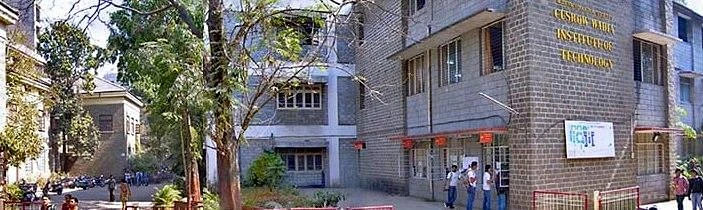
 Auditorium
 Cafeteria
 Computer Labs
 Gym
Gym Hostel
 Medical
 Science Labs
 Sports Complex
 Study Library