Loading Admission Guardian content
Loading Admission Guardian content

Provisional score based on available data. It may change as more information is verified.
Find a program, read its fee details and explore the admission requirements.
Summary of the programs shown below. First-year fee. Check the note beside each amount for inclusions and exclusions.
| Course | Stream | Fees |
|---|---|---|
| Diploma in Engineering (Polytechnic) | Engineering | 35000 |
| Bachelor of Technology [B.Tech] | Engineering | 60000 |
| Master of Business Administration [MBA] | Management | 60000 |
Specializations
Eligibility: 10 or 10+2
Specializations
All accepted exams
Eligibility: 10+2 with 45% + UPTAC
Specializations
All accepted exams
Eligibility: Graduation
 HDFC Bank
 Hewlett-Packard (HP)
 Hindustan Copper Limited (HCL)
 Housing Development Finance Corporation (HDFC)
 IBM
IBM ICICI Bank
 Idea Cellular
 ING Vysya Bank
 ING-Vysya
 Karvy Group
 Mahindra & Mahindra
 NIIT
NIIT NIIT Ltd
 NTPC Limited
 Siemens
 Tech Mahindra
D. S. Institute of Technology & Management (DSITM) in Ghaziabad is a private engineering and management college that’s been around since 2008. It’s affiliated with Dr. A.P.J. Abdul Kalam Technical University (AKTU) and approved by the AICTE. For students looking at colleges in the National Capital Region, DSITM often comes up as a budget-conscious choice. Its location on NH-58 offers decent connectivity, but the real story here is the trade-off between affordable fees and the need for significant self-driven effort, especially when it comes to landing a good job. The campus vibe is functional rather than vibrant, and while the faculty gets decent marks for being approachable, you won’t find the cutting-edge infrastructure or high-flying placement culture of a top-tier institute.
DSITM runs the standard AKTU curriculum across its programs. For B.Tech, the total intake is around 210 seats, with Computer Science and Engineering (CSE) and Information Technology (IT) being the most sought-after streams. The MBA program has a larger batch size of about 260 seats, with specializations in Marketing, Finance, and HR. There’s also a Diploma (Polytechnic) wing.
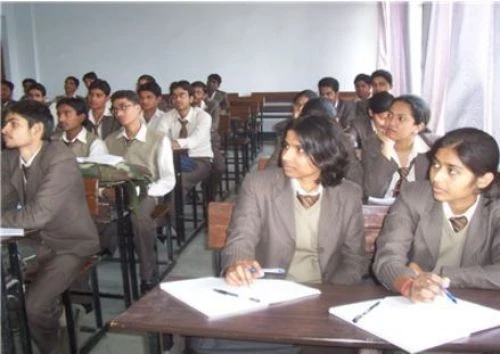
Academically, it’s a straightforward affair. The faculty, numbering about 100, is often described in student reviews as helpful if you reach out with doubts. Professors like Prof. Sushant Jhingran (HOD, CSE/IT) and Prof. Seema Gusain are noted figures. But the teaching methodology leans traditional—think lectures and prescribed textbooks rather than interactive workshops or heavy project-based learning. You’ll follow the AKTU semester schedule, deal with its sometimes-notorious exam patterns, and need to maintain the 75% attendance mandate. It’s a system that works if you want a degree without too much fuss, but don’t expect an academic environment that pushes boundaries.
This is where you need to read between the lines. The college’s official placement claims and the ground reality reported by students often don’t match up.
The brochure might mention a highest package of ₹8-10 LPA, but that’s an unverified figure and likely an outlier secured off-campus. The average package for on-campus roles sits in the ₹3.0 to ₹4.5 LPA range, with a median around ₹3.2 LPA. That’s a modest starting point, typical for many AKTU colleges outside the top tier.
The more critical number is the placement percentage. While the institute cites 70-80%, a consensus from student reviews on portals like CollegeDunia and Shiksha suggests the actual on-campus placement rate is closer to 40-50%. This gap is the defining characteristic of DSITM placements. Companies like TCS, Wipro, HCL, and Tech Mahindra do visit, but they hire in limited numbers. For core engineering roles, names like Mahindra, Siemens, and Bosch appear on the recruiter list.
Most students agree: the placement cell provides assistance, but high-paying jobs are usually the result of off-campus hustle. The mandatory 4-6 week internship after the 6th semester is also largely self-sourced. If you’re in CSE and proactive with your coding skills, you can land decent roles. For others, it’s a tougher climb.
The affordability is DSITM’s strongest card. For the 2024-25 session, B.Tech tuition is between ₹55,000 and ₹65,000 per year. Over four years, you’re looking at roughly ₹2.45 lakhs in tuition fees. The MBA program totals about ₹1.33 lakhs for two years. Compared to many private colleges in the NCR, these are manageable numbers.
Hostel and mess fees add another ₹50,000 to ₹60,000 annually for a non-AC room. Factor in one-time charges for uniforms (approx. ₹5,000) and refundable library security, plus the semester exam fees paid directly to AKTU.
For financial aid, the primary avenue is the UP State Government Scholarship (Saksham) for students with family incomes below ₹2 lakhs (General/OBC) or ₹2.5 lakhs (SC/ST). The college itself doesn’t appear to offer major merit-based scholarships.
Admissions follow the standard AKTU-affiliated college process. For B.Tech, 85% of seats are filled through the state counseling body, UPTAC, based on your JEE Main rank. The remaining 15% are management quota seats.
The cutoff isn’t steep. For general category students aiming for B.Tech in Computer Science, a JEE Main rank within the top 4,00,000 to 6,00,000 has been sufficient in recent years. It’s accessible. You can check the official UPTAC website for detailed counseling schedules.
For the MBA program, they accept scores from CUET-PG, CAT, MAT, and CMAT. Diploma admissions happen through the JEECUP entrance exam.
The application window typically runs from April to July. If you’re considering the management quota, direct contact with the institute is necessary, and fees might be higher.
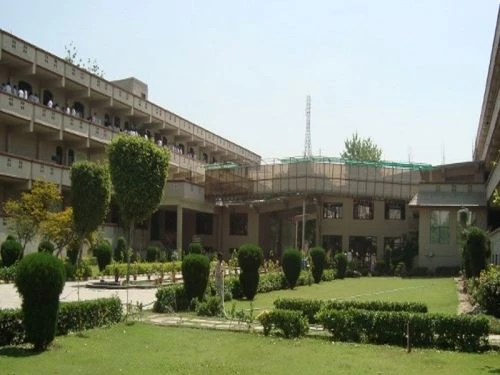
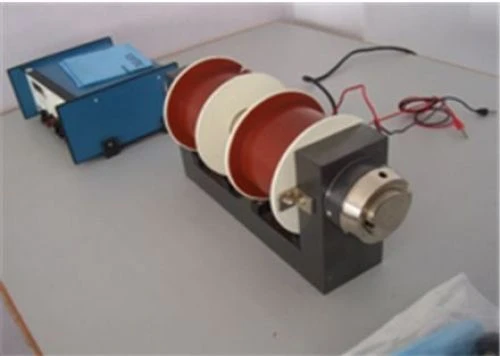
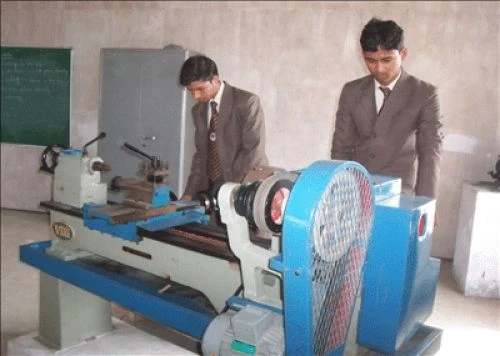
The campus spans an estimated 10-12 acres. It’s functional. The library has a collection of around 5,400 books and 1,300 titles, but digital resources are limited. Labs are equipped with basics—the central computer lab has 60+ PCs, and mechanical workshops have lathes and milling machines. Wi-Fi is available in specific zones like the library and labs, but it’s not a high-speed, campus-wide blanket.
Hostel life is a common pain point. There are separate buildings for boys (200 capacity) and girls (50 capacity). Reviews consistently rate them around 2.5 out of 5. Complaints center on basic amenities, inconsistent Wi-Fi, and, most frequently, the mess food, which gets described as repetitive and oily. The college does run a bus service covering Ghaziabad, Noida, and East Delhi.
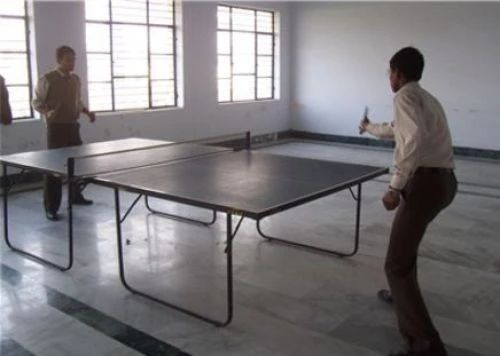
Social life is quiet. There are annual fests and sports facilities for cricket, football, and volleyball, but they don’t have the scale or energy of fests at nearby colleges like AKGEC or KIET. It’s a commuter and hostel campus where the focus is largely academic, by necessity.
Scouring reviews gives you a consistent picture. The positives are clear: low fees, a location on the highway that’s well-connected, and faculty who are generally supportive when you approach them. For a student on a tight budget who’s disciplined, it can be a viable launchpad.
But the negatives are just as consistent and weighty. The placement reality check is the biggest one. Many feel the need to supplement college training with external courses or coding platforms. Infrastructure, especially hostels and the canteen, is seen as needing an upgrade. The administrative side is often called slow, and there’s a noted lack of exposure to a dynamic, industry-ready coding culture. You won’t find a bustling startup incubation cell or major hackathons here.
It’s a college that provides a framework. What you build within it is largely up to you.
DSITM occupies a specific niche. It’s worth serious consideration if your priority is securing an AKTU-affiliated B.Tech or MBA degree with the lowest possible financial outlay. If you’re a self-motivated student, particularly in CSE, who is prepared to rely on online resources, competitive coding platforms, and off-campus job drives to build a career, the low fee here removes pressure. It’s a pragmatic choice for cost-conscious families in the NCR region.
However, you should probably look elsewhere if you prioritize a vibrant campus life, modern infrastructure, or a strong college-driven placement cell that reliably lands a high percentage of students into good roles. The gap between official claims and student-reported outcomes is notable. DSITM is a budget instrument. Its return on investment depends almost entirely on the effort and initiative of the individual student, not on the brand value or network of the institute itself.

In this preview: 5 photos · 0 videos
DSITM Ghaziabad is considered a budget-friendly option for pursuing a B.Tech in Computer Science and Engineering. However, students should be prepared to work diligently on their own to secure high-paying jobs, as major placement opportunities are primarily off-campus.
The total tuition fee for the two-year Master of Business Administration (MBA) program at D. S. Institute of Technology & Management is approximately ₹1.33 Lakhs.
Yes, the college provides on-campus hostel accommodation. There are separate hostel facilities available for both male and female students.
D. S. Institute of Technology & Management is located approximately 6 to 7 kilometers from the Shaheed Sthal (New Bus Adda) Metro Station in Ghaziabad.
Yes, D. S. Institute of Technology & Management is fully affiliated with Dr. A.P.J. Abdul Kalam Technical University (AKTU) in Lucknow.
Share what future students should know about DSITM.
Student voices are not rewritten by colleges. We remove spam and abuse.
Wider admission question? Community PulseWhat should future students know?
Tell us which course you're considering. We'll help you work out the next step.
Get instant Partner access after mobile verification. Your public edits are reviewed before they go live.
Claim this college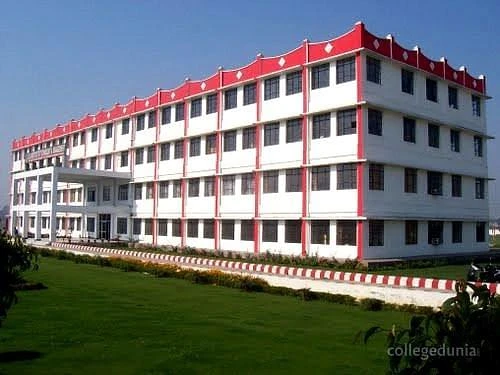
 Auditorium
 Cafeteria
 Campus Shuttle
 Computer Labs
 Hostel
 Medical
 Science Labs
 Smart Classrooms
 Sports Complex
 Study Library