Loading Admission Guardian content
Loading Admission Guardian content

Provisional score based on available data. It may change as more information is verified.
Selected ranking categories, with the recorded year beside each result. Open all records for the complete history.
32 published records · Lower numeric ranks are stronger
Outlook
Engineering · private
#122024
IIRF
Engineering · private
#642024
India Today
Engineering · private
#382020
The Times Of India
Engineering · private
#1002023
IIRF
B.Tech · private
#1102022
Find a program, read its fee details and explore the admission requirements.
Summary of the programs shown below. First-year fee. Check the note beside each amount for inclusions and exclusions.
| Course | Stream | Fees |
|---|---|---|
| Master of Engineering [ME] | Engineering | 121307 |
| Bachelor of Engineering [BE] | Engineering | 123998 |
| Bachelor of Engineering [BE] {Lateral} | Engineering | 123998 |
| Ph.D | Engineering |
Specializations
All accepted exams
Eligibility: Graduation with 50%+ GATE
Specializations
All accepted exams
Eligibility: 10+2 with 50%
Specializations
All accepted exams
Eligibility: 10+3 with 50%
Specializations
Eligibility: Post Graduation
3 exams with cutoff data available - showing recent entries
 3D PLM Software Solutions Limited
 Accenture
 Ace Micromatic
 ADP Private Limited
 Amazon
 Amdocs
 Artech Infosystems
 Asahi India Glass Ltd.
 Atlas Copco India
 Atos Origin
 Bank of India
 Bentley Systems
 Bosch Limited
 Bosch Ltd
 Cadbury
 Calsoft
 Capgemini
 Caterpillar
 Cognizant
 Cybage Software
 DLF
DLF Eleation Academy
 Electromech
 Emerson Design Engineering Centre
 Emerson Virgo
 Epam
Epam Era Group
 ESDS Software Solution Pvt. Ltd.
 Fiserv
 Force Motors Ltd.
 Godrej & Boyce
 HCL Technologies
 Hewlett-Packard (HP)
 Hexaware Technologies
 Honeywell
 IBM
IBM IBM India Pvt. Ltd.
 Igate Patni
 India Bulls
 Indian Army
 Indian Navy
 Infosys
 Kirloskar Brothers
 Kirloskar Group of Companies
 KPIT Cummins
 L&T ECC
 L&T Infotech
 Larsen & Toubro Ltd.
 Laxmi Kumaran & Sridharan
 LG Electronics
 Mahindra & Mahindra
 Mphasis
 Mu Sigma
 Newgen
 Nvidia
 Persistent Systems Limited
 Quick Heal
 SABA
SABA Siemens
 Simplex Infrastructure ltd
 Syntel
 TATA Communications
 Tata Consultancy Services
 Tata Elxsi
 Tata Motors
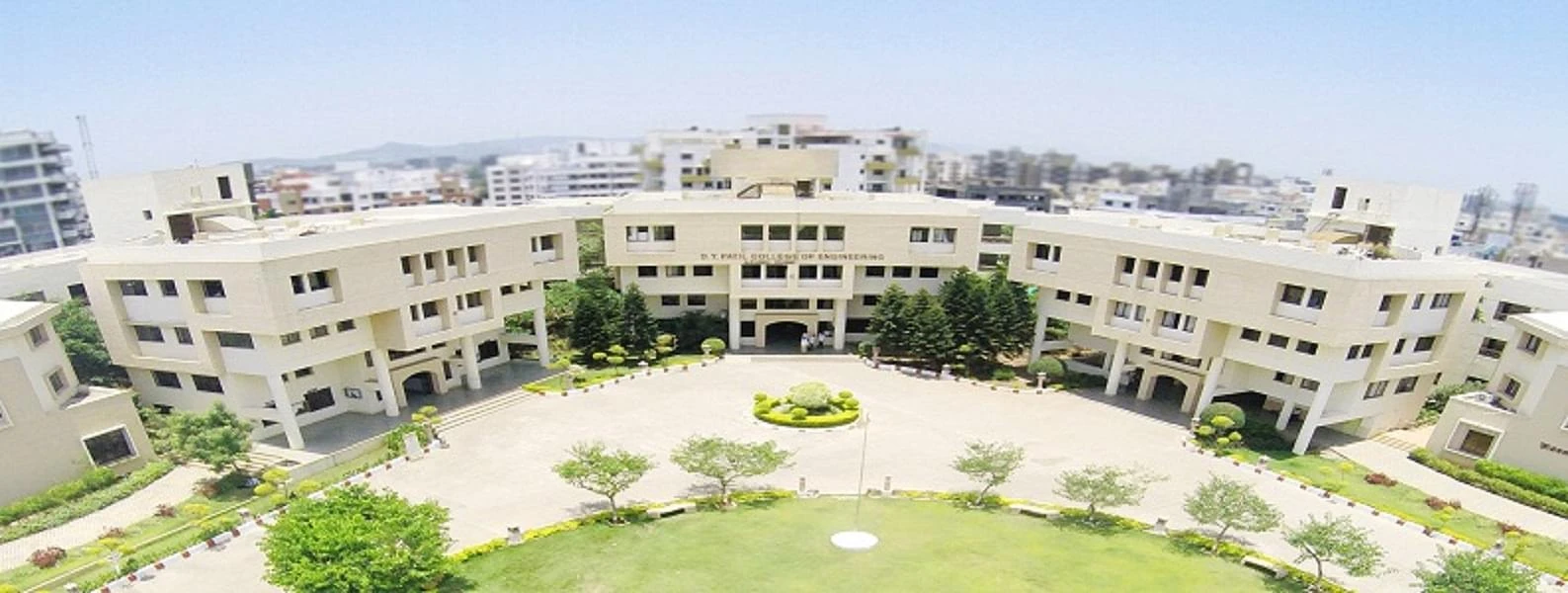
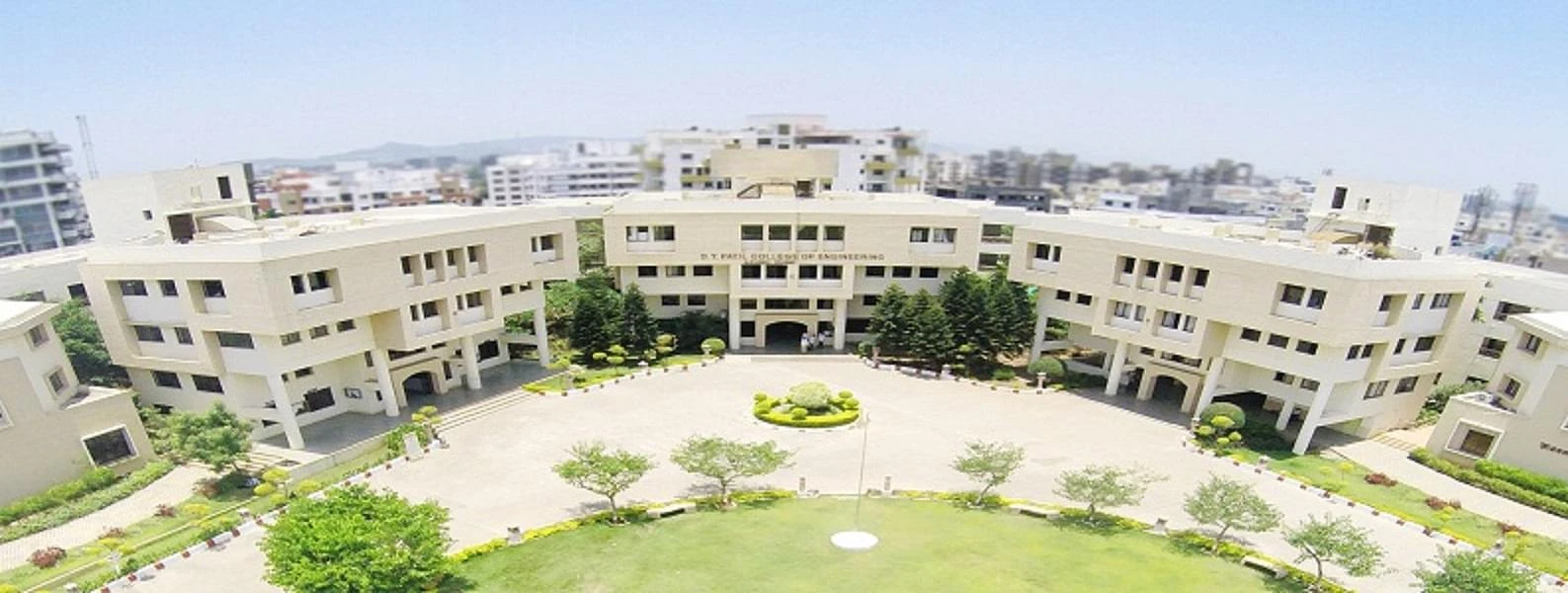
D. Y. Patil College of Engineering in Akurdi has long been a fixture on the Pune engineering map, but a recent shift is changing the game. Starting from the 2024-25 academic year, the college became autonomous. That means it's ditched the old Savitribai Phule Pune University (SPPU) syllabus to design its own curriculum under the NEP 2020 framework. For students tired of outdated coursework, that's a significant draw. The campus itself is a visual standout—lush, green, and dotted with fountains—but it's the location that truly seals the deal for many. Being a 500-meter walk from Akurdi Railway Station makes commuting from anywhere in the Pune-Mumbai corridor almost effortless. It's a college that's trying to modernize its academics while holding onto a reputation for decent, if not spectacular, placements and a campus life that's more balanced than some of its stricter local rivals.
The big story here is autonomy. The college now crafts its own curriculum, which includes new-age elements like mandatory vocational courses, 'Liberal Learning' modules, and even an 'Indian Knowledge System' (IKS) component. It's a clear move to stay relevant. The programs are broad. At the undergraduate level, the big draws are Computer Engineering and the newer AI & Data Science program, each with an intake of 180 students. IT and E&TC also pull in similar numbers. For core engineering, Mechanical and Civil have 120 seats each, while niche options like Robotics & Automation and Instrumentation & Control have 60. They're moving to a B.Tech nomenclature and a 10-point CGPA system.
Faculty strength is around 220, with a solid chunk—maybe 30-40% of senior staff—holding PhDs. The teaching style, according to students, remains fairly traditional and lecture-heavy, but the faculty are generally seen as supportive. The college has also inked MoUs with industry players like Dassault Systèmes and Microsoft IT Academy, which feeds into lab infrastructure and occasional workshops. For post-graduation, M.Tech programs are available in key departments, and Ph.D. research is offered in Civil, Mechanical, E&TC, and Computer Engineering.
This is where you need to separate the headline from the fine print. The college proudly cites a highest package of 52 LPA for 2024, often linked to Microsoft. It's crucial to understand that this is typically an off-campus offer secured by a student, though the college environment and brand likely played a supporting role. The average package most students can realistically expect is between 5.5 to 6 LPA. The official NIRF 2024 report puts the median package at ₹4.2 LPA, which is a more sobering and probably more accurate number for the typical graduate.
Placement percentages also need a reality check. While the official claim hovers around 85-90% for CS/IT branches, the overall figure across all branches, as echoed in student reviews on platforms like Shiksha and CollegeDunia, is closer to 75%. Top recruiters are a who's who of IT mass recruiters: TCS, Infosys, Wipro, Capgemini, and Cognizant are the most common destinations. Premium names like Microsoft, Adobe, Amazon, and Deloitte do visit, but for far fewer roles. A persistent complaint from Mechanical and Civil students is the lack of true core engineering companies; many end up sitting for—and accepting—software roles out of necessity.
The cost is squarely in the upper-mid range for private engineering in Pune. Annual tuition for the open category runs from ₹1.34 to ₹1.5 lakhs. But the real budget-kicker is accommodation. The standard college hostel with mess charges about ₹1.19 lakhs per year. There's a new premium hostel opening in July 2025, and student reports indicate its cost could go as high as ₹2.35 lakhs annually. Add in other development and exam fees, and the total four-year cost, including a standard hostel, easily lands between ₹12 to ₹14 lakhs.
Many students find this hostel cost prohibitive and opt for private PGs in Akurdi or Nigdi after their first year. For financial aid, the primary avenue is the state government's MAHA-DBT scheme, which offers a 100% tuition fee waiver for SC/ST students and a 50% waiver for OBC, EBC, and VJNT categories. The college also lists a Schneider Electric India Foundation scholarship of ₹50,000 per year for eligible engineering students.
Admission for the majority of seats is through the Maharashtra state counseling process (CAP rounds) based on your MHT-CET score. JEE Main scores are used for the smaller All India quota. The cutoffs, especially for the coveted branches, are competitive and reflect the college's strong regional demand. For the 2024 General Home State category in Round 1:
If your scores don't make the CAP cutoff, there's an Institutional/Management Quota (about 20% of seats). Admission here is based on merit among direct applicants to the college, but the tuition fees are significantly higher. You can find the official admission portal and notices on the college website.
The 10-acre campus is widely praised for its aesthetics—it's clean, green, and well-maintained. A downside is that it can feel crowded, as it's shared with other institutions in the D. Y. Patil complex. Infrastructure is a strong point. Academic labs, especially for AI, Robotics, and Mechanical, are rated highly (4.5/5) and come loaded with professional software. The library has a 24/7 reading room during exams. Wi-Fi is campus-wide, though students say speeds dip when everyone's online.
Hostel quality gets a middling 3.5/5. Rooms are typically 2-3 sharing. The food in the mess is considered hygienic but monotonous, a common grievance across Indian hostels. The new hostel facility promises an upgrade. For sports, there's an indoor hall and a shared outdoor ground. The canteens, like 'Brilliant,' are popular hangouts with good, affordable food. The social life isn't wild, but it's there. Students describe DYPCOE Akurdi as the balanced middle child—not as rigidly strict as PCCOE nor as unstructured as some other private colleges. Rules like mandatory uniforms on specific days and the enforced 75% attendance policy, especially for first-years, keep things in check.
The consensus from review aggregators and forums is remarkably consistent. This college is seen as a solid, reliable choice—not the absolute top tier, but far from the bottom. The most repeated positive is the location. Proximity to Akurdi station is a daily life-saver. The campus vibe and infrastructure also get consistent praise; it feels like a proper, established institute. Students are cautiously optimistic about the new autonomous curriculum, hoping it will be more practical than the old SPPU system.
On the flip side, the strictness is a frequent gripe, particularly for freshers who face school-like discipline. The hostel cost is widely considered too high for what you get, driving many to PGs. And the placement reality is a constant topic. While the brochure talks about high flyers, seniors are quick to ground expectations, pointing to the 4-5 LPA median and the struggle for core branch students. It's a pragmatic, somewhat critical student body that values the college's strengths but is clear-eyed about its compromises.
DYPCOE Akurdi makes the most sense for a specific kind of student. If you have an MHT-CET percentile in the mid-90s and want a reputable private college in Pune with excellent connectivity, decent infrastructure, and a track record of getting people placed into IT jobs, it's a very sensible option. The new autonomous status is a potential game-changer that could add value. However, if you're dreaming of sky-high packages or a ultra-vibrant, liberal campus life, you might be disappointed. The median outcomes are modest, and the rules are firm. It's also a tough sell for dedicated core branch enthusiasts (Mechanical, Civil) given the IT-heavy placement focus. Ultimately, it's a college that offers a balanced, practical engineering education with few surprises—which, for many students and parents, is exactly what they're looking for.
In this preview: 1 photo · 0 videos
The choice depends on priorities. PCCOE has slightly better placement statistics but is known for being much stricter with a school-like environment. DYPCOE Akurdi offers a better campus life and more freedom while still maintaining decent placement records.
DYPCOE Akurdi is the original flagship engineering college under the Pratishthan, while DYP Pimpri is a Deemed University. Akurdi is generally preferred by students for its established legacy and location.
Yes, attendance is strict, with a 75% minimum requirement. Students who default may face issues with internal marks or being barred from exams, though enforcement can become slightly more relaxed during the final year.
Admission depends on the branch. For competitive branches like Computer Science and IT, you typically need a 95+ percentile. For core branches like Civil or Instrumentation, admission is possible with a 75-85 percentile. The management quota is also an option for lower scores.
Reviews are mixed. The food is maintained hygienically, but students often find the menu repetitive. Many seniors recommend moving to a private paying guest (PG) accommodation after the first year to save costs and have more variety.
Share what future students should know about D. Y. Patil College of Engineering.
Student voices are not rewritten by colleges. We remove spam and abuse.
Wider admission question? Community PulseWhat should future students know?
Tell us which course you're considering. We'll help you work out the next step.
Get instant Partner access after mobile verification. Your public edits are reviewed before they go live.
Claim this college
 TCS
TCS Tech Mahindra
 ThoughtWorks Technologies
 ValueLabs
 Virtusa
 Wipro
Wipro Wipro Technologies
 Zensar
 Zycus
Zycus75 named recruiters in the recorded data. Company names are deduplicated.
 Auditorium
 Bank & ATM
 Cafeteria
 Computer Labs
 Gym
Gym Hostel
 Medical
 Science Labs
 Sports Complex
 Study Library