Loading Admission Guardian content
Loading Admission Guardian content

Find a program, read its fee details and explore the admission requirements.
Summary of the programs shown below. Fee periods can differ by program. Check the note beside each amount before comparing costs.
| Course | Stream | Fees |
|---|---|---|
| Bachelor of Technology [B.Tech] | Engineering | 70710 |
| Bachelor of Technology [B.Tech] {Lateral} | Engineering | 70710 |
| Bachelor of Vocational Studies [B.Voc.] (Graphics & Multimedia) | Vocational Courses | |
| Diploma in Vocational Studies [D.Voc] | Vocational Courses |
Specializations
All accepted exams
Eligibility: 10+2
Specializations
All accepted exams
Eligibility: 10+3
Specializations
Eligibility: 10+2
Specializations
Eligibility: 10th
DAV College of Engineering and Technology in Kanina, Mahendragarh, is a private institution that’s been around since 2002. It’s affiliated with Maharishi Dayanand University (MDU) and approved by AICTE. If you’re looking at colleges in Haryana, you’ll find this one offers a standard set of engineering programs at a relatively affordable cost. But the story here isn’t about prestige or rankings—it’s about a college with decent infrastructure and a significant, unresolved question mark hanging over its placement record. The gap between official claims and what some students say on forums is wide enough to give anyone pause.
The academic portfolio is what you’d expect from a mid-sized engineering college in the region. The B.Tech program is the main draw, with five branches: Civil, Computer Science & Engineering (CSE), Electronics & Communication Engineering (ECE), Information Technology (IT), and Mechanical Engineering (ME). Intake is modest, with around 40-60 seats per popular branch like CSE and ECE, and 30-40 for Civil and Electrical. That’s a decent size, not too crowded. They also offer lateral entry B.Tech, an M.Tech program, and even vocational courses like a B.Voc in Graphics & Multimedia and a D.Voc in Automobile Servicing, which is a bit of a differentiator.
The faculty, led by Principal Dr. Ashok Kumar, is described as a mix. Some student reviews praise the teaching culture and note that many faculty members hold PhDs or Master's degrees and are helpful with labs and projects. But you’ll also find comments about some teachers being unhelpful or rigid about the syllabus. It’s a mixed bag, which is pretty common. The college emphasizes practical learning and claims comprehensive support for internships and research projects, though the actual industry tie-ups aren't detailed beyond generic statements.
This is the section that requires the most careful reading. The data is contradictory, and that’s putting it mildly.
On one hand, the college’s official placement cell and some promotional material list recruiters like Infosys, Wipro, TCS, Accenture, HCL, and Capgemini. They’ve reported a highest package of ₹32 LPA from Amazon in a 2024 review, and a more recent 2025 figure of ₹7 LPA as the highest. The stated average package for 2025 is ₹3.0 LPA, with other reviews mentioning a ₹2-4 LPA range.
And then there’s the student sentiment. It’s starkly different. Multiple reviews on platforms like CollegeDunia and Shiksha state things like, “Almost 1-2% of students get placed every year,” and “There is no placement of our college from previous three years.” One review explicitly calls out the discrepancy, noting that while the college claims “very good” placements, their batch and senior batches saw none.
So, what’s the reality? The truth likely lies somewhere in the messy middle. It’s probable that a small number of students, perhaps from the top of the CSE or IT batches, secure offers through campus drives, accounting for the high package claims. The broader student body, however, may find very limited on-campus opportunities, pushing them to seek jobs off-campus. The claim that around 50% of students get an internship from the college is also hard to verify against the bleak placement reviews. If you’re considering DAVCET Kanina, you should plan to be highly self-driven from day one regarding internships and final placements. Don’t bank on the college’s placement cell to deliver a job.
The fee structure is one of the college’s clearer advantages. For the B.Tech program, the first-year tuition is approximately ₹70,710. Over four years, the total tuition cost is estimated to be between ₹2.8 to ₹3.2 lakhs. That’s notably affordable for a private engineering college. Lateral entry B.Tech students pay the same annual rate, leading to a total of about ₹1.71 lakhs for three years. M.Tech total fees are in the ₹1.2-1.5 lakhs range for two years.
Hostel fees have been reported at two very different figures: ₹38,000 (unspecified year) and ₹14,000 per year (from a student review). Mess food costs around ₹3,000 per month. Add in a one-time application/registration fee of ₹1,000-1,200, and the total cost for a B.Tech student staying in the hostel could range from roughly ₹4-5 lakhs over four years, depending on which hostel fee is accurate.
The college does offer scholarships. These are based on academic merit, reserved category status, or financial need, including concessions for students from families below the poverty line. M.Tech candidates with GATE scores may also qualify for fee waivers.
Admission to the B.Tech program requires 10+2 with Physics, Chemistry, and Mathematics, and at least 45% aggregate marks. The primary gateway is the JEE Main exam. Admissions are processed through the centralized counseling conducted by the Haryana State Counselling Society (HSCS).
For the 2024 cycle, the JEE Main percentile cutoffs give a sense of the competition level:
These are not highly competitive cutoffs, which aligns with the college’s positioning. There’s also a management quota—25% of total seats, with 10% for Management and 15% for All India Category—where admission is based on inter-se merit of JEE Main and Class XII marks.
For lateral entry, you need a Diploma or B.Sc degree and must take the LEET (Lateral Entry Entrance Test). M.Tech admissions are based on GATE scores or merit in the qualifying degree, and PhD admissions require a relevant Master's degree.
The application window for B.Tech typically runs from April to June, with counseling from June to July. You can apply through the college's official website.
The campus is in a semi-urban setting in Kanina. Infrastructure-wise, students generally report positive things. The labs are called “well-equipped” and “modern,” the library has over 15,000 books, and there’s a central Wi-Fi zone. Sports facilities cover both outdoor (cricket, football, basketball) and indoor games (table tennis, carrom, chess). There’s a gym, an auditorium, a cafeteria, an in-built bank/ATM, and on-campus medical facilities with a resident doctor. Bus and pick-up/drop services are available.
Hostels are separate for boys and girls. Reviews say rooms are “good” but often shared by three, with common toilets and bathrooms for the roommates. The mess gets good marks for food quality and hygiene, and students seem to have a say in the menu. Some amenities like TV, recreation rooms, and 24-hour security are mentioned. It’s a functional, no-frills setup that gets the job done.
Social life revolves around college-organized events. The main fest is “Jigyasa,” a national-level techno-cultural fest. They also have a Zonal Youth Festival, Engineering Day, industrial visits, quizzes, and workshops. It’s not a bustling metropolitan campus life, but there are activities to break the monotony of a 9 AM to 5 PM schedule, which some students have complained about.
Synthesizing the feedback creates a picture of a college with clear pros and significant cons.
Students consistently praise the management and teaching culture, describing it as supportive and secure. The infrastructure—labs, library, hostels, sports facilities—is rated as good and modern. The mess food is considered above average, and the overall learning environment is seen as nurturing for both academic and extracurricular growth.
But the negatives are heavy. The placement scenario is the single biggest point of contention and anxiety. The conflicting reports create massive distrust. Beyond that, some students find certain faculty members unhelpful. The long daily schedule (9-5) and what some call “useless assignments” are gripes. The hostel crowding (three to a room) is also noted.
The takeaway from reviews is this: if you get a good, dedicated teacher, you’ll learn. The facilities won’t hold you back. But you are very much on your own when it comes to career launch. The college might provide a degree and a decent campus experience, but the job at the end is not guaranteed by any stretch.
DAV College of Engineering and Technology, Kanina, is a specific kind of bet. It’s worth considering if your JEE Main percentile is in the 78-92 range and you are looking for an affordable, AICTE-approved B.Tech degree from an MDU-affiliated college. The infrastructure is reportedly solid, the fees are low, and the daily academic environment is described as supportive. If you are a highly self-motivated student who doesn’t expect the college to hand you a job, and you plan to build your own profile through external internships, online courses, and aggressive off-campus placement searches, this college could be a cost-effective platform to get your degree.
However, you should probably look elsewhere if a reliable, active campus placement drive is a top priority. The alarm bells in student reviews about placement rates are too loud to ignore. Also, if you’re seeking a vibrant, urban campus life or a college with strong brand recognition, this rural Haryana location won’t provide that. Ultimately, it’s a college for the financially conscious, independent student who sees the degree as a baseline requirement and is prepared to do all the heavy lifting for their career themselves.
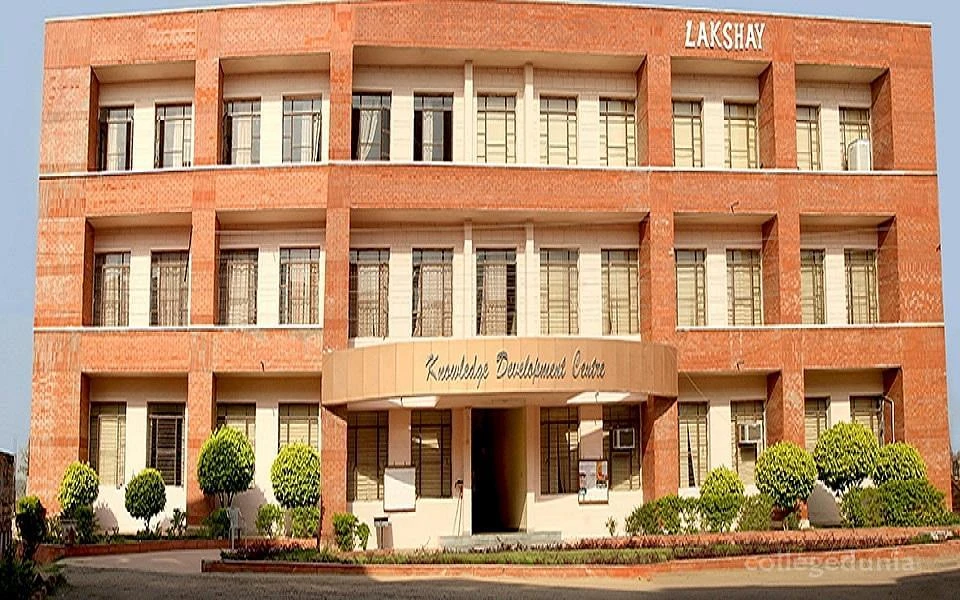
In this preview: 1 photo · 0 videos
The college offers 4-year B.Tech programs in Civil, Computer Science & Engineering (CSE), Electronics & Communication (ECE), Information Technology (IT), and Mechanical Engineering. The first-year tuition fee for B.Tech is approximately ₹70,710, with the total program cost estimated between ₹2.8 to ₹3.2 lakhs for four years (2025-26 data). They also offer B.Tech Lateral Entry, M.Tech, B.Voc in Graphics & Multimedia, and D.Voc in Automobile Servicing.
Admission requires 10+2 with Physics, Chemistry, and Mathematics and at least 45% marks. The primary entrance exam is JEE Main. Selection is through centralized counseling by the Haryana State Counselling Society (HSCS). For the 2024 cycle, JEE Main percentile cutoffs ranged from 78-92% depending on the branch, with CSE being the highest.
Student sentiment is highly conflicting and represents the biggest concern. While official reports mention recruiters like Infosys, Wipro, and TCS with an average package of ₹3 LPA (2025), many student reviews state placement rates are extremely low, with claims like "1-2% of students get placed every year" and "no placement... from previous three years." Prospective students should be cautious and not rely solely on campus placement drives.
The college provides separate hostels for boys and girls with rooms on a sharing basis (often three to a room with common bathrooms). Mess facilities are available and generally receive positive reviews for food quality and student involvement in menu decisions. Reported hostel fees vary significantly, from ₹14,000 to ₹38,000 per year, with mess charges around ₹3,000 per month.
For B.Tech Lateral Entry (3-year program), candidates need a Diploma in Engineering/Technology or a B.Sc degree with at least 45% marks and Mathematics in 12th grade. Admission is based on scores from the LEET (Lateral Entry Entrance Test) conducted by Haryana. The annual tuition fee is the same as the regular B.Tech program, approximately ₹70,710.
Share what future students should know about DAV College of Engineering and Technology.
Student voices are not rewritten by colleges. We remove spam and abuse.
Wider admission question? Community PulseWhat should future students know?
Tell us which course you're considering. We'll help you work out the next step.
Get instant Partner access after mobile verification. Your public edits are reviewed before they go live.
Claim this college
 Auditorium
 Cafeteria
 Computer Labs
 Gym
Gym Hostel
 Medical
 Science Labs
 Sports Complex
 Study Library