Loading Admission Guardian content
Loading Admission Guardian content
Provisional score based on available data. It may change as more information is verified.
Selected ranking categories, with the recorded year beside each result. Open all records for the complete history.
18 published records · Lower numeric ranks are stronger
NIRF
B.Tech
#572019
IIRF
Engineering · public
#342024
Outlook
Engineering · public
#202022
IIRF
B.Tech · public
#522023
Outlook
B.Tech · public
#202022
Find a program, read its fee details and explore the admission requirements.
Summary of the programs shown below. Programs record different fee periods. Compare the individual amounts and their notes below.
| Course | Stream | Fees |
|---|---|---|
| Ph.D | Engineering | 72000 |
| Master of Science [M.S] (Research) | Science | 110000 |
| Post Graduate Diploma in Fire and Industrial Safety [PGDFSE] | Science | 110000 |
| Master of Science [M.Sc] | Science | 146600 |
| Master of Technology [M.Tech] | Engineering | 156000 |
Specializations
Eligibility: Post Graduation with 55%
Specializations
All accepted exams
Eligibility: Graduation
Specializations
Eligibility: Graduation
Specializations
All accepted exams
Eligibility: Graduation
Specializations
All accepted exams
Eligibility: Graduation with 55% + GATE
2 exams with cutoff data available - showing recent entries
 Bharat Electronics Limited
 Bharat Forge Limited
 Canopus Infosystems
 DRDO
DRDO Eaton
Eaton Intel
Intel Larsen & Toubro Limited
 Mathworks
 Philips
 Tata Power
 TCS
TCS Tech Mahindra
If you're looking for a standard engineering college with a bustling campus life and a direct pipeline to IT giants, the Defence Institute of Advanced Technology (DIAT) in Pune isn't it. But if you're a GATE-qualified engineer obsessed with guided missiles, UAVs, or quantum computing for defence, this is arguably the most unique academic environment in the country. Functioning directly under the DRDO, DIAT is less a university and more a national asset—a 496-acre campus where civilian scholars sit alongside serving military officers, all focused on building the next generation of defence technology. The trade-offs are clear: you get unparalleled lab access and a peer group you won't find anywhere else, but you also sign up for a rigid, highly academic life far from Pune's city center. It's a specific choice for a specific kind of student.
Let's be clear: DIAT doesn't do B.Tech. It's a pure postgraduate and research powerhouse. The academic model is built around specializations you simply won't find in a typical university brochure—Guided Missiles, Armament & Combat Vehicles, Radar & Communication, Cyber Security for defence. Intakes are small, often between 18 to 48 students per branch, which means cohorts are tight and focused.
The faculty is a major draw. Over 90% hold PhDs from IITs or top international schools, and a solid 10%—including Prof. P.K. Khanna and Prof. Balasubramanian K.—are listed in Stanford’s Global Top 2% Scientists list. That's a serious concentration of brainpower. Teaching is rigorous, attendance rules are strict (think 75-80%), and the grading follows a tough 10-point CGPA system. The calendar is semester-based: Autumn runs July to December, Spring from January to May.
What sets the curriculum apart are the over 50 MoUs with partners like Cranfield University in the UK and domestic giants like Bharat Forge and L&T. This isn't theoretical. Project work often ties directly into ongoing DRDO or industry challenges. If you're in Materials Science, you might be working on nano-coatings for submarines. In Computer Science, it could be AI for threat detection. The connection to applied, mission-critical problems is constant.
The placement story here requires nuance. A significant chunk of the student body are "Sponsored" officers—they're already employed by the armed forces or DRDO and are here for advanced training. They go back to their units. The placement stats primarily reflect the "Scholarship" (GATE-qualified) and "Self-Sponsored" civilians.
Officially, the 2024 numbers are solid: a highest package of 18 LPA (from Brahmos/L&T), an average of 9.02 LPA, and a median of 9.29 LPA. The placement percentage for eligible non-sponsored students sits around 71%. That's a decent outcome, but the sector breakdown is telling.
Top recruiters are heavily skewed towards core defence and engineering: Brahmos Aerospace, Bharat Forge, Mahindra Defence, L&T, Tata Power, and DRDO labs (often as Junior Research Fellows). IT/Tech companies like Intel, TCS, and Bosch do recruit, especially for Cyber Security and Data Science roles, but this isn't a mass-recruitment campus. You won't see a line of service-based IT firms. The institute's own NIRF data and student reviews align on this: DIAT is a core engineering institute. If you're in Aerospace or VLSI, the median package is a strong, authentic reflection of your prospects in that niche. If you're hoping to use an M.Tech from DIAT as a springboard into generic software roles, you're probably looking at the wrong place. The gap between DIAT's core-focused outcomes and a typical IT-heavy engineering college is notable.
For a premier institute with its infrastructure, DIAT's fee structure is relatively accessible, especially for GATE qualifiers. For the 2024-25 session, an M.Tech student under the Scholarship Category pays about ₹78,000 in the first year, with a total 2-year cost hovering between ₹1.6 to ₹2.2 lakhs. That includes tuition.
"Self-Sponsored" candidates pay more, with total costs ranging from ₹1.5 to ₹3.3 lakhs for the program. On top of tuition, budget for a one-time admission fee (₹4,000), a refundable caution deposit (₹10,000), and an alumni fee (₹1,000).
Hostel and mess fees are approximately ₹50,000 per year, which breaks down to about ₹200 per day for food and accommodation. The key financial aid is the AICTE stipend for GATE-qualified students, which is ₹12,400 per month. That stipend effectively covers your living costs and a good portion of the fees, making the institute financially viable for most students.
The gateway for civilians is overwhelmingly the GATE exam. For M.Sc programs, the institute accepts scores from IIT-JAM or the CCMN counseling process. PhD admissions consider UGC-NET, CSIR-NET, GATE, or DIAT's own entrance exam.
The selection for M.Tech is primarily merit-based through the CCMT (Centralized Counseling for M.Tech/M.Arch/M.Plan) process. Cutoffs are competitive and niche-specific. For the 2024 cycle, General category GATE score cutoffs gave a clear picture of demand:
It's crucial to understand the seat matrix. A portion of seats in each specialization are reserved for Sponsored candidates—serving officers from the Army, Navy, Air Force, and scientists from DRDO or defence PSUs. They undergo a separate nomination and interview process. For civilians, your GATE score is your primary ticket, and you're competing for the remaining "Scholarship" and "Self-Sponsored" seats.
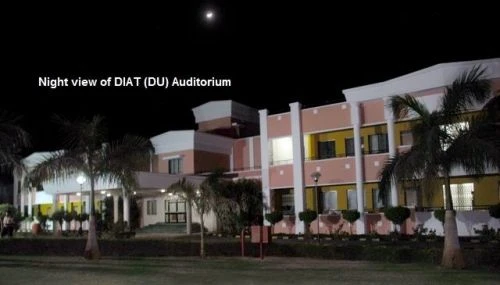
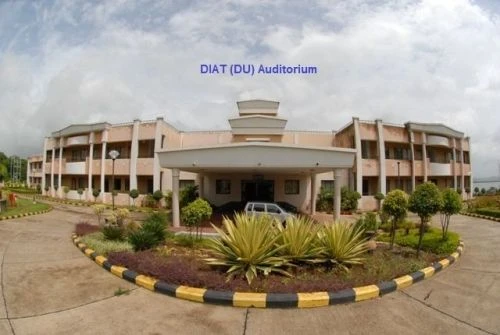
The 496-acre campus near the Khadakwasla Dam is scenic, green, and pollution-free. It's also isolated. The nearest major hub, Pune Junction, is about 20 km away. You come here to work, not to party.
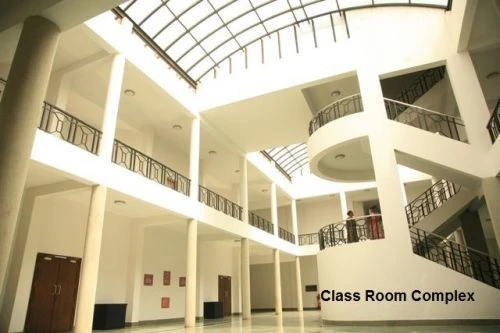
Infrastructure is where DIAT shines. Being a DRDO institute, the labs are exceptional. Whether it's the robotics lab, the guided missiles lab, or the cyber security setups, students consistently report access to "industry-standard" and often unique equipment. The library, or "Information Centre," has extensive digital subscriptions to IEEE, ScienceDirect, and defence journals.
There are two main hostels: Ganga and the newer Krishna block. Krishna is highly rated for its modern amenities. Rooms are typically double-occupancy with attached washrooms. The campus has 24/7 high-speed Wi-Fi, good sports facilities for cricket, football, and basketball, and a well-equipped gym.
But let's talk about life. Social events are low-key. Don't expect massive cultural fests. The student mix—a blend of civilian scholars and disciplined officers—creates a unique, academically intense, and somewhat formal atmosphere. It's quiet. For some, that's a perfect environment to deep-dive into research. For others, it can feel restrictive.
Scouring forums like CollegeDunia, Shiksha, and the occasional Reddit thread reveals a consistent, almost unanimous consensus. The positives are powerful and specific.
Students rave about the research culture. The phrase "better than many mid-tier IITs for defence research" comes up repeatedly. The peer group is a unique advantage—learning alongside and networking with military officers provides perspectives and discipline rarely found in academia. And the lab access is universally praised as "top-notch."
But the negatives are just as consistent. The administration is frequently described as "bureaucratic" and "rigid." Grievance redressal is known to be slow. The social life is minimal—a trade-off for the serene location. Most importantly, students are clear-eyed about placements: while the median package for core roles is respected, the opportunities in mainstream software are limited compared to a broad-based engineering college. It's a trade-off they acknowledge.
DIAT isn't for everyone. It's a specialist institution with a laser focus. If you are a GATE-qualified engineer passionate about aerospace, defence electronics, armament technology, or specialized fields like quantum computing for security, DIAT offers an environment that is arguably unmatched in India. The faculty credentials, the DRDO-backed labs, and the unique peer network provide a launchpad for a career in defence R&D, core engineering, or academia that few other institutes can. The financial value, with the AICTE stipend, is excellent.
However, if your primary goal is a high-paying IT job, a vibrant campus social life, or a broad-based engineering education, you will likely find DIAT too narrow, too rigid, and too isolated. It serves a national need first and a student's conventional college experience second. Your decision hinges entirely on whether your academic and professional ambitions align with its singular, defence-technology mission. For the right candidate, it's not just worth it—it's the only place of its kind.
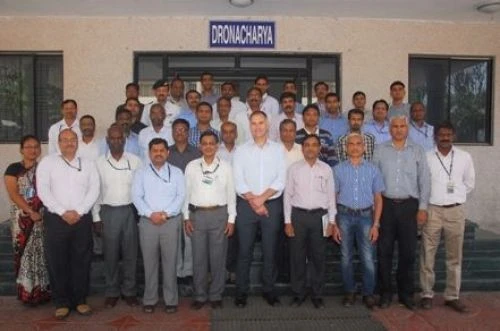
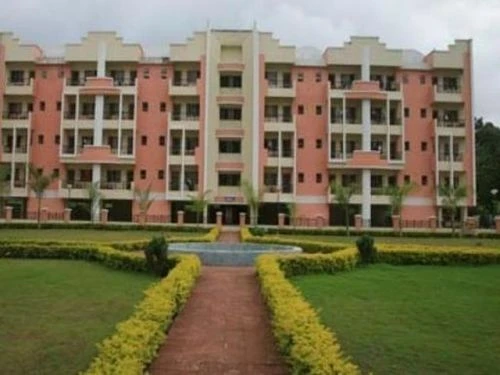
In this preview: 5 photos · 0 videos
No, the Defence Institute of Advanced Technology (DIAT) does not offer a B.Tech program. It is a postgraduate and research-focused institution offering M.Tech, M.Sc, and PhD programs.
For M.Tech in defence-related specializations like Guided Missiles and UAVs, DIAT is considered superior. However, for general specializations like IT or Software Engineering, top NITs may offer better placement records for corporate roles.
Yes, civilians can apply to DIAT. Admission for civilians is typically based on a valid GATE score, and they can apply for "Scholarship" or "Self-Sponsored" category seats.
The "Sponsored" category at DIAT refers to seats reserved specifically for officers from the Indian Armed Forces, DRDO scientists, and employees of Defence Public Sector Undertakings (PSUs).
Yes, a degree from DIAT is valid for private sector jobs. It is a UGC-recognized Deemed University, and its degrees are highly respected in core engineering sectors such as Aerospace and VLSI.
Share what future students should know about DIAT.
Student voices are not rewritten by colleges. We remove spam and abuse.
Wider admission question? Community PulseWhat should future students know?
Tell us which course you're considering. We'll help you work out the next step.
Get instant Partner access after mobile verification. Your public edits are reviewed before they go live.
Claim this college
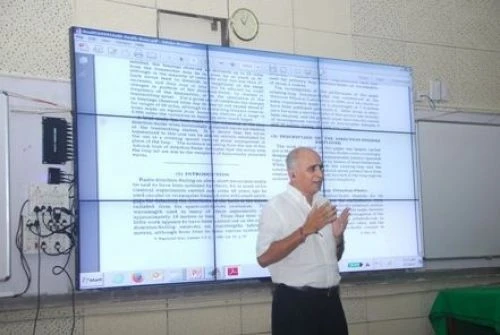
 Auditorium
 Cafeteria
 Computer Labs
 Gym
Gym Hostel
 Medical
 Sports Complex
 Study Library