Loading Admission Guardian content
Loading Admission Guardian content
Provisional score based on available data. It may change as more information is verified.
Find a program, read its fee details and explore the admission requirements.
Summary of the programs shown below. First-year fee. Check the note beside each amount for inclusions and exclusions.
| Course | Stream | Fees |
|---|---|---|
| Ph.D. (Economics) | Arts | 7092 |
| Master of Arts [MA] (Economics) | Arts | 8883 |
| Bachelor of Arts [BA] | Arts | 9965 |
| Master of Business Administration [MBA] | Management | 48870 |
| Bachelor of Arts [BA] {Hons.} (Economics) | Arts |
Specializations
Eligibility: Post Graduation
Specializations
Eligibility: Graduation
Specializations
Specializations
All accepted exams
Eligibility: Graduation with 50% + CAT
Specializations
Eligibility: 10+2
3 exams with cutoff data available
 Accenture
 AIG Group
 Amazon
 American Express
 ANZ-IT
 Axis Bank
 Bank of America
 Barclays Bank
 Bennett Coleman & Co
 Capgemini
 Capital First Limited
 Capital One Financial Services
 Citi Bank
 Citicorp Finance India Ltd.
 D. E. Shaw India Private Limited
 Deloitte
 Ernst & Young
 ESSEX Lake Group
 EXL Services
 Experion
![Fair Isaac and Company [FICO]](https://assets.admissionguardian.com/imgproxy/insecure/w:64/h:64/rt:fit/el:0/f:avif/q:82/sm:1/plain/local%3A%2F%2F%2Fimages%2Frecruiter_logos%2Ffair-isaac-and-company-fico-logo.webp) Fair Isaac and Company [FICO]
Fair Isaac and Company [FICO] Fractal Analytics ltd
 Genpact
 Goldman Sachs
 HDFC Bank
 HP Enterprise
 HSBC
HSBC i3 Consulting
 IBM
IBM ICICI Bank
 Indian Oil Corporation Ltd (IOCL)
 Infosys
 JM financial
 JP Morgan
 Ken Research
 Knight Frank
 Mannapuram
 Mastercard
 McKinsey & Co
 Microsoft
 MJunction
 NDTV
NDTV NIIT
NIIT Nokia
Nokia Nomura Services India (P) Ltd.
 Pepsico Holdings (I) Pvt. Ltd.
 Philips
 Piramal Enterprises Ltd
 PWC
PWC Reliance
 Royal Bank of Scotland
 SBI card and Payment Services
 Standard Chartered
 Sutherland
 TCS
TCS Teach for india
 Wadhwan Group
 Walmart
 Wells Fargo India Solutions Pvt. Ltd.
 Whirlpool
 Zee Media
61 named recruiters in the recorded data. Company names are deduplicated.
The Delhi School of Economics (DSE), established in 1949 by V.K.R.V. Rao and modeled after the London School of Economics, operates as a specialized centre for postgraduate education and research within the University of Delhi. Over the decades, it has served as a critical incubator for Indian economic policy, claiming former Prime Minister Dr. Manmohan Singh and Nobel Laureate Amartya Sen among its historical faculty ranks. Today, its academic scope includes the Department of Economics, the Department of Sociology, the Department of Geography, and the Department of Commerce. The Commerce department administers the institution's heavily subscribed MBA programs.
Because DSE is fully integrated into the University of Delhi, it does not receive an independent National Institutional Ranking Framework (NIRF) rank; instead, it shares the university's 2024 NIRF positioning, where DU placed 6th among all Indian universities and 15th in the overall category.
For applicants building a college shortlist, DSE represents a distinct proposition: exceptional return on investment (ROI), strict quantitative and entrance benchmarks, and a traditional public university environment rather than a corporate business school campus.
Evaluating DSE requires looking past its historical brand and assessing practical applicant outcomes, program structures, and campus realities.
DSE operates primarily at the postgraduate and doctoral levels. While the school influences the curriculum for the University of Delhi's B.A. (Hons.) Economics, the undergraduate classes are conducted at individual DU colleges, not at the DSE campus.
The flagship M.A. Economics program is managed by the Department of Economics. The curriculum is known for its heavy emphasis on Microeconomics, Macroeconomics, Econometrics, and Mathematical Economics. Students must navigate a rigorous set of core modules before accessing specialized electives such as Game Theory, Environmental Economics, Financial Markets, and Public Economics. The pedagogy is notoriously demanding, with high attrition and strict grading curves. The program serves as a dual-track pathway: it is a premier feeder for top-tier global Ph.D. programs in the US and Europe, as well as a highly recruited pool for domestic corporate roles.
Historically running as Master of International Business (MIB) and Master of Human Resource and Organizational Development (MHROD), these programs were restructured and rebranded as full MBA degrees to align with industry standards.
Admission protocols at DSE are strictly separated by department and degree type. Candidates must track independent application portals and deadlines.
Admission to the MBA programs (IB, HRD, BA) is routed exclusively through the Common Admission Test (CAT).
Following the University of Delhi's transition away from its internal entrance test (DUET), M.A. Economics admissions are now entirely dependent on the Common University Entrance Test (CUET PG).
The defining characteristic of a DSE education is its cost accessibility, heavily subsidized by the central government.
Despite the low base fees, DSE and the University of Delhi provide targeted financial support for economically weaker sections and academic toppers.
Due to the minimal upfront tuition costs, the Return on Investment (ROI) metrics at DSE consistently outperform those of private institutions charging upwards of INR 20 lakh. The Department of Commerce handles MBA placements, while the Department of Economics operates its own independent placement cell.
M.A. Economics graduates are aggressively recruited for their quantitative superiority. Typical recruiters include premier investment banks (such as J.P. Morgan and Nomura), global management consulting firms (including Bain and Company and McKinsey and Company), and specialized economic research houses (like American Express and Capital One). Packages for top-quartile M.A. Economics students frequently rival or exceed the MBA averages, often touching the INR 20 to 25 LPA mark for quantitative modeling and analytics roles. Furthermore, a significant subset of the cohort opts out of corporate placements entirely to pursue doctoral studies at institutions like MIT, Harvard, or LSE, or to prepare for the Indian Economic Service (IES).
The MBA programs are heavily corporate-focused. Over the past three years, the average packages have demonstrated steady upward compression, moving from the INR 11 LPA range up toward the INR 13 to 14 LPA band.
The placement drives are populated by leading firms across consulting, financial services, analytics, and FMCG sectors. Prominent historical and current recruiters include Morgan Stanley, S&P Global, EY (Ernst and Young), Infosys, and ITC.
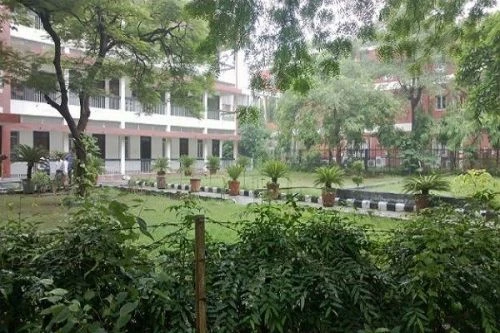
DSE is located in the North Campus of the University of Delhi. The environment is academically dense, historically significant, and politically active.
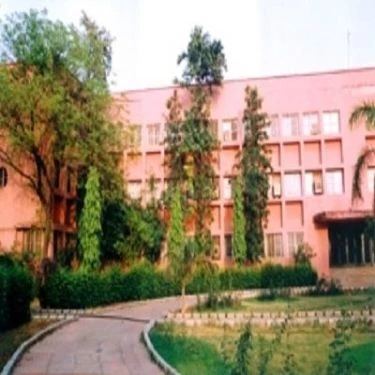
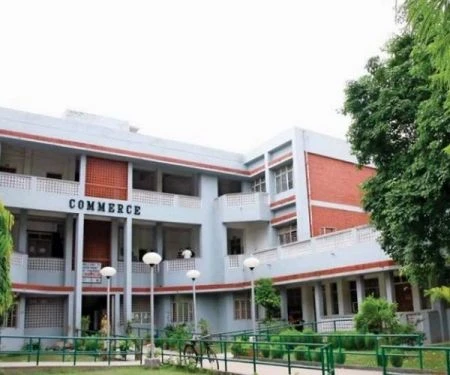
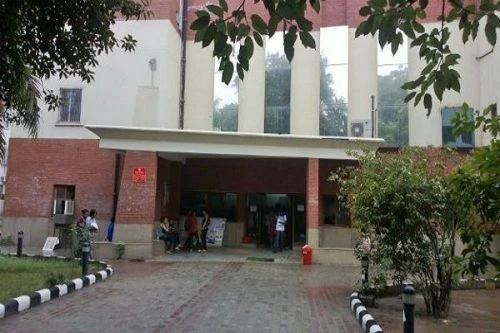
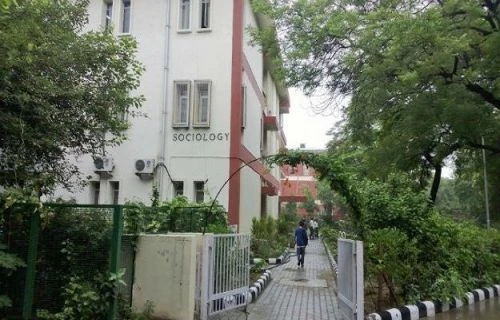
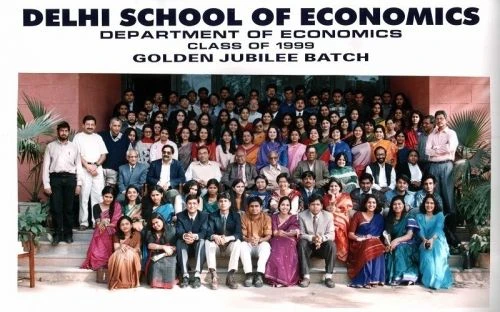
In this preview: 5 photos · 0 videos
For Return on Investment (ROI), DSE is considered a strong choice, especially for students wishing to avoid massive education loans. However, for infrastructure and corporate networking, the top IIMs (like IIM A, B, or C) are generally regarded as better.
The entrance exam for the MA Economics program at DSE is extremely competitive. It requires a very strong grasp of advanced mathematical concepts including Calculus, Linear Algebra, and Game Theory.
Yes, for its MBA programs, DSE provides 100% placement. For the MA Economics program, nearly all students who participate in the placement process get placed, though a portion typically opts for higher studies like a PhD abroad instead.
No, there is no management quota at DSE. Admissions to its programs are strictly based on merit, determined through national entrance exam scores like CAT or CUET.
The MBA in International Business (IB) focuses on international trade, forex, and global marketing. The MBA in Human Resource Development (HRD) focuses on organizational behavior, labor laws, and talent management. Both programs have similar placement statistics.
Share what future students should know about DSE Delhi.
Student voices are not rewritten by colleges. We remove spam and abuse.
Wider admission question? Community PulseWhat should future students know?
Tell us which course you're considering. We'll help you work out the next step.
Get instant Partner access after mobile verification. Your public edits are reviewed before they go live.
Claim this college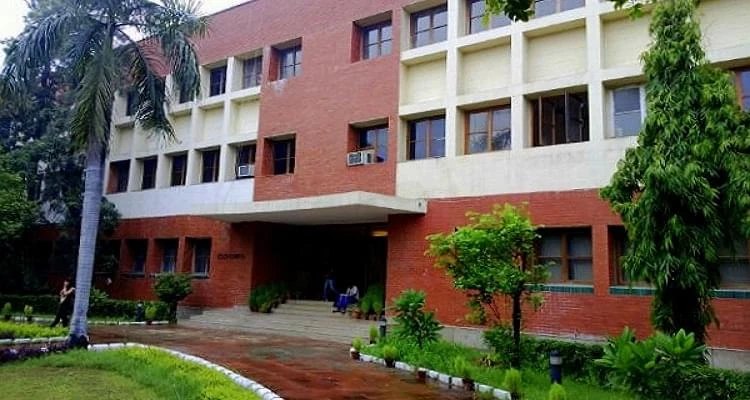
 Auditorium
 Cafeteria
 Computer Labs
 Hostel
 Medical
 Science Labs
 Sports Complex
 Study Library
 Gym
Gym