Loading Admission Guardian content
Loading Admission Guardian content

Find a program, read its fee details and explore the admission requirements.
Summary of the programs shown below. Fee periods can differ by program. Check the note beside each amount before comparing costs.
| Course | Stream | Fees |
|---|---|---|
| Bachelor of Arts [BA] | Arts | 3150 |
| Bachelor of Commerce [B.Com] | Commerce | 3270 |
| Bachelor of Science [B.Sc] | Science | 6030 |
| Bachelor of Science [B.Sc] {Hons.} | Science | 6630 |
| Bachelor of Vocational Studies [B.Voc] | Vocational Courses | 24400 |
Specializations
Eligibility: 10+2
Specializations
Eligibility: 10+2
Specializations
Eligibility: 10+2
Specializations
Eligibility: 10+2
Eligibility: 10+2
Derozio Memorial College is a bit of a paradox, and that's what makes it interesting. It's a government-aided institution in Kolkata's Rajarhat area that feels like two colleges in one. For the vast majority of its 2,200+ students in traditional B.A., B.Sc., and B.Com. programs, it's a solid, affordable stepping stone to a master's degree. But for a smaller cohort in its vocational B.Voc programs—especially Broadcast Journalism—it's a surprisingly hands-on, industry-focused training ground with a professional-grade media studio. That split personality defines the DMC experience. You get the subsidized fees and academic rigor of a state college, but the career outcomes depend almost entirely on which path you choose. The college has held a NAAC B++ grade since 2016 and is affiliated with West Bengal State University, a fact that grounds its academic credibility even as its location on the city's northern fringe makes commuting a daily reality for most.
DMC's academic portfolio is its first clear indicator of a dual identity. On one side, you have the comprehensive suite of traditional three-year degrees (now transitioning to the NEP's four-year structure) under WBSU. The Arts stream is particularly strong, with Honours offerings in Bengali, English, History, Political Science, and notably, Journalism & Mass Communication. Science offers the standard Physics, Chemistry, Mathematics, and Computer Science, while Commerce focuses on Accounting & Finance.
The other, more distinctive side is the Community College wing, born from a UGC scheme. This is where DMC sets itself apart in the region. The B.Voc degrees in Broadcast Journalism, Printing & Book Publishing, and Public Relations are built for direct employability. The intake is tight—50 seats per program—and selection involves an interview or screening test alongside board marks. The pedagogy here is less about theory and more about studio time, which is a major draw. Faculty quality is a consistent positive in reviews; many associate and assistant professors hold PhDs, and departments like English and Journalism are repeatedly praised for having dedicated, accessible teachers. The academic calendar follows the WBSU semester system, and the shift to CBCS and now NEP means students are navigating a modern, credit-based framework.
This is where the two college experiences diverge completely. You have to look at the data separately.
For the B.Voc and some B.Com. students, there's a functional placement cell. The official highest package cited for 2024-25 is ₹3.6 LPA, with an average hovering between ₹1.5 and ₹2.0 LPA. The college claims high internship and job rates for these vocational courses, sometimes quoting 80-90%. Recruiters are niche: local news channels and printing presses for the media/publishing tracks, and companies like Gillette or SBI Life for broader roles. It's not glamorous corporate recruitment, but it's tangible.
For the vast majority in B.A. and B.Sc. programs, the story is different. The official NIRF data reports a median package of ₹2.0 LPA, but student consensus puts actual on-campus placement rates for these streams at 20-30%. That's not an indictment—it's a reflection of intent. Most science and arts graduates here are aiming for postgraduate studies (M.Sc., M.A., B.Ed.) or government exams. The college functions as a launchpad for that. You'll find alumni who've gone on to PhD programs at IISER Kolkata or the University of Calcutta. So, the "placement" success is often measured in admissions to good master's programs, not in immediate job offers. Top recruiters for the general pool include TCS (often through off-campus drives) and various BPOs.
The gap between the B.Voc promise and the traditional degree reality is the single most important factor to weigh. If you're in Journalism B.Voc, you might get a local media job. If you're in B.Sc. Botany, you're likely planning for an M.Sc.
This is DMC's undisputed strength. As a government-aided college, its fee structure is highly subsidized and a primary reason for its popularity. For the 2024-25 session, annual tuition for traditional Honours courses ranges from ₹3,150 for B.Com. to ₹4,090 for B.Sc. That means a full three-year degree can cost roughly between ₹9,450 and ₹12,270 in core tuition fees. B.Voc programs are higher, given their specialized equipment needs, with annual fees estimated between ₹5,000 and ₹14,000.
Additional costs are minimal: an application fee (₹500), semester exam fees (around ₹1,000), and library/tech charges. Crucially, there are no hostel fees because the college doesn't have hostels. Students rely on private PGs or commuting.
The college facilitates several state scholarships, which are essential for many students. These include Kanyashree for girls from lower-income families, the Swami Vivekananda Merit-cum-Means Scholarship (SVMCM), and the Udaan Scholarship for top performers. SC/ST/OBC stipends are also processed through the college as per state norms. The affordability is real, and it opens doors for a wide demographic.
Admission to most programs at DMC is strictly merit-based, relying entirely on Class 12 marks. There's no entrance exam for the standard B.A., B.Sc., or B.Com. courses. The process kicks off in June/July after board results are out, via the college's own application portal.
Cutoffs vary wildly by subject popularity. For the 2024 cycle, competitive Honours subjects like English required around 80-85%, and science subjects like Zoology or Botany hovered near 75-80%. For general/multidisciplinary courses, the threshold can drop to the 50-60% range. Reservation for SC, ST, OBC, and PwD candidates follows West Bengal government rules. There is no management quota, which keeps the process transparent.
The B.Voc programs are the exception. Here, selection is based on a 50% weightage on 10+2 marks and 50% on a screening test or interview. This is where the college assesses aptitude for the hands-on vocational training.
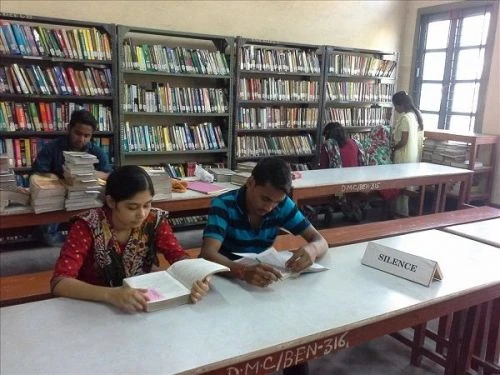
Let's be direct: the infrastructure is a mixed bag. The positives are specific and notable. The Central Library is a genuine asset—fully automated with over 15,800 books and digital access to millions of e-journals. The Media Studio for Journalism is, by all accounts, professional-grade, equipped with 4K cameras and Apple Mac editing suites. Science labs for physics and chemistry are reported to be well-equipped. The campus is Wi-Fi enabled and has a large playground, an SBI ATM, and a subsidized canteen.
Now, the consistent negatives from student reviews. There is no on-campus hostel. This is a major point for anyone from outside the immediate Rajarhat/Baguiati area, forcing them into the private PG market. Maintenance is a recurring complaint. Students frequently mention poorly maintained toilets, worn-out benches, and general cleanliness issues. It has the feel of a functional, somewhat worn, government institution.
Student life is described as generally safe and politically calm compared to some older Kolkata colleges. Ragging is reportedly absent. The student union exists but isn't described as overly disruptive. The social scene is what you make of it, centered on departmental events and the canteen. It's a commuter campus, so life disperses quickly after classes.
Synthesizing feedback from CollegeDunia, Shiksha, and Google reviews paints a consistent picture. Teaching quality is highly rated, often around a 4.2/5. Comments like "teachers are helpful mentors" and specific praise for the English and Journalism departments are everywhere. The faculty is seen as the college's core strength.
However, the infrastructure complaints are just as universal. "The studio is amazing, but the bathrooms are terrible" captures the dichotomy perfectly. Students feel the management is slow on administrative fixes and maintenance.
On placements, reviews validate the split. B.Voc students express satisfaction with the practical exposure. One review noted, "The Journalism department is the best part of the college; the studio feels professional." For traditional courses, the sentiment is pragmatic: "It's a stepping stone to a Master's degree." There's little illusion about walking into a high-paying job from a B.A. in History here. The overall environment is considered safe and academically focused, if not luxurious.
Derozio Memorial College is worth it for very specific students, and it's a poor fit for others. It's an excellent, cost-effective choice if you fall into one of two categories. First, you're a student seeking a reputable, affordable BA/B.Sc./B.Com. degree with the explicit goal of pursuing a master's or preparing for competitive exams. The low fees and qualified teachers make it a smart financial and academic launchpad. Second, you're specifically targeting its unique vocational programs, especially the B.Voc in Broadcast Journalism, where the hands-on facilities offer real-world skills not found in many undergraduate colleges.
You should probably look elsewhere if you prioritize lush campus life, on-campus housing, or a strong track record of corporate placements for traditional arts and science degrees. The lack of hostels and patchy infrastructure are real drawbacks. DMC isn't a "placement college" in the conventional sense. It's a practical, no-frills institution that delivers solid education at an unbeatable price, with one standout vocational department. Your decision hinges entirely on aligning your goals with which version of DMC you'd be attending.
In this preview: 5 photos · 0 videos
Yes, Derozio Memorial College is considered one of the best colleges for Journalism under the West Bengal State University (WBSU). The program is supported by a dedicated studio, 4K cameras, and is integrated with a B.Voc curriculum.
No, Derozio Memorial College does not provide official on-campus hostel facilities. Students typically arrange for private paying guest (PG) accommodations in nearby areas such as Rajarhat or Baguiati.
The general eligibility for Honours programs is an aggregate of 50% in the qualifying examination. However, admission to highly competitive subjects like English or Zoology often requires a percentage of 80% or higher.
Derozio Memorial College is a Government-aided college. It is affiliated with the West Bengal State University (WBSU), which is a State University.
Direct campus placements for B.Sc. Computer Science are rare. Most students secure positions through off-campus pool drives organized by the university or choose to pursue further studies like an MCA.
Share what future students should know about DMC.
Student voices are not rewritten by colleges. We remove spam and abuse.
Wider admission question? Community PulseWhat should future students know?
Tell us which course you're considering. We'll help you work out the next step.
Get instant Partner access after mobile verification. Your public edits are reviewed before they go live.
Claim this college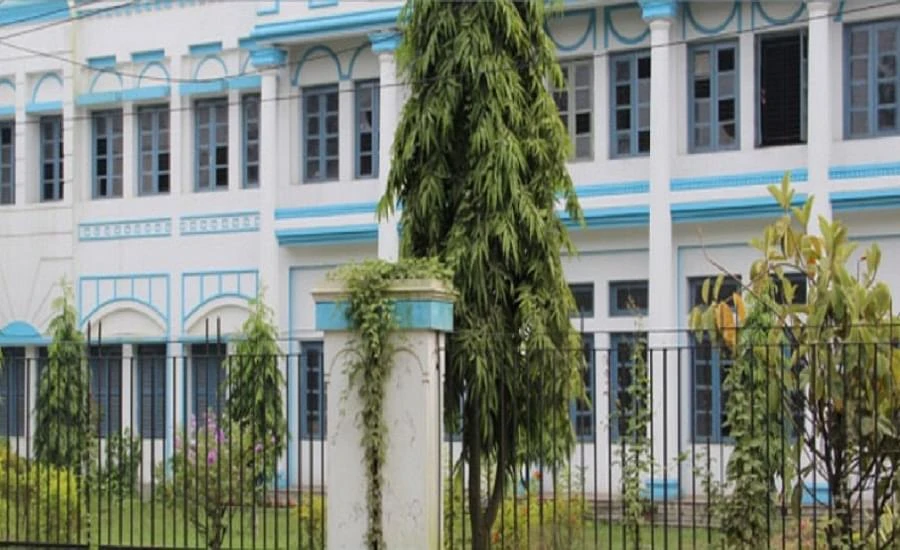
 Cafeteria
 Medical
 Science Labs
 Study Library