Loading Admission Guardian content
Loading Admission Guardian content

Provisional score based on available data. It may change as more information is verified.
Find a program, read its fee details and explore the admission requirements.
Summary of the programs shown below. First-year fee. Check the note beside each amount for inclusions and exclusions.
| Course | Stream | Fees |
|---|---|---|
| Master of Physiotherapy [MPT] | Medical | 145000 |
| Bachelor of Physiotherapy [BPT] | Medical | 150000 |
Specializations
Eligibility: B.P.T. + PGP-CET
Eligibility: 10+2
If you're looking for a physiotherapy college in Pune that prioritizes clinical rigor over flashy infrastructure, DES Brijlal Jindal College of Physiotherapy (DESBJCOP) is a name that comes up consistently. Established in 2007 under the century-old Deccan Education Society, its biggest selling point isn't a sprawling campus but its location in the academic heart of the city and its deep ties to premier hospitals like Sassoon. It's a place where the academic schedule is demanding, the faculty are seasoned clinicians, and the path to becoming a competent physiotherapist is treated with serious intent. You won't find corporate placement drives here, but you will find a pathway to real-world patient handling that many newer, glossier institutions struggle to match.
The academic offering is focused, following the MUHS curriculum. The BPT program runs for 4.5 years, which includes a mandatory six-month internship. With an intake of just 40 students, the batches are relatively small, which can be a plus for hands-on learning. The Master of Physiotherapy (MPT) program offers 21 seats across four specializations: Neurosciences, Musculoskeletal, Cardiovascular & Respiratory, and Community Physiotherapy.
The teaching methodology is traditional and exam-focused, operating on an annual system rather than semesters. Internal marks are heavily weighted, coming from terminal and preliminary exams. That structure, combined with a strict 75% attendance policy, creates an environment students describe as "academically strict." The faculty roster is a strength, featuring professors like Dr. Atiya Shaikh, who brings over 23 years of clinical and pediatric neuro experience, and Dr. Abha Dhupkar, a published researcher in community health. You're learning from practitioners who are still active in the field.
It's critical to understand that physiotherapy colleges don't have campus placements in the engineering or MBA sense. Success here is measured by clinical preparedness and professional network. The college's strongest asset is its Memorandum of Understanding (MoU) with major hospitals for clinical rotations. Your training ground includes government setups like Sassoon General Hospital and top-tier private facilities like Deenanath Mangeshkar Hospital and Surya Sahyadri Hospital.
Post-graduation, the trajectory splits. A significant chunk, maybe 30% or more, pursue an MPT or aim for opportunities abroad. The majority of the rest secure roles in private hospitals, sports clinics (like Fit2Sports), or rehabilitation centers in and around Pune. Some venture into private practice. You should ignore any generic portal data claiming recruiters like Google or Amazon with 12.5 LPA packages—that's simply false for this medical stream. The real "placement" is the skillset and the hospital exposure you get, which most alumni agree makes them "work-ready." The compulsory internship, however, typically does not come with a stipend.
Fees are regulated by the Maharashtra Fee Regulating Authority (FRA), which brings some transparency. For the 2024-25 academic year, the total annual fee for the BPT program is ₹1,50,000 (₹1,33,929 tuition + ₹16,071 development fee). The MPT program is slightly lower at ₹1,45,000 annually.
Adding hostel and mess costs, which run about ₹52,000 per year, the total cost for the 4.5-year BPT course lands between ₹7.5 to ₹8.5 lakhs. That's a substantial investment, but it's in line with other private physiotherapy institutions in the state. Financial aid is primarily available through state government scholarships for SC/ST/OBC/EBC categories, which students can apply for via the MAHADBT portal. The college itself doesn't appear to offer significant merit-based scholarships.
Admission is centralized and entrance-exam driven. For the BPT program, a valid NEET-UG score is compulsory. For the MPT, you need to appear for the Maharashtra PGP-CET. The selection happens through the Centralized Admission Process (CAP) rounds run by the State CET Cell.
Based on recent trends, NEET cutoffs for the BPT program are competitive. For the Open category, you're looking at a range of 380 to 460 marks to have a realistic shot. Scores for OBC/EWS categories hover between 350-420, and for SC/ST between 280-350. These numbers can shift each year based on applicant pool and seat matrix. The college has an 85% state quota and a 15% management/institutional quota. The management quota seats usually command higher fees but might accept slightly lower NEET scores.
The campus is compact, about 3 acres nestled within the historic Fergusson College grounds. This location on F.C. Road is arguably its biggest lifestyle perk—you're in the middle of Pune's most vibrant student hub, with everything from cafes to bookstores within walking distance. The academic building is functional but dated; students note the lack of AC in classrooms, which can be a grind during Pune's peak summer.
Infrastructure for learning is adequate. The electrotherapy and exercise therapy labs are well-equipped with modern machines. The library has a decent collection of nearly 1,000 books and journals, plus digital access to the MUHS consortium. For sports, you get to leverage the extensive Fergusson College grounds—cricket pitches, a gym, basketball courts.
The hostel offers separate wings for boys and girls. Rooms are basic, triple-sharing, and non-AC. The mess provides four meals a day, described by students as "decent but repetitive." The trade-off is clear: you're sacrificing some modern comfort for unparalleled safety, convenience, and that classic Pune college atmosphere.
The consensus from forums like Shiksha and Quora paints a consistent picture. The praise is loud and clear for two things: the quality of clinical exposure and the faculty's expertise. "Clinical exposure at Sassoon Hospital is a game-changer," is a repeated sentiment. Students feel the professors are not just teachers but mentors with deep industry connections.
The "DES Brand" carries weight and instills a sense of pride. And the location is almost universally loved.
But the critiques are just as consistent. The administrative side is often called "slow and bureaucratic." The physical infrastructure is seen as old, especially when compared to newer private university setups. The academic pressure and strict attendance policy are frequently mentioned as challenges. One Quora review put it bluntly: “If you want a chill college life, don't come here. They take internal exams very seriously.” It's not a place for a laid-back degree.
DESBJCOP is a solid, no-nonsense choice for a specific type of student. It's best for someone who values rigorous, traditional academic training and unparalleled hospital-based clinical exposure over a plush, resort-style campus. If your goal is to become a skilled, confident physiotherapist with hands-on experience from day one, and you're willing to put in the work under a strict regime, this college delivers. The DES legacy and the F.C. Road location are significant bonuses.
However, if you prioritize modern infrastructure, a more relaxed academic schedule, or are seeking a college with active corporate placement cell for alternative careers, you might feel constrained here. The total cost is significant, so weigh it against the clinical opportunities you're buying. For a student serious about the clinical practice of physiotherapy in Maharashtra, DESBJCOP remains a top-tier private option, warts and all. Just go in with your eyes open to its particular strengths and old-school character.
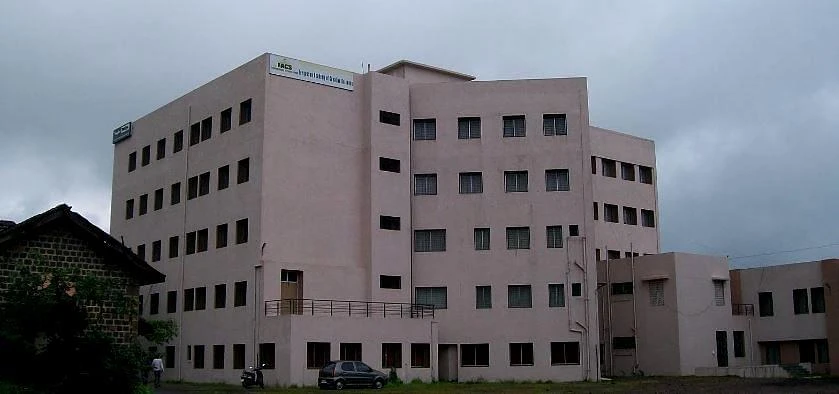
In this preview: 1 photo · 0 videos
Yes, DES Brijlal Jindal College of Physiotherapy is considered one of the top private choices in Pune for a Bachelor of Physiotherapy (BPT) due to its affiliation with the Maharashtra University of Health Sciences (MUHS) and its strong clinical tie-ups with major hospitals like Sassoon and DMH.
For admission to the BPT program, candidates from the Open category should aim for 400+ marks in NEET to be safe for securing a seat in the first two Centralized Admission Process (CAP) rounds.
No, as a private un-aided college, DES Brijlal Jindal College of Physiotherapy typically does not provide a stipend to students during their compulsory internship period.
Yes, the college reserves 15% of its total seats for admission under the Institutional or Management quota, separate from the regular CAP rounds.
The girls' hostel is safe and located within the secure FC campus. The rooms are basic, offered on a triple-sharing basis, and are non-air-conditioned.
Share what future students should know about DES Brijlal Jindal College of Physiotherapy.
Student voices are not rewritten by colleges. We remove spam and abuse.
Wider admission question? Community PulseWhat should future students know?
Tell us which course you're considering. We'll help you work out the next step.
Get instant Partner access after mobile verification. Your public edits are reviewed before they go live.
Claim this college
 Auditorium
 Cafeteria
 Campus Shuttle
 Computer Labs
 Gym
Gym Hostel
 Medical
 Science Labs
 Sports Complex
 Study Library