Loading Admission Guardian content
Loading Admission Guardian content

Provisional score based on available data. It may change as more information is verified.
Find a program, read its fee details and explore the admission requirements.
Summary of the programs shown below. Total course fee. Check the note beside each amount for inclusions and exclusions.
| Course | Stream | Fees |
|---|---|---|
| Master of Science [M.Sc] (Nursing) | Paramedical | 100000 |
| Bachelor of Science [B.Sc] (Nursing) | Paramedical | 130000 |
Specializations
Eligibility: 55% in bsc
Specializations
Eligibility: 10+2
If you're looking at nursing colleges in Pune, the name that comes up again and again is DES College of Nursing. It’s not the oldest, but it’s built a reputation fast. The reason? Its clinical training. The college is run by the Deccan Education Society, the same trust behind the iconic Fergusson College, and it sits right on that historic campus in the heart of Shivajinagar. But what really sets it apart is its primary tie-up with the Sahyadri Group of Hospitals. That link gives students a level of hands-on exposure that’s hard to match at other private institutes. It’s a disciplined, no-nonsense place where you’ll work hard, but you’ll likely graduate with a job offer in hand. The nursing shortage in India, especially in a healthcare hub like Pune, means placement isn't really the worry here. The real question is whether you can handle the rigor.
The academic portfolio is straightforward and focused. The B.Sc. Nursing program is the main draw, taking in 40 to 50 students each year. There's also a Post Basic B.Sc. for working diploma holders, and an M.Sc. program with specializations in Medical-Surgical, Obstetric & Gynecological, Community Health, and Mental Health Nursing. The total M.Sc. intake is just 15, which keeps cohorts small. They offer a Ph.D. as well, though that intake is still being formalized.
Academically, it’s all about the MUHS framework. You’re looking at a 25% internal assessment and 75% university exam split. The faculty pool of about 25-30 is a strength, with several PhD holders and specialists in each department. Students consistently say the teaching goes beyond textbooks. “They don’t just read from slides; they share real clinical cases,” is a common refrain you’ll find in reviews. But be ready for the pressure. The schedule is packed, and the grading is strict.
Let’s cut to the chase. The college claims 100% placement, and for nursing in Pune, that’s not an exaggeration. The demand for qualified nurses is so high that most students have offers lined up before they even finish their mandatory six-month internship. The official highest package for 2024-25 was ₹6.5 LPA for a domestic role, but that’s an outlier. The working average is firmly in the ₹3.2 to ₹4.0 LPA range. That’s a decent starting point for a fresh B.Sc. graduate in this field.
The top recruiter is, unsurprisingly, the Sahyadri Group of Hospitals. That clinical affiliation isn’t just for training; it’s a direct pipeline to jobs. Other major Pune hospitals like Deenanath Mangeshkar, Ruby Hall Clinic, Jehangir, and Aditya Birla Memorial are regulars. Some graduates even land roles at big names like Kokilaben Hospital in Mumbai or Fortis. The internship itself comes with a stipend, usually between ₹10,000 to ₹15,000 per month. So, if you’re worried about employment after spending four years here, don’t be. The system is designed to funnel you into a job.
For a private college with its reputation, the fees are structured but not exorbitant. The estimated total annual fee for B.Sc. Nursing in 2024-25 is around ₹1.3 lakhs. For M.Sc., it’s about ₹1.45 lakhs. These figures are subject to approval by the Fee Regulating Authority (FRA), so they can shift slightly year to year.
Then you have living costs. The on-campus girls' hostel runs about ₹85,000 to ₹95,000 per year, and mess fees add another ₹3,500-₹4,500 monthly. All in, the total four-year cost for a B.Sc. student, including living expenses, is estimated between ₹7.5 to ₹8.5 lakhs.
Financial aid is available. The college facilitates standard Government of Maharashtra freeships for eligible students (EBC, SC/ST/OBC). A notable opportunity is the Lila Poonawalla Foundation scholarship, which is specifically for female nursing students. MUHS also runs its own schemes, like the Dhanvantri Vidhyadhan Yojana.
The gateway has changed. For B.Sc. Nursing admissions starting in 2024-25, the primary route is the MH-B.Sc. Nursing CET (state-level exam). The earlier use of NEET-UG scores has been phased out for this stream. Selection happens through the Centralized Admission Process (CAP) rounds run by the state.
It’s competitive. For the General category in 2024, you typically needed a percentile of 85-90 or higher in the CET to secure a seat in the early rounds. The intake is split 85% for the state quota and 15% for the Institutional/NRI quota. The application window usually opens around May and runs through July. For M.Sc. admissions, it’s based on merit or an entrance conducted by MUHS or the college itself.
The location is a huge plus. Being inside the Fergusson College campus in Shivajinagar means you’re in a vibrant, safe, and well-connected part of Pune. The Shivajinagar metro and railway stations are within walking distance. The campus vibe is classic DES—green, historic, and academic.
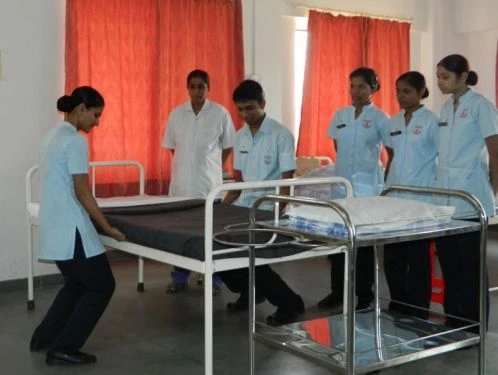
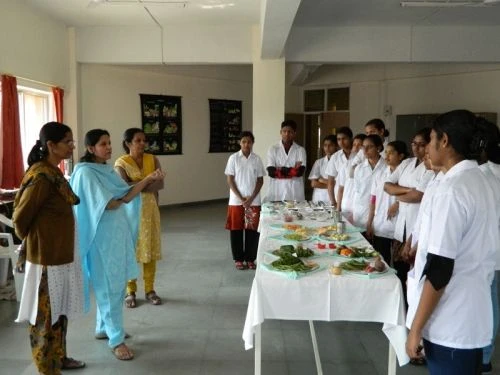
Infrastructure is functional and geared towards training. The labs are well-equipped: a Nursing Foundation lab with advanced manikins, a Nutrition lab that’s a full kitchen, and specialized labs for Community Health and Maternal/Child care. The library has over 3,500 books and journal access.
The hostel life is a defining experience. The girls' hostel (capacity 236) is on campus, which means safety and convenience. Rooms are twin or triple sharing. But it comes with strict rules. Curfews are enforced, and the overall atmosphere is often described as “prison-like” by students who crave more freedom. The food? Reviews call it nutritious but repetitive, averaging a 3 out of 5.
And here’s the social trade-off. While you have access to the famous Fergusson canteens and can see the buzz of college fests around you, nursing students often feel they have “no time” to participate. Clinical shifts and academic pressure eat into that typical college life.
Synthesizing feedback from platforms like CollegeDunia and Shiksha, a clear picture emerges.
The overwhelming positive is the “Sahyadri Advantage.” Students unanimously rate the clinical postings as exceptional, providing exposure superior to many competitors. The faculty’s knowledge and approachability are also consistently praised. The DES brand and prime location add significant trust and convenience.
But the negatives are just as consistent. The college is “very disciplined.” The 75% theory and 100% clinical attendance rules are non-negotiable, and falling short can mean being barred from exams. The administrative process is often called slow and bureaucratic. And while the hostel is safe, the strict timings and limited social life for nursing students are frequent complaints. You’re there to work.
DES College of Nursing is a solid, no-frills choice for a serious nursing career. It’s best for students who prioritize high-quality clinical training and a near-guaranteed job in Pune’s hospital network over a typical, relaxed college experience. The Sahyadri Hospital link is its crown jewel, providing practical skills that are directly marketable. If you can handle the strict discipline, academic pressure, and somewhat restrictive hostel life, you’ll graduate with a reputable degree and very good employment prospects. However, if you’re looking for a balanced college life with ample time for extracurriculars and a more lenient atmosphere, you might find the environment here too rigid. It’s a trade-off: exceptional professional preparation at the cost of a more conventional student social life.

In this preview: 4 photos · 0 videos
Yes, DES College of Nursing is considered one of the top 3 private nursing colleges in Pune, largely due to its strong clinical tie-up with Sahyadri Hospitals.
For the 2024 academic year, students generally need a 90+ percentile in the MH-B.Sc. Nursing CET for admission under the General category.
Yes, the high demand for nurses in Pune ensures that almost all graduates find jobs immediately, with many placed within the Sahyadri hospital network.
The main on-campus hostel with 236 beds is for girls. The college assists boys in finding accommodation in nearby DES-managed hostels or private paying guest (PG) facilities.
Extremely. The college strictly enforces MUHS norms, which require 75% attendance in theory and 100% in practicals. Students falling short may be barred from appearing for exams.
Share what future students should know about DESCN.
Student voices are not rewritten by colleges. We remove spam and abuse.
Wider admission question? Community PulseWhat should future students know?
Tell us which course you're considering. We'll help you work out the next step.
Get instant Partner access after mobile verification. Your public edits are reviewed before they go live.
Claim this college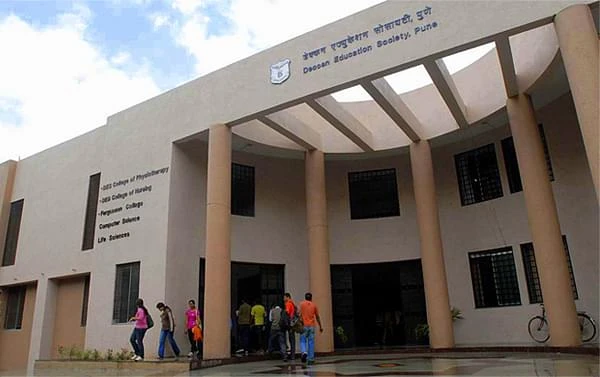
 Auditorium
 Cafeteria
 Computer Labs
 Gym
Gym Hostel
 Medical
 Science Labs
 Sports Complex
 Study Library