Loading Admission Guardian content
Loading Admission Guardian content

Find a program, read its fee details and explore the admission requirements.
Summary of the programs shown below. Fee periods can differ by program. Check the note beside each amount before comparing costs.
| Course | Stream | Fees |
|---|---|---|
| Bachelor of Arts [BA] {Hons.} | Arts | 2500 |
| Bachelor of Commerce [B.Com] {Hons.} (Accountancy) | Commerce | 2810 |
| Bachelor of Science [B.Sc] | Science | 3760 |
| Bachelor of Science [B.Sc] {Hons.} | Science | 4910 |
| Bachelor of Computer Applications [BCA] | Computer Applications |
Specializations
Eligibility: 10+2
Specializations
Eligibility: 10+2
Specializations
Eligibility: 10+2
Specializations
Eligibility: 10+2
Specializations
Eligibility: 10+2
Deshabandhu Mahavidyalaya is a story of access, not ambition. For over fifty years, this government-aided college in the railway township of Chittaranjan has served as a crucial academic gateway for students from West Bengal's Paschim Bardhaman district and the bordering regions of Jharkhand. With annual fees for a B.A. Honours degree hovering around ₹4,000, it’s one of the most affordable degree colleges in the state. That affordability defines its identity. Don't expect corporate recruiters lining up at the gate. Instead, you'll find a campus where the primary goal for most is securing a foundational degree—often as a stepping stone to government job exams or postgraduate studies. Its recent NAAC 'B' grade (CGPA 2.40) in 2024 reflects a solid, if unspectacular, institution focused on its core mission: providing accessible higher education to a largely local student body.
The college has fully adopted the NEP 2020 framework, offering 4-year UG Honours programs with exit options. Its strength lies in traditional arts and sciences, with substantial intakes in B.A. subjects like Bengali, English, and History (40-120 seats per subject). The B.Sc. stream offers Physics, Chemistry, Mathematics, and notably, Computer Science. For commerce, B.Com. in Accountancy is the mainstay. The professional courses—BBA (Hons) and BCA (Hons)—are newer additions, drawing students looking for a more vocational angle, albeit at a significantly higher fee.
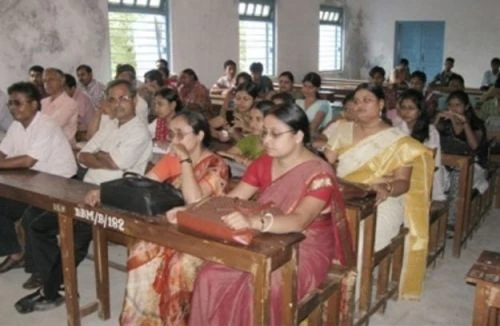
Academically, it’s a mixed bag. The college operates on a shift system: a Morning Shift for B.A. General and Hindi, and a Day Shift for Honours and Science programs. Faculty includes around 45-50 members, with a decent chunk (about 40%) holding PhDs. Teaching is largely traditional and lecture-based, though departments are increasingly using projectors. The collaboration with local MSME units for vocational certification, like an Electrician course, is a practical touch. You won't find cutting-edge research labs, but for following the KNU syllabus and getting personal attention from approachable professors, it does the job.
Let's be clear: if you're coming here expecting a traditional placement drive with companies visiting campus for mass recruitment, you'll be disappointed. That's not this college's reality. As a general degree college in a semi-urban location, the placement cell functions more as a career guidance and counseling unit. Its focus is on organizing career fairs with the District Employment Exchange and preparing students for competitive exams.
For the professional courses (BBA, BCA), there's some activity. Student reviews mention off-campus opportunities leading to packages in the INR 4-5 LPA range, with IT giants like TCS, Wipro, and Infosys hiring through their pool campus or 'Ignite' programs. The estimated average for these courses is a modest INR 2.5 - 3 LPA. For the vast majority in Arts and Science, the path after graduation is either higher studies (MA, MSc, MBA) or intense preparation for government exams—SSC, Railways, WBPSC. The college's linkage with CLW and Railways means a notable number of alumni end up in administrative roles there, but that's through independent application, not campus placement.
This is where DBM truly shines and defines its value proposition. The affordability is staggering. A full four-year B.A. (Honours) degree will cost you roughly ₹15,000 to ₹18,000 in total tuition. That's less than a single semester's fee at many private colleges. B.Sc. (Honours) is slightly higher, estimated at ₹18,000 to ₹22,000 for four years. You pay small additional fees for labs, library, and development, but the core cost is minimal.
The professional courses are a different tier. BBA and BCA cost ₹17,000 to ₹20,000 per semester, pushing the total 4-year cost to ₹1.4 to 1.6 lakhs. It's still affordable compared to private institutes, but the jump from the arts and science fees is significant.
Financial aid is robust and well-utilized. The college actively facilitates state government scholarships, most prominently the Kanyashree Prakalpa (K1 & K2) for female students, and the Swami Vivekananda Merit-cum-Means Scholarship (SVMCM). SC/ST/OBC Post-Matric scholarships are also processed efficiently. For eligible students, the already low fees can effectively drop to zero.
Admission is straightforward and entirely merit-based. There are no entrance exams for any program. Selection is 100% based on your Class 12 marks, processed through the West Bengal Centralised Admission Portal (WB CAP). The application window typically opens in May and runs through July.
Cutoffs vary by subject popularity. For high-demand Honours courses like English or Geography, you might need an aggregate of 80-90%. For BBA and BCA, the bar is lower, around 60-70%, but you must have a background in Mathematics or Computer Applications. It's a transparent, no-frills process. You apply online, the merit list is published, and you secure your seat based on your rank and choice. Given the low fees, seats in popular subjects get filled quickly.
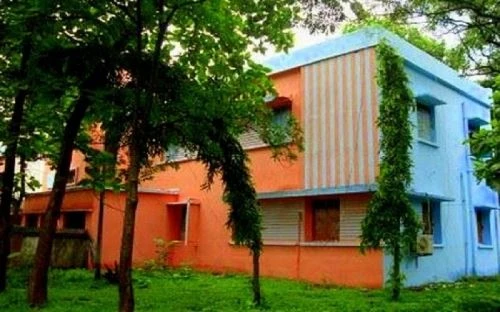
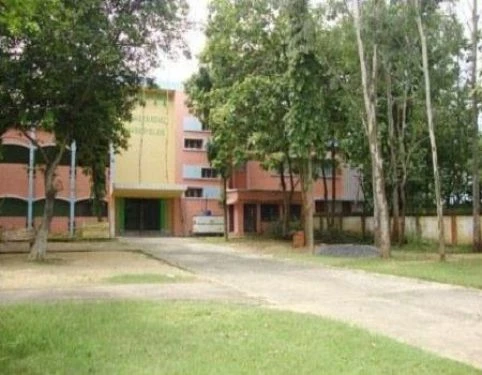
The 15-acre campus, leased from the Railways, has a sprawling feel with a large, shared playground. But the infrastructure is functional, not fancy. Some buildings show their age, and 'smart classrooms' are limited. The central library is a solid resource with over 25,000 books and access to the INFLIBNET N-LIST for e-journals. Labs for Physics, Chemistry, and Computer Science are adequately equipped for undergraduate coursework.
Now, the biggest practical hurdle for outstation students: there is no functional on-campus hostel. College notices as recent as 2025 confirm this. Students from outside Chittaranjan typically rent private PG accommodations in nearby areas like Rupnarayanpur. The campus canteen provides basic, affordable meals, with student reviews giving it a middling 3/5 for quality.
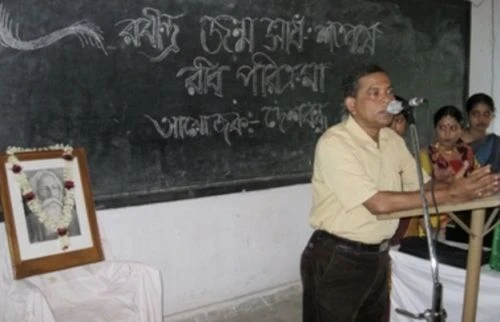
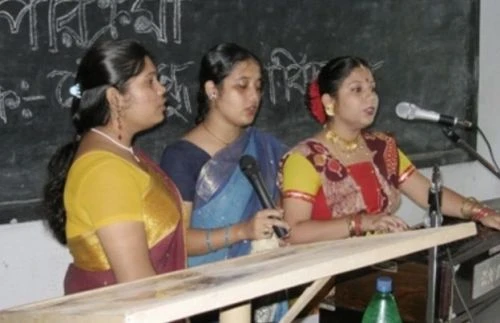
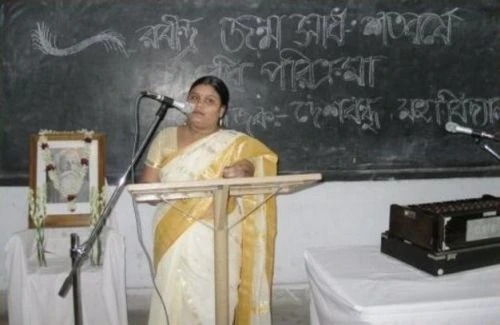
Where student life thrives is in extracurriculars. The NSS (National Service Scheme) unit is exceptionally active, regularly winning awards at the university level. They organize blood donation camps, tree plantations, and community outreach—it's a big part of the campus culture. The NCC is also present. Social life is quiet and revolves around college events and township activities. This isn't a 'campus life' college; it's a 'go to class, use the library, head home' kind of place.
Talking to students and scanning forums paints a consistent picture. The overwhelming positive is affordability and faculty accessibility. Students repeatedly praise the low fees and note that professors are helpful and maintain a cordial relationship. The active NSS culture is also a big plus for many.
The criticisms are equally clear. The lack of campus placements is the most frequent complaint, especially from BBA/BCA students who hoped for more corporate connectivity. The absence of a hostel is a major logistical and financial burden for those coming from afar. Infrastructure is called 'old' and 'needing upgrade,' with Wi-Fi being partial and unreliable in some spots.
The consensus? It's a no-nonsense college that delivers exactly what it promises at the price it charges: a decent, recognized degree from Kazi Nazrul University. You get what you pay for, and you don't pay much. The onus for career advancement post-degree falls almost entirely on the student.
Deshabandhu Mahavidyalaya serves a specific student profile exceptionally well. If you are a local student or from the surrounding districts, looking for an extremely affordable pathway to a UGC-recognized bachelor's degree, it's a compelling choice. It's perfect for those who plan to use the degree as a foundation for government exams or postgraduate studies, where the college brand matters less than the qualification itself. The supportive faculty and scholarship ecosystem are significant advantages.
However, if you are an outstation student reliant on hostel life, or someone whose primary goal is direct campus recruitment into corporate jobs, you should look elsewhere. The lack of hostel and minimal placement support are deal-breakers for those needs. The professional courses (BBA/BCA) here are a budget option, but you must be prepared to hustle for off-campus opportunities from day one.
In essence, DBM is a community college in spirit if not in name. It provides vital, low-cost higher education access. It's worth it for the right student with the right expectations—managing those expectations is key.
In this preview: 5 photos · 0 videos
Deshabandhu Mahavidyalaya is considered a budget-friendly option for BCA with decent laboratory facilities. However, students should note that the college primarily relies on off-campus placement opportunities.
No, as of 2025, Deshabandhu Mahavidyalaya in Chittaranjan does not have a functional on-campus hostel for its students.
Deshbandhu College is a constituent college of the University of Delhi (DU) located in Delhi. Deshabandhu Mahavidyalaya is an affiliated college under Kazi Nazrul University (KNU) located in Chittaranjan, West Bengal.
For admission in 2026, prospective students must submit their application through the official West Bengal Centralised Admission Portal (WB CAP), which manages the centralized admission process for the college.
The first-year fee for the B.A. Honours program at Deshabandhu Mahavidyalaya is approximately ₹3,500 to ₹4,000, making it an affordable option.
Share what future students should know about DBM.
Student voices are not rewritten by colleges. We remove spam and abuse.
Wider admission question? Community PulseWhat should future students know?
Tell us which course you're considering. We'll help you work out the next step.
Get instant Partner access after mobile verification. Your public edits are reviewed before they go live.
Claim this college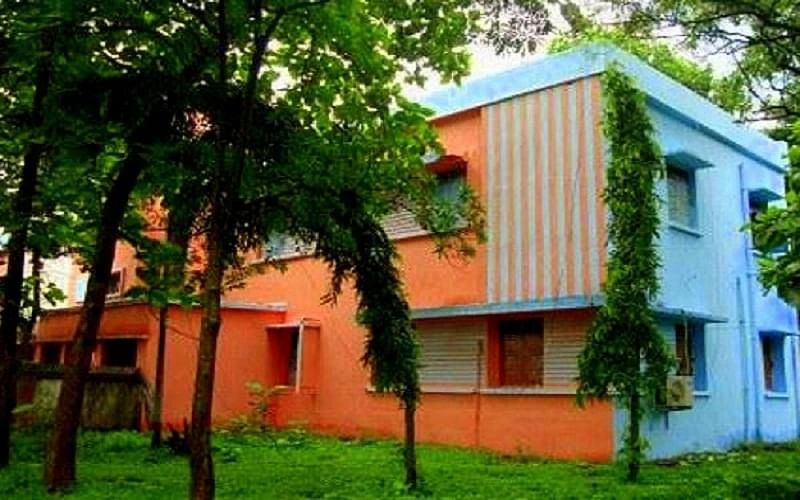
 Cafeteria
 Hostel
 Medical
 Sports Complex
 Study Library