Loading Admission Guardian content
Loading Admission Guardian content

Based on incomplete college records.
Selected ranking categories, with the recorded year beside each result. Open all records for the complete history.
1 published record · Lower numeric ranks are stronger
Find a program, read its fee details and explore the admission requirements.
Summary of the programs shown below. First-year fee
| Course | Stream | Fees |
|---|---|---|
| Bachelor of Arts [BA] | Arts | 2080 |
| Bachelor of Commerce [B.Com] | Commerce | 2080 |
| Bachelor of Science [B.Sc] | Science | 2665 |
| Master of Arts [MA] | Arts | 3255 |
| Master of Science [M.Sc] | Science | 3255 |
Specializations
Eligibility: 10+2
Specializations
Eligibility: 10+2
Specializations
Eligibility: 10+2
Specializations
Eligibility: Graduation
Specializations
Eligibility: Graduation
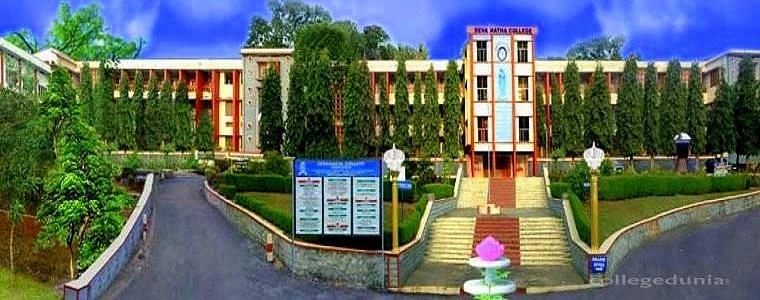
Deva Matha College in Kuravilangad is a bit of a paradox. It's an institution with a solid academic reputation—an NAAC 'A' grade and affiliation with Mahatma Gandhi University—yet its official placement numbers tell a story that's far from the high-flying corporate dreams many students have. Established in 1964 on a 13-acre campus, this private aided college has built its identity around strong foundational sciences, arts, and commerce programs. The fees are remarkably low, almost unbelievably so for a private college. But that affordability comes with a clear trade-off: you're not coming here for a direct pipeline to a high-paying corporate job. You're coming for a traditional, affordable, and well-rounded undergraduate education in a supportive environment, where the focus is as much on sports and extracurriculars as it is on the syllabus. If you understand that distinction, DMC Kuravilangad makes a lot of sense.
DMC offers a classic liberal arts and sciences curriculum. There's no engineering or flashy tech degrees here. The strength lies in its foundational UG programs: B.Sc in Mathematics, Physics, Chemistry, Botany, and Zoology; BA in English, Malayalam, Economics, and Politics; and B.Com with specializations in Computer Applications, Finance & Taxation, and Co-operation. Intakes are modest, typically between 30 and 50 students per UG batch, which allows for a more personalized classroom experience.
At the postgraduate level, they offer M.A., M.Sc., and M.Com programs, with M.Sc. Botany being a noted specialization. The faculty body is sizeable at 114 members, and student reviews consistently highlight supportive and knowledgeable teachers. The academic calendar runs from June to May, and the pass percentage is a straightforward 40% in each subject.
A notable shift is on the horizon. The college has announced a collaboration with G-TEC Education to launch new industry-aligned, career-oriented diploma programs starting in the 2026 academic year. This is a clear signal they're aware of the need to bridge the gap between their traditional curriculum and modern job markets. For now, though, the academic culture feels more oriented towards producing good graduates for further studies or government exams rather than corporate-ready candidates.
This is where you need to read between the lines. The official data from the college, likely submitted for NIRF or university reports, is stark. For the UG 3-year degree in 2021-22, only 21 students out of 435 graduating were placed through the college—that's about 4.8%. For PG programs, the percentage was better but still modest: around 22-30%.
The median salary figures are equally grounded. For that same UG batch, it was ₹2,34,000 per annum. For PG, it hovered around ₹2.5 LPA. The highest package mentioned is in the ₹3-4 LPA range. Top recruiters are predominantly regional: South Indian Bank, other local banks, educational institutions, and local firms in sectors like IT and services.
Now, contrast that with a student review that claims "Around 80% of students got placed." That's a massive discrepancy. The likely truth lies in the definition of "placed." The official 4.8% probably refers to on-campus, college-facilitated jobs. The 80% might include students who found jobs on their own after graduation, perhaps through family networks, competitive exams, or off-campus drives. The consistent student complaint is about "limited opportunities for direct job placements and internships from the college." That's the reality check.
If your primary goal is to walk out of college with a high-paying corporate offer in hand, DMC is not built for that. The placement cell exists, but its reach is limited. The value here is in the degree itself—a reputable, affordable qualification from an 'A' grade college—which you then leverage on your own for higher studies or job searches.
The most compelling argument for DMC Kuravilangad is its cost. It's astonishingly low for a private institution. Based on available data, the total fee for a three-year BA or B.Com is approximately ₹5,490. For a B.Sc, it's between ₹5,985 and ₹7,245. Postgraduate degrees cost about ₹5,880 total. The first-year payment is typically half that.
These are just tuition figures. You'll have to add caution fees, registration, admission, development, and lab fees. But even then, the total cost is a fraction of what most private colleges charge. Hostel and mess fees aren't specified in the data, but given the low tuition, they are expected to be reasonable.
Where the college shines is in scholarship support. They list a wide array of options: Central and State Higher Education scholarships, Post Matric, merit-based waivers, need-based EWS support, and category-based aid for SC/ST, minority, and sports students. They even have specific endowed scholarships like the Rajasekharan Nair Memorial Scholarship. Maintaining a CGPA above 6.0 is usually required to keep them. For students from economically constrained backgrounds, this financial accessibility is DMC's biggest advantage.
Admission is straightforward and merit-based. For UG courses, it's all about your Class 12 marks. The college admits students through the Centralized Admission Process (CAP) of Mahatma Gandhi University. There's no mention of intense entrance exam cutoffs for BA, B.Sc, or B.Com programs. You apply, your marks are evaluated, and if you meet the merit list, you're in after document verification.
The application window for UG courses is short and late, typically in early August (e.g., 3rd-4th Aug for 2025). For PG courses, the window is longer, from May to August. Some PG and PhD programs may include an interview round. The college mentions an NRI intake for some courses, but details on management quota or NRI fees aren't specified. The process is bureaucratic in the typical university style, but not overly complex.
The 13-acre campus is described as well-maintained and functional. Infrastructure is a strong point. The library is a standout, with over 52,500 books, an e-learning centre, and high-speed 100 Mbps internet. There are 54 classrooms, with 20 being ICT-enabled.
Where DMC seems to invest significant energy is in sports and extracurriculars. The facilities are impressive for a college of its type: a multipurpose indoor stadium, an outdoor athletic stadium, courts for nearly every sport imaginable (basketball, volleyball, kabaddi, cricket nets), and a modern gymnasium. Student reviews repeatedly praise the high importance given to sports and activities.
Separate hostels for boys and girls are available. Reviews specifically highlight the good ambiance and, notably, the quality of the food in the mess—a rare compliment in college reviews. The campus also has a canteen, banking/ATM services, a medical unit, and transport facilities. The social life is built around active clubs like NCC, NSS, drama, oratory, and the Haritha Club, with regular fests, seminars, and tours.
Synthesizing the sentiment, a clear picture emerges. The overwhelming positive is the teaching faculty. Phrases like "supportive and knowledgeable," "teaching quality is the best," and "teachers are very helpful and loveable" appear consistently. The hostel food and ambiance also get high marks.
Students feel the college provides a positive and healthy environment for growth, especially through non-academic avenues. The library and sports facilities are heavily utilized and appreciated.
The singular, recurring negative is the career support. The phrase "less opportunity" directly tied to placements and internships is a common thread. While the campus life and academic experience are rated highly, there's a frank acknowledgment that the college's role ends largely at graduation. You are well-taught and supported, but then you're on your own to navigate the job market. This isn't portrayed as malice, but as a limitation of the college's network and focus.
It depends entirely on your goals and budget. Deva Matha College is an excellent, arguably outstanding, choice for a specific type of student. If you are looking for an affordable, high-quality foundational education in arts, science, or commerce from a reputed 'A' grade college, and your plan involves preparing for competitive government exams, pursuing a postgraduate degree (like an M.Sc or M.A.), or leveraging a family network for employment, then DMC offers tremendous value. The low fees, good teachers, and strong campus life are a winning combination.
However, if your primary metric for college success is a high campus placement percentage and a direct gateway to corporate careers with high starting salaries, you will likely be disappointed. The official placement stats don't lie, and the college's recruiter network is local and limited.
Think of it as a traditional liberal arts college with modern infrastructure. It's for the student who values education as formation, not just as transactional job training. For the right student, with the right expectations, it's not just worth it—it's a smart, pragmatic choice. For the student chasing the classic "placement story," it's probably the wrong fit. Check out their official site at www.devamatha.ac.in for the latest updates, especially on those new G-TEC diploma programs which could slowly change this equation.
In this preview: 1 photo · 0 videos
Deva Matha College is affiliated with Mahatma Gandhi University, Kottayam. It holds a strong 'A' grade accreditation from the National Assessment and Accreditation Council (NAAC) and is also ISO 9001:2008 certified. This combination of a reputable university affiliation and a high NAAC score is a core indicator of its academic standing.
The fees are remarkably low. For undergraduate programs (BA, B.Sc, B.Com), the total program cost ranges from approximately ₹5,490 to ₹7,245. Postgraduate programs (MA, M.Sc, M.Com) cost around ₹5,880 for the entire course. These figures are based on recent application cycles and cover core tuition; additional mandatory fees for labs, registration, etc., apply. This affordability is one of the college's biggest draws.
Admissions are primarily merit-based. For most UG and PG courses, selection is done through the Centralized Admission Process (CAP) of Mahatma Gandhi University, based purely on your marks in the qualifying examination (like Class 12 for UG). There's no complex entrance exam for core programs. The final step is document verification. Some PG and PhD courses may include an interview.
Placement prospects through the college are limited. Official data shows a median salary of around ₹2.34 LPA for UG graduates and ₹2.5 LPA for PG graduates. The placement percentage for UG students has been in the single digits historically. Top recruiters are regional players like South Indian Bank and local educational institutions. Students consistently note that direct job and internship opportunities from the college are scarce, so graduates often pursue higher studies or find jobs independently.
The college offers extensive facilities on its 13-acre campus. Academically, it has well-equipped labs, a large library with over 52,500 books and digital access, and Wi-Fi. For student life, the highlights are the sports infrastructure—including an indoor stadium, outdoor grounds, multiple courts, and a gym—and separate hostels for boys and girls that receive positive reviews for food and ambiance. There's also a canteen, medical unit, and banking services on campus.
Share what future students should know about DMC.
Student voices are not rewritten by colleges. We remove spam and abuse.
Wider admission question? Community PulseWhat should future students know?
Tell us which course you're considering. We'll help you work out the next step.
Get instant Partner access after mobile verification. Your public edits are reviewed before they go live.
Claim this college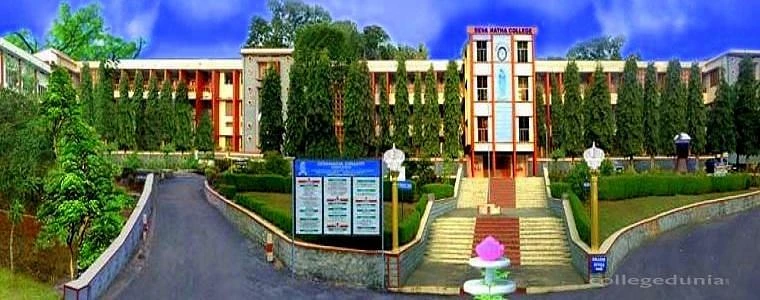
 Auditorium
 Cafeteria
 Computer Labs
 Medical
 Sports Complex
 Study Library