Loading Admission Guardian content
Loading Admission Guardian content

Provisional score based on available data. It may change as more information is verified.
Find a program, read its fee details and explore the admission requirements.
Summary of the programs shown below. Fee amounts are not listed. Contact the college for its current fee schedule.
| Course | Stream | Fees |
|---|---|---|
| Bachelor of Commerce [B.Com] | Commerce | |
| Master of Commerce [M.Com] | Commerce | |
| Bachelor of Education [B.Ed] | Education | |
| Bachelor of Science [B.Sc] | Science | |
| Master of Science [M.Sc] | Science |
Specializations
Eligibility: 10+2
Specializations
Eligibility: Graduation
Specializations
All accepted exams
Eligibility: Graduation with 55% + UP Bed JEE
Specializations
Eligibility: 10+2
Specializations
Eligibility: Graduation
If you're looking for a no-frills, government-aided college in Meerut where the focus is squarely on academics and the price is almost impossibly low, Deva Nagri College (DN) has been that option for generations. Established in 1958 and affiliated with Chaudhary Charan Singh University (CCSU), it’s a place where the primary goal for most students isn't a corporate placement letter, but a solid degree that serves as a foundation for government exams or further studies. The campus buzzes with a different kind of ambition—one geared towards the UPSC, SSC, and banking sectors. With an NAAC 'A' grade accreditation (though it's from 2014) and fees that can be fully covered by state scholarships, it represents a specific, utilitarian value proposition in higher education.
DN College operates across the traditional faculties of Science, Commerce, and Arts, with a notable B.Ed. program added in 2005. The undergraduate offerings are standard for a CCSU affiliate: B.Sc. with Maths and Bio groups, B.Com., and B.A. in subjects like Economics, Political Science, and English. The B.Sc. in Computer Science is a self-financed program, which explains its higher fee. At the postgraduate level, M.Sc. programs in core sciences like Chemistry and Botany have been running for decades, alongside M.A. and M.Com. courses. The college also supports Ph.D. research in several departments.
The academic culture is old-school and rigorous. They follow the CCSU semester system and have adopted the Choice Based Credit System (CBCS). Faculty strength is around 80-90, and a significant majority hold PhDs—a point of pride for the administration. Students consistently note that professors are knowledgeable and take classes seriously, which isn't a given at all aided colleges in the region. The Botany Department stands out for its practical outreach; it houses a functional Soil Testing Lab that provides services to local farmers, a rare example of applied academia here.
Let's be clear: if you're evaluating DN College based on placement statistics, you're looking at it wrong. As a traditional degree college, it does not have a proactive corporate recruitment culture. A placement cell exists, but its function leans more toward career counseling and skill development workshops than hosting company drives.
The numbers tell the story. According to the official NIRF report from 2021—the most recent data available—the median salary for UG (3-year) graduates was ₹52,000 per annum. For PG (2-year) graduates, it was ₹68,000. That translates to roughly ₹4,300-₹5,600 per month. In student reviews, the consensus is that only about 10-15% of students secure any form of direct campus placement. Those who do, often land roles through university-level pools or local firms, with off-campus offers for B.Sc./B.Com. graduates occasionally mentioned in the ₹4-5 LPA range. Recruiters like TCS, Wipro, or HCL are sometimes named, but these are almost certainly off-campus hires.
The real "placement" strategy for a DN College student is different. The college is a known hub for government exam preparation. The low cost and disciplined environment allow students to focus on studying for the SSC, UPSC, or banking exams while earning their degree. That's the career pipeline here, not campus recruitment.
This is where DN College shines for budget-conscious students. The fees are heavily subsidized. For a three-year B.A. or B.Com., your total tuition could be as low as ₹8,000 to ₹10,000. Even for a B.Sc., it's typically between ₹10,000 and ₹13,000 for the entire program. The self-financed B.Sc. Computer Science is the exception, costing an estimated ₹50,000-₹75,000 over three years. The B.Ed. program, at around ₹81,250 for two years, is also a significant expense relative to other courses.
A critical point: the college has no official hostels. Students rely on private paying guest accommodations nearby, which can cost ₹4,000–₹6,000 per month including food. The major financial relief comes from scholarships. UP Government Post-Matric scholarships are extensively available and often fully reimburse tuition fees for eligible SC, ST, OBC, and EWS students. For many, this makes the college effectively free.
Admission for most UG and PG courses is merit-based, determined by your marks in the previous qualifying exam (10+2 for UG, graduation for PG). The process is centralized through the CCSU Admission Portal (admission.ccsuweb.in). You register online, select your college preferences, and await merit lists declared by the college itself.
Cutoffs vary yearly but give a sense of the competition. For popular streams like B.Sc., the first merit list cutoff often floats between 75% and 85%. Attendance rules are strictly enforced, with a 75% minimum requirement. For the B.Ed. program, eligibility requires qualifying the UP B.Ed JEE entrance exam. It's also important to note that CCSU has begun adopting CUET for some UG courses, so prospective students must check the latest guidelines on the university portal. The application window typically opens in May/June.
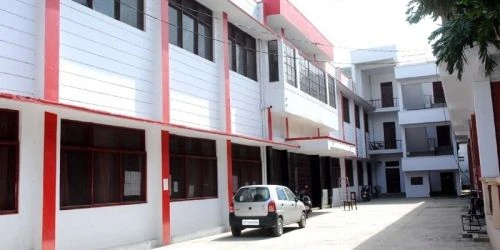
The campus, located in the heart of Meerut near Railway Road, is compact and functional, estimated at 5-7 acres. The infrastructure reflects its age and status as a government-aided institution. You'll find well-equipped labs for core sciences and a central library praised for its collection of over 50,000 books. The sports ground is large and active.
But student reviews are candid about the drawbacks. Classroom furniture is often reported as worn or broken, and buildings are in need of maintenance. Wi-Fi is not campus-wide; it's restricted to specific areas like the computer labs or library. The canteen offers only basic snacks and gets mediocre ratings. The biggest lifestyle factor is the lack of on-campus hostels, which shapes the commuter-centric, day-scholar culture. Social life is quiet, with very few major fests or cultural events. It’s not a "campus life" college in the modern sense.
Scouring platforms like CollegeDunia and Shiksha reveals a consistent, almost unanimous profile of DN College. It’s seen as a "serious academic hub" and a "government exam factory."
The positives are clear. Students value the academic rigor and discipline. Teachers are respected for their knowledge and dedication to taking classes. For female students, the environment is repeatedly described as safe and secure with zero tolerance for ragging. And of course, the affordability is the top draw—the return on investment for a student using the degree as a stepping stone is considered excellent.
The negatives are equally consistent. The aging infrastructure is a common gripe. The placement cell is viewed as ineffective for corporate jobs, a fact students feel should be more transparently communicated. Administrative staff can be slow and difficult to deal with during admission or exam periods. And if you're looking for a vibrant, event-filled college experience, you'll be disappointed. The social life is minimal.
Deva Nagri College is a very specific tool for a very specific job. It is absolutely worth it for a student from the region with limited financial means, whose primary goal is to obtain a reputable, affordable bachelor's degree while dedicating serious time to preparing for government service exams (UPSC, SSC, Banking). The low fees, scholarship options, disciplined environment, and qualified faculty create a perfect ecosystem for that singular purpose.
However, if your expectation is a campus with modern amenities, an active corporate placement drive, a bustling social calendar, or on-campus housing, you will be frustrated. This isn't that kind of college. It’s also not the right fit for someone aiming for immediate, high-paying private sector jobs post-graduation. Choose DN College for its stark practicality and academic foundation, not for a holistic "college experience." For the right student, it’s an invaluable launchpad. For the wrong one, it can feel like a time capsule.




In this preview: 5 photos · 0 videos
Deva Nagri College is a government-aided institution affiliated with Chaudhary Charan Singh University (CCSU).
No, Deva Nagri College does not have official hostel facilities on its campus.
The cutoff for B.Sc. programs varies annually but generally falls within the range of 75% to 85% for the first merit list.
The college is known for strictly enforcing a compulsory 75% attendance rule, which is more stringent than many other local colleges.
Prospective students must register on the official CCSU Admission Portal and select Deva Nagri College as their preferred choice during the application process.
Share what future students should know about DN.
Student voices are not rewritten by colleges. We remove spam and abuse.
Wider admission question? Community PulseWhat should future students know?
Tell us which course you're considering. We'll help you work out the next step.
Get instant Partner access after mobile verification. Your public edits are reviewed before they go live.
Claim this college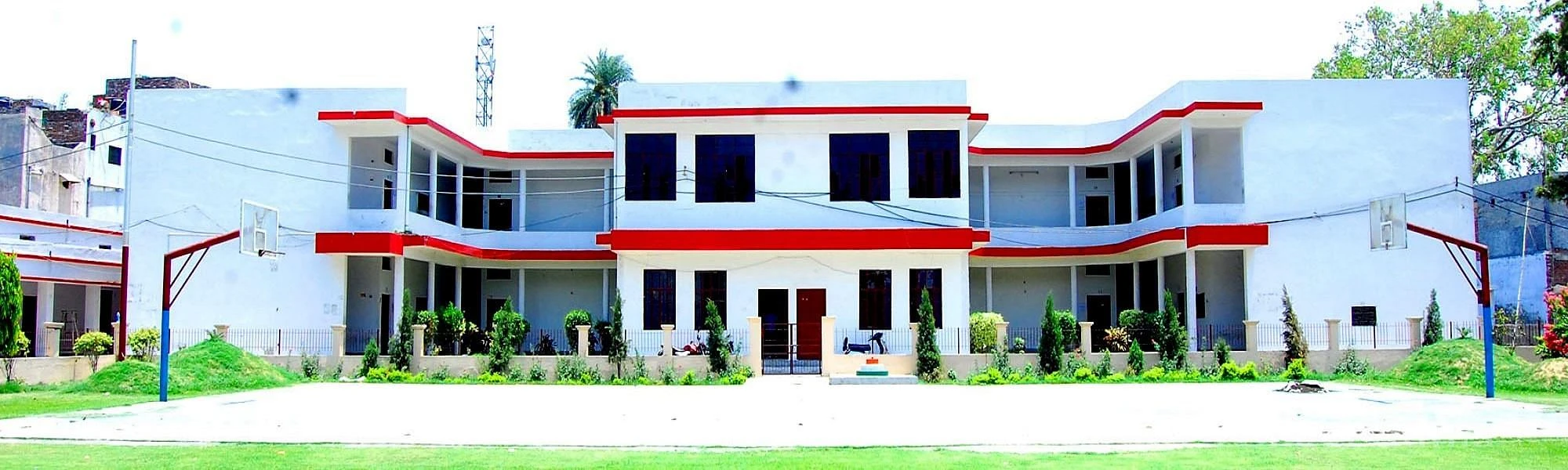
 Auditorium
 Cafeteria
 Computer Labs
 Gym
Gym Hostel
 Medical
 Science Labs
 Sports Complex
 Study Library