Loading Admission Guardian content
Loading Admission Guardian content

Provisional score based on available data. It may change as more information is verified.
Find a program, read its fee details and explore the admission requirements.
Summary of the programs shown below. Fee amounts are not listed. Contact the college for its current fee schedule.
| Course | Stream | Fees |
|---|---|---|
| Bachelor of Arts [BA] | Arts | |
| Bachelor of Arts [BA] {Hons.} | Arts | |
| Bachelor of Science [B.Sc] | Science |
Specializations
Eligibility: 10+2
Specializations
Eligibility: 10+2
Specializations
Eligibility: 10+2
If you're looking for a quiet, affordable place to earn a solid undergraduate degree in West Bengal's Dakshin Dinajpur, Dewan Abdul Gani College (DAGC) is a name that comes up. Established in 1994, this government-aided institution serves as a crucial educational hub for a semi-urban and rural population. Its primary draw isn't flashy placements or a bustling metro location—it's accessibility. With first-semester fees often under ₹2,000 and a peaceful, green campus, it provides a legitimate pathway to a Bachelor's degree for students where cost and proximity are non-negotiable factors. The academic focus is traditional, with a strong emphasis on the humanities and a growing science department, all under the umbrella of the University of Gour Banga. Just don't confuse its value with corporate career launchpads; this is a college for building a foundation, either for further study or government service.
DAGC has fully adopted the National Education Policy (NEP) 2020 framework for new admissions starting the 2023-24 session. This means students can opt for 4-year Honours degrees (with or without a research component) or 3-year multidisciplinary General programs. The Arts stream is the dominant force here, with a total BA intake capacity of around 1,571 students across ten Honours specializations like Bengali, English, History, Political Science, and Education. The Science side is smaller, with B.Sc. Honours offered in Geography (its standout department), Mathematics, Physics, Chemistry, and Computer Science, with intakes typically between 50-100 per discipline.
The teaching method leans traditional—think lecture-based instruction. But they've integrated some tech with ICT-enabled "Smart Classrooms." The faculty roster is compact, around 16-20 permanent or SACT (State Aided College Teachers) members, several of whom hold PhDs. The consensus from students is that the professors are the college's strongest asset: knowledgeable, approachable, and invested. The academic calendar follows the standard University of Gour Banga schedule, and students have access to a decent computerized library with N-LIST (INFLIBNET) access for e-resources. It's a straightforward, no-frills academic environment that gets the job done.
Let's be clear: you don't come to a rural general degree college like DAGC for on-campus recruitment drives. The official placement data reflects that—there is no published highest or average package. The college does maintain a Career Counselling & Placement Cell, but its role is more about guidance than bringing Amazon or TCS to campus. It organizes the occasional workshop on soft skills or job awareness, but that's about the scale of it.
The real "placement" story here is different. For the vast majority of students, the degree is a stepping stone. The top sectors for alumni, as noted in the brief, are Education (becoming school teachers), the West Bengal Police, the Indian Army, and local administration. Achieving those goals almost always requires further study—an MA or a B.Ed.—or dedicated preparation for competitive government exams. One recurring piece of student feedback puts it bluntly: "Don't expect a job right after BA; you must do an MA or B.Ed to get anywhere." That's the honest reality check. The college provides a low-cost, supportive environment to earn the necessary qualification to then compete for the next step.
This is where DAGC shines for its target demographic. Fees are heavily subsidized by the West Bengal government. For the 2024-25 session, the first-semester admission fee is just ₹1,970 for B.A. Honours and ₹2,770 for B.Sc. Honours in Geography. Over three years, the total tuition cost is estimated to be between ₹12,000 and ₹18,000. That's almost unheard of in most of higher education today.
Hostel fees are a point of clarification. Some unverified third-party sites list exaggerated figures. In reality, as a government-aided college, the hostel seat rent is nominal, likely in the range of ₹2,000 to ₹5,000 per year. Mess charges are extra and managed by the students themselves. Where the college truly supports its students is through scholarships. They facilitate a wide array of state government schemes including Kanyashree, Swami Vivekananda Merit-cum-Means (SVMCM), OASIS for SC/ST/OBC students, and Aikyashree for minority students. This financial ecosystem makes college education genuinely accessible.
The process at DAGC is refreshingly straightforward. There are no entrance exams. Admission is strictly merit-based, relying entirely on your Class 12 (Higher Secondary) marks from a recognized board like WBCHSE, CBSE, or ISC.
Eligibility follows the University of Gour Banga norms. For Honours programs, you generally need a minimum of 45% in aggregate, or 40% in aggregate with 50% in the specific subject you want to major in. For General (Programme) degrees, you just need the pass marks. The application window typically opens in June or July, right after the HS results are out. The process is online: you apply, the college publishes merit lists, and then there's an online counseling and document verification phase. Cutoffs vary by subject and year, but for the most popular Honours subjects in Arts, they can be competitive within the context of the applicant pool.
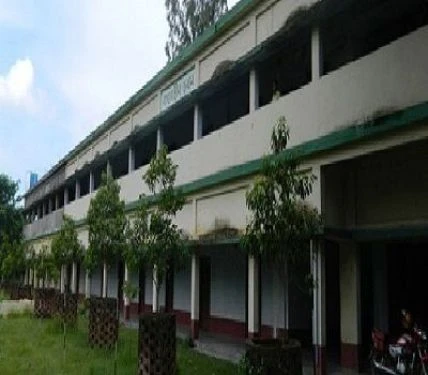
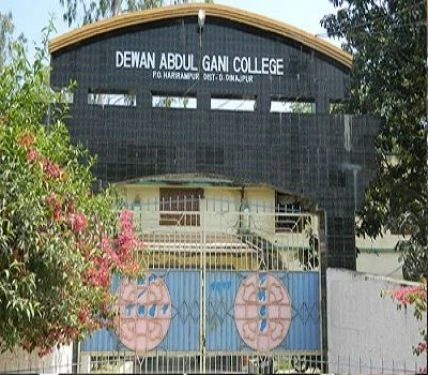
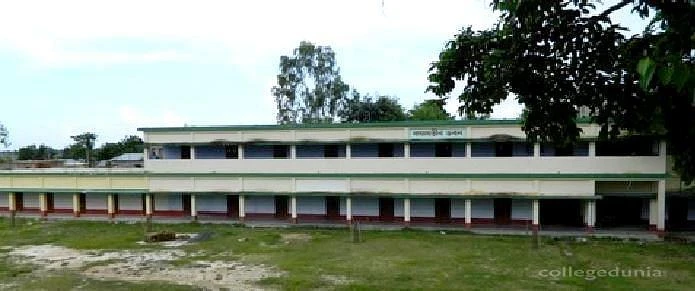
The campus spans an estimated 5-7 acres and is consistently described by students as "lush green" and "peaceful." It's a semi-urban/rural setting, which means quiet surroundings but also a degree of remoteness from major city amenities. Infrastructure is functional. There's a central library, a well-regarded Geography lab, and basic labs for Physics, Chemistry, and Computer Science (though some reviews wish for more modern equipment in the pure science labs).
Separate hostel facilities for boys and girls are available on campus, which is a significant advantage for students from surrounding villages. Sports facilities include grounds for football, volleyball, and basketball. Student life revolves around academics, the NSS (2 units), the NCC wing, and the subsidized student canteen. It's not a "happening" college life in the metropolitan sense. The social scene is low-key, and the location means you're not popping into cafes or malls. For some, that's a downside. For others, it minimizes distraction and keeps the focus on studies and exam prep.
Synthesizing feedback from platforms like CollegeDunia and Shiksha, a clear consensus emerges. The positives are strong but specific. Faculty accessibility is the top praise—teachers are repeatedly called "helpful," "friendly," and treat students "like family," especially in departments like Geography. The calm, green campus environment and the radical affordability are the other major wins.
And the negatives are just as clear. The remote location in Dakshin Dinajpur is the biggest gripe. It creates a feeling of disconnection from bigger coaching centers, urban job markets, and even simple entertainment. The almost complete absence of corporate campus placement is a frequent grievance for those not aiming for teaching. Some also note that while the building infrastructure is decent, maintenance and updates to science lab equipment could be better. The reviews paint a picture of a college that knows its strengths and limitations. As one student noted, the Geography department is the best in the district. But you have to understand what you're signing up for.
Dewan Abdul Gani College is a classic example of a institution you evaluate on its own terms, not against national benchmarks. It is unequivocally worth it for a specific student: one from the northern districts of West Bengal (or similar regions) who needs an extremely affordable, accredited, and peaceful place to complete a foundational BA or BSc degree. Its value is immense for those planning to become school teachers, pursue an MA, or prepare for state government exams, as it removes the financial barrier to entry. The supportive faculty is a major bonus.
However, it's probably not the right fit if you're seeking a cosmopolitan campus experience, direct industry placements, or cutting-edge research facilities in the sciences. The location is isolating, and you must be self-driven to use the degree as a launchpad. In short, DAGC is a vital and effective local institution. It provides a legitimate, low-risk path to a university degree for thousands of students. Just know exactly what that path leads to—and what it doesn't.

In this preview: 4 photos · 0 videos
Dewan Abdul Gani College is a government-aided college. It receives financial grants from the West Bengal government but is managed by an independent Governing Body.
Yes, the college offers B.Sc. programs in subjects including Geography, Mathematics, Physics, Chemistry, and Computer Science. It is noted, however, that the Arts stream is more prominent at the institution.
Official tuition fees are very low, approximately ₹2,000 per semester. Hostel seat rent is also nominal, set at government rates. Separate mess charges are extra and are decided by the student committee.
No, admission to the BA Honours program is not based on an entrance exam. Selection is done solely on the basis of your Class 12 percentage.
The college is located about 45–50 km from the nearest major railway station, which is Raiganj. Most students rely on the extensive local bus network to travel to the college in Harirampur.
Share what future students should know about DAGC.
Student voices are not rewritten by colleges. We remove spam and abuse.
Wider admission question? Community PulseWhat should future students know?
Tell us which course you're considering. We'll help you work out the next step.
Get instant Partner access after mobile verification. Your public edits are reviewed before they go live.
Claim this college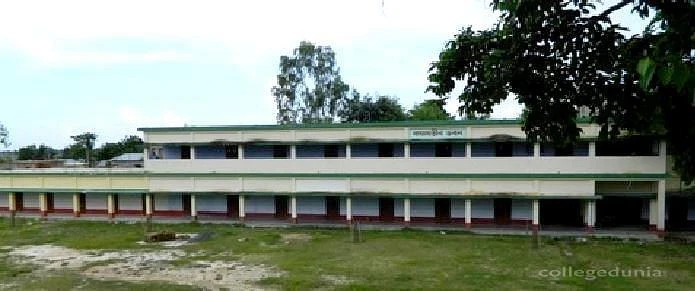
 Auditorium
 Cafeteria
 Hostel
 Medical
 Smart Classrooms
 Sports Complex
 Study Library