Loading Admission Guardian content
Loading Admission Guardian content

Find a program, read its fee details and explore the admission requirements.
Summary of the programs shown below. Fee periods can differ by program. Check the note beside each amount before comparing costs.
| Course | Stream | Fees |
|---|---|---|
| Bachelor of Science [B.Sc] | Science | 3490 |
| Bachelor of Arts [BA] | Arts | 8160 |
| Bachelor of Arts [BA] {Hons.} (Economics) | Arts | 8160 |
Specializations
Eligibility: 10+2
Specializations
Eligibility: 10+2
Specializations
Eligibility: 10+2
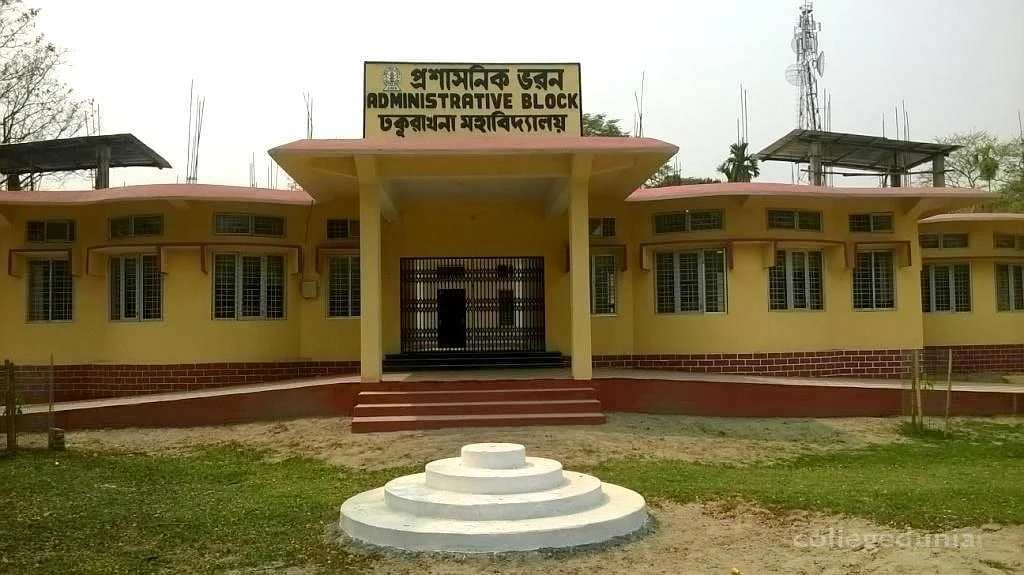
Dhakuakhana College isn't trying to compete with the IITs. That's the first thing you need to understand. Its mission, stated clearly, is social transformation through higher education, particularly for underprivileged sections in Assam's Lakhimpur district. And on that front, it delivers. Established in 1966 and recently granted autonomous status by the UGC in September 2024, this public institution has carved out a solid reputation as a reliable, affordable launchpad for higher education in the region. With an NAAC 'A' grade re-accreditation in 2023 and climbing state rankings, it's a college that's clearly improving. But the real story is in the balance between its commendable academic intent and the practical realities of campus life, as told by the nearly 1,700 students who walk its 15-acre grounds each year.
This is a traditional arts and science college, now transitioning under the National Education Policy (NEP) 2020. The core offerings are B.A. and B.Sc. programs, available as both general and honours degrees. They're rolling out the Four-Year Undergraduate Programme (FYUGP) with a Choice Based Credit System (CBCS).
The science stream covers the expected bases: Physics, Chemistry, Botany, Mathematics, Zoology, and Anthropology. Arts offers English, History, Economics, Political Science, and again, Anthropology. It's a standard lineup, but the college tries to add practical value. They run career-oriented parallel courses in Computer Application and Spoken English, and have a dedicated Computer Education Centre offering short-term diplomas.
A couple of features stand out. There's an institutional Bio-Tech Hub, which is a notable facility for a college at this level, providing research avenues. They also operate as a study centre for Krishna Kanta Handique State Open University (KKHSOU), offering distance learning options. The faculty, numbering 49 permanent members, gets consistently high marks from students. Reviews describe them as kind, helpful, and knowledgeable. That's a significant strength for any institution.
Let's be direct about placements. The official numbers show a median package of ₹3.36 LPA for the 2023-24 batch, with an average of ₹4.2 LPA and a high of ₹7.2 LPA. Those are decent figures for a government arts and science college in this region, especially when you consider the minuscule tuition fees.
But the critical number is the placement percentage. It's low. The college's own data shows 9% for 2023-24, 21% for 2022-23, and 14% for 2021-22. This tells you the placement cell is active and can secure opportunities, but it's not a high-volume, campus-driven recruitment hub. The top recruiters are almost exclusively government bodies and hospitals: NHM (National Health Mission), Assam Government departments, Civil Hospital, and the Education Department. This aligns perfectly with the college's community-oriented mission.
The takeaway? Don't come here expecting a flood of corporate recruiters. The placement support exists and can yield good government-sector jobs, but most students will be leveraging their degree to pursue higher studies, competitive exams, or seeking employment independently. One student review on Shiksha still rated placements 4 out of 5, suggesting satisfaction with the opportunities that are provided.
This is where Dhakuakhana College becomes a compelling option. The fees are astonishingly low, a hallmark of its status as a provincialised government college. Based on older data (which rarely spikes at such institutions), the total fee for an entire 3-year B.A. program was around ₹8,160. For B.Sc., it was about ₹9,270. That breaks down to roughly ₹2,700-₹3,100 per year in tuition.
A 2024 review mentioned a first-semester cost of ₹2,450 for a course with practicals. Hostel fees are hinted to be as low as ₹600, with food costs around ₹40. These numbers are unverified but plausible given the context.
Financial aid is a strong point. The college explicitly offers free admission to Below Poverty Line (BPL) students per Government of Assam schemes. Notices for National and Combined Merit Scholarships are published. There's a mention of merit scholarships up to $1,200/year for local students (though this figure from an external site should be verified). The official college website would be the source for the latest scholarship notices. The bottom line: if cost is a primary barrier, this college systematically works to remove it.
Admission is merit-based, focusing on your 10+2 marks. There's no mention of CUET or other national entrances for most UG programs—it's your board results that count. The entire process for B.Sc. programs (and likely B.A.) is conducted online through the Assam Admission Samarth Portal, which opens after the 12th board exams.
You apply, pay a nominal fee online, and await a merit list. Admission is provisional until you physically verify your documents at a counseling session. The college publishes merit lists for FYUG admissions on its website and notice boards. Reservation policies for all castes are in place, consistent with state government rules. It's a straightforward, transparent system designed for accessibility.
The campus is spread over nearly 15 acres by the river Charikoria. Infrastructure reviews are the most mixed. Some students praise the "attractive and professional" campus, a well-equipped digital library with over 18,800 books, and labs that received equipment under the RUSA 2.0 scheme. Others call facilities "very bad." The truth likely lies in the middle: it's a developing institution. You'll find a 500-seat auditorium, ICT-enabled classrooms, a language lab, and a range of science labs.
Hostels are separate for boys and girls, but quality is a common complaint. "Hostel facility is not so good" is a direct quote. On the positive side, the canteen gets good marks for hygienic, affordable food.
Where the college shines is in student engagement. The campus is described as "full of crowds and craze" with active participation in NSS, cultural programs, and a huge variety of sports—from cricket and basketball to kabaddi and kho-kho. There's an indoor stadium, a multi-equipped gym, and a yoga centre. Clubs for music, literature, fine arts, and tourism keep the calendar busy. The social life seems vibrant and organic.
Synthesizing student sentiment paints a clear picture. The overwhelming positive is the faculty. Teachers are consistently described as experienced, helpful, and the core of the college's value.
The second big positive is campus life and extracurriculars. Students report an active, fun environment with plenty of activities. It's not a sleepy campus.
The negatives are practical. Hostel quality is the most frequent gripe. Infrastructure receives conflicting reviews, suggesting some facilities are good (library, some labs) while others may be lacking or in need of upgrade. Some find semester exams tough, but that's hardly unique.
There's a palpable sense of institutional pride mixed with a demand for better amenities. Students acknowledge the college is in a "developing phase." They appreciate the smooth admission and reservation system. The low fees are a constant, appreciated backdrop to all conversations.
Dhakuakhana College is a very specific value proposition. It's absolutely worth it if you are a student from the region or similar background seeking a quality, affordable foundational education in arts or sciences. For the incredibly low cost, you get NAAC 'A' grade accreditation, a newly autonomous status allowing for more flexible curricula, a genuinely good teaching faculty, and a vibrant campus life. It's an excellent platform for preparing for competitive exams or pursuing a postgraduate degree.
You should look elsewhere if your primary goal is high-probability, on-campus corporate placement or if you require luxurious, modern hostel amenities. The placement percentages are low, and hostel conditions are a known pain point.
In essence, this college fulfills its mission. It provides transformative access to higher education. It's a solid, respectable, and improving government college that does its core job well. Just go in with clear eyes about what that core job is.
In this preview: 1 photo · 0 videos
Dhakuakhana College is a government institution, which typically means it follows state-mandated fee structures and admission processes set by the relevant higher education authority.
Dhakuakhana College offers undergraduate programs, including BA (Bachelor of Arts) and BSc (Bachelor of Science) degrees. The specific majors or streams within these programs would be detailed in the official college prospectus.
As a government college, Dhakuakhana College generally has a subsidized and affordable fee structure for its BA and BSc programs. Prospective students should consult the college's official admission notification for the exact, current academic year's fees.
The college provides placement opportunities, though specific details regarding the quality of placements and average salary packages offered to graduates are best obtained directly from the college's placement cell or official communications.
Admission to Dhakuakhana College is based on specific criteria and a formal application process, typically involving merit-based selection from qualifying higher secondary examinations. The exact process is announced annually by the college administration.
Share what future students should know about Dhakuakhana College.
Student voices are not rewritten by colleges. We remove spam and abuse.
Wider admission question? Community PulseWhat should future students know?
Tell us which course you're considering. We'll help you work out the next step.
Get instant Partner access after mobile verification. Your public edits are reviewed before they go live.
Claim this college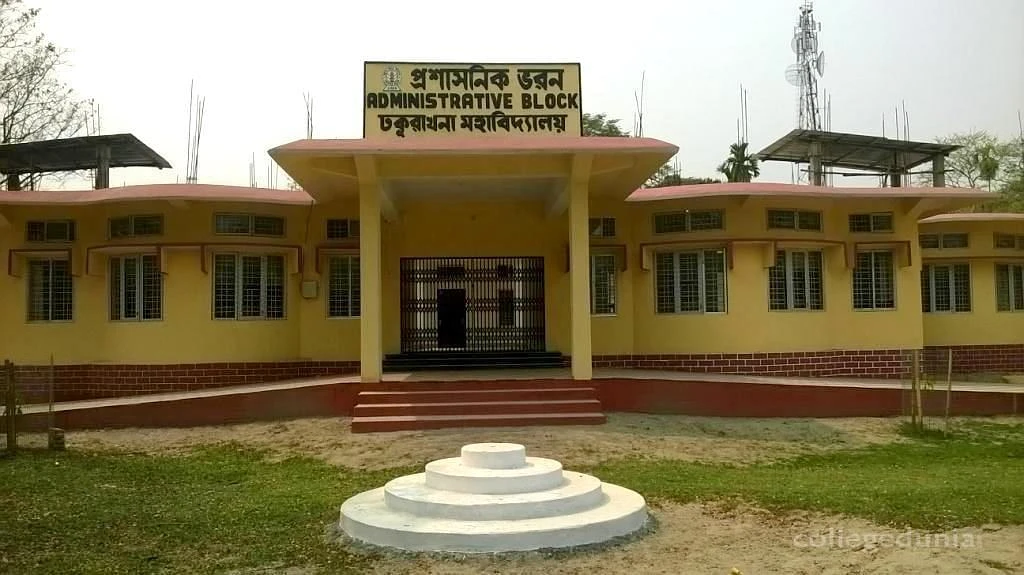
 Auditorium
 Cafeteria
 Computer Labs
 Hostel
 Medical
 Sports Complex
 Study Library